Menu & categories

Goose

Fat poultry meat with high energy and fat content

Wiki about goose Nutri-Score D Vegan No Gluten-free Yes Lactose-free Yes Nut-free Yes
NUTRITION / 100 g
350 kcal 17 g Protein 0 g Kohlenhydrate 32 g Fett

Introduction

Raw goose meat on a cutting board
I have an inexplicable weakness for goose that has been with me since childhood. When I think of frosty November evenings, the scent of crispy skin and spicy vegetables immediately comes to mind; it's a smell that holds memories. Once a colleague brought a smoked goose from his homeland to the office, and we gathered like moths around a light — it was a small culinary revelation that showed me how versatile this ingredient can be.

Goose is more than just the festive roast it often represents. I love the combination of bold flavor and juicy meat, which pairs wonderfully with sour and sweet components. In my kitchen I prefer pieces with fat still visible, because it is precisely that fat that, during slow cooking, develops flavors that turn a simple potato dish into a feast. Once I tried a recipe with orange sauce, and the balance between the fatty goose and the fresh acidity was so perfect that I immediately sent it to several friends.

Anyone cooking with goose should keep a few things in mind:

  • Slow cooking: So that the meat becomes tender and the fat has time to work its magic.
  • Salt and spices: Balanced seasoning is crucial so the flavors are not overwhelmed.
  • Choice of side dishes: Acidic components like red cabbage, apples, or cranberries complement goose ideally.
  • Leftover use: Goose broth is a treasure that elevates soups and sauces.
I remember being invited once to a small village festival where a neighbor had roasted the traditional goose. The patience with which she prepared and seasoned the bird was impressive, and the community around it made the enjoyment even more intense. Moments like that have shown me that goose is not just a dish, but often an occasion — a reason to bring people together and share stories.

Although goose is regarded as a festive ingredient in many kitchens, it is surprisingly suitable for everyday use when portions are cleverly planned and leftovers are used creatively. For me goose remains an ingredient love: powerful, traditional and endlessly versatile. Every bite evokes images of warm family gatherings, smoky celebrations and improvised dinners, and it is precisely this mix of earthiness and elegance that makes goose so special to me.

Availability & types

Availability and types of the ingredient „Goose“

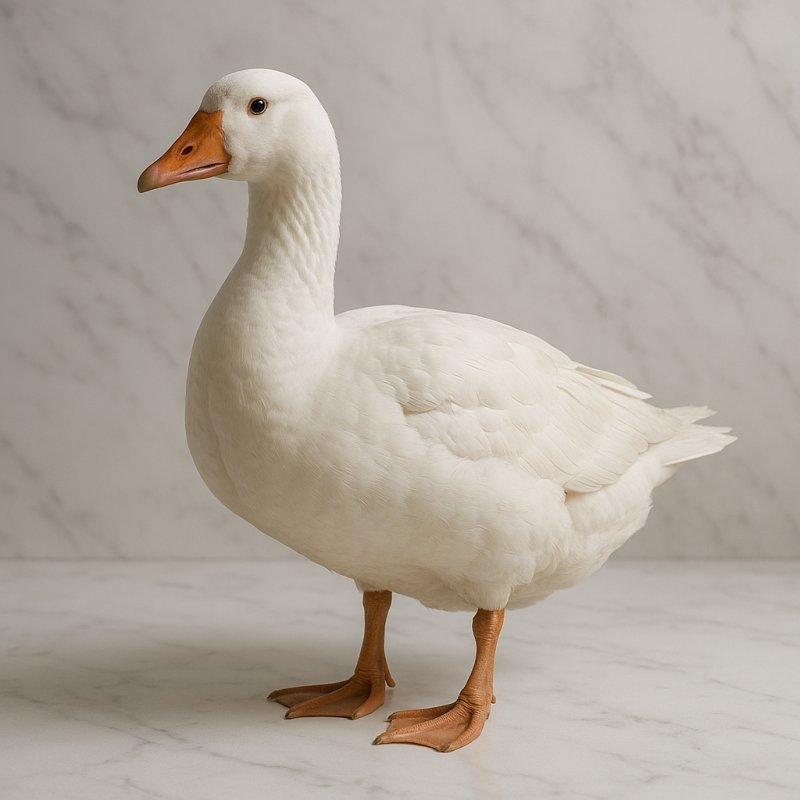
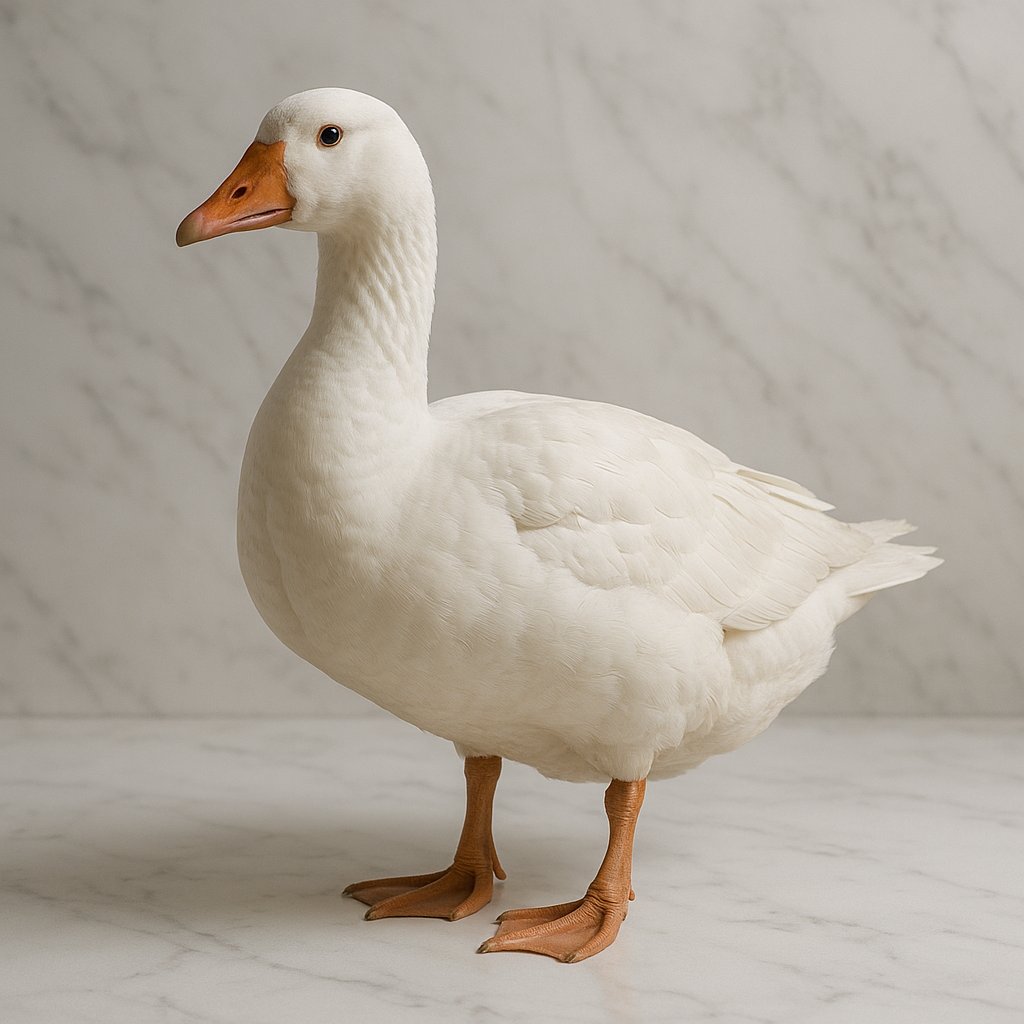
The goose is a large poultry bird kept in many countries as a source of meat. When you think of goose, imagine a large, white or gray-feathered bird that lives on farms. Geese are most often bought for special occasions like Christmas or family celebrations, because a goose provides a lot of meat and is filling for a long time.

Origin
Geese originally come from Europe and parts of Asia. Many of the geese we eat today are descendants of wild geese that people domesticated long ago. The best-known breeds come from countries such as Germany, France, the Netherlands, Poland and China. These countries have good farms and climates that suit geese.

Farming or rearing areas
Geese are not grown like plants but reared. This is called "rearing". There are two main ways geese live before they are slaughtered:

  • Farm or free-range rearing: Here geese have space to move, meadows and often water sources. They can roam, peck and forage in the grass. This is more natural for the animals and many people find that the meat tastes better.
  • Indoor rearing: With this method geese live in barns. It is often more efficient and protects the animals from bad weather, but it can mean they have less space to roam.
Both rearing systems exist in many countries in Europe and Asia. In regions with much agriculture, lush meadows and sufficient space, geese are particularly common.

Available breeds and variants
There are different goose breeds and product forms you can find in stores. Some differences are like with apples: there are red, green or sweet varieties — they all belong to the same species but taste slightly different.

  • Breeds: Well-known breeds include, for example, the German country goose, Embden (often large and white) and Toulouse (usually gray and compact). Some breeds are larger and yield more meat, others have more fat, which adds flavor when roasting.
  • Fresh or frozen: Fresh geese are usually purchased seasonally in autumn and winter because goose festivals occur then. Frozen geese are available year-round and are practical because you can thaw them at home and prepare them later.
  • Whole or in portions: Some people buy a whole goose, others prefer breast, legs or fillets. It's like a big cake: some want the whole thing, others only a slice.
  • Organic or conventional: Organic goose means the animals are kept according to specific rules – more space, better feeding and no use of certain medications. Conventional geese are often cheaper, but with organic geese you are more likely to know that the animals could live more naturally.
  • Special products: Geese also provide products such as goose fat (a fat produced during roasting), sausages or smoked parts. You can find these in delicatessens or supermarkets.
When is goose easy to obtain?
Geese are particularly easy to obtain in the autumn and winter season because many holidays fall in this period. If you want a goose outside this time, frozen options or portioned parts are a good choice.

In summary: Geese come from different regions of Europe and Asia, there are several breeds and rearing systems, and you can buy them fresh, frozen, whole or in parts. Organic and free-range geese often have more space and live more naturally, while conventional geese are sometimes cheaper. This way you can choose the right goose depending on taste, occasion and budget.
Details & nutrition

Property Value
Unit g
Average weight per piece 4000
Calories per 100 350
Protein per 100 17
Carbohydrates per 100 0
Sugar per 100 0
Fat per 100 32
Saturated fat per 100 10
Monounsaturated fat 15
Polyunsaturated fat 4
Fiber per 100 0
Vitamin C (mg) per 100 0
Vitamin D (IU) per 100 30
Calcium (mg) per 100 15
Iron (mg) per 100 2.5
Nutri-Score D
CO₂ footprint 7.0
Origin Europe
Gluten-free Yes
Lactose-free Yes
Nut-free Yes
Vegan No
Note Nutritional values for raw goose meat with skin, values may vary depending on feeding and cut.

Technical & scientific information

Goose refers to the meat of adult birds of the family Anatidae, mainly the domestic goose (Anser anser domesticus) and less commonly related wild geese when used as food. As an ingredient in the kitchen, goose meat differs both in composition and in technological properties from other poultry species. Typical product forms are whole roasted, carved, portioned as breast or leg, and processed into cold cuts, pâtés or canned goods.

Chemical composition and macronutrients

  • Goose meat consists mainly of water (typically 60–75 %), proteins (about 18–24 %) and lipids (fat content highly variable, typically 10–30 % raw, higher with high-fat feeding).
  • Muscle protein is made up of myofibrillar proteins such as actin and myosin as well as structural connective tissue proteins like collagen. The collagen content influences tenderness and cooking behavior.
  • The fat composition includes saturated, monounsaturated (e.g. oleic acid) and polyunsaturated fatty acids (such as linoleic acid). The share of monounsaturated fatty acids is often relatively high in goose fat compared to beef tallow, which benefits melting and flavor properties.
Vitamins and minerals

  • Goose meat contains B vitamins, particularly niacin (B3), vitamin B6 and vitamin B12, which are important for energy metabolism and blood formation.
  • Minerals include iron, zinc and phosphorus. Iron content is especially higher in dark meat and contributes to preventing iron deficiency.
Sensory and technological properties

  • Goose skin is rich in subcutaneous fat that melts during roasting and makes the skin crispy while the underlying muscle tissue remains juicy.
  • The higher ratio of connective tissue and fat requires adapted cooking processes: lower temperatures and longer cooking times or methods such as confit, slow roasting or braising lead to more tender meat.
  • Meat color varies by muscle type from pink to dark red; dark meat (legs) usually has a more intense flavor and more concentrated aroma compounds.
Processing methods

  • Conventional preparation includes roasting at moderate temperatures, possibly after trimming fat or removing excess skin, as well as using stuffing and glazes.
  • Industrial processing uses cutting, curing and smoking for preservation as well as freezing and vacuum techniques to extend shelf life and minimize water loss.
  • In the production of pâtés or sausages, goose fat is often used because of its melting properties and flavor.
Health aspects and food safety

  • Because of the higher fat content, goose meat provides concentrated energy; this should be considered in a calorie-conscious diet.
  • Positive aspects are the levels of essential fatty acids, B vitamins and iron. Restrictions apply to people at increased risk of hyperlipidemia or cardiovascular disease, for whom overall fat and cholesterol intake should be monitored.
  • Food safety–relevant aspects concern microbiological risks such as Salmonella or Campylobacter. Careful cooking to a safe internal temperature and hygienic slaughtering and processing conditions minimize these risks.
  • Allergic reactions to poultry protein are rare but can occur. Additionally, wild geese may be exposed to environmental contaminants depending on their habitat.
Ecological and nutritional classification

  • Goose rearing can have different environmental profiles depending on management; extensively reared geese on pasture have different emissions and land-use requirements than intensive fattening systems.
  • From a nutritional standpoint, goose offers a protein alternative to red meat with its own nutrient profile, which can fit into a balanced diet if portion sizes and fat content are considered.
Overall, goose as an ingredient is characterized by a distinctive flavor, a high potential fat content and a rich nutrient spectrum. The choice of appropriate cooking and processing methods significantly affects texture, aroma and nutritional properties and contributes to the safe and enjoyable use of this traditional poultry species.

Wiki entry for: goose
Active now: 24 visitors of which 2 logged-in members in the last 5 minutes