Menu & categories

Gingerbread spice mix

Aromatic spice blend for Christmas baked goods

Wiki about gingerbread spice mix Nutri-Score B Vegan Yes Gluten-free Yes Lactose-free Yes Nut-free Yes
NUTRITION / 100 g
320 kcal 7 g Protein 50 g Kohlenhydrate 8 g Fett

Introduction

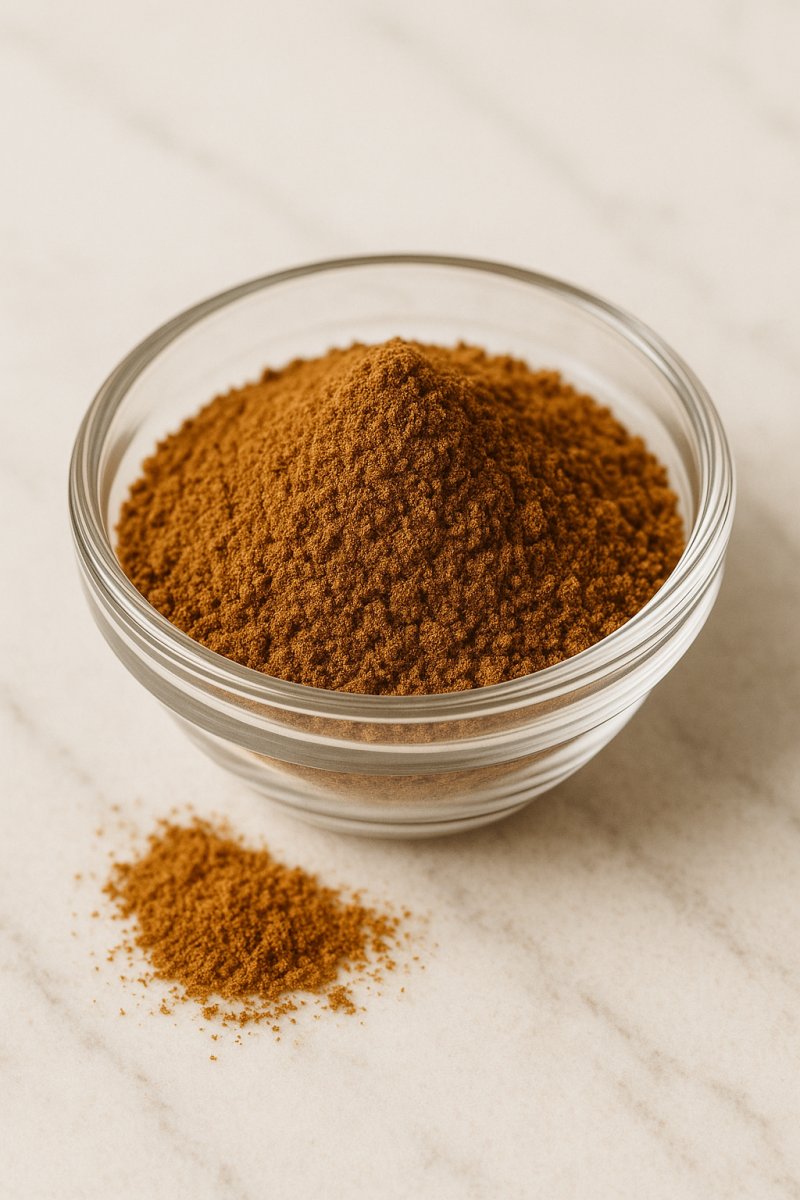
Gingerbread spice as a brown powder in a bowl
I still clearly remember the first scent of gingerbread spice I consciously noticed: a warm stream of cinnamon, cloves and nutmeg that spread through the house when I slipped into a bakery as a young visitor. That scent immediately showed me that spices do more than add flavor — they weave memories. Gingerbread spice is for me like a little recipe for coziness, a blend that often dominates Christmas but can bring pleasure all year round.

What makes this spice so special? At its core it is a balanced combination of:

  • Cinnamon – warm and sweet, the base of many blends, signaling comfort.
  • Cloves – intense and slightly sharp, for depth and character.
  • Allspice (pimento) – an underrated nuance that recalls cherries and nutmeg.
  • Cardamom – floral-fresh, for elegance and spice.
  • Ginger – fresh and invigorating, the little kick in the blend.
  • Nutmeg – warm and nutty, rounds off the composition.
I have used gingerbread spice in surprising ways. A colleague once brought a pot of pumpkin soup, into which I sprinkled some of the blend out of curiosity. The combination was so harmonious that we both decided to add a pinch to the menu from then on. Gingerbread spice can not only enhance cookies and cakes, but also marinades, mulled wine, roasted vegetables and even chocolate desserts.

For home preparation I recommend grinding the spices fresh when possible. Ground variants are practical, but freshly ground spices release their aromas more intensely and vividly. A small screw-top jar often lasts for months if stored in a dark, cool place.

What fascinates me about this blend is how it builds cultural bridges: every family has a slightly different version, a secret passed down from generation to generation. That makes gingerbread spice for me more than just an ingredient — it is an olfactory heritage that tells stories and brings an immediate smile at the first sniff.

Availability & types

Availability and types

Gingerbread spice is easy to find in many countries, especially in the cold season around Christmas. You can buy it in supermarkets, drugstores, at weekly markets or in spice shops. It is often displayed in small jars or tins next to cinnamon and vanilla. Freshly ground gingerbread spice is sometimes available only in specialty stores or online, while ready-made blends can be found in any regular shop. If a store does not carry the spice blend, individual spices like cinnamon, cloves and nutmeg are almost always available there.

The spices that go into gingerbread spice come from different countries. For example:

  • Cinnamon is often imported from Sri Lanka or Indonesia. You can think of cinnamon as the bark of a tree that is dried and sold as sticks or ground.
  • Cloves commonly come from Madagascar or Tanzania. Cloves are small, hard flower buds from a tree and have a very strong aroma.
  • Allspice (pimento) grows in the Caribbean and Central America. It looks like a small brown berry and tastes like a combination of pepper, cinnamon and cloves.
  • Nutmeg originates from spice islands such as Indonesia and is obtained from a seed kernel.
  • Anise and cardamom come from regions such as Asia and parts of Europe.
Because these ingredients come from different parts of the world, spice manufacturers mix the dried and ground parts before selling the finished gingerbread spice. It's like mixing several colors to get a new shade — each part contributes a small piece of flavor.

There are different variants of gingerbread spice so there's something for every taste. The main types are:

  • The classic blend: Usually the most commonly purchased variant. It contains cinnamon, cloves, nutmeg, allspice and sometimes coriander. This blend tastes warm and spicy, just as you would expect from traditional gingerbread.
  • The mild or child-friendly blend: Strong spices like cloves are reduced here so the flavor is softer and less sharp. Good when children are baking or when no one likes a very intense clove taste.
  • The intense blend: For people who love a stronger flavor. This contains more cloves or cardamom so the scent and aroma are more pronounced.
  • The organic variant: These spices come from certified organic cultivation. That means the plants were grown without chemical pesticides. For some people this is important because they want to know how their food was produced.
  • Regional or artisanal blends: Small producers or markets sometimes offer their own recipes. These can include special ingredients like orange peel or vanilla and therefore taste somewhat different from standard blends.
You can also make gingerbread spice yourself if you have the individual spices at home. It's like a small experiment in the kitchen: cinnamon and nutmeg provide warmth, cloves bring the bite, and anise or cardamom add a fresh note. Ready-made blends are practical because you don't have to buy every single ingredient separately.

In summary: gingerbread spice is widely available, comes from various countries and is offered in many variants — from mild to strong, from conventional to organic. This way almost everyone can find the blend that suits their taste.
Details & nutrition

Property Value
Unit g
Calories per 100 320
Protein per 100 7
Carbohydrates per 100 50
Sugar per 100 2
Fat per 100 8
Saturated fat per 100 2
Monounsaturated fat 3
Polyunsaturated fat 3
Fiber per 100 25
Vitamin C (mg) per 100 1
Vitamin D (IU) per 100 0
Calcium (mg) per 100 250
Iron (mg) per 100 10
Nutri-Score B
CO₂ footprint 4.0
Origin Typical blend of ground spices such as cinnamon, cloves, allspice, nutmeg, cardamom, coriander and anise; may vary by manufacturer.
Gluten-free Yes
Lactose-free Yes
Nut-free Yes
Vegan Yes
Note Nutritional values are average values for a pure, sugar-free gingerbread spice blend without flour or nut ingredients; actual composition may vary by manufacturer.

Technical & scientific information

Gingerbread spice is a traditional spice blend used in Central European baking, primarily for gingerbread and Christmas pastries. It is not a single botanical substance but a composed aroma and spice profile that combines several dried and finely milled components whose proportions vary by recipe. Typical constituents are cinnamon (cinnamon bark), cardamom, cloves, allspice (pimento), anise, nutmeg and often ginger as well as sometimes coriander and orange peel.

Chemically, these plant components supply a spectrum of essential oils, phenols, terpenes and resins that are responsible for the characteristic aroma. Examples of relevant chemical compounds include cinnamaldehyde (mainly in cinnamon), eugenol (in cloves), 3-caren and limonene (in citrus peels), gingerol-related compounds (in ginger) as well as myristicin and safrole in trace amounts in nutmeg. These compounds are volatile and lipophilic, which explains why heat and fat in baked goods intensify and disperse the aroma.

From a nutritional standpoint, gingerbread spice contributes only marginally to macronutrients because it is used in small amounts. Typical nutritional values per 100 g of spice blend range around 200–350 kcal, mainly due to carbohydrates and small amounts of fat. Since the amount used in recipes is usually only a few grams, the caloric contribution in finished products is negligible. Mineral-wise the components contain traces of potassium, calcium and magnesium as well as small amounts of iron and zinc.

Industrial production of gingerbread spice includes drying, coarse grinding, where applicable de-oiling of certain components, fine milling and homogenization. To increase quality and shelf life, individual spices are often packaged airtight and protected from moisture, because essential oils can oxidize when exposed to light and oxygen. Fine milling settings influence aroma release: coarser particles release aromas more slowly, while finer milling enables faster and more intense aroma during baking.

From a health perspective the individual components are generally safe in customary amounts. Nevertheless there are some points to consider:

  • Allergies and sensitivities: Components such as anise or cardamom can trigger allergic reactions in sensitive individuals.
  • Overdose and toxicity: Certain compounds, for example myristicin in nutmeg, can be neurotoxic at high doses; however, in gingerbread spice these are typically present only in trace amounts.
  • Interactions: Essential oils can interact with medications at very high doses; in foods such amounts are unlikely to be reached.
  • Antimicrobial and antioxidant properties: Many components show antimicrobial and antioxidant effects in vitro, which can help extend the shelf life of baked goods.
Sensorially, gingerbread spice is characterized by an interplay of sweetish, warm, slightly sharp and balsamic notes. The mixing ratios determine the character: a higher cinnamon proportion produces more warmth and sweetness, more cloves increase the sharpness and spiciness, while citrus components add freshness. For both industrial and homemade applications it is common to store the blend in small airtight containers in a cool, dark place to minimize aroma losses.

In summary, gingerbread spice is a composed spice formula with a complex chemical composition that primarily provides essential oils and aromatic phenols. It has only a minor nutritional impact at typical usage levels, but contributes significantly to taste, olfactory profile and partly to the shelf life of gingerbread and similar pastries. When used appropriately the health risks are minimal, making the blend versatile both culinarily and technologically.

Wiki entry for: gingerbread spice mix
Active now: 18 visitors of which 2 logged-in members in the last 5 minutes