Menu & categories

Gelatin

Animal gelling agent derived from collagen

Wiki about gelatin Nutri-Score D Vegan No Gluten-free Yes Lactose-free Yes Nut-free Yes
NUTRITION / 100 g
335 kcal 85 g Protein 0 g Kohlenhydrate 0 g Fett

Introduction

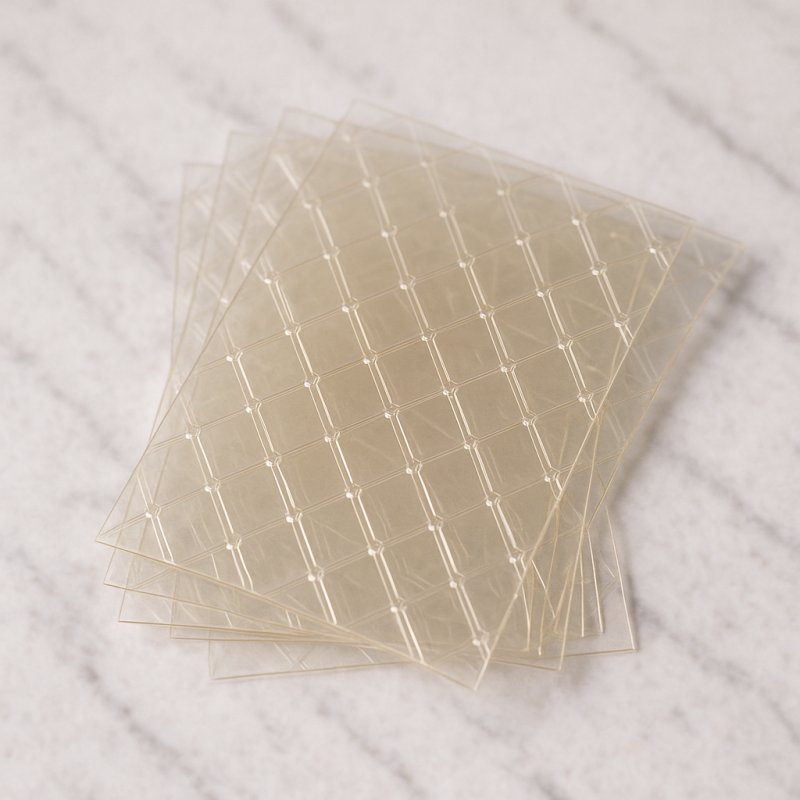
Dried gelatin in sheets and powder form
I still remember well the first evening when gelatin became for me more than just an ingredient name on a recipe note. A friend had prepared a simple but perfect panna cotta, and when I broke through its velvety-soft surface, I knew: gelatin is the quiet magic in many desserts. Since then gelatin has accompanied me through kitchen experiments, family celebrations and occasional culinary missteps — most of them instructive and accompanied by laughter.

Gelatin is an animal gelling agent obtained from collagen, which is found in bones and connective tissue. It is used in powder or sheet form, and both variants have their loyal fans. I learned that sheet gelatin is often more practical when it comes to dissolving finely without lumps, while powder is uncomplicated and reliable for quick cake fillings. It is always important to soak it in cold water so the gelatin softens evenly and does not become gummy later.

Practical tips that have made my life easier in the kitchen:

  • Proper hydration: Always let it bloom, otherwise it clumps.
  • Watch the temperature: Do not boil, otherwise it loses its gelling power.
  • Know the alternatives: Agar‑agar, pectin or carrageenan for vegetarian/vegan options.
I remember a party where I wanted to stabilize a citrus mousse with gelatin. Guests praised the texture until a well-meaning colleague asked whether the dessert was “firm like jelly”. I had to laugh — because proper gelatin work makes a mousse creamy, not rubbery. The secret lies in the correct ratio of liquid to gelatin and in gentle chilling.

Gelatin is not only for desserts. In fine cooking it stabilizes terrines, gives glazes shine and helps in making homemade gummy bears. Those who avoid animal products can find alternatives, but the unique mouthfeel that gelatin provides is hard to reproduce exactly. For me it remains a versatile, accessible and almost nostalgic element in the kitchen — a little science and a lot of enjoyment in one spoonful.

Availability & types

Availability and types

Gelatin is an ingredient found in many supermarkets, drugstores and baking shops. You can buy it in different forms: as sheets (also called gelatin sheets), as powder (instant or classic) and in some cases pre-mixed gel mixes that only need to be stirred with water or juice. Most large supermarket chains carry at least one variety; specialty or organic stores often offer additional variants.

Origin
Gelatin is made from the skins, bones or connective tissues of animals. Common sources are pork and beef. Therefore it is important to know that gelatin is not a plant-based product. For people with certain dietary rules (for example vegetarians, vegans or those who do not eat pork) there are alternatives, which I will describe shortly. Manufacturers may indicate on the packaging from which animal the gelatin is derived, or whether it is suitable for specific religious or health requirements.

Production areas / Countries of origin
Because gelatin is a by‑product of the meat and animal processing industry, raw materials usually come from countries with large meat production. Well-known countries include the USA, Brazil, China and parts of Europe. The exact origin is sometimes printed on the package, often only the manufacturer or the country of production is indicated. Organic or specialty brands more frequently emphasize regional origin and stricter controls.

Available types and variants

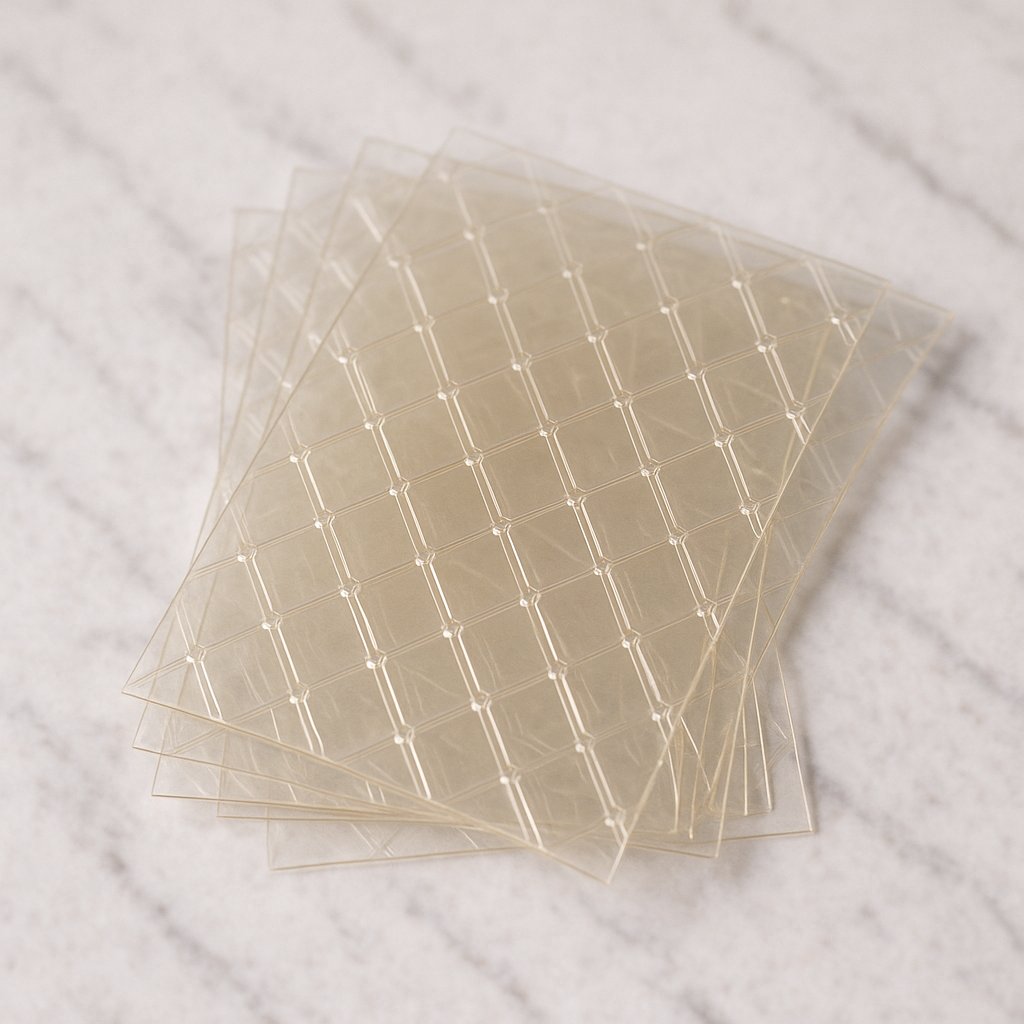
  • Gelatin sheets: Thin transparent sheets in various strengths. Advantage: they dissolve evenly and are good for delicate desserts like panna cotta or cake glazes. Soak them in cold water and then dissolve them in warm liquid.
  • Gelatin powder (classic): Fine powder that you let bloom in cold water and then stir into the warm mixture. It is practical when you want to weigh quickly.
  • Instant gelatin: This powder does not need prior soaking and can be stirred directly into warm or sometimes even cold liquids. Very practical for quick recipes.
  • Meat-free alternatives: For people who do not want animal gelatin, there are plant-based gelling agents:
    • Agar‑agar: Made from seaweed. It sets firmer and faster than animal gelatin and remains firmer at warmer temperatures.
    • Pectin: A natural gelling agent often used in jams. It usually needs sugar and acid to gel properly.
    • Carrageenan (red algae): Also derived from algae, it is often used in industry.
  • Specially labeled gelatin: Some packages say "halal" or "kosher", which means the gelatin was produced according to certain religious rules. There are also brands that note allergen information, antibiotic-free status or non‑GMO feed usage.
Simple example for understanding
Think of gelatin like an invisible net: when you add it to a liquid, this net builds up and holds the liquid together so it no longer flows and becomes firm — like a spiderweb can hold small things together. Different types of gelatin or gelling agents form this net with different density, which is why some preparations become very firm (e.g. gummy bears) and others only tender and creamy (e.g. panna cotta).

Overall gelatin is easy to find and available in many variants, so you can usually find a suitable option for almost any recipe and for different dietary needs. When shopping pay attention to the form (sheet or powder), the origin and special labels so the product matches your preferences.
Details & nutrition

Property Value
Unit g
Calories per 100 335
Protein per 100 85
Carbohydrates per 100 0
Sugar per 100 0
Fat per 100 0
Saturated fat per 100 0
Monounsaturated fat 0
Polyunsaturated fat 0
Fiber per 100 0
Vitamin C (mg) per 100 0
Vitamin D (IU) per 100 0
Calcium (mg) per 100 30
Iron (mg) per 100 0.5
Nutri-Score D
CO₂ footprint 5.0 kg CO2e/kg
Origin Mostly obtained from pig or cattle bones and skins
Gluten-free Yes
Lactose-free Yes
Nut-free Yes
Vegan No
Note Gelatin is an animal protein product derived from collagen and is used as a gelling and thickening agent. It is naturally free from gluten, lactose and nuts, but is not suitable for vegetarian or vegan diets. Nutritional values may vary slightly depending on the manufacturing process.

Technical & scientific information

Gelatin is an animal protein obtained by partial hydrolysis of collagen, the main structural protein of connective tissue, bones and skin. Chemically, gelatin consists of a mixture of peptide chains of varying length that are rich in the amino acids Glycine, Proline and Hydroxyproline. This amino acid composition and the three-dimensional structure of the peptides determine the physical properties of gelatin, in particular the ability to form a gel in aqueous solution upon cooling.

Manufacturing process
Industrial production begins with the preparation of animal raw materials, usually cattle or pig bones and hides. By adding acids (for soft hides) or alkalis (for tougher materials) the collagen is broken down, followed by a long leaching phase in water. This is followed by extraction at elevated temperature, filtration, concentration and drying. Different pretreatments and extraction conditions affect the molecular weight distribution and thus the gel strength and solubility of the final products.

Physical properties
Gelatin forms reversible thermally labile gels: it dissolves when heated in water and gels upon cooling. Important parameters are the Bloom value, a measure of gel strength, and the viscosity of the solution. Higher Bloom values correlate with firmer gels and a higher average molecular weight. Gelation temperature typically lies between 15 and 25 °C, depending on concentration, ion composition and the presence of sugars or acids.

Nutritional values and composition
Gelatin provides mainly protein and virtually no carbohydrates or fats. Per 100 g it contains about 300–350 kcal, depending on residual moisture, with protein content on a dry basis typically around 85–90%. Gelatin is an incomplete protein source because it contains only small amounts of some essential amino acids such as Tryptophan; however it complements other protein sources well.

Applications
Gelatin is widely used in the food industry (confectionery, desserts, stabilizers in dairy products), in pharmaceuticals (capsule shells, tableting), in the history of photography and in technical applications such as adhesives and bioprinting substrates. Its biocompatible and biodegradable nature also makes it interesting for medical biomaterials.

Health aspects
For most people gelatin is well tolerated. Allergic reactions are rare but can occur in sensitive individuals. Because of its animal origin gelatin is not suitable for vegetarians or vegans, and religious dietary rules may affect its permissibility. From a microbiological perspective production requires hygienic control since raw material can be contaminated. Due to its high protein content gelatin can contribute to satiety; its effect on joint disorders is scientifically mixed: some studies report moderate improvement in joint function with collagen or gelatin supplements, others find no clear benefit.

Safety and labeling
Food legislation requires correct declaration of origin and appropriate limits for residues. Industrial processes include measures to remove contaminants and inactivate potentially pathogenic material. For special applications further purified or hydrolyzed forms can be used that provide specific functional properties such as higher solubility or altered gel strength.

Future and research
Current research areas include optimizing bio-based materials, developing plant-based alternatives for gelling purposes and modified processing methods to reduce ecological footprints. Additionally, tailored gelatin derivatives are being developed for medical applications, for example for targeted drug release or as scaffolds for tissue engineering.

Wiki entry for: gelatin
Active now: 11 visitors of which 2 logged-in members in the last 5 minutes