Availability and types of gelatin sheets
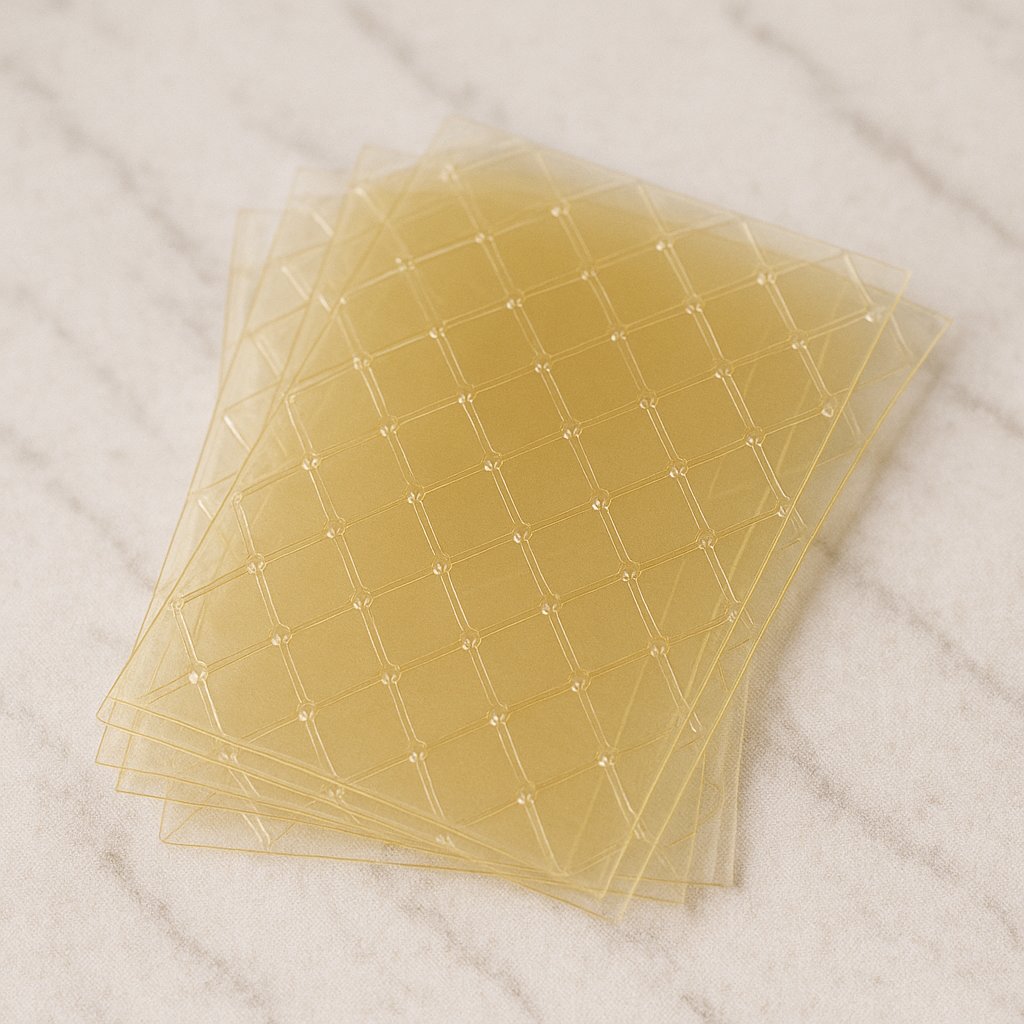
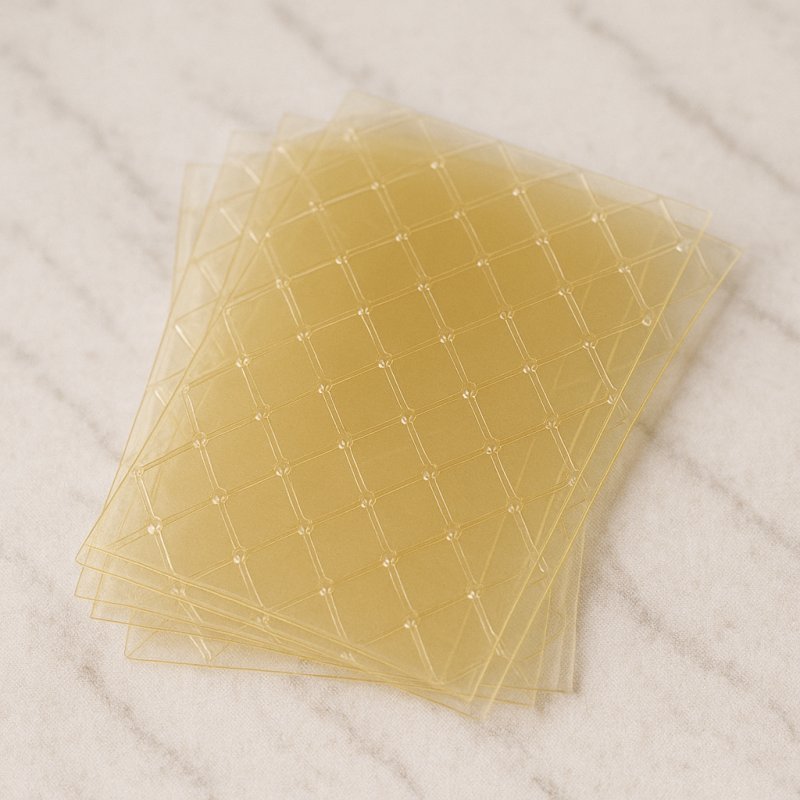
Gelatin sheets are a practical ingredient often used in desserts such as puddings, jellies or mousse to make them set nicely. Gelatin originally comes from animal bones, skin and connective tissue — mostly from pigs or cattle. Imagine cooking these parts for a long time with water until everything softens; the liquid is then purified and processed into gelatin. The sheets you find in the supermarket are thin, transparent “layers” that can be soaked in cold water and then incorporated into warm dishes so that the liquid sets.
Where does gelatin come from?
Gelatin is not grown like a vegetable but made from animal parts. The animals come from various parts of the world. Bovine gelatin is often produced in Europe, North and South America, while pork gelatin comes from countries where pigs are raised, for example in Europe and Asia. There is also fish gelatin, made from fish skin or fish bones; it more often comes from coastal countries or fishing operations.
Gelatin is not grown like a vegetable but made from animal parts. The animals come from various parts of the world. Bovine gelatin is often produced in Europe, North and South America, while pork gelatin comes from countries where pigs are raised, for example in Europe and Asia. There is also fish gelatin, made from fish skin or fish bones; it more often comes from coastal countries or fishing operations.
What types of gelatin sheets are there?
You can buy different varieties of gelatin sheets. Here are the main ones:
You can buy different varieties of gelatin sheets. Here are the main ones:
- Regular (or pork or bovine gelatin): These are the most common. The package often states whether they come from pig or cattle. They are colorless and have no strong taste of their own.
- Fish gelatin: It is especially useful when someone for religious or personal reasons does not want to eat gelatin from pig or cattle. Fish gelatin can have slightly different gelling behavior but is a good alternative.
- Vegetarian/vegan alternatives: These are not called gelatin sheets, but they replace gelatin in recipes. Examples are agar-agar (from seaweed) or pectin (from fruit). Agar-agar is sometimes available in sheet form or powder; it behaves a little differently than animal gelatin — it becomes firmer when cooled and also remains firmer at warmer temperatures than normal gelatin.
- Different strengths: Some packages give a number or designation that shows how strongly the gelatin sets. This is similar to gelatin candies: some are firmer, others softer. For desserts you usually choose a normal strength; for more stable molds you use stronger gelatin.
How to find the right type in the store?
Gelatin sheets can be found in supermarkets, baking shops or delicatessens. Pay attention to the label: it will state whether it is pork, beef, fish or a plant-based alternative. Organic or specialty shops often carry fish or vegetarian variants. If you are unsure, a look at the ingredient list or asking a shop assistant can help you choose the right option.
Gelatin sheets can be found in supermarkets, baking shops or delicatessens. Pay attention to the label: it will state whether it is pork, beef, fish or a plant-based alternative. Organic or specialty shops often carry fish or vegetarian variants. If you are unsure, a look at the ingredient list or asking a shop assistant can help you choose the right option.
Simple examples for comparison
Imagine you have three cloths: one is elastic like a rubber band (animal gelatin), one is firm like paper (agar-agar) and one is somewhere in between (pectin). Depending on how you want your dessert — very soft or firm like a gummy bear — you choose the appropriate type. Origin can also matter: some families do not eat pork, so the fish or plant option is better.
Imagine you have three cloths: one is elastic like a rubber band (animal gelatin), one is firm like paper (agar-agar) and one is somewhere in between (pectin). Depending on how you want your dessert — very soft or firm like a gummy bear — you choose the appropriate type. Origin can also matter: some families do not eat pork, so the fish or plant option is better.
In summary: gelatin sheets exist in different variants (pork, beef, fish and plant-based alternatives). They are made from animal parts or plants, are available in many supermarkets and have different strengths. If you know your restrictions or preferences, you can easily find the right type.