Menu & categories

Fruit

Collective term for fresh, mostly sweet fruits high in vitamins and dietary fiber

Wiki about fruit Nutri-Score A Vegan Yes Gluten-free Yes Lactose-free Yes Nut-free Yes
NUTRITION / 100 g
55 kcal 0.7 g Protein 13 g Kohlenhydrate 0.3 g Fett

Introduction

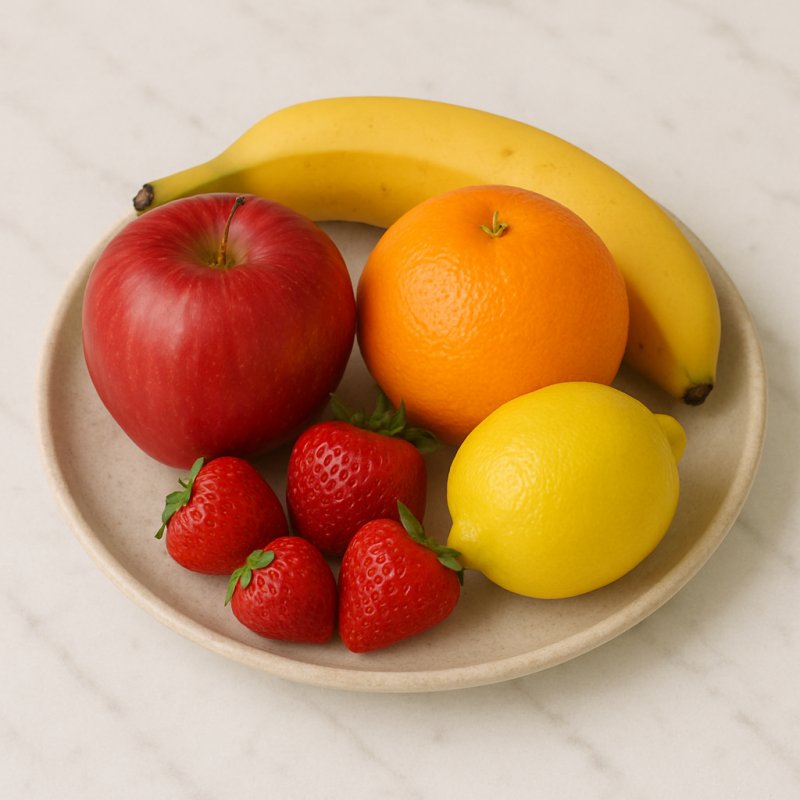
Various fresh fruits such as apples, berries and grapes
I have always loved fruit, not only for its taste but also for the stories each fruit carries. Fruit is like a small travel book to me: an apple recalls afternoons in the countryside, a ripe mango evokes distant markets with steaming chai in the background. I still remember a rainy Sunday when I made a fruit salad from everything the kitchen had — the combination was so surprisingly good that I never wanted to treat guests again to the usual packaged dessert.

In everyday life I appreciate fruit for its versatility. It works as a quick snack, as a sweet finish to a menu, or as a surprising element in savory dishes. Practically speaking: it provides vitamins, fiber and moisture with little effort. A colleague of mine swears by banana in the morning smoothie because it makes it creamy and bridges the coffee machine when appointments overlap.

When cooking I like the balance between sweetness, acidity and texture. Citrus brings freshness, berries add vivid color accents, and dried fruit gives deep, concentrated flavor. I like to try new things: figs in a warm salad, cherries with dark chocolate cake or plums in a spicy chutney. These combinations are often simple tricks that lift dishes from "nice" to "unforgettable".

  • Health: Fruit is rich in vitamins and antioxidants.
  • Versatility: Fresh, dried, grilled or cooked — fruit fits almost always.
  • Seasonality: Paying attention to seasonal fruit makes a difference in taste.
What I particularly appreciate about fruit is its ability to evoke memories and create community. A basket of nectarines invites sharing, a bowl of grapes becomes a basis for conversation during a spontaneous visit. So when I go to the store, I decide not only by price but by what will make my kitchen and my guests happy. Fruit to me is not just an ingredient, it is a small invitation to the table — colorful, fragrant and always ready to tell stories.

Availability & types

Availability and types of fruit

Fruit can be found in almost every part of the world and there are very many different kinds. Some fruits grow on trees, others on bushes or even on climbers. The origin of a fruit means where it originally comes from or where it grows best. For example, the banana originally comes from Southeast Asia, while the apple comes from Central Asia. Many fruits are now at home in many countries because people have planted them around for centuries.

Growing regions
Fruit grows in very different areas depending on the variety. Here are some typical examples, simply explained:

  • Apples: Often grow in cooler regions such as Central Europe or North America. They like sunny days and cold nights in winter.
  • Bananas: Need warmth and a lot of rain, so they grow in tropical countries like Ecuador, Costa Rica or Indonesia.
  • Oranges and citrus fruits: Prefer a Mediterranean climate with warm days and mild winters – important are Spain, Italy and parts of the Americas.
  • Berries (strawberries, raspberries): Can grow in many gardens, often in more temperate regions and sometimes in greenhouses.
  • Exotic fruits (mango, pineapple): Mostly come from warm, tropical countries such as India, Thailand or Costa Rica.
Because the climate in a place is important, fruits are often grown in the regions that suit them best. It's similar to clothing: you don't wear a winter coat when it's hot, and you don't wear shorts in the snow.

Available varieties and types
For each kind of fruit there are often many different varieties — these are slightly different versions of the same fruit. These varieties can differ in shape, size, color, taste or shelf life. Some are sweeter, others a bit more tart or crisper. Here are a few examples that show this:

  • Apples: There are sweet varieties like Gala, tart ones like Granny Smith and firmer ones like Braeburn. Different varieties are used for eating or baking.
  • Bananas: The common yellow bananas are dessert bananas. There are also cooking bananas (plantains), which are larger and used for frying.
  • Berries: Strawberries, blueberries and raspberries differ in size and juiciness. Some breeders have developed varieties that keep longer or are more frost-resistant.
  • Citrus fruits: Oranges, mandarins, grapefruits and lemons are all citrus, but each has its own taste and uses.
  • Exotics: Mango has different varieties like Alphonso or Kent that differ in aroma. Pineapple or kiwi also have different types.
Seasonality and availability
Fruit usually has a season, that is, a time of year when it is freshly harvested and tastes best. In summer there are many berries and cherries, in autumn we harvest apples and pears. Some fruits are available year-round in supermarkets because they are imported from other countries or grown in greenhouses. Imported fruit may look good, but it often has a long journey behind it — locally grown fruit that is in season usually tastes fresher.

In summary: fruit comes from many parts of the world and there are many varieties. Climate and soil determine where which fruit grows well. The variety ensures that we can enjoy different fruits all year round — fresh from the region in season or as imports when we fancy something exotic.
Details & nutrition

Property Value
Unit g
Calories per 100 55
Protein per 100 0.7
Carbohydrates per 100 13
Sugar per 100 10
Fat per 100 0.3
Saturated fat per 100 0.05
Monounsaturated fat 0.05
Polyunsaturated fat 0.15
Fiber per 100 2.0
Vitamin C (mg) per 100 25
Vitamin D (IU) per 100 0
Calcium (mg) per 100 20
Iron (mg) per 100 0.3
Nutri-Score A
CO₂ footprint 0.4 kg CO2e/kg (durchschnittlich, stark sortenabhängig)
Origin Worldwide; depending on the fruit variety and the season, sourcing varies regionally
Gluten-free Yes
Lactose-free Yes
Nut-free Yes
Vegan Yes
Note Nutritional values are to be understood as average guideline values for fresh, unprocessed fruit (e.g. apples, pears, berries, grapes); actual values vary depending on variety, ripeness and origin.

Technical & scientific information

Fruit denotes in botany the fleshy or dry seed-bearing structures of flowering plants that develop from the ovary and, if applicable, additional floral organs. In everyday language the term covers a wide variety of edible fruits such as apples, bananas, berries, citrus fruits, stone fruits and tropical types. Botanically, fruits are classified according to their structure and origin, for example as berries, stone fruits (drupes), aggregate fruits or hesperidia in citrus.

Chemical composition and main constituents
Fruit consists mainly of water (often 70–95 %), carbohydrates, fiber, organic acids, vitamins, minerals and secondary plant compounds. Carbohydrates occur mainly as mono- and disaccharides (glucose, fructose, sucrose) and as polysaccharides in the form of pectins and cell wall material. Organic acids such as ascorbic acid (vitamin C), citric acid, malic acid and tartaric acid influence taste, shelf life and pH. Pectin is a water-soluble polysaccharide capable of gel formation and is used in food technology for jams and gelling agents.

Nutritional values and micronutrients
The energy density of fruit varies depending on sugar content and water proportion; berries and citrus fruits typically have lower calorie densities than bananas or grapes. Fruit provides important vitamins (particularly vitamin C and numerous provitamins such as beta‑carotene), minerals (potassium, magnesium, trace elements) and fiber (soluble and insoluble). Fiber improves bowel peristalsis and influences the glycemic response by slowing sugar absorption.

Secondary plant compounds and health relevance
Fruits contain a wide range of secondary plant compounds, including flavonoids, anthocyanins, polyphenols and terpenes. These compounds act as antioxidants, modulate inflammatory processes and have been associated with a reduced risk of cardiovascular diseases, certain cancers and metabolic disorders. The effects are dose-dependent and partly dependent on matrix effects, that is the interaction of different constituents within the fruit.

Technological processing and preservation
Processing methods include washing, peeling, pasteurizing, canning, freezing, drying and juice pressing. Thermal methods reduce microbial risk but alter heat-sensitive vitamins and aroma compounds. Freeze-drying and freezing preserve structure and nutrients relatively gently, while drying and concentration lead to water loss and thus increased calorie density. Pectins are industrially extracted as thickening and gelling agents; enzymatic treatment (pectinases) improves juice extraction but also affects clarity and viscosity of fruit juices.

Microbiological and chemical risks
Fresh fruit can be microbially contaminated (bacteria, yeasts, molds) and can contain pesticide residues. Hygienic handling, cooling and appropriate cleaning measures reduce risks. Furthermore, improper storage can lead to biogenic amines, mycotoxins or excessive fruit ripening degradation. Ethylene is a climacteric gas that controls ripening processes; handling ethylene-producing or -sensitive varieties is technologically relevant.

Dietary recommendations
Because of their nutrient profile, fruits are recommended in dietary guidelines worldwide as part of a balanced diet. Regular fruit consumption is associated with positive effects on blood pressure, blood lipids, weight control and gut health. Awareness of portion sizes is sensible because fruit juices and dried fruits can deliver concentrated sugars.

Concluding remark
From a nutritional science and technical perspective fruit is a versatile food with a complex chemical composition and significant health-promoting components. The choice of variety, degree of ripeness and the processing or preservation method chosen influence nutrient content, sensory properties and shelf life. Scientific research on interactions of fruit constituents, bioavailability of micronutrients and optimal processing techniques continues to contribute to improving quality and nutritional value.

Wiki entry for: fruit
Active now: 11 visitors of which 2 logged-in members in the last 5 minutes