Menu & categories

Fruchtzwerg

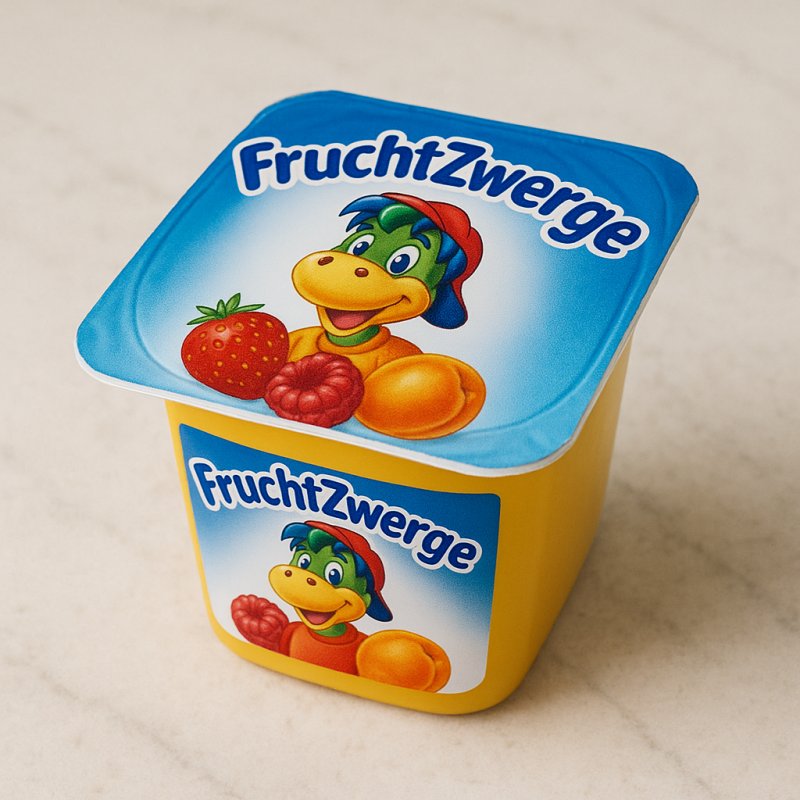
Creamy quark fruit snack in a small cup.

Wiki about fruit yogurt Nutri-Score D Vegan No Gluten-free Yes Lactose-free No Nut-free Yes
NUTRITION / 100 g
125 kcal 3.5 g Protein 15.5 g Kohlenhydrate 5.0 g Fett

Introduction

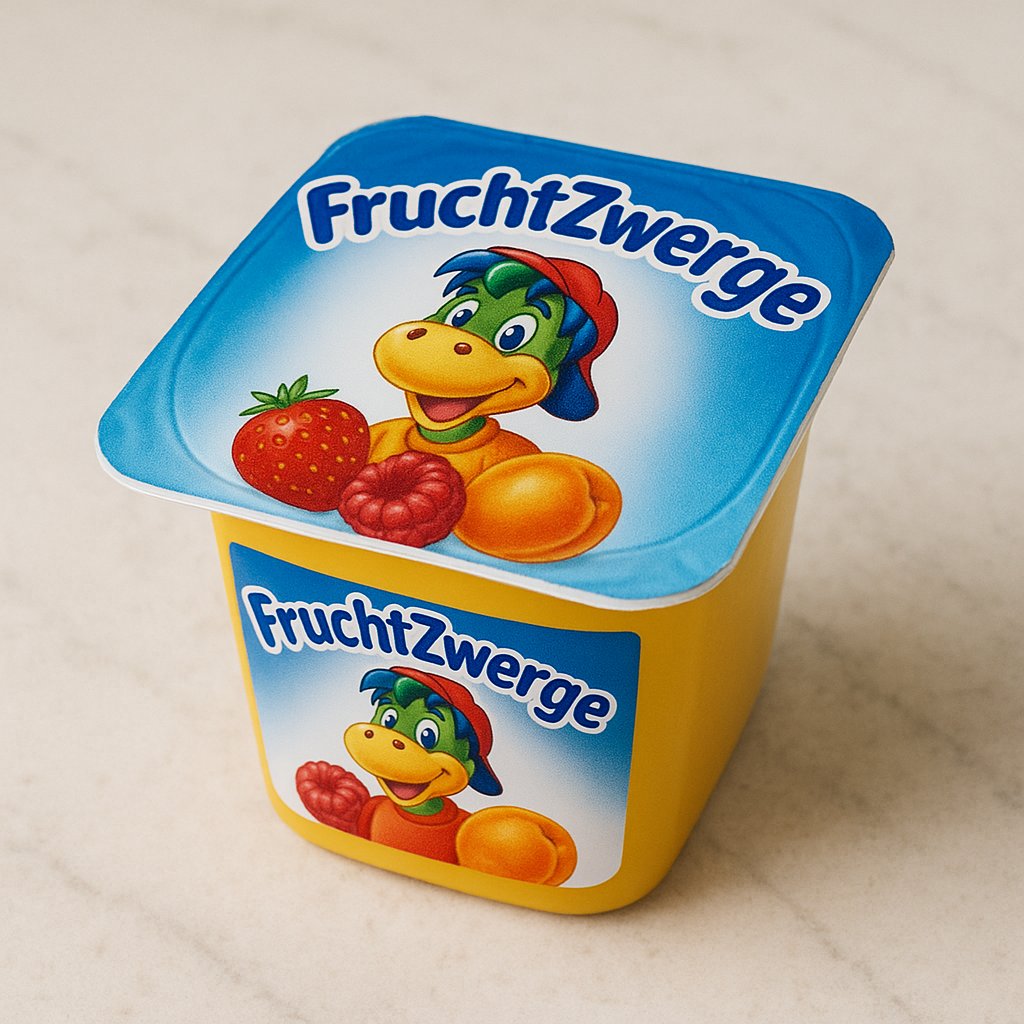
A Fruchtzwerg in a small cup with creamy quark-fruit filling
I have a weakness for small things that evoke big memories, and Fruchtzwerg definitely belongs to that category. At the first spoonful childhood comes back immediately: the cute packaging, the soft crack when opening and that seductively fruity sweetness. I still remember school days when a Fruchtzwerg in my lunchbox felt like a little treasure that was carefully kept until recess.

As an ingredient Fruchtzwerg is surprisingly versatile. At its core it is a creamy, flavored fruit yogurt, often based on milk with sugar and fruit purée, sometimes with added cultures. The texture is velvety, the taste child-friendly sweet — both make it ideal for refining and experimenting in the kitchen.

I have rescued many an improvised dessert with this little cup. A colleague of mine swears by layering Fruchtzwerg with some crumbled sponge cake for a quick trifle, and in one spontaneous summer break I pureed different varieties into a popsicle that was so popular colleagues asked for the recipe.

Practical ideas for use:

  • As a base for smoothies, combined with banana and oats.
  • As an airy-light glaze for muffins or a quick cake cream.
  • Frozen as a Fruchtzwerg popsicle.
  • Mixed with herbs and lemon juice as an unusual dressing for summer salads.
It is important to check the ingredient list, because sugar and fat contents vary between varieties. For conscious uses I prefer varieties with less sugar and add fresh fruit if needed to enhance flavor and texture. A small trick is to stir natural yogurt with a spoonful of Fruchtzwerg to dose sweetness and aroma precisely.

Fruchtzwerg is more than a children's yogurt: it is a small all-rounder in the kitchen, a mood-lifter for desserts and sometimes simply a nostalgic treat. When used creatively it opens doors to quick, cheerful recipes that work just as well on an adult afternoon table as at a kindergarten party.

Availability & types

Availability and types

What is Fruchtzwerg and where does it come from?
Fruchtzwerg is a popular yogurt- or milk-based snack for children made by a large food manufacturer. It usually consists of milk and a fruit preparation – that is simply a piece of fruit or a fruit purée mixed into the yogurt. The milk often comes from farms near the factories, and the fruit typically comes from various growing regions in Europe or other areas, depending on which flavor is being produced. You can imagine it like this: the milk is like the framework of a house, and the fruit are the colorful windows that give it flavor.

Where can you buy Fruchtzwerg?
Fruchtzwerg is easy to find in many shops. Typical places of sale are:

  • Supermarkets and discounters – there you usually find the largest selection of flavors and pack sizes.
  • Kiosks and petrol stations – here you often find single cups for a quick snack.
  • Online shops – some supermarkets or delivery services also offer Fruchtzwerg for home delivery.
  • Children's canteens or school cafeterias – sometimes such products are also available in institutions like these.
Important: Fruchtzwerg belongs in the refrigerator because it contains dairy. The packaging shows the best-before date – that is the date until which the product keeps its best quality.

Which flavors and variants are there?
There are many different types of Fruchtzwerg. Manufacturers often try new flavors to keep it interesting for children. The main groups are:

  • Fruity classics: strawberry, raspberry, banana or cherry – these are the well-known and popular flavors.
  • Mixed varieties: berry mixes or yogurts with several fruits in one cup.
  • Drink variants: bottles or small drink packs with fruity drinking yogurt for on the go.
  • Lighter versions: varieties with less fat or reduced sugar for adults or families watching their sugar intake.
  • Organic variants: some brands also offer organic versions, where milk and fruit come from organic farming. Organic farming means that farmers generally use less chemicals and more natural methods.
  • Limited editions and special promotions: sometimes special flavors appear at certain times, for example in summer or for holidays.
How to choose the right variant?
When choosing, think briefly: do you prefer fruit pieces or something creamy? Do you need something for on the go (then a drink variant is practical) or for breaks at home (a cup is often enough)? Also pay attention to the package size – a single cup is good for being at home alone, a multipack may be worthwhile for several children or a week at home.

Overall, Fruchtzwerg is available in many stores and comes in various forms so there's something for every taste. Whether classic strawberry, convenient drink packs or special organic variants – the variety makes it easy to find the right one.
Details & nutrition

Property Value
Unit g
Average weight per piece 50
Calories per 100 125
Protein per 100 3.5
Carbohydrates per 100 15.5
Sugar per 100 12.5
Fat per 100 5.0
Saturated fat per 100 3.3
Monounsaturated fat 1.3
Polyunsaturated fat 0.2
Fiber per 100 0.0
Vitamin C (mg) per 100 0
Vitamin D (IU) per 100 0
Calcium (mg) per 100 120
Iron (mg) per 100 0.1
Nutri-Score D
CO₂ footprint 0.16 kg CO2e/100 g
Origin EU (Manufacturing depends on brand/production site, often Germany or France)
Gluten-free Yes
Lactose-free No
Nut-free Yes
Vegan No
Note Nutritional values may vary slightly depending on variety (fruit/vanilla) and brand; mostly a sweetened dairy product.

Technical & scientific information


Fruchtzwerge is primarily a brand name for portion-sized fruit yogurts marketed mainly as a children's product. In a scientific and technical sense "Fruchtzwerg" does not denote a single chemical molecule, but a composite food product made from a milk base, fruit components, sweeteners, stabilizers, flavorings and microbial cultures. The following description outlines structure, typical ingredients, processing steps and relevant health aspects of this product type in general terms.

Typical chemical composition and ingredients: The base is milk or skimmed milk yogurt, consisting of water, milk sugar (lactose), milk proteins (caseins and whey proteins) and milk fat in varying amounts. Added to these are:

  • Fruit preparation: fruit purees, concentrates or aroma extracts, which may contain fruit acids (e.g. citric acid), fruit sugars and pectins.
  • Sweeteners: table sugar (sucrose) or sugar syrups; the total sugar content is an important nutritional parameter.
  • Stabilizers and thickeners: pectin, modified starch, gelatine or locust bean gum to control texture and water binding.
  • Starter cultures: lactic acid bacteria such as Streptococcus thermophilus and Lactobacillus delbrueckii subsp. bulgaricus for fermentation; some products also contain probiotic strains.
  • Other additives: milk powder to enrich protein, minerals or vitamins in fortified variants as well as natural or nature-identical flavourings and colorants.
Nutritional values (typical ranges): Depending on the recipe, energy value and macronutrient distribution vary. Typical magnitudes per 100 g are about 70–130 kcal, proteins 3–4 g, fat 0.5–4 g and carbohydrates 9–15 g, a large part of which is present as added or intrinsic sugars. Exact values are product- and country-specific and should be taken from the respective label.

Processing methods: Technical production comprises several standardized steps: milk standardization (adjusting fat and dry matter), homogenization to distribute fat, pasteurization to reduce unwanted microbes, cooling and lactose fermentation by inoculating starter cultures until the target pH is reached. Afterwards fruit preparations and stabilizers are stirred in or added as a separate layer before the product is filled, stored chilled and distributed. Heat treatments of the fruit preparation serve preservation and enzyme inactivation.

Health aspects: Fruit yogurts provide easily digestible milk proteins, calcium and occasionally added vitamins. A critical point is the content of added sugars, which with regular consumption increases the risk of dental caries and obesity. For people with lactose intolerance, matured yogurts are often better tolerated because some lactose is broken down by fermentation, whereas people with milk allergy must avoid fruit yogurts. In probiotic-containing variants health-related effects such as improved gut flora can be discussed; however, these effects are strain- and dose-dependent and are not established for all products.

Safety and regulatory notes: As a refrigerated dairy product, fruit yogurt is subject to microbiological quality requirements (hygiene standards, shelf-life testing) and labelling obligations (ingredients, allergens, nutritional information). Additives must be approved and declared. Consumers should check labels for sugar content, ingredients list and added benefits (e.g. added vitamins).

Overall, Fruchtzwerg as a type of fruit yogurt is a technically produced, nutrient-rich dairy product whose nutritional value strongly depends on recipe and consumption amount. In a balanced diet it can be an easily accessible source of calcium and protein for children, while a conscious approach to sugar content and consideration of individual intolerances is recommended.

Wiki entry for: fruit yogurt
Active now: 12 visitors of which 2 logged-in members in the last 5 minutes