Menu & categories

Fruit candy

Fruity hard candy with sugar as the main ingredient

Wiki about fruit candy Nutri-Score E Vegan Yes Gluten-free Yes Lactose-free Yes Nut-free Yes
NUTRITION / 100 g
390 kcal 0 g Protein 98 g Kohlenhydrate 0.1 g Fett

Introduction

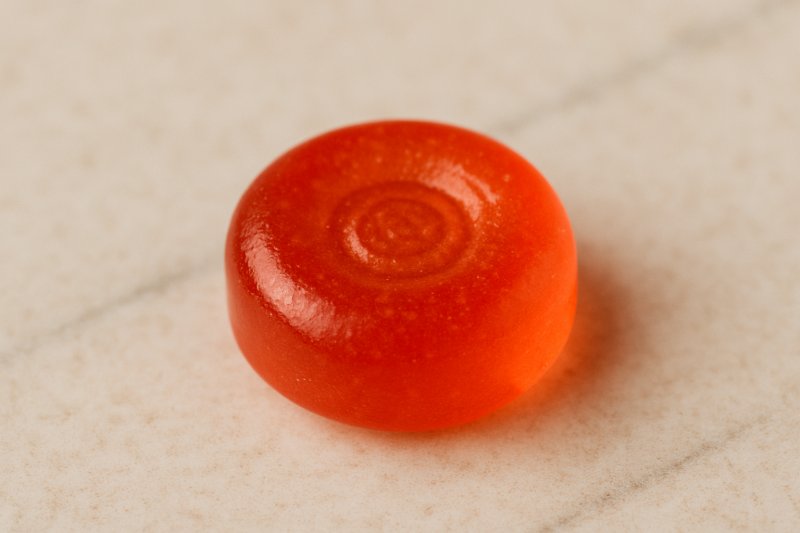
Colorful fruit candies in various colors
I still remember well the first moment I tried a fruit candy that really surprised me: it was at a flea market among stacked cookbooks, and the candy was hidden in a brightly colored paper wrapper. The first bite was a small explosion of sour and sweet that immediately brought back memories of warm summer days and grandma's jam jars. Since then this simple but refined ingredient has never quite left me.

For me the fruit candy is more than just a sweet snack. It is a versatile element in the kitchen and a nostalgic bridge between childhood and the present. I like to use it:

  • as a crunchy garnish on desserts, because it adds surprising texture and clear fruit aromas,
  • in fine pralines as a liquid or solid core,
  • to flavor tea or cocktail bases when you want an intense, concentrated fruit profile.
A colleague of mine was once skeptical when I suggested melting a fruit candy into a vanilla cream. He just laughed — until he tried it and immediately widened his eyes. These small, often underestimated sugar pieces have the power to steer a dish in a new direction, whether fruity caramel notes or a sudden sour kick.

The production of classic fruit candies also fascinates me. The interplay of fruit juice, sugar, glucose syrup and the right cooking temperature requires patience and feeling. On hot afternoons I have stirred for hours with friends, filled jars with colorful candies and laughed until our stomachs hurt. This handcrafted side gives the fruit candy character and makes it, for me, a small culinary work of art.

Of course modern variants with natural flavors, less sugar or vegan gelling agents are long on the market. I like to try new interpretations and exchange tips with other sweet lovers. For me the fruit candy remains a charming, changeable ingredient: practical, nostalgic and surprisingly delicate.

Availability & types

Availability and types

Fruit candies are sweets with fruit flavor that can be bought almost everywhere. They are found in supermarkets, drugstores, kiosks and at many petrol stations. Sometimes they are also available in small shops that sell only sweets, or at markets and fairs. Because they have a long shelf life and do not need refrigeration, they are often placed on shelves next to other sweets.

Origin
Fruit candies do not have a single place of origin – the idea of making sweets with fruit flavor exists in many countries. Large brands often come from countries like Germany, the USA, France or the United Kingdom. Many recipes for fruit candies have been developed over decades: at first they were simple candies with sugar and syrup, later flavors, natural fruit pieces or fruit juices were added. Some candies are manufactured in factories in one country and then exported to many other countries, which is why a candy can look “German” but contain ingredients or flavors from other countries.

Growing regions of the fruits
Even though fruit candies themselves are made in factories, the fruits or fruit juices often come from certain growing regions. Here are a few examples:

  • Citrus fruits (lemon, orange): In countries with warm climates such as Spain, Italy or the USA.
  • Berries (strawberry, raspberry): Often from cooler regions or greenhouses in Europe and North America.
  • Apple: Widely cultivated in Europe, North America and parts of Asia.
  • Tropical fruits (mango, passion fruit): Often come from countries near the equator such as Brazil, India or Thailand.
Some manufacturers use real fruit juice or fruit pulp, others only artificial flavors that taste similar to the real fruit. If the package says “with fruit juice” there is often a portion of real juice in it; if it only says “flavor” then it may be artificial.

Available varieties and variants
Fruit candies come in many shapes and flavours. Here are the main types, simply explained:

  • Hard candies: These are firm and crack or dissolve slowly in the mouth, for example classic fruit lollipops. They are like small colorful stones that last a long time.
  • Soft or chewable candies: These are more gummy and can be chewed, similar to gummy bears but in candy form. Sometimes they contain fruit pieces or juice.
  • Fruit pastilles: Flat candies, often with a mild flavor and sometimes enriched with vitamins, that can be sucked.
  • Fillings: Some candies have a soft filling in the middle, for example with fruit syrup or a sour layer that gives a surprise taste.
  • Sour vs. sweet: There are very sweet variants and extra sour ones that make your face pucker — like when you taste a lemon. Sour candies are very popular with many children.
  • Natural vs. artificial: Some varieties advertise “natural flavours” or “with real fruit juice”, others use artificial flavours, which are often cheaper. Both taste good, but the packaging states what is inside.
  • Sugar-free: For people who want to eat less sugar, there are candies with sweeteners that sweeten but are not real sugars.
In summary: Fruit candies are easy to obtain and there are many different types — from hard to soft, sweet to sour, with real fruit juices or with flavours. The fruits for them come from suitable growing regions worldwide, and the selection in the store is large, so almost everyone can find their favourite flavour.

Details & nutrition

Property Value
Unit g
Average weight per piece 4
Calories per 100 390
Protein per 100 0
Carbohydrates per 100 98
Sugar per 100 70
Fat per 100 0.1
Saturated fat per 100 0.05
Monounsaturated fat 0.02
Polyunsaturated fat 0.03
Fiber per 100 0
Vitamin C (mg) per 100 0
Vitamin D (IU) per 100 0
Calcium (mg) per 100 5
Iron (mg) per 100 0.1
Nutri-Score E
CO₂ footprint 1.2
Origin Industrial production, various countries
Gluten-free Yes
Lactose-free Yes
Nut-free Yes
Vegan Yes
Note Typical hard candy made from sugar and glucose syrup with fruit flavorings and colorings; nutritional values may vary slightly depending on brand and recipe.

Technical & scientific information

Fruit candy denotes a broad category of solid, chewable or suckable confectionery that is flavored to imitate or enhance the taste of fruits. Typically fruit candies are made from a carbohydrate base, acids for flavoring, flavorings for specific fruit profiles, colorants and possibly additional additives such as emulsifiers or coatings. Products vary in structure from glassy hard candies to soft caramel-like variants to jelly-like or chewable fruit gums.

Chemical composition and ingredients

  • The basic matrix of many fruit candies is sucrose or glucose syrup; sucrose provides crystallization properties, while glucose syrup makes the sweet more plastic and less crystalline.
  • Acidulants such as citric acid, malic acid or tartaric acid are used to create the fruity acid profile and to accentuate the taste. Acids also influence the stability of colorants and flavors.
  • Natural or artificial flavorings determine the individual fruit aroma; chemically these are often esters, aldehydes and terpenes, which convey specific odor and taste impressions.
  • Colorants (natural e.g. betanin, anthocyanins; synthetic e.g. tartrazine) give the products an expected visual link to the respective fruit.
  • In soft variants gelling agents such as pectin, gelatine or modified starch are often used to shape texture and mouthfeel.
Nutritional values and caloric density

Fruit candies consist predominantly of carbohydrates and therefore have a high energy density. Per 100 g the calories are typically in the range of 300–400 kcal, with the main portion coming from simple sugars. Proteins and fats are negligible in most confectionery types, except for special variants with nuts or chocolate coating. The fibre content is low in classic candies, but can be moderately increased in pectin-containing products.

Manufacturing processes

  • The most common process for hard candies is cooking a sugar solution to a specific temperature (e.g. 140–150 °C) to achieve the desired water content and create the glassy phase. Afterwards forming and cooling take place.
  • For soft fruit gums the mixture is heated, poured into molds and stored at controlled temperature so that the gelling agent swells and the texture stabilizes.
  • Lubricating or coating processes (e.g. waxing, powdered sugar or cellulose-based coatings) are used to reduce stickiness and to improve shelf life and shine.
Food safety and health aspects

From a nutritional science perspective, fruit candies are concentrated sources of sugar; high consumption increases the risk of tooth decay, overweight and metabolic disorders. Particularly problematic is the prolonged presence of sugar in the mouth with suckable products. Allergens typically play a role only when proteins are added (e.g. gelatine, milk components or nuts). In sensitive individuals synthetic colorants or preservatives can trigger intolerance reactions. For consumers with fructose malabsorption, products with a high fructose content can cause digestive complaints.

Storage, labelling and regulatory aspects

Fruit candies should be stored dry and cool, as moisture negatively affects texture and can promote crystallization or microbial spoilage. Labelling requirements demand the declaration of ingredients, allergenic substances and nutritional information; when flavourings are used it must be stated whether natural or identical substances are applied. Legal maximum levels for certain additives and colourants are set depending on the jurisdiction.

Overall, fruit candies are technologically mature products that can be varied in taste and texture through targeted selection of sugar types, acids, flavorings and gelling agents. Their appeal to consumers lies in intense fruit flavors and long shelf life, while their health profile suggests moderate consumption.

Wiki entry for: fruit candy
Active now: 18 visitors of which 2 logged-in members in the last 5 minutes