Availability and types
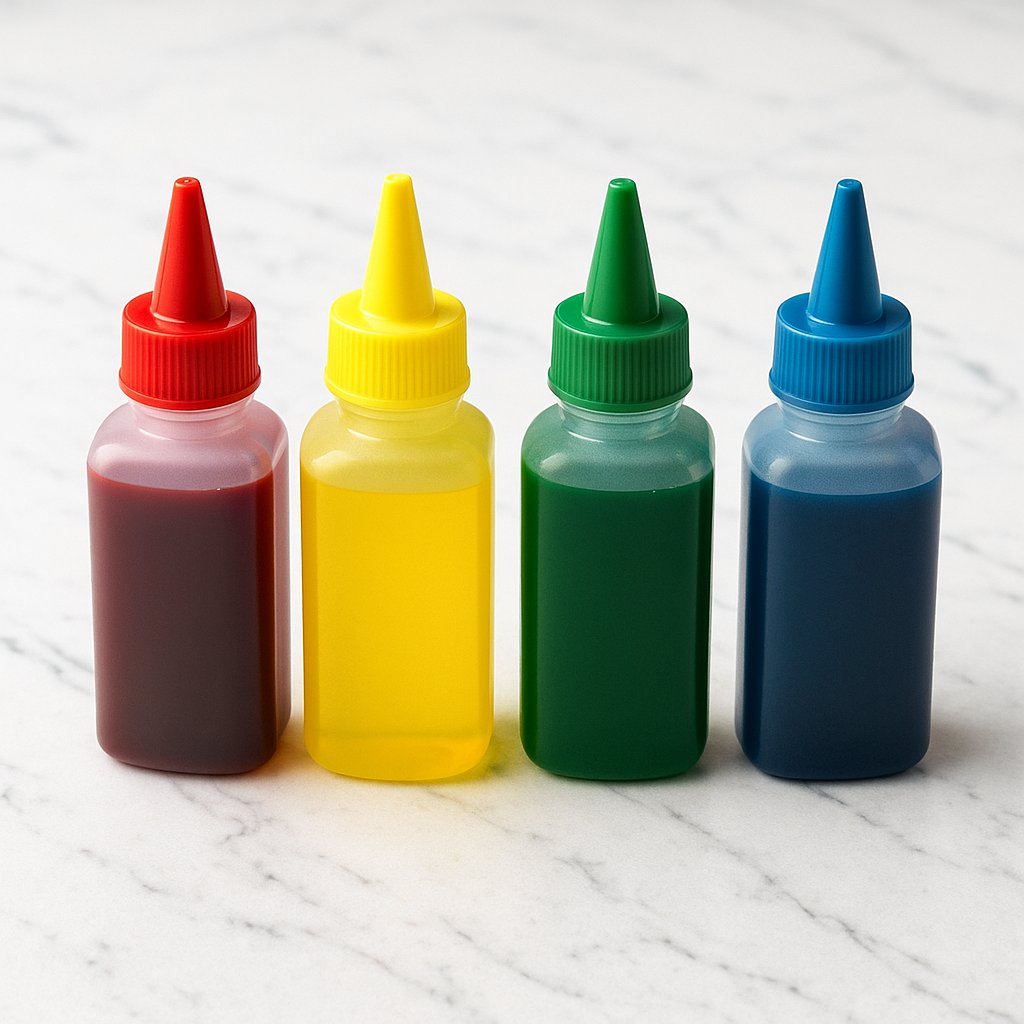
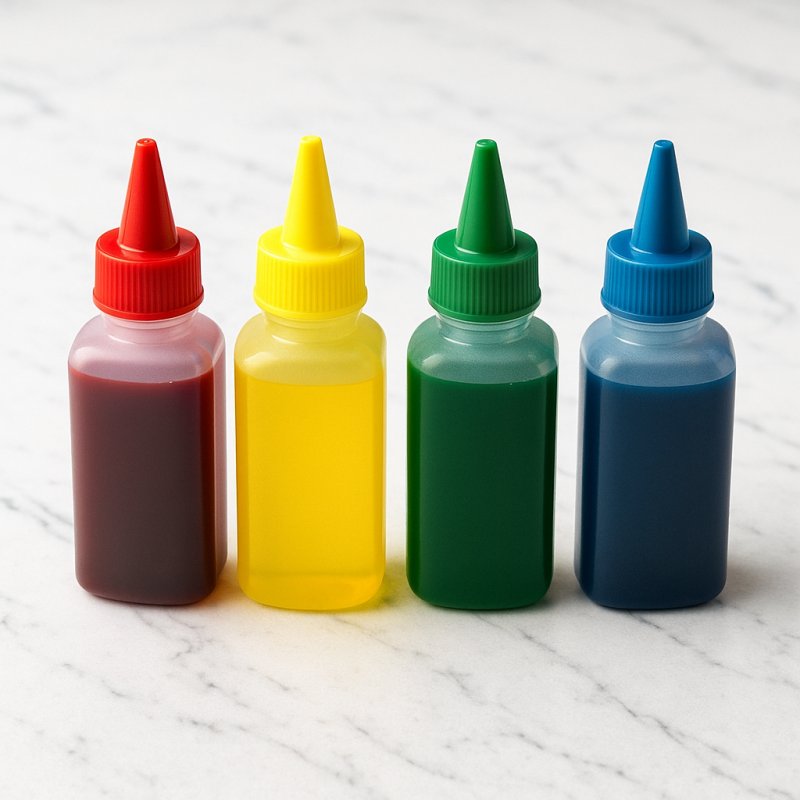
Food coloring is an ingredient that gives color to foods – for example cakes, cotton candy or ice cream. It comes in many variants and from very different places of origin. You can buy food coloring in the supermarket, in the baking shop or online. Some packages are small and enough for a few muffins, others are large and intended for bakeries. If you bake at home, you will usually find gel, liquid or powdered colors. For industry there are even more concentrated pastes and powders that are very economical.
Where do the colors come from?
There are two main sources: natural and artificial colors.
- Natural colors: These are obtained from plants, fruits, algae or even insects. Examples are beetroot (for red), turmeric root (for yellow), spirulina (an alga for blue/green) and annatto (a seed color from tropical plants, often orange). These raw materials grow in specific places: turmeric is widely cultivated in India, beetroot rather in temperate regions like Europe, annatto originally comes from Central and South America, and spirulina is farmed in warm, sunny lakes or ponds in Asia and Africa.
- Artificial colors: These are manufactured in factories and are very uniform in color. They are often cheaper and glow more brightly. These colors are produced in many countries, for example in Europe, China or the USA. They are not made from plants but chemically produced to be safe and stable.
What forms are there?
Food coloring comes in different "forms" depending on what you need it for:
Food coloring comes in different "forms" depending on what you need it for:
- Liquid: Easy to mix, good for thin batters or drinks. Like water, but with color.
- Gel: Thick, very popular in baking. One drop is often enough, and the color spreads well in icing.
- Powder: Dry and economical. Good for chocolate or sugar because it does not dilute.
- Pastes/Concentrates: Very intense, used by professionals. A small amount is enough, like a droplet of color in concentrated form.
Special variants and notes
Some colors are specially made for children because they are mild and have no unpleasant odors. Others are for professionals and very strong. With natural colors the shade can vary somewhat depending on the season or harvest – that's normal, like apples being different sizes. There are also colors that come from animals, for example carmine from cochineal insects. Such colors are not suitable for everyone (for example vegetarians or people with certain religious rules).
Some colors are specially made for children because they are mild and have no unpleasant odors. Others are for professionals and very strong. With natural colors the shade can vary somewhat depending on the season or harvest – that's normal, like apples being different sizes. There are also colors that come from animals, for example carmine from cochineal insects. Such colors are not suitable for everyone (for example vegetarians or people with certain religious rules).
Finally it is important: the packaging states what is inside. Look for words like natural, artificial, or ingredient lists. That way you know whether the color comes from plants, algae, insects or a factory. In this way you find the right food coloring for your project – whether you want to bake a rainbow cake or colorful cookies.