Availability and types
Food coloring is something you can find in many stores and is used to make food more colorful and appealing. There are different types of food coloring, and they are not all the same. Some are manufactured artificially, others come from plants or other natural sources. This makes them different in appearance, taste and behavior during cooking.
Where does food coloring come from?
Some colors are produced in a laboratory from chemicals. These are called artificial colorants. They are often very intense and stable, even when food is baked or frozen. Other colors come from nature: from plants, fruits, vegetables or even certain animals. Examples are beetroot juice for red, turmeric for yellow or spirulina (a type of algae) for blue-green. Natural colors can sometimes be weaker and change colour when heated.
Some colors are produced in a laboratory from chemicals. These are called artificial colorants. They are often very intense and stable, even when food is baked or frozen. Other colors come from nature: from plants, fruits, vegetables or even certain animals. Examples are beetroot juice for red, turmeric for yellow or spirulina (a type of algae) for blue-green. Natural colors can sometimes be weaker and change colour when heated.
Growing regions and places of origin
Natural colorants come from different regions of the world depending on which plant is used. Here are some examples:
Natural colorants come from different regions of the world depending on which plant is used. Here are some examples:
- Beetroot: Grows in many parts of Europe and North America. Farmers grow it in fields, and juice or powder is made from it for colouring.
- Turmeric: This yellow root originally comes from India and Southeast Asia. It is cultivated in many countries because it prefers warm climates.
- Red colorants from cochineal: These are tiny insects that live on cacti. They are collected mainly in parts of Latin America. They produce a strong red (in some products labeled as E120).
- Spirulina and other algae: These grow in lakes or specialized farms in warm countries and provide blue to green shades.
- Berries, grapes, carrots: Many fruits and vegetables can be grown locally, so the origin is often close to the point of sale.
Available forms and variants
In the store you will find food coloring in several forms. Each form has advantages and disadvantages, similar to different tools for different tasks.
In the store you will find food coloring in several forms. Each form has advantages and disadvantages, similar to different tools for different tasks.
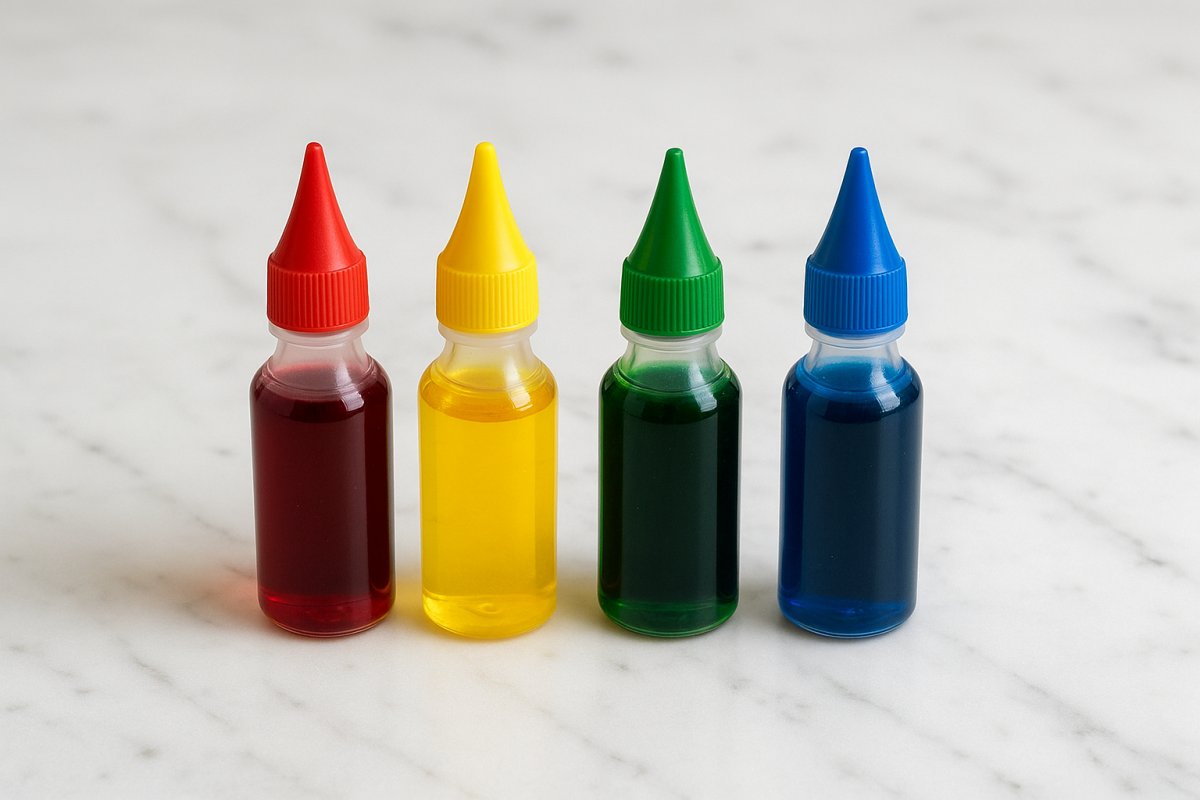
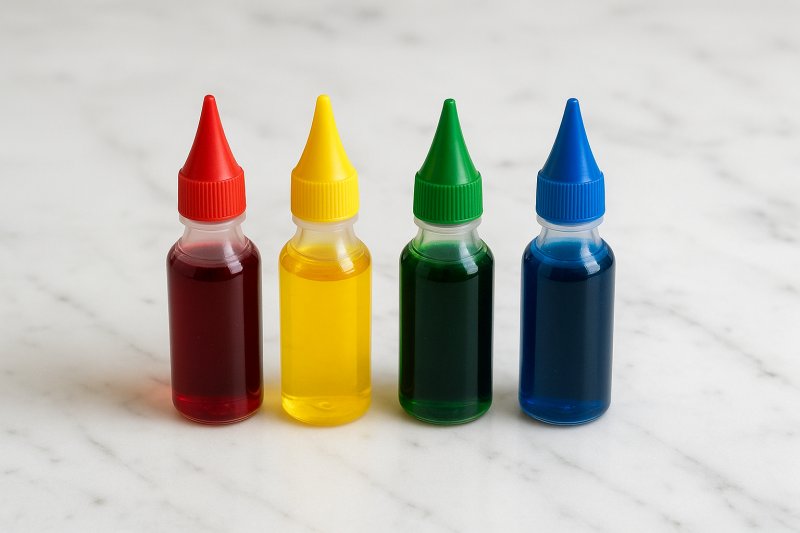
- Liquid colors: They come in small bottles. You add them to food with a dropper. They are easy to use but sometimes too runny for thick doughs.
- Gels: These are thicker and very suitable for doughs or frosting (icing). They color intensely and only a small amount is needed.
- Powders: Dry colors are practical because they have a long shelf life and fit well into dry mixes. They can be reconstituted with water.
- Natural colors: These can be liquid, gel or powdered. They are made from plants, fruits or algae and are often a good choice if you want to avoid artificial substances.
- Artificial colors: Usually very intense and inexpensive. They are also available in liquid or powder form and change little during baking.
How to find the right color?
If you want to buy color, first think about what you need it for: cookies, cakes, drinks or confectionery? For frozen ice cream you might need a different form than for a dry dough. Check the packaging to see if the color is suitable for baking and whether it is natural or artificial. Some people also pay attention to allergies or prefer only plant-based products.
If you want to buy color, first think about what you need it for: cookies, cakes, drinks or confectionery? For frozen ice cream you might need a different form than for a dry dough. Check the packaging to see if the color is suitable for baking and whether it is natural or artificial. Some people also pay attention to allergies or prefer only plant-based products.
Overall, food colorings are widely available: in supermarkets, drugstores, baking shops and online. You can choose from many variants — from natural plant colors to strong artificial dyes — and thus find the right product for your baking or cooking project.