Menu & categories

Flour Type 1050

Robust wheat flour with a higher mineral content for hearty baked goods

Wiki about type 1050 flour Nutri-Score C Vegan Yes Gluten-free No Lactose-free Yes Nut-free Yes
NUTRITION / 100 g
340 kcal 11.0 g Protein 69.0 g Kohlenhydrate 1.5 g Fett

Introduction

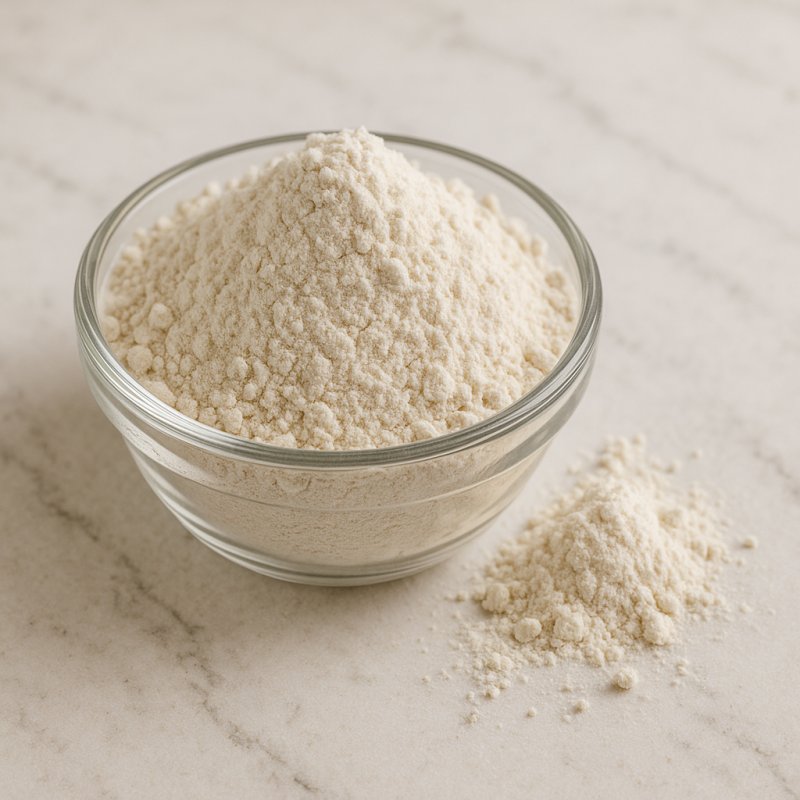
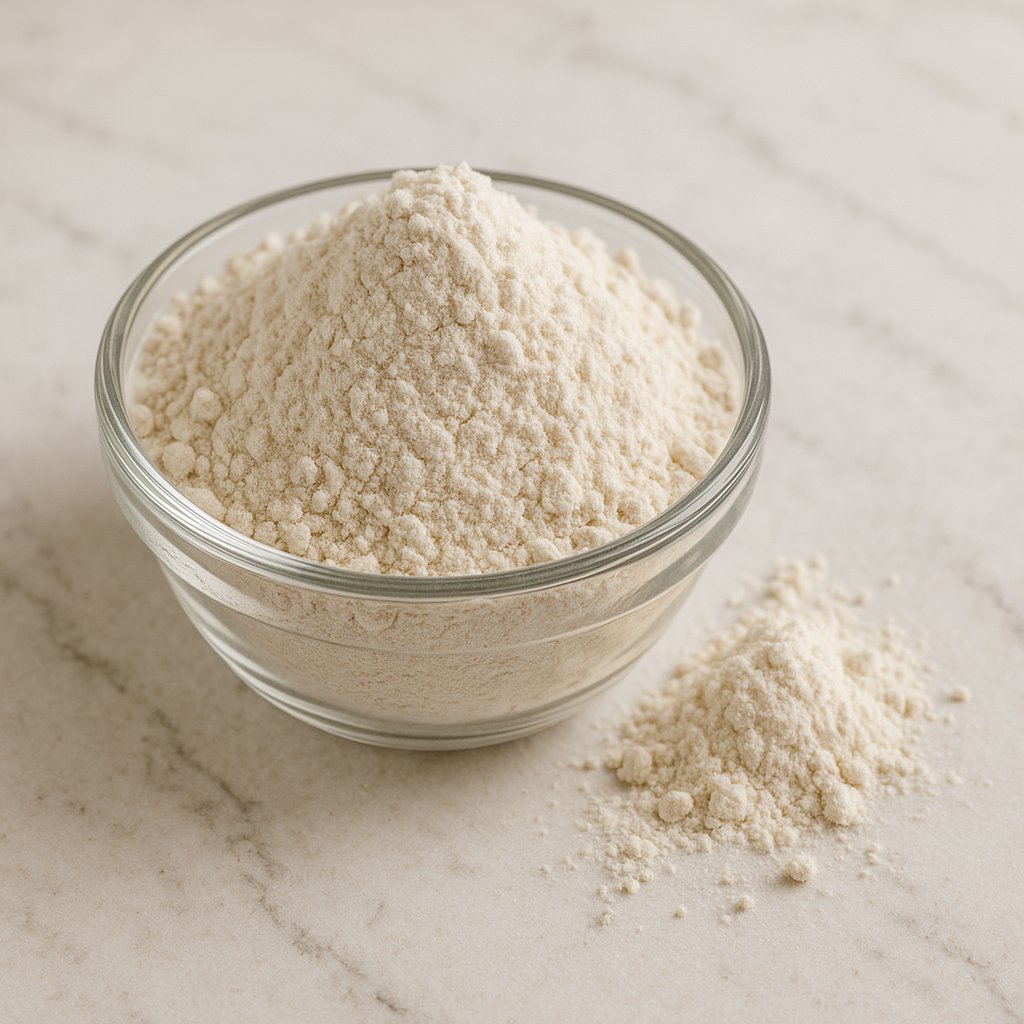
Type 1050 flour in a bowl with some flour on the work surface
I still remember clearly the first scent that drew me into a warm baking experience: slightly nutty, malty, simply homely. That was Type 1050 flour, which one morning I unpacked in my kitchen out of curiosity. Since then it has become a faithful companion because it offers a wonderful balance between the rustic character of wholegrain and the fineness of lighter varieties.

Type 1050 stands for a slightly higher extraction rate than classic wheat flour Type 405. For me that means: more bran content, more minerals and a flavor that is not so restrained. In my recipes I like to use it when I bake bread that should have both a crust and a soft interior. A friend once brought a homemade ciabatta — it was crispy on the outside and moist inside, and the Type 1050 flour gave the bread that pleasant depth without making it heavy.

Practical advantages I often highlight:

  • Versatility: Well suited for breads, rolls, rustic cakes and savory doughs.
  • Flavor: More aroma than very light flours, with a slight malty note.
  • Baking properties: It has enough gluten protein to develop a good dough structure, while remaining more forgiving than pure Type 550.
I enjoy trying combinations: I often mix 1050 with a portion of Type 405 to combine fineness and bite. Once an elderly woman in a small village showed me how a simple potato dough suddenly gains more character with 1050; since then I'm a fan of such small tricks that immediately enhance the result.

For anyone who wants to experiment with flour, Type 1050 is a great entry into the world of heartier flours. It gives baked goods substance without dominating them and turns baking into a little journey of discovery. For the next recipe I recommend: be bold and knead in some 1050 — the result often surprises in a positive way.

Availability & types

Availability and types of Type 1050 flour

Type 1050 flour is a widely available flour variety in Germany and Europe. The name gives an indication of how much bran and germ are still present in the flour: the number 1050 stands for the mineral content, that is how much “residue” of the original grain kernels remains in the flour. This makes Type 1050 darker and more substantial than very light flours like Type 405. You can imagine it this way: when you mill grain, higher numbers mean more of the outer hull remains — the flour then has a stronger flavor and more nutrients.

Origin and growing regions
Type 1050 flour is usually made from wheat. Wheat is grown in many parts of the world, but especially large growing areas are found in Europe: Germany, France, Poland and Russia are among the important countries. Large quantities are also grown in North America (USA, Canada) and in parts of South America and Australia. Within Germany the kernels often come from regions with fertile soils, for example in northern Germany, parts of Lower Saxony, North Rhine-Westphalia or the Palatinate. Weather, soil and field management influence how good the harvest is — just like for fruits and vegetables.

Available varieties and variants
Type 1050 is not a single strict variety like a specific apple, but a category. Nevertheless there are differences you can easily notice:

  • Regional or supraregional: Some millers offer flour made from locally grown grain. This is similar to buying rolls from a baker made with flour from local farmers. Other flours come from across Europe or the world.
  • Organic or conventional: Organic flour comes from fields where synthetic pesticides or fertilizers are not used. Conventional flour comes from fields managed with modern methods. Organic flour may be important for people who value environmentally friendly farming.
  • Whole grain vs. blended: Some packages contain pure wheat Type 1050, others are blends with spelt or rye admixtures. Such blends change flavor and baking properties — similar to mixing chocolate with nuts.
  • Fineness and milling: Even if the type number is the same, millers grind the flour to different fineness. Finer flour feels softer and can sometimes be easier to work with; coarser flour contains more small particles of the bran.
Where can you buy it?
Type 1050 flour is available in supermarkets, health food stores, natural food shops and directly from the miller or baker. Online shops and farm stores often offer special variants, such as regional or organic flour. Hobby bakers should check the label: it will state whether the flour comes from Germany or abroad, whether it is organic and whether there are special notes (e.g. stone-ground).

Why this selection matters
The different types and variants help to find the right flour for a recipe. Type 1050 is well suited for hearty breads, rolls and baked goods with a strong flavor. If a recipe calls for a dark country loaf, Type 1050 is often a better choice than very light flour. Those who like to experiment can try different types and compare them — much like tasting different ice cream flavors until you find your favorite.
Details & nutrition

Property Value
Unit g
Calories per 100 340
Protein per 100 11.0
Carbohydrates per 100 69.0
Sugar per 100 1.0
Fat per 100 1.5
Saturated fat per 100 0.3
Monounsaturated fat 0.2
Polyunsaturated fat 0.8
Fiber per 100 4.0
Vitamin C (mg) per 100 0
Vitamin D (IU) per 100 0
Calcium (mg) per 100 20
Iron (mg) per 100 1.2
Nutri-Score C
CO₂ footprint 0.6
Origin Typically from Europe, exact origin depends on the manufacturer
Gluten-free No
Lactose-free Yes
Nut-free Yes
Vegan Yes
Note Nutritional values may vary slightly by manufacturer; Type 1050 flour is a wheat flour with a higher mineral content than Type 405 and is especially suitable for breads and hearty baked goods.

Technical & scientific information

Type 1050 flour is a common designation in Central Europe for wheat flour, where the figure 1050 indicates the mineral content in milligrams per 100 grams of flour according to the German analysis method. Compared with refined flours with a lower type number, Type 1050 contains a higher proportion of bran and germ components, which affects color, nutrient content, processing and baking properties. It is mainly used for hearty breads, rolls and mixed breads because it offers a balanced combination of baking performance and flavor.

Chemical composition and ingredients
Type 1050 flour consists primarily of the starchy endosperm of the wheat kernel, but compared with Type 405 or 550 it contains more minerals, fiber and secondary plant compounds. Key components are:

  • Carbohydrates: Predominantly starch (amylose and amylopectin), which shows gelling and swelling properties during baking and dough maturation.
  • Proteins: Mainly storage proteins (gliadins and glutenins), which during kneading form the gluten network and are responsible for dough elasticity and gas retention. Total protein content typically ranges between 10 and 13%.
  • Minerals: As the type number increases, ash content rises; relevant minerals include potassium, magnesium, phosphorus and traces of iron and zinc.
  • Fiber: Mainly indigestible cell wall components such as arabinoxylans and cellulose increase, which can support intestinal health.
  • Fats: Small amounts of lipids from the germ, which are more prone to oxidation than in refined flour.
  • Vitamins and secondary plant compounds: Traces of B vitamins (e.g. thiamine, niacin) and secondary plant compounds such as phenolics are more present in less refined or higher-type flours.
Nutrition values (typical per 100 g)
Exact values vary with production methods and grain quality. A rough guideline is: energy 1400–1600 kJ (330–380 kcal), carbohydrates 60–70 g, proteins 10–13 g, fat 1.5–2.5 g, fiber 3–5 g, ash/minerals approx. 1.0–1.1 g.

Manufacturing and processing methods
Type 1050 is produced by controlled milling and sieving of the wheat kernel. The milling process roughly separates endosperm, germ and bran parts; in Type 1050 a portion of the outer layers is intentionally retained, increasing ash content. Modern roller or stone mills determine particle fineness and distribution. In dough preparation, 1050 flour influences hydration rate, gluten development and sourdough activity: because of higher fiber and bran residues the dough typically requires a bit more water and longer maturation times, but it responds robustly to extended proofs and delivers a more intense flavor.

Baking-technical properties
The protein composition ensures sufficient gluten formation, supporting structure and volume of breads. Compared to lower types, Type 1050 produces a denser, more aromatic crumb with a stronger crust and good crumb moisture. It is suitable for:

  • Rustic breads and mixed breads
  • Rolls with a pronounced crust
  • Sourdough breads, since the lower starch availability and higher bran content support acid tolerance
Health aspects
Type 1050 flour offers nutritional advantages over highly refined flours due to higher fiber and micronutrient content. Fibers support intestinal peristalsis and can moderate the post-meal rise in blood glucose. However, the higher amount of unrefined components also brings more phytic acid, which can reduce mineral bioavailability; longer dough rest, fermentation or germination reduce phytate content and improve nutrient availability. For people with celiac disease or non-celiac gluten sensitivity, Type 1050, like any wheat flour, is unsuitable.

Storage and quality
Storage in a cool, dry place in airtight packaging minimizes oxidation of lipids from the germ and contamination. Freshness and smell are indicators of quality; a rancid odor indicates fat breakdown. Microbiological risks are low in dry, hygienically processed flours.

In summary, Type 1050 flour is a versatile, technically balanced wheat flour with an increased bran fraction, positioned between light refined flours and wholemeal flour. It combines good baking properties with a higher content of fiber and minerals and is particularly suitable for hearty breads and long-fermented doughs, while fermentative processes further enhance its nutritional advantages.

Wiki entry for: type 1050 flour
Active now: 18 visitors of which 2 logged-in members in the last 5 minutes