Menu & categories

Fish stock

Aromatic broth made from fish carcasses and vegetables

Wiki about fish stock Nutri-Score A Vegan No Gluten-free Yes Lactose-free Yes Nut-free Yes
NUTRITION / 100 ml
20 kcal 3.0 g Protein 0.5 g Kohlenhydrate 0.5 g Fett

Introduction

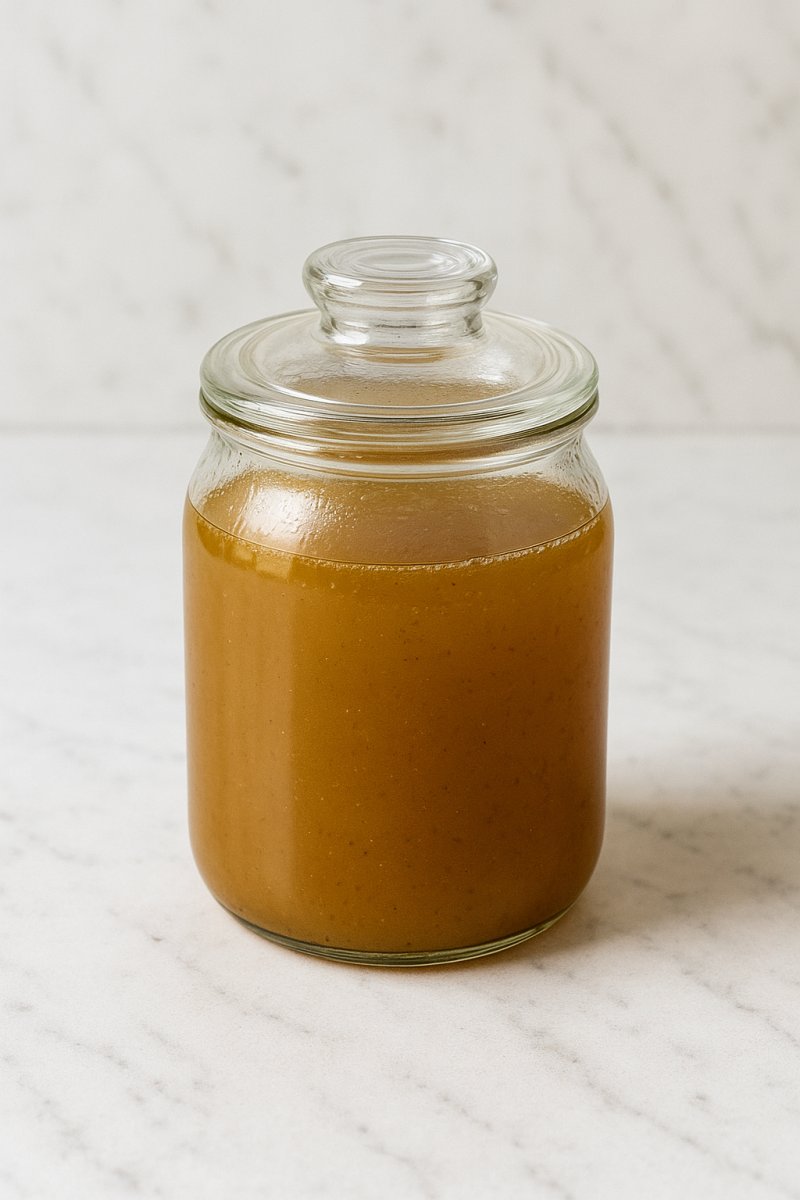
Clear fish stock in a pot with pieces of vegetables
I still remember well the first fish stock I made myself: a rainy Saturday, me with wet shoes in a small kitchen and a pot that smelled as if the sea had just announced a visit. Since then fish stock for me is much more than mere broth – it is the foundation for dishes that bring warmth, depth and a piece of the coast to the plate.

Fish stock is made from the leftovers of fish and shellfish, vegetables and aromatic herbs. When I cook it I pay attention to few but good ingredients: clear flavors, no overload. A head of white fish, bones, shelled shrimp and celery, leek and parsley stems are often enough. Briefly brought to a boil and then gently simmered, this yields a broth that works both for simple soups and refined sauces.

I've learned that time and patience are decisive. At a dinner with friends time once slipped away; the stock was cooked too hastily and tasted flat. Since then I prefer to let it simmer slowly. That way the bones release their gelatin and the flavors combine into a rounded, full-bodied fond. Skimming is also essential: I take the few minutes needed to clarify the surface.

I especially love the practical advantages:

  • Versatility: Fish stock suits soups, risottos, sauces and seafood pans.
  • Resource saving: Much of what would otherwise be thrown away gets new life.
  • Depth of flavor: Even simple ingredients benefit from the intensity of the fond.
A colleague of mine swears by stirring a tablespoon of fish stock into his tomato sauce – it supposedly works like magic. Magic or not, I can confirm: the umami boost is undeniable. A small tip from my kitchen: lemon zest or a splash of white wine bring freshness without covering the base note.

If there are leftovers I freeze the stock in portions. An ice cube tray is ideal for this: that way I always have a piece of the sea on hand when the kitchen calls for a quick but honest flavor hit. Fish stock for me is therefore not just technique but also a small, everyday cooking philosophy – an invitation to make something good out of what you have.

Availability & types

Availability and types

Fish stock is a liquid produced by cooking fish bones, fish scraps or whole fish pieces with water and sometimes vegetables and spices. You can think of fish stock like a broth, similar to chicken or vegetable broth, but with the taste of fish. It is important in many cuisines around the world because it gives depth and flavor to soups, sauces and stews.

Origin
Fish stock originates where people catch or farm a lot of fish. These are regions by seas, rivers and lakes. In countries with long coastal cultures like Japan, Norway or Spain fish stock has long been part of traditional dishes. In the past all parts of the fish were used – nothing was wasted. From fish bones and heads people cooked stock that made meals tastier. Today both fishermen and food businesses and kitchens produce the stock, sometimes fresh at home, sometimes bottled and sold in factories.

Fishing and farming areas
Because fish stock comes from fish, its availability depends on the places where fish are caught or farmed. Important fishing areas include:

  • Coastal regions: Many different fish species are caught along sea coasts and processed into stock.
  • Fjord and island areas: Places like Norway or Japan have long traditions of fish-based broths.
  • Lakes and rivers: Inland waters also supply fish from which stock is made.
  • Fish farms (aquaculture): More and more fish come from farms; remains from there can also be processed into stock.
You can say: Where there is a lot of fish, there is also a lot of fish stock.

Available kinds and variants
Fish stock comes in many different forms. Here is a simple overview to help understand the differences:

  • Fresh homemade fish stock: Made at home from fish bones, heads and water. Vegetables like onions, carrots or celery are often added. It tastes fresh and intense.
  • Bought broth or fond: Supermarkets sell ready-made fish fond in cans, jars or as a concentrated seasoning. This is practical because it can be used quickly.
  • Liquid concentrate: Sometimes the stock is heavily reduced and sold in small bottles. A little of it is enough to give a lot of flavor.
  • Dry seasoning powder or instant: This variant is a powder that is mixed with water. It has a long shelf life and is easy to store.
  • Fish stock from different fish species: The flavor depends on the fish used. From white fish like cod comes a mild stock, from oily fish like salmon or mackerel a stronger stock.
  • Mixed fonds: Sometimes fish stock is combined with seafood or crustaceans – then it is called for example “seafood fond” and has a more complex flavor.
Where to find it and how to use it
Fish stock is available in supermarkets, delicatessens or online. Freshly made is best, but ready-made products are convenient when you need to be quick. When shopping you can look for labels like “for fish soups” or “fish fond”. For children it is like seasoning: a good fish stock makes a soup as aromatic as a good apple pie with cinnamon.

Overall fish stock is very versatile: it comes from places with lots of fish, can be cooked at home or bought and is available in many variants depending on whether you want a strong or mild flavor. This makes it a valuable ingredient in the kitchen.
Details & nutrition

Property Value
Unit ml
Calories per 100 20
Protein per 100 3.0
Carbohydrates per 100 0.5
Sugar per 100 0.5
Fat per 100 0.5
Saturated fat per 100 0.1
Monounsaturated fat 0.1
Polyunsaturated fat 0.2
Fiber per 100 0
Vitamin C (mg) per 100 1
Vitamin D (IU) per 100 20
Calcium (mg) per 100 15
Iron (mg) per 100 0.2
Nutri-Score A
CO₂ footprint 0.25
Origin Varies depending on the fish species used and the region
Gluten-free Yes
Lactose-free Yes
Nut-free Yes
Vegan No
Note Nutritional values refer to clear, homemade fish stock made from fish carcasses, water, vegetables and seasonings without added fats or cream. Actual values may vary slightly depending on the recipe and degree of reduction.

Technical & scientific information

Fish stock is a clear to slightly cloudy liquid produced by boiling fish scraps, fish bones, heads and other fish material in water. It serves in the kitchen as a flavor-carrying base for soups, sauces and fonds and is at the same time a food with a characteristic chemical composition. The organoleptic properties of fish stock — umami, sea aroma and mild bitterness — result from dissolved amino acids, peptides, nucleotides and water-soluble lipids.

Production and processing methods
Typical production processes for fish stock include blanching or cold extraction of the fish parts, followed by longer simmering at low to medium temperature. Finer stocks are often obtained by brief boiling (10–30 minutes) to achieve a clear flavor without strong extraction of turbidity; stronger fonds require longer simmering (up to several hours). Aromatic vegetable components such as onions, leek, carrots and celery as well as spices (bay leaf, peppercorns, fennel) are frequently added during preparation. Modern industrial methods additionally use controlled extraction, filtration, centrifugation and pasteurization to increase shelf life and microbiological safety.

Chemical composition and constituents
Fish stock is predominantly water but contains a variety of dissolved substances that determine flavor and nutritional value. Important components include:

  • Amino acids, notably glutamate, which plays a major role in umami taste.
  • Peptides, formed from protein breakdown of fish tissues and contributing to mouthfeel.
  • Nucleotides such as inosine monophosphate (IMP), which synergize with glutamate to enhance savory taste.
  • Water-soluble vitamins (e.g. B vitamins) in small amounts and some minerals such as potassium, sodium, phosphorus and traces of iodine, depending on the fish species.
  • Dissolved lipids and fatty acids, including long-chain omega‑3 fatty acids (EPA, DHA) at low concentrations, which are extracted less in short extractions than in fattier fonds.
  • Gelatin-like substances, released from collagen in bones and skin during prolonged cooking, which give the stock body and viscosity.
Nutritional values and nutritional aspects
Nutritionally, a typical fish stock provides relatively few calories per 100 ml because it is mostly water; the protein and fat content is moderate to low, depending on concentration and raw materials used. The amino acids and minerals present contribute to nutrient density, while the content of omega‑3 fatty acids is usually too low to consider it a primary source. However, the addition of salt can significantly increase sodium content, which should be taken into account from a nutritional perspective.

Food safety and shelf life
Fish stock is susceptible to microbial spoilage. Rapid cooling and storage at ≤4 °C as well as pasteurizing or sterilizing treatments in industry reduce risks. Sensitive components such as omega‑3 fatty acids can oxidatively spoil, so airtight packaging and low storage temperatures are important. Filtration, clarification and occasionally additives for stabilization are frequently used in processing.

Sensory properties and culinary application
Sensorially, fish stock is assessed by intensity, clarity and type of sea aroma. Light white-fish stocks are delicate and suitable for fine soups and sauces, while robust fonds from fatty or oily fish provide more intense base flavors for stews and ragouts. The combination of stock with acids, fats and spices influences the release and perception of the soluble flavor components.

In summary, fish stock is a complex, water-based aroma extract with biologically active constituents that has both culinary value and nutritional relevance. Production technique, raw materials used and storage largely determine the chemical composition, sensory quality and food safety of the final product.

Wiki entry for: fish stock
Active now: 17 visitors of which 2 logged-in members in the last 5 minutes