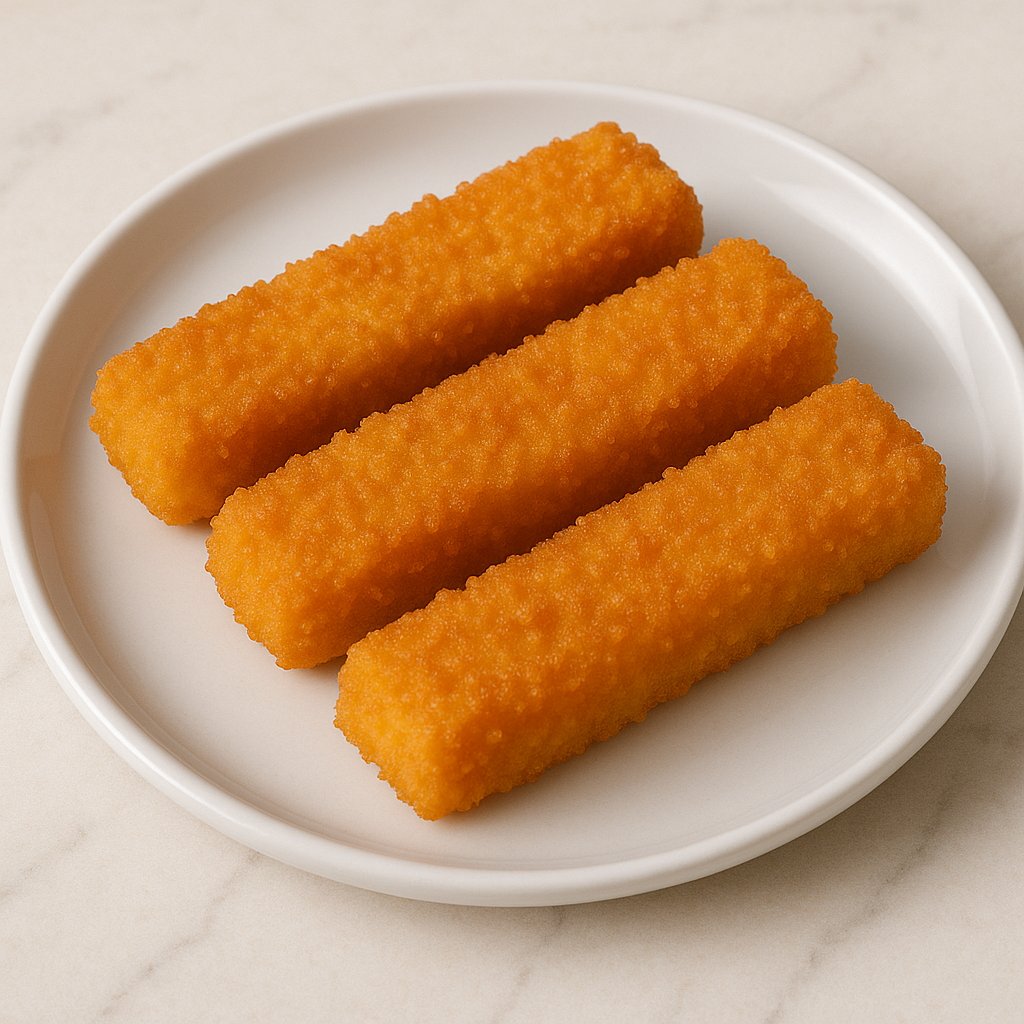
Availability and types of fish sticks
Fish sticks are easy to find in many supermarkets and even in some smaller shops. They are part of the frozen food section, meaning they are sold frozen to keep them fresh for longer. You will usually find them in the freezer next to the fries and other ready meals. In some large stores there are even multiple shelves with different brands and variants – from cheap own‑label products to more expensive options.
Origin
Fish sticks are made from fish fillet that is breaded and pre‑baked or pre‑fried. The fish used often comes from various seas or fish farms. Common species include cod, pangasius and pollock (sometimes called Alaska pollock). Cod lives in cold seas such as the Atlantic, pangasius typically comes from large river farms in Southeast Asia, and pollock is often caught in the North Atlantic or the North Pacific. Packaging often states the country of origin of the fish or whether it comes from a farm.
Fish sticks are made from fish fillet that is breaded and pre‑baked or pre‑fried. The fish used often comes from various seas or fish farms. Common species include cod, pangasius and pollock (sometimes called Alaska pollock). Cod lives in cold seas such as the Atlantic, pangasius typically comes from large river farms in Southeast Asia, and pollock is often caught in the North Atlantic or the North Pacific. Packaging often states the country of origin of the fish or whether it comes from a farm.
Fishing and farming areas
To help a child imagine it: fish are either caught in the wild or raised in “water farms”, similar to chickens on a farm, but in water. Important fishing and farming areas are:
To help a child imagine it: fish are either caught in the wild or raised in “water farms”, similar to chickens on a farm, but in water. Important fishing and farming areas are:
- North Atlantic and the North Sea: much cod and pollock come from here.
- North Pacific: pollock and other marine fish are also caught here.
- Southeast Asia: pangasius often comes from large farms here.
Some manufacturers also indicate on the package which fishing method was used (for example netting or trawling). This is important because different methods can have different effects on fish and the sea.
Available types and variants
Fish sticks come in many different versions. Here are some common variants, explained simply:
Fish sticks come in many different versions. Here are some common variants, explained simply:
- Classic fish sticks: these are the normal, usually breaded sticks with white fish flesh. They are crispy outside and soft inside.
- With wholegrain coating: these have a coating made from wholegrain crumbs, i.e. from healthier bread that contains more fibre. They often taste a little nuttier.
- Without coating (fillets): some prefer just the fish fillet, simply seasoned and frozen, without a crispy shell.
- With special coatings: there are variants with herbs, with cheese or even with cornflake or coconut coatings, which taste different and are crispy.
- For children or mini portions: smaller fish sticks or special packs for children are often available, usually with milder seasoning.
- Vegetarian or vegan alternatives: these look like fish sticks but are made from plant‑based ingredients (for example pea or soy protein) and taste similar while being fish‑free.
Buying tips
On the packaging you can often see which fish was used and where it comes from. Some packs also carry labels for sustainable fishing; such labels indicate that fishing or farming practices took environmental concerns into account. If you want to try something, taste different brands or varieties to discover which you like best.
On the packaging you can often see which fish was used and where it comes from. Some packs also carry labels for sustainable fishing; such labels indicate that fishing or farming practices took environmental concerns into account. If you want to try something, taste different brands or varieties to discover which you like best.
Overall, fish sticks are therefore very easy to obtain and there are many different types – from classic to vegetarian variants – so there is something for many tastes and needs.