Menu & categories

Feta

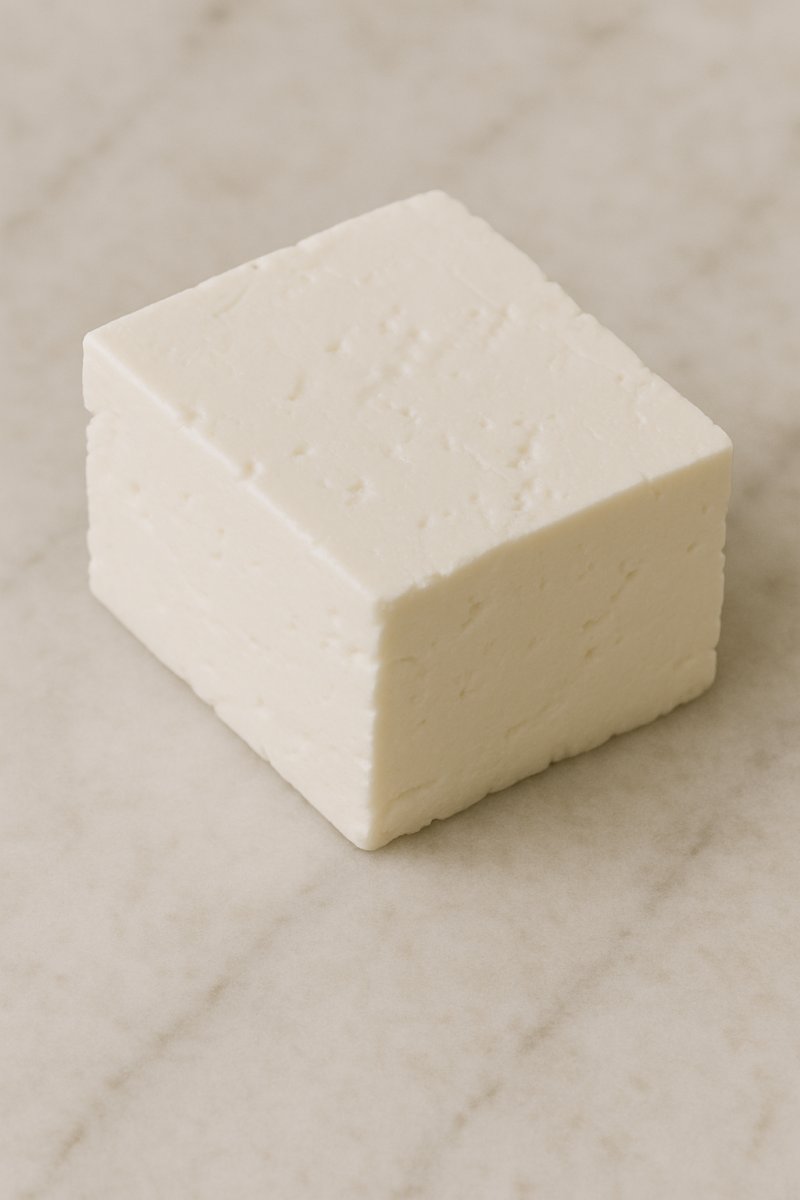
Greek brined cheese made from sheep's and goat's milk

Wiki about feta Nutri-Score D Vegan No Gluten-free Yes Lactose-free No Nut-free Yes
NUTRITION / 100 g
265 kcal 14.0 g Protein 1.5 g Kohlenhydrate 21.0 g Fett

Introduction

Cubes of feta cheese on a wooden board
I have a special relationship with feta, that crumbly, salty delight that appears in my fridge as reliably as sunscreen in summer. I still remember my first holiday in Greece: a small breakfast terrace café, olive trees, the sea in the distance and a plate of tomatoes, cucumbers and generously crumbled feta. The taste was so direct and honest that I thought cheese could only be like that.

Feta is not a single product, but an interplay of tradition, region and craft skill. Originally made from sheep's and goat's milk, it has a remarkable range of textures: from creamy-soft to crumbly and firm. I learned that the milk source and the degree of aging change everything. A friend who once held his own little cheese tasting had us compare different fetas in turn – an instructive and delicious evening that showed me how nuanced this cheese can be.

In my kitchen feta is a versatile partner. It gives salads structure, elevates roasted vegetables and as a filling in puff pastry pieces provides the ultimate crunch. Sometimes I mix it with freshly chopped herbs, a little lemon zest and olive oil and have a dip for guests in no time. A colleague of mine jokingly called this mixture "instant summer", and the term stuck.

When shopping I pay attention to origin and ingredients. A good feta smells slightly tangy, tastes salty but balanced, and falls apart to the touch into nice, irregular pieces. I avoid products with overly long ingredient lists or unnecessary additives. For special dishes I like to invest in an artisan sheep's-milk feta, which simply has more character.

Feta tells stories of landscapes, of simple farms and of centuries-old recipes. It is uncomplicated, but never boring. When I have guests I rarely put together a big menu; often a plate with warm bread, preserved tomatoes, olives and feta is enough. The conversations then last longer, the meal remains memorable, and I think again of that terrace by the sea where it all began.

Availability & types

Availability and types of feta

Feta is a white, crumbly cheese that many people enjoy. It originally comes from Greece, where it has been produced for a long time. Traditionally feta is made from sheep's milk or a mix of sheep's and goat's milk. In countries outside Greece there are also variants made from cow's milk. If you imagine feta like different kinds of apples — some are sweet, some are tart — these differences help you choose the right feta for your dish.

Origin and production areas
The best-known feta comes from Greece. In certain regions there the cheese has the right to be called "Feta" because it is made according to traditional recipes and with certain ingredients. This protected designation ensures the cheese has a particular taste and consistent quality. Outside Greece similar cheeses are often sold simply as "salt cheese" or "white cheese".

You can find feta in supermarkets almost anywhere in the world. In Europe, North America, Australia and many other places feta is available in the refrigerated shelves. At markets or delicatessens you will often find even more choice, sometimes even handmade feta from small producers.

Available varieties and versions
Feta is available in several versions. Here are the main ones, explained simply:

  • Traditional Greek feta: Usually made from sheep's milk or a blend of sheep's and goat's milk. It is flavorful, slightly salty and has a crumbly texture. This is the feta many people mean when they simply say "feta".
  • Cow's milk feta: Often milder and softer than Greek feta. It is like a lighter version, liked by people who do not enjoy the strong taste of the original.
  • Feta in brine: Many feta pieces are stored in a jar or package with salty liquid. This brine helps the cheese stay fresh longer and gives it extra flavor — similar to pickles preserved in vinegar.
  • Low-salt or salt-free feta: For people who want to eat less salt, there are versions with less salt. They taste milder but are otherwise similar.
  • Aged feta: Some feta pieces are aged longer and therefore stronger in flavor. Others are fresh and softer — it is comparable to the difference between fresh bread and older, crustier bread.
  • Feta with herbs or spices: In many shops you find feta flavored with herbs like oregano, chili or pepper. These versions work well as spreads or in salads.
How to find the right feta
When you go to the store you can look at the label to see whether the feta is made from sheep's, goat's or cow's milk. The packaging also states whether it is stored in brine or whether it has been seasoned. For salads and crumbling you often prefer the crumbly, slightly firm type. For frying or pan-cooking, firmer, higher-fat variants are better because they do not fall apart as easily.

In summary: feta is widespread worldwide, originally from Greece, and available in many variants — from strong and salty to mild and flavored. That way you can easily find the feta that best suits your taste.
Details & nutrition

Property Value
Unit g
Calories per 100 265
Protein per 100 14.0
Carbohydrates per 100 1.5
Sugar per 100 1.5
Fat per 100 21.0
Saturated fat per 100 14.0
Monounsaturated fat 5.5
Polyunsaturated fat 0.8
Fiber per 100 0
Vitamin C (mg) per 100 0
Vitamin D (IU) per 100 40
Calcium (mg) per 100 480
Iron (mg) per 100 0.7
Nutri-Score D
CO₂ footprint 5.5
Origin Greece / EU (Protected Designation of Origin - PDO)
Gluten-free Yes
Lactose-free No
Nut-free Yes
Vegan No
Note Traditionally produced brined cheese made from sheep's and goat's milk with Protected Designation of Origin (PDO); contains lactose and is not suitable for a vegan diet.

Technical & scientific information

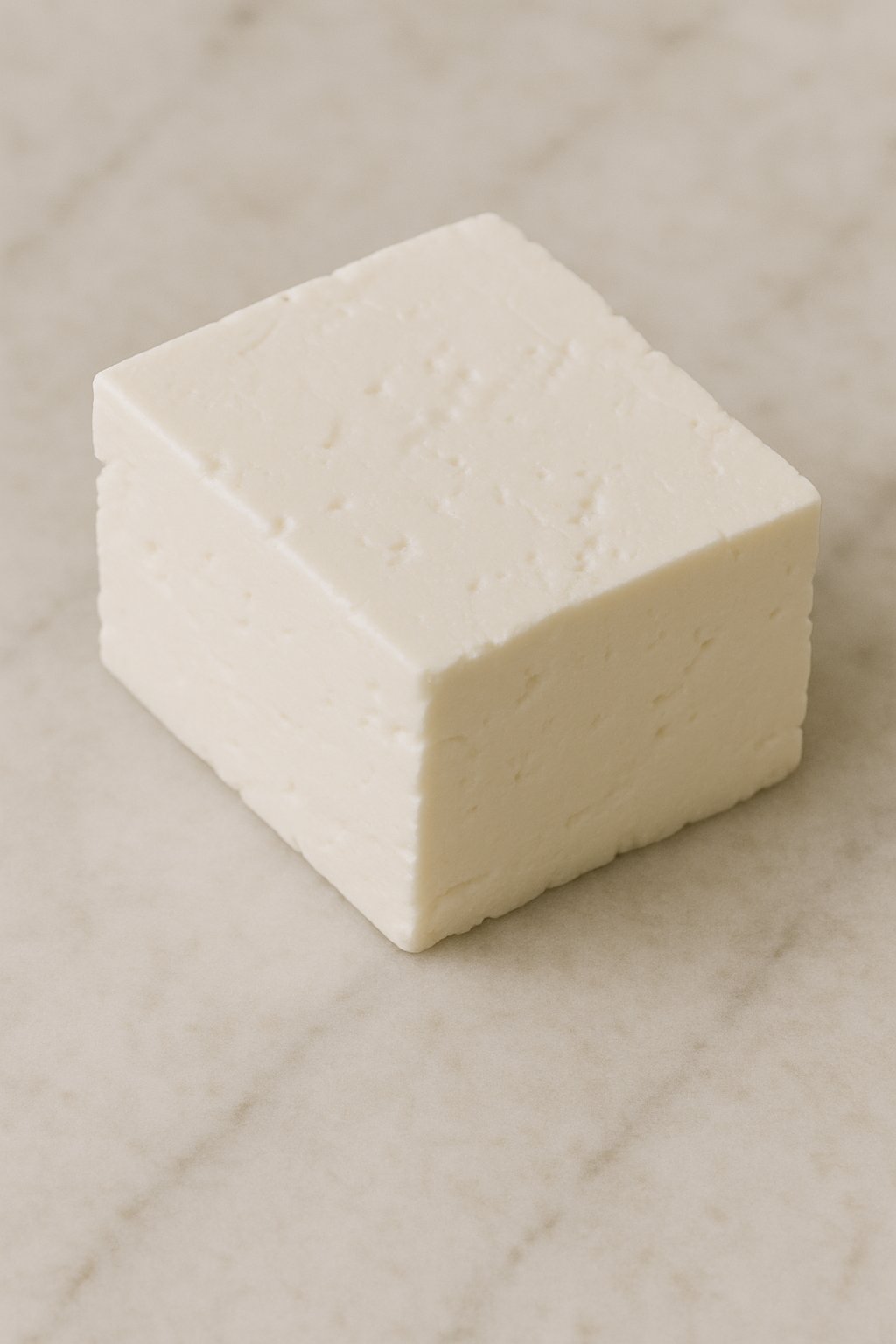
Feta is a traditional Greek white cheese produced mainly from sheep's milk or a blend of sheep's and goat's milk. It is characterized by its granular to slightly crumbly texture, a salty, mildly acidic taste and a white to ivory color. Feta is registered in the European Union as a Protected Designation of Origin (PDO); the name may only be used for cheese produced according to defined criteria in certain regions of Greece.

Manufacturing process

  • Milk treatment: The raw milk is heated to a defined temperature, using partially pasteurized or thermized procedures. Traditionally raw milk was used, while modern production methods often use pasteurized milk to regulate the microbial flora.
  • Coagulation: Rennet (animal or microbial) or a combination with plant proteases is used as the coagulating agent. Casein microstructures coagulate and form the gel.
  • Cutting and draining: The gel is cut into curd and gently stirred to release whey. The curd is then placed in molds and pressed, allowing further whey to escape.
  • Salting and ripening: Feta is typically stored in brine (10–12 % NaCl). The salt concentration and ripening time (at least two months) influence texture and flavor. During ripening lactic acid bacteria and proteolytic enzymes act, causing structural changes and aroma formation.
Chemical composition and constituents

  • Macronutrients: Feta typically contains 20–25 % protein and 21–28 % fat in the dry matter, while the fat content on the total mass can be about 15–21 %, depending on milk type and ripeness.
  • Salt and water content: Water content is often between 50–60 %, and the sodium content is increased by the brine; this results in a high salt intake per portion.
  • Micronutrients: Feta is a source of calcium, phosphorus, vitamin B12 and riboflavin-like compounds. The vitamin A content is moderate, depending on the fat content of the milk.
  • Biochemical changes: During ripening there is a decrease in lactose through lactic fermentation, proteolysis (breakdown of caseins into peptides and free amino acids) and lipolysis (release of fatty acids), which contribute to the development of characteristic aromas.
Microbiology

The microbiological composition is mainly determined by lactic acid bacteria (e.g. Lactococcus spp., Lactobacillus spp.); raw milk feta may also contain natural starter cultures and non-starter lactobacilli. The brine and the low pH inhibit many pathogens, nevertheless hygienic production is crucial to minimize risks such as Listeria monocytogenes or enteric pathogens.

Health aspects

  • Positive: Feta provides high-quality protein, calcium and certain B vitamins. Fermentation products and peptides may have positive effects on the gut microbiota and blood pressure regulation, although research results vary.
  • Negative: The high sodium content makes feta less suitable for people with hypertension or sodium-sensitive conditions. The fat content, particularly saturated fatty acids, is moderate to high, depending on production method.
  • Intolerances and allergies: People with cow's milk allergy can often avoid or better tolerate feta, since it is made from sheep's and goat's milk; however cross-reactions may occur. In lactose intolerance lactose content is reduced after ripening, but not zero.
Use and storage

Feta is used in salads, casseroles, baked pastries and as a topping. Feta stored in brine should be kept refrigerated; the brine retains texture and flavor. For calorie- or salt-conscious applications there are reduced-fat and reduced-salt variants, which however vary sensorially and technologically.

Conclusion

Feta is a microbially fermented, brine-ripened cheese with characteristic texture and flavor, whose properties are determined by milk source, coagulation, salting and ripening processes. It offers nutritional benefits such as high-quality protein and minerals, but presents limitations for specific groups due to high sodium and fat content. Modern production methods aim for microbiological safety and standardized sensory quality, while traditional production methods continue to generate flavor diversity.

Wiki entry for: feta
Active now: 17 visitors of which 2 logged-in members in the last 5 minutes