Menu & categories

Fatty pork

Fatty pork as an energy-dense meat ingredient

Wiki about fatty pork Nutri-Score D Vegan No Gluten-free Yes Lactose-free Yes Nut-free Yes
NUTRITION / 100 g
320 kcal 16 g Protein 0 g Kohlenhydrate 30 g Fett

Introduction

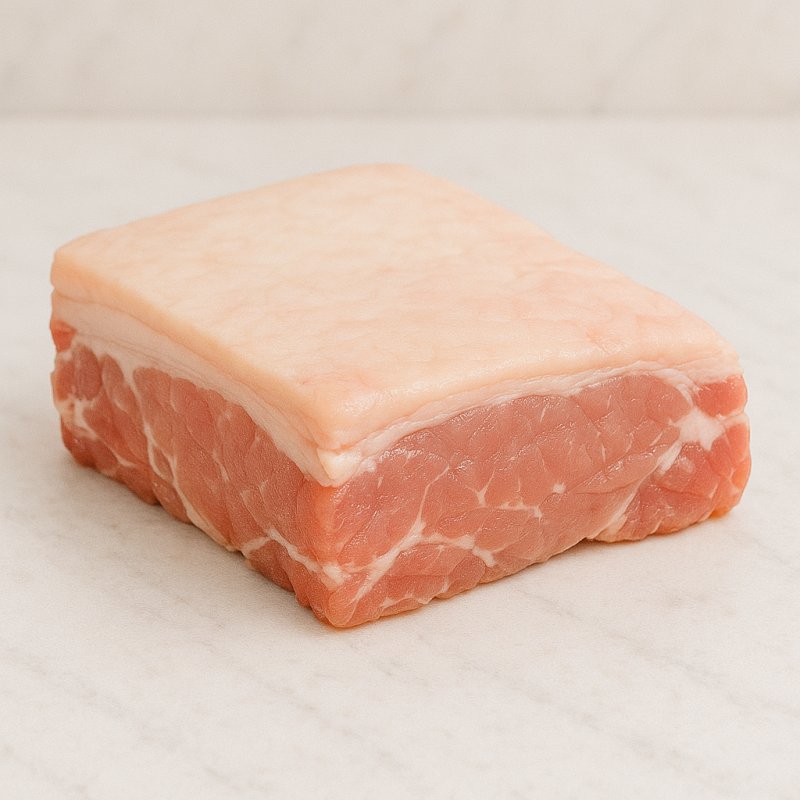
Raw fatty pork with visible layers of fat
I still remember the day I first became consciously aware of pork fat: at my aunt's family celebration a bowl of rendered bacon fat suddenly sat on the table, and the scent alone triggered a small public gathering. Since then I have carried the realization that pork fat is not merely waste but a versatile, flavor-bearing ingredient with tradition and character.

To me pork fat is much more than a calorie-rich component. It is the link between texture and taste, making bread crispy, the sauce velvety and the vegetables more aromatic. A good spoonful of rendered bacon fat can transform a pan in a way that oil alone never achieves. I have tried confiting with lard, roasting fried potatoes in it and even refining sweets — surprising how it rounds flavors without dominating them.

I have also learned that not all pork fat is the same. From lean backfat to finely marbled belly fat, melting point, flavor and uses differ. On a market visit I once hugged a vendor — well, almost — because his homemade lard was so aromatic. Encounters like that remind me that quality, origin and processing play a major role.

Important points about pork fat in brief:

  • Flavor carrier: Increases depth and mouthfeel of dishes.
  • Versatility: For frying, confiting, baking or as a bread spread.
  • Differences: Consistency and aroma vary by cut and processing.
  • Shelf life: Properly rendered and cooled lard keeps for a long time.
Of course there are dissenting voices: health-conscious people and vegetarians have legitimate objections to frequent consumption. I myself balance this by using pork fat deliberately and sparingly — as an accent, not the base of every meal. At a cooking evening with friends a debate once broke out about whether lard is 'retro' or timeless. In the end taste won, accompanied by a glass of wine and the agreement that good food sometimes allows small sins.

In conclusion I can say that pork fat for me is a culinary helper: practical, traditional and full of surprising uses. I invite you to try it with curiosity — with respect for quality and moderation — and perhaps you too will develop a small lard-love as I did.

Availability & types

Availability and types of pork fat

Pork fat is an ingredient used in many cuisines worldwide. When talking about availability one means where pork fat can be obtained and how easy it is to find. Pork fat is available at butcher shops, well-stocked supermarkets and weekly markets. It can also be ordered online, for example as lard (which is already rendered and often seasoned) or as backfat and belly fat from which fat can be rendered. In regions where many pigs are kept, pork fat is particularly easy to get – often rural areas in Europe, North America and parts of Asia. In cities it is somewhat rarer, but still found in stores that sell traditional or regional products.

Origin

Pork fat comes, as the name implies, from pigs. Pigs are raised on farms, and depending on how and where they are raised the fat can taste and look different. A distinction is often made between fat from pigs that live on farms with lots of outdoor space (free-range) and those from more intensive systems. If pigs graze outdoors and have a more varied diet, their fat can taste slightly different – similar to how you notice the difference when tasting eggs from free-range hens. Additionally, the feed given to pigs (corn, grass, special feed mixes) can influence the color and taste of the fat.

Available types and variants

  • Raw pork fat: This is straight from the animal, not yet processed. It can be sold as lard (belly fat) or backfat. You can render it at home to make lard.
  • Lard: Lard is rendered and often filtered pork fat that becomes solid again when cooled. It is convenient because it is ready for cooking or as a bread spread. Sometimes lard is flavored with onions, apples or spices.
  • Sliced bacon: Sliced belly bacon or breakfast bacon also contains fat. When fried, part of it melts and gives food flavor and juiciness.
  • Backfat (backfat): This fat deposit sits along the pig's back. It is often firmer and is used in cooking when a finer texture is desired, for example in making sausages or pâtés.
  • Crackling lard (Griebenschmalz): This is lard obtained by rendering bacon or fat pieces and contains small crispy bits (cracklings). These can be sprinkled on bread – a bit like crunchy crumbs.
How to picture it

Imagine pork fat as butter that comes from animals: both are solid fats that melt when heated and make foods juicier. Pork fat, however, has its own flavor — often strong and savory. While butter is made from milk and frequently used in sweet baking, pork fat is popular in savory dishes and traditional recipes because it carries flavors well and gives a nice texture.

What to look for when buying

  • Freshness: The fat should smell fresh, not rancid.
  • Origin: Those who value animal welfare can look for products from free-range farming or farms with transparent labeling.
  • Packaging: Lard is often sold in tins or jars, raw fat in paper or plastic packaging.
In summary: pork fat is available in many forms and qualities – from raw backfat to smoked bacon and ready-made lard. Its origin (how the pigs were raised) influences flavor and availability, and it is worth paying attention to freshness and production to ensure the fat tastes good and is safe.

Details & nutrition

Property Value
Unit g
Calories per 100 320
Protein per 100 16
Carbohydrates per 100 0
Sugar per 100 0
Fat per 100 30
Saturated fat per 100 11
Monounsaturated fat 13
Polyunsaturated fat 3
Fiber per 100 0
Vitamin C (mg) per 100 0
Vitamin D (IU) per 100 0
Calcium (mg) per 100 15
Iron (mg) per 100 1.2
Nutri-Score D
CO₂ footprint 7.0
Origin Pig, mostly from conventional farming
Gluten-free Yes
Lactose-free Yes
Nut-free Yes
Vegan No
Note Nutritional values for raw, fatty pork (e.g., heavily marbled or belly cuts); values may vary slightly depending on the cut and trimming.

Technical & scientific information

Pork fat refers to the adipose tissue of the domestic pig (Sus scrofa domesticus), which appears both in raw form as backfat or belly fat and in processed products such as lard. Chemically it is mainly a mixture of triglycerides, with the fatty acid composition determining physical properties such as melting point and consistency. Typical fatty acids are saturated fatty acids like palmitic acid (C16:0) and stearic acid (C18:0), monounsaturated fatty acids mainly oleic acid (C18:1) and to a lesser extent polyunsaturated fatty acids such as linolenic acid and linoleic acid (omega-6). The exact proportion varies depending on breed, feeding, age and storage conditions.

Nutritional value and energy content: Pork fat is energy-dense and provides about 9 kcal (≈37–39 kJ) per gram of fat. In 100 grams of pork fat there are typically around 90–99 grams of fat, practically no carbohydrates and only traces of protein. The energy density makes pork fat an efficient calorie source; at the same time the content of saturated fatty acids is nutritionally relevant, as excessive consumption is associated with an increased risk of cardiovascular disease.

Physical properties and processing: Fresh pork fat is firm to semifirm at refrigerator temperature and melts at about 30–40 °C, depending on fatty acid composition. When processing into lard the fat is obtained by slow rendering (heating without water) from the tissue; this separates into liquid fat and solid residues (cracklings). Other processing methods include refining, filtration and, in industrial applications, hydrogenation to alter melting point and oxidation resistance. Refined pork fat is less odorous and flavorful than raw fat and has a longer shelf life.

Technological and culinary uses: Pork fat is used in the kitchen as frying and baking fat, as a base for pâtés and preserves, and to improve texture in sausages. Industrially it is also used in the production of biocides, soaps and biodiesel. In baked goods pork fat contributes to layer formation and flavor, because it exhibits specific melting characteristics when heated that affect porosity and crumb structure.

Safety, shelf life and storage: Pork fat is susceptible to oxidative rancidity, especially in the presence of polyunsaturated fatty acids, light, oxygen and heat. Antioxidants such as tocopherols (vitamin E) and cool, light-protected storage extend shelf life. Microbiologically pure fat is little susceptible due to low water content, but losses in quality parameters can occur through hydrolytic and oxidative processes.

Health aspects: Nutritionally, the balance of saturated to unsaturated fatty acids is decisive. Pork fat contains a comparatively higher proportion of monounsaturated oleic acid than some other animal fats, but still contributes noticeably to saturated fat intake. Moderate consumption as part of a balanced diet does not pose an acute risk for healthy people, while individuals with elevated cardiovascular risk should continue to limit saturated fat intake. Furthermore, improper husbandry or processing can lead to accumulation of contaminant residues (e.g., persistent organic pollutants) in the fat; appropriate control measures reduce this risk.

Environmental and ethical aspects: The production of pork fat is tied to the overall production of pork. Resource use, animal welfare and emissions in livestock farming influence the product's ecological footprint. Valorization strategies for by-products contribute to resource efficiency when fat residues are used sensibly.

Overall pork fat is a technically versatile food and industrial raw material with characteristic chemical and physical properties. Its nutritional assessment depends on the amount and context of consumption, while processing, storage and origin are important factors for quality and food safety.

Wiki entry for: fatty pork
Active now: 18 visitors of which 2 logged-in members in the last 5 minutes