Menu & categories

Condensed milk

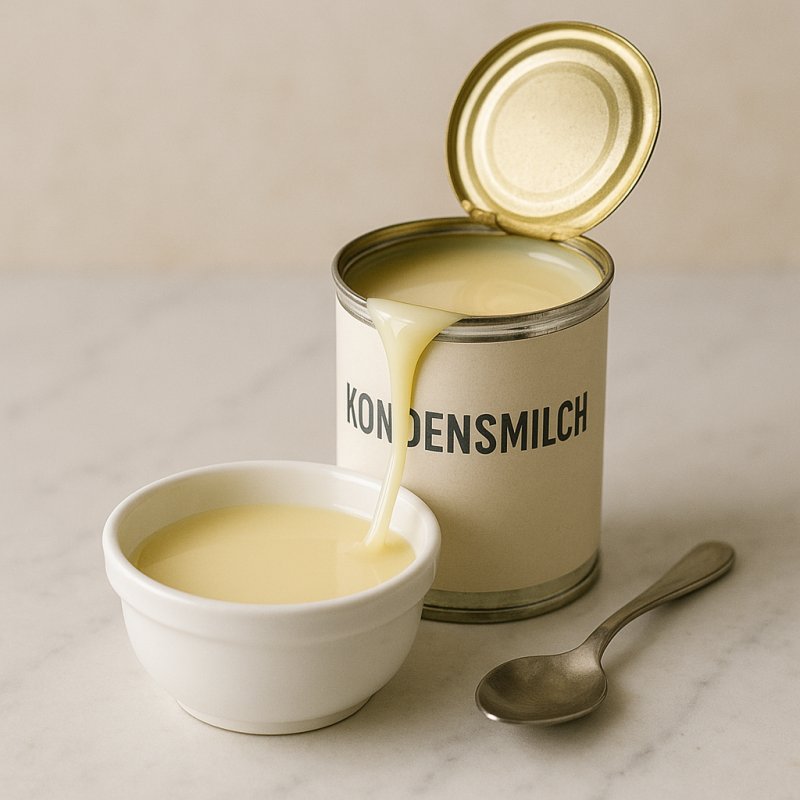
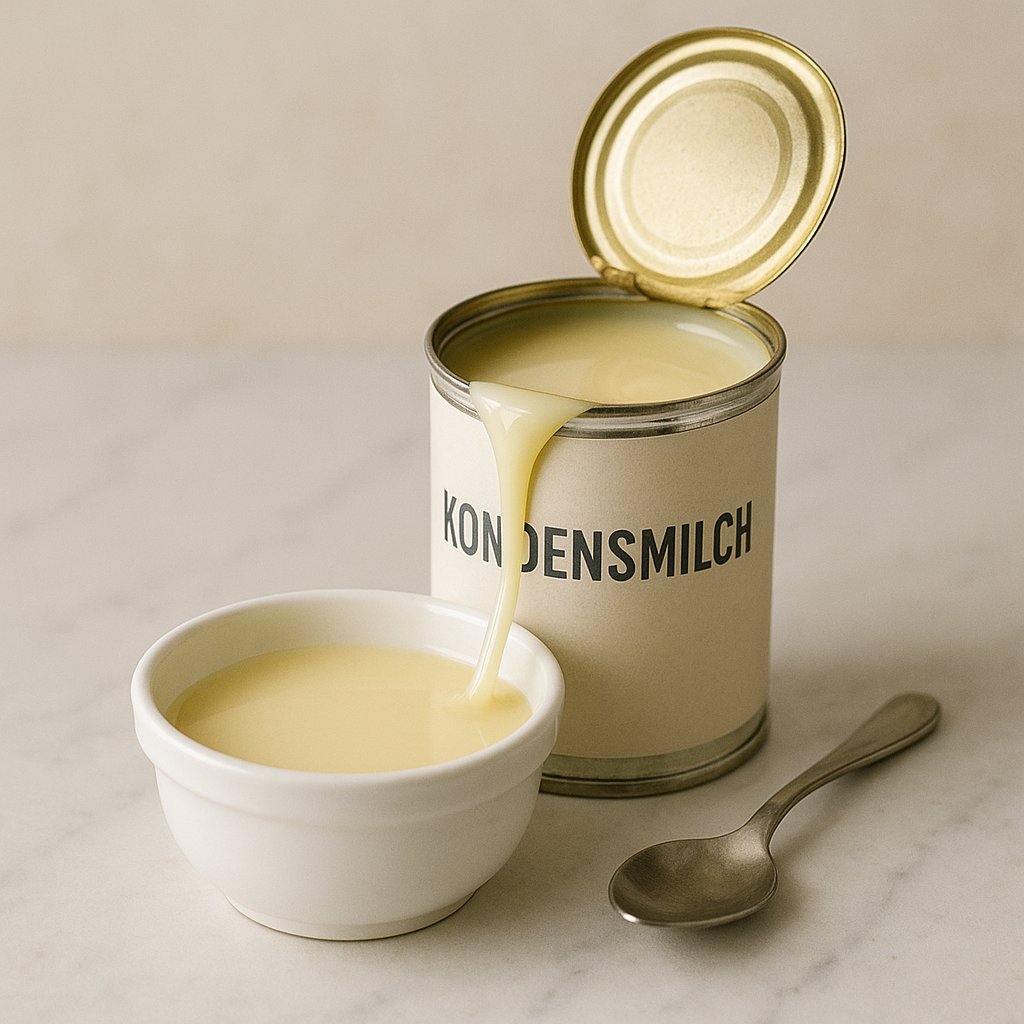
Creamy condensed milk with 7.5% fat – ideal for enhancing coffee, sauces and desserts.

Wiki about evaporated milk Nutri-Score C Vegan No Gluten-free Yes Lactose-free No Nut-free Yes
NUTRITION / 100 g
134 kcal 6.6 g Protein 9.9 g Kohlenhydrate 7.5 g Fett

Introduction

Condensed milk with 7.5 percent fat in a can
I still clearly remember the first can of condensed milk 7.5% fat that I brought home from a small corner shop: unremarkable, dull at first glance, and yet a true chameleon in my kitchen. For me it is the practical sister of fresh milk, longer-lasting, stable when heated and still pleasantly creamy. I often reach for this variant when I need an intermediate solution between low-fat milk and cream.

What I particularly appreciate about this condensed milk is its unpretentious nature: it is preserved but not sweet, it reliably thickens sauces and soups and makes coffee or tea velvety without weighing them down. A colleague of mine swears by using it instead of milk in his muesli and insisted that breakfast now tastes immediately more luxurious. I, in turn, loved it in savory gratins because it promotes a nice crust and gently envelops the potatoes.

Practical properties I often mention:

  • Shelf life: Long storage life and ideal for pantry stocks.
  • Heat stability: Rarely coagulates, therefore good for hot dishes.
  • Consistency: Creamy, but not as heavy as cream.
  • Versatility: Usable in both sweet and savory dishes.
A small kitchen experiment I recommend repeatedly: add a splash of condensed milk to a hot broth instead of as a cold finish — it changes the mouthfeel balance in a surprisingly pleasant way. And yes, on a camping trip I once opened a can because fresh milk had run out; it became an improvised fruit dessert that was so well received that I now always plan it into the holiday kitchen.

For me, condensed milk 7.5% fat is a reliable helper that shows itself discreetly: it does not replace the quality of freshly milked milk, but it rescues sauces, refines drinks and makes cooking more relaxed. When I'm on the road or guests arrive spontaneously, it is often the unassuming star that rounds off dishes and carries me smiling to the next culinary idea.

Availability & types


Condensed milk 7.5% fat is a form of milk from which some water has been removed, making it thicker and longer-lasting. If the package states 7.5% fat, that means that out of 100 parts of content 7.5 parts are fat. That is a bit more than in regular UHT milk, but less than in cream. You can imagine condensed milk like strong coffee compared to regular coffee: it is more concentrated and often lasts longer.

Origin: Condensed milk is usually made from cow's milk. The milk comes from farms, often located in regions with extensive pastureland. In Europe, major dairy-producing countries include Germany, the Netherlands, France and Poland. Worldwide there are also large producers in countries such as Brazil, India and Thailand. The milk is collected at farms and then brought to dairies where it is heated and concentrated.

Production regions:

  • Europe: Many dairies in Germany, the Netherlands and France produce condensed milk.
  • Latin America and Asia: Countries like Brazil, Argentina, Thailand and India produce large quantities, mainly for export and local markets.
  • Regional farms: Some small producers make condensed milk locally, often as organic products or with regional branding.
Available types and variants: Condensed milk comes in different types, not only with 7.5% fat. Here are the main variants explained simply:

  • Unsweetened condensed milk / evaporated milk: This is simply concentrated milk without sugar. Perfect for cooking or when you want to sweeten yourself.
  • Sweetened condensed milk: Sugar has been added. It is very sweet and is often used for desserts, cakes or sweet drinks.
  • Different fat levels: Besides 7.5% there are lower-fat variants (e.g. 1–3%) and higher-fat products, depending on how creamy the result should be.
  • Organic and regional: From organic farming, often more expensive but with stricter rules for animal husbandry.
  • Lactose-free: For people who do not tolerate normal milk sugar (lactose) well.
  • Packaging: Cans are classic, but there are also Tetra Paks or pouches that are easier to open.
  • Plant-based alternatives: For vegans or allergy sufferers there are condensed alternatives based on soy, oat or coconut (e.g. sweetened coconut condensed milk).
Availability: Condensed milk with 7.5% fat is found in many supermarkets, discount stores and online shops. Because it is heated and sealed, it has a long shelf life and is therefore available year-round. Some varieties are regionally rarer, for example special organic or lactose-free variants. If a shop does not have something, it is worth checking international grocery stores or online retailers.

Finally: when you buy condensed milk, check the label — it will state whether sugar is included, how much fat is contained, whether it is organic or lactose-free. Opened condensed milk must be refrigerated and should be used within a few days. That way you will find the right type for coffee, cakes or your favorite recipe.
Details & nutrition

Property Value
Unit g
Average weight per piece 15
Calories per 100 134
Protein per 100 6.6
Carbohydrates per 100 9.9
Sugar per 100 9.9
Fat per 100 7.5
Saturated fat per 100 4.8
Monounsaturated fat 2.1
Polyunsaturated fat 0.3
Fiber per 100 0.0
Vitamin C (mg) per 100 1.0
Vitamin D (IU) per 100 12
Calcium (mg) per 100 250
Iron (mg) per 100 0.1
Nutri-Score C
CO₂ footprint 1.8 kg CO2e/kg
Origin EU (milk)
Gluten-free Yes
Lactose-free No
Nut-free Yes
Vegan No
Note Unsweetened condensed milk (evaporated milk) with 7.5% fat; nutritional values may vary slightly by manufacturer.

Technical & scientific information


Condensed milk 7.5% fat refers to a concentrated form of cow's milk obtained by partial removal of water and typically offered in a sweetened version. The specification 7.5% fat refers to the proportion of milk fat in the final product and is an important quality parameter that affects flavor, mouthfeel and culinary uses.

Composition and chemical basics: Condensed milk consists mainly of water, milk components (milk fat, milk proteins, lactose) and, in sweetened condensed milk, sucrose. After evaporation the water content typically lies at about 25–30%. The most important components are:

  • Milk fat: triglycerides in fat globules, stabilized by membranes; responsible for creaminess and as aroma carriers.
  • Milk proteins (caseins and whey proteins): contribute to viscosity, emulsion stability and foam formation.
  • Lactose and added sugar: increase the dry matter, lower water activity and influence sweetness as well as browning reactions (Maillard reaction).
  • Trace elements and vitamins: such as calcium, phosphorus and fat-soluble vitamins (A, D) in smaller amounts in the final product.
Typical nutritional values (approx. per 100 g): Energy about 320–340 kcal (1 340–1 420 kJ), fat 7.5 g (of which saturated fatty acids approx. 4–5 g), carbohydrates 50–60 g (of which sugars >50 g in sweetened condensed milk), protein 6–9 g, salt approx. 0.1–0.3 g. These values can vary depending on the formulation and sugar content.

Manufacturing process: Production includes several technically relevant steps:

  • Pretreatment: filtration and standardization of raw milk to adjust the fat content.
  • Thermal treatment: pasteurization to kill pathogenic microorganisms.
  • Evaporation / concentration: under vacuum water is removed at reduced temperature to minimize heat damage to proteins and preserve delicate aromas.
  • Addition of sugar: in sweetened condensed milk sucrose is blended in precise ratios to achieve the desired consistency and preservation.
  • Homogenization: reduction of fat globule size to stabilize the emulsion.
  • Filling and preservation: sterile filling into cans or tubes; the high sugar content and reduced water activity inhibit microbial growth.
Safety and shelf life: The high sugar content and heat treatment ensure long shelf life of unopened containers at room temperature. After opening refrigeration is required and product quality can change due to sugar crystallization, slight phase separation or flavor alterations.

Health aspects: Condensed milk is a calorie- and sugar-rich food. Regular, high consumption can lead to increased energy and sugar intake and increase the risk of overweight, tooth decay and metabolic disorders. People with lactose intolerance or milk protein allergy should avoid the product. Condensed milk is not suitable as a primary food for infants, as it does not meet the nutritional needs and proportions required for infant formula.

Applications and technological properties: Condensed milk is used in desserts, bakery, beverages and as an ingredient for caramelized products like dulce de leche. The high viscosity, good emulsion stability and targeted flavor make it valuable in industrial blends and artisanal recipes.

In summary, condensed milk 7.5% fat is a technologically useful dairy product with a characteristic composition of fat, proteins and a high sugar content in sweetened variants; it offers long shelf life and versatile uses but requires conscious nutritional management due to its high energy and sugar content.

Wiki entry for: evaporated milk
Active now: 15 visitors of which 2 logged-in members in the last 5 minutes