Availability and types of espresso
Espresso is a coffee beverage that is very concentrated and flavorful. But what exactly does that mean for availability and types? Here I explain in an easy-to-understand way where espresso comes from, in which regions it is grown, what varieties exist and which espresso variants are popular — so that even a 12-year-old can follow along easily.
Origin and growing regions
Espresso itself is not a special coffee tree, but a method of preparation. That means: the beans used to make espresso grow on coffee plants. These plants like warm, humid places with shade. The main regions are:
Espresso itself is not a special coffee tree, but a method of preparation. That means: the beans used to make espresso grow on coffee plants. These plants like warm, humid places with shade. The main regions are:
- South America (e.g. Brazil, Colombia): Many coffee beans for espresso come from here. Brazil is like a large garden that supplies a lot of coffee.
- Central America (e.g. Guatemala, Costa Rica): Here beans grow at higher altitudes, which often leads to finer flavors.
- Africa (e.g. Ethiopia): Some of the most aromatic and fruity beans come from Africa.
- Asia (e.g. Vietnam, Indonesia): These countries often supply stronger or more earthy flavors.
You can imagine it like this: if you want fruit, you buy it from a farmer in a certain area. In the same way coffee beans come from different countries, and each region gives the coffee its own taste because soil, climate and sun differ.
Available varieties (bean types)
There are two main types of coffee beans you can find in espresso. Think of them like two different apple varieties:
There are two main types of coffee beans you can find in espresso. Think of them like two different apple varieties:
- Arabica – These beans often have a finer, fruitier taste. They usually grow at higher elevations and require more care. Many people prefer Arabica because it is milder and more aromatic.
- Robusta – These beans are stronger and contain more caffeine. They can taste a bit more bitter and often produce a thicker crema (the foamy layer on top). Robusta makes the espresso “bolder.”
Roasters often blend Arabica and Robusta to get a balanced espresso: Arabica brings flavor, Robusta provides strength and crema. It's like mixing chocolate and nuts — both together often taste better.
Variants and preparation methods
Espresso can be prepared or further processed in different ways. Here are the most well-known variants, simply explained:
Espresso can be prepared or further processed in different ways. Here are the most well-known variants, simply explained:
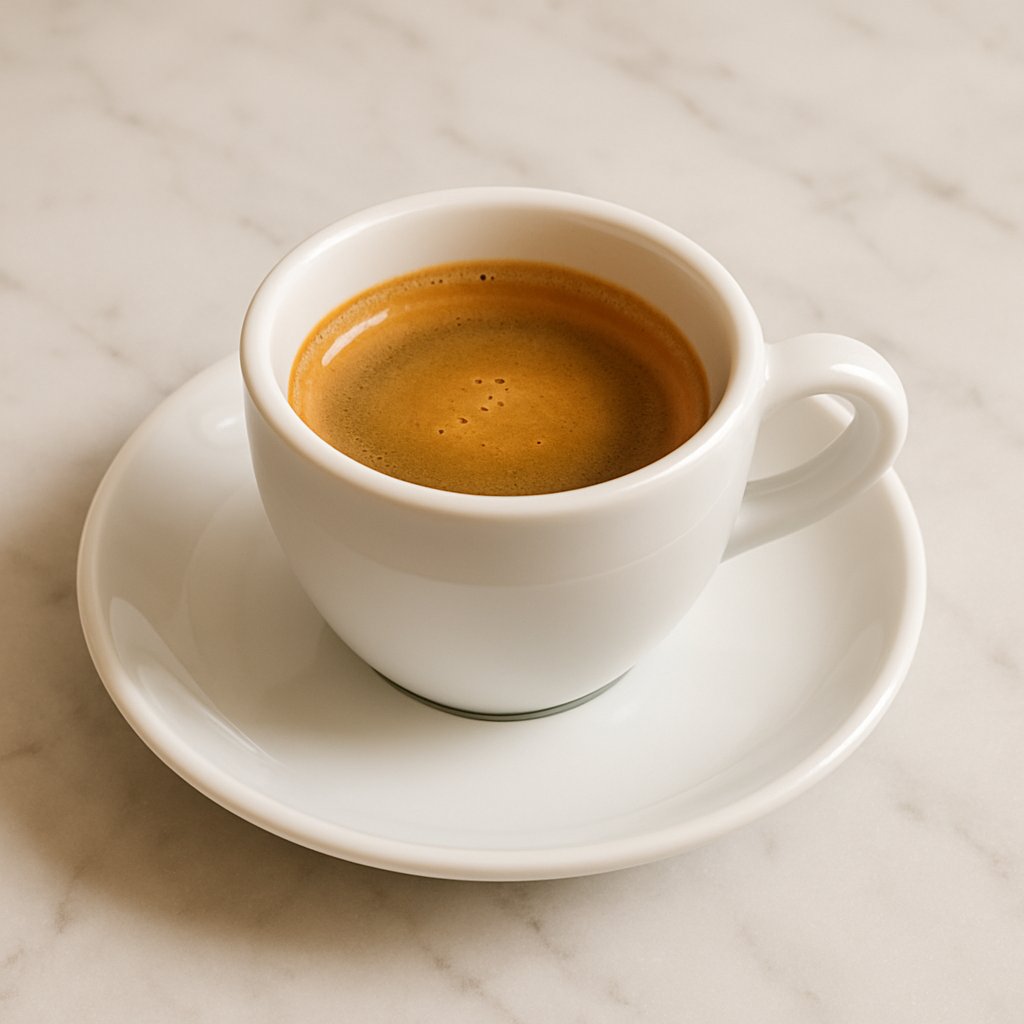
- Pure espresso – A small, concentrated sip with a strong flavor. Often 20–30 milliliters.
- Doppio (double espresso) – The same, but twice the amount of liquid. Good if you want more flavor.
- Ristretto – Even more concentrated than a normal espresso, with less water. Very intense.
- Lungo – More water than a normal espresso, making it somewhat milder.
- Espresso macchiato – An espresso with a small dab of steamed milk.
- Espresso in drinks – Many well-known drinks like cappuccino or latte macchiato are based on espresso, but with a lot of milk.
Availability
Espresso beans and pre-ground espresso are available almost everywhere: in supermarkets, coffee shops and online. There are cheap brands and very special, expensive beans. For home use you can buy whole beans and grind them fresh — this gives better flavor. Cafés often use a special blend that provides consistent taste.
Espresso beans and pre-ground espresso are available almost everywhere: in supermarkets, coffee shops and online. There are cheap brands and very special, expensive beans. For home use you can buy whole beans and grind them fresh — this gives better flavor. Cafés often use a special blend that provides consistent taste.
In summary: espresso comes from coffee beans grown in many countries. There are the bean types Arabica and Robusta, which are mixed to create different flavors. Espresso can be strong, mild, short or long, and is easy to find — whether you drink it in a café or prepare it at home.