Menu & categories

Espresso

Strong, concentrated coffee with an intense aroma

Wiki about espresso Nutri-Score A Vegan Yes Gluten-free Yes Lactose-free Yes Nut-free Yes
NUTRITION / 100 ml
9 kcal 0.2 g Protein 1.7 g Kohlenhydrate 0.0 g Fett

Introduction

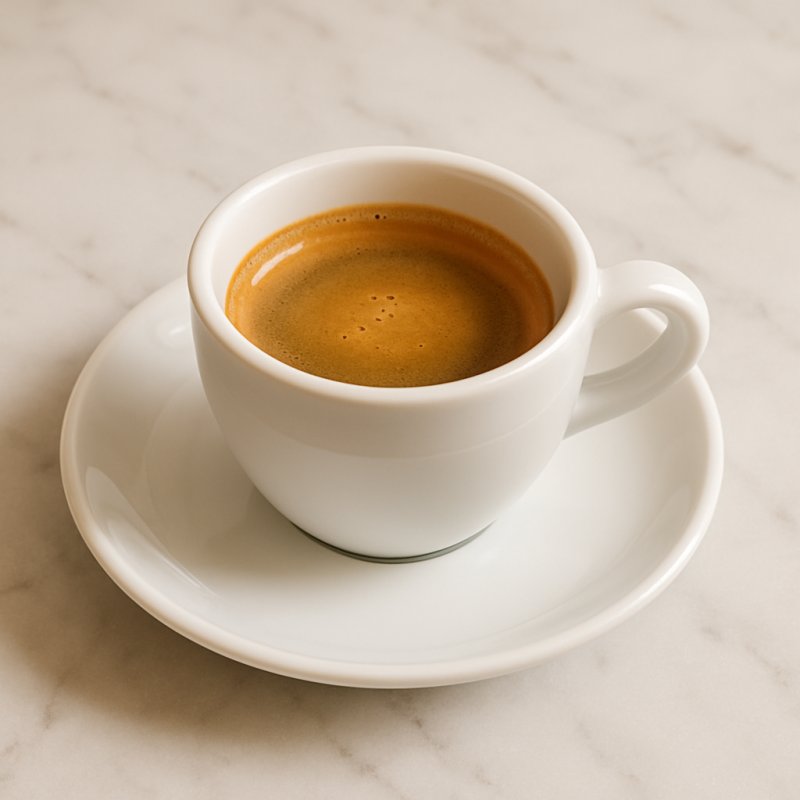
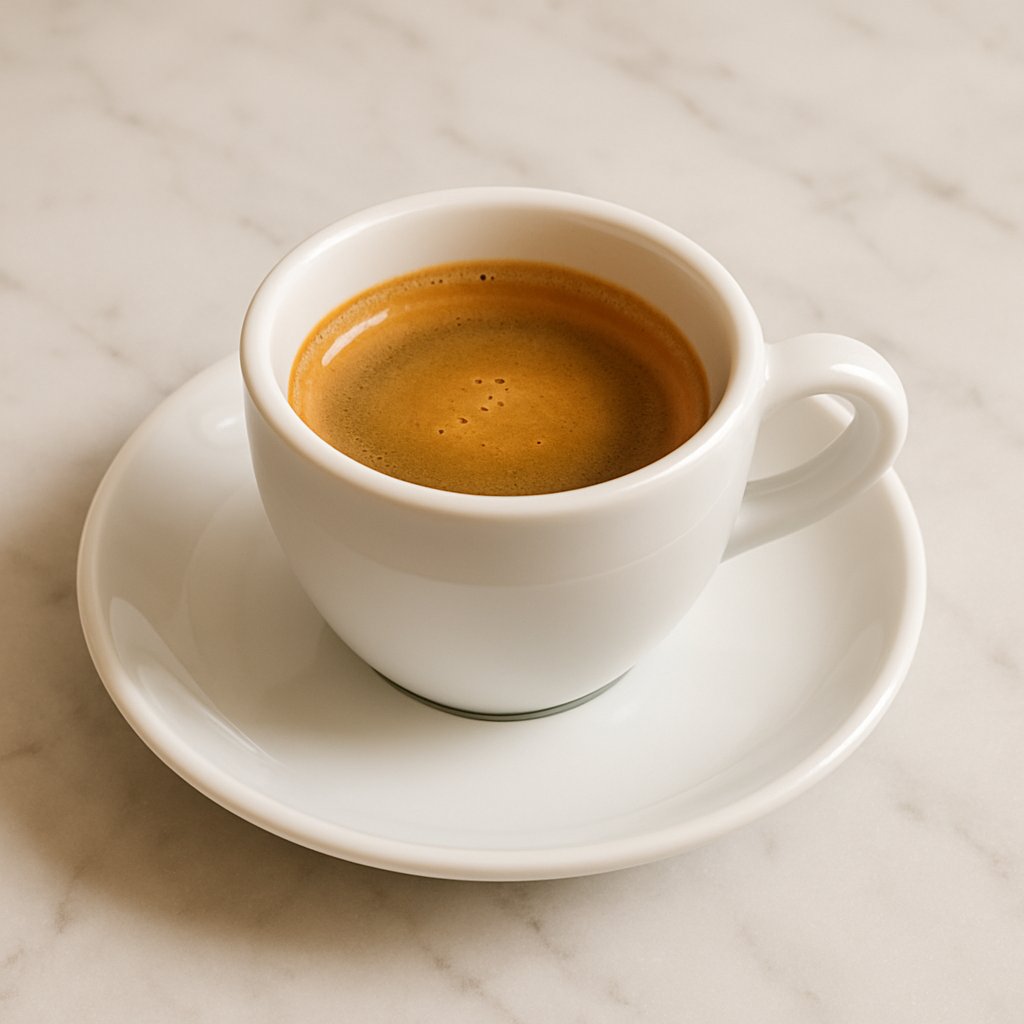
A small cup of freshly prepared espresso
I have a secret affair with espresso, and no, it's completely acceptable — sometimes even life-saving. Espresso for me is not just a drink; it is a short, intense novel in a cup, a concentrated expression of bean, roast, and craft. I still remember a rainy morning when a colleague handed me a small cup without a word: the crema like amber, the aroma like a promise. That was the moment when espresso finally became a mini-philosophy for me.

What I love is its versatility. On one hand there is the purist sip — short, strong, and aromatic — which gives you a clear thought in the middle of the day. On the other hand espresso transforms with a few spoonfuls of milk foam into a completely different experience: velvety, comforting, almost like a warm conversation. I have learned that often it is the small details that make the difference:

  • Bean quality: Fresh and well stored — it may sound banal, but it is crucial.
  • Grind size: Fine, but not clogged; a perfect extraction requires patience and precision.
  • Machine and technique: Temperature, pressure and timing are the invisible conductors of a good espresso.
A small anecdote: at a coffee workshop I once really wanted to create my “signature shot”. After numerous failed attempts and a small explosion from grind that was too fine (a quiet, chaotic moment) I suddenly pulled a shot that was so round the participants applauded — I did too, inwardly. Moments like that show how artisanal and at the same time sensual espresso can be.

For me espresso is more than caffeine. It is ritual, creativity and sociability in one. When I prepare the first cup in the morning I breathe deeper, plan better and laugh more easily. And even on days when everything goes wrong, a good espresso is often enough to make the world a little kinder.

Availability & types

Availability and types of espresso

Espresso is a coffee beverage that is very concentrated and flavorful. But what exactly does that mean for availability and types? Here I explain in an easy-to-understand way where espresso comes from, in which regions it is grown, what varieties exist and which espresso variants are popular — so that even a 12-year-old can follow along easily.

Origin and growing regions
Espresso itself is not a special coffee tree, but a method of preparation. That means: the beans used to make espresso grow on coffee plants. These plants like warm, humid places with shade. The main regions are:

  • South America (e.g. Brazil, Colombia): Many coffee beans for espresso come from here. Brazil is like a large garden that supplies a lot of coffee.
  • Central America (e.g. Guatemala, Costa Rica): Here beans grow at higher altitudes, which often leads to finer flavors.
  • Africa (e.g. Ethiopia): Some of the most aromatic and fruity beans come from Africa.
  • Asia (e.g. Vietnam, Indonesia): These countries often supply stronger or more earthy flavors.
You can imagine it like this: if you want fruit, you buy it from a farmer in a certain area. In the same way coffee beans come from different countries, and each region gives the coffee its own taste because soil, climate and sun differ.

Available varieties (bean types)
There are two main types of coffee beans you can find in espresso. Think of them like two different apple varieties:

  • Arabica – These beans often have a finer, fruitier taste. They usually grow at higher elevations and require more care. Many people prefer Arabica because it is milder and more aromatic.
  • Robusta – These beans are stronger and contain more caffeine. They can taste a bit more bitter and often produce a thicker crema (the foamy layer on top). Robusta makes the espresso “bolder.”
Roasters often blend Arabica and Robusta to get a balanced espresso: Arabica brings flavor, Robusta provides strength and crema. It's like mixing chocolate and nuts — both together often taste better.

Variants and preparation methods
Espresso can be prepared or further processed in different ways. Here are the most well-known variants, simply explained:

  • Pure espresso – A small, concentrated sip with a strong flavor. Often 20–30 milliliters.
  • Doppio (double espresso) – The same, but twice the amount of liquid. Good if you want more flavor.
  • Ristretto – Even more concentrated than a normal espresso, with less water. Very intense.
  • Lungo – More water than a normal espresso, making it somewhat milder.
  • Espresso macchiato – An espresso with a small dab of steamed milk.
  • Espresso in drinks – Many well-known drinks like cappuccino or latte macchiato are based on espresso, but with a lot of milk.
Availability
Espresso beans and pre-ground espresso are available almost everywhere: in supermarkets, coffee shops and online. There are cheap brands and very special, expensive beans. For home use you can buy whole beans and grind them fresh — this gives better flavor. Cafés often use a special blend that provides consistent taste.

In summary: espresso comes from coffee beans grown in many countries. There are the bean types Arabica and Robusta, which are mixed to create different flavors. Espresso can be strong, mild, short or long, and is easy to find — whether you drink it in a café or prepare it at home.
Details & nutrition

Property Value
Unit ml
Average weight per piece 30
Calories per 100 9
Protein per 100 0.2
Carbohydrates per 100 1.7
Sugar per 100 0.1
Fat per 100 0.0
Saturated fat per 100 0.0
Monounsaturated fat 0.0
Polyunsaturated fat 0.0
Fiber per 100 0.0
Vitamin C (mg) per 100 0.0
Vitamin D (IU) per 100 0.0
Calcium (mg) per 100 2
Iron (mg) per 100 0.0
Nutri-Score A
CO₂ footprint 0.25
Origin Varies depending on the coffee beans used; often blends from South America, Africa and Asia
Gluten-free Yes
Lactose-free Yes
Nut-free Yes
Vegan Yes
Note Nutritional values refer to unsweetened espresso (black coffee) without added milk.

Technical & scientific information

Espresso refers both to a preparation method for coffee and to the resulting beverage, produced by high water pressure and short contact with finely ground coffee extract. Technically, espresso is characterized by an extraction time of about 20–30 seconds at temperatures between 88–96 °C and a brew pressure typically of 8–10 bar. The result is a concentrated coffee extract with a dense crema and a high content of soluble components per volume unit.

Physical and chemical composition
An espresso contains water, dissolved organic compounds, fine coffee particles and a small amount of oils. Among the most important dissolved substances are:

  • Caffeine: An alkaloid with stimulating effects; typical content varies with bean variety and roast degree, but for a typical 25–30 ml espresso it is about 30–100 mg.
  • Acids: Chlorogenic acids and other organic acids contribute to taste perception (acidity, fruitiness) and influence gastric tolerance.
  • Melanoidins: Maillard reaction products formed during roasting; they provide aroma, body and color.
  • Lipids and coffee oils: Insoluble and colloid-bound oils contribute to crema and mouthfeel.
  • Volatile aroma compounds: Hundreds of compounds (e.g. aldehydes, ketones, esters) determine the complex aroma profile.
Nutritional values
A single straight espresso (approx. 25–30 ml) has very few calories, typically 1–5 kcal, provided no milk or sugar is added. Macronutrients are negligible; the amounts of protein, fat and carbohydrates are low. However, espresso brings a high concentration of bioactive substances such as antioxidants, mainly from chlorogenic acids and polyphenolic compounds.

Processing methods
Producing espresso involves several technically relevant steps:

  • Bean selection and roasting: Blends of Arabica and Robusta are common; darker roasts reduce acidity and increase bitter-caramel notes.
  • Grind size: Fine to very fine; grind affects extraction rate and particle size, which in turn determine taste balance.
  • Dosing and tamping: Standard portions range from 7–18 g of ground coffee for single or double shots; compact tamping ensures even resistance to the flowing water.
  • Extraction: Control of temperature, pressure and flow rate is essential to avoid over- or under-extraction.
  • Equipment: Portafilter machines, automatic espresso machines or lever portafilters differ in precision and influence on the final product.
Health aspects
Espresso delivers a concentrated dose of caffeine that can lead to increased alertness, elevated heart rate and improved cognitive performance. With moderate consumption (commonly cited: up to 400 mg of caffeine per day for adults) negative effects are generally minor. Sensitive individuals, pregnant people and those with certain cardiac or gastroesophageal conditions should, however, restrict caffeine intake. Some people may react to bitter components or acids with stomach discomfort. At the same time, present antioxidants are associated with positive metabolic effects, although the overall impact depends on individual factors.

Sensory and quality
High-quality espresso is characterized by balanced bitterness, pleasant acidity, full body and a complex aroma spectrum. Crema is an indicator of emulsified coffee oils and CO2 release; its color and persistence give clues about roast, freshness and extraction. Defects like burnt, watery or overly acidic cups can often be traced to roasting faults, incorrect grind size, unbalanced dosing or unsuitable extraction parameters.

Overall, espresso is a technically demanding product whose final quality depends on a chain of finely tuned parameters: bean variety, roast profile, grind, dosing, temperature and pressure during extraction. These variables influence chemical composition, related physiological effects and the sensory experience, making espresso both a popular pleasure and a subject of intensive scientific and technical optimization.

Wiki entry for: espresso
Active now: 18 visitors of which 2 logged-in members in the last 5 minutes