Menu & categories

Elderberries

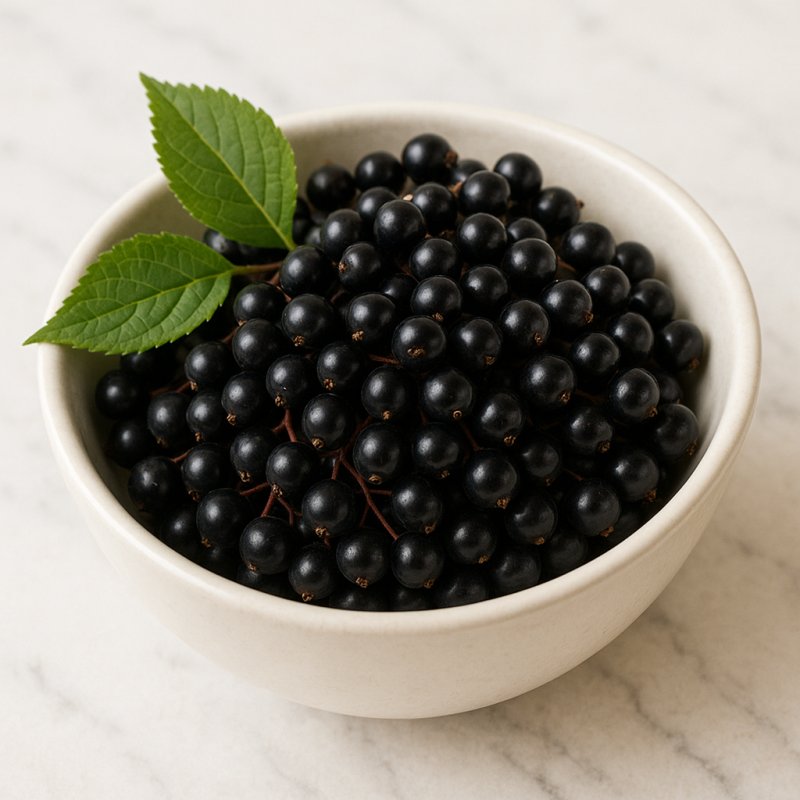
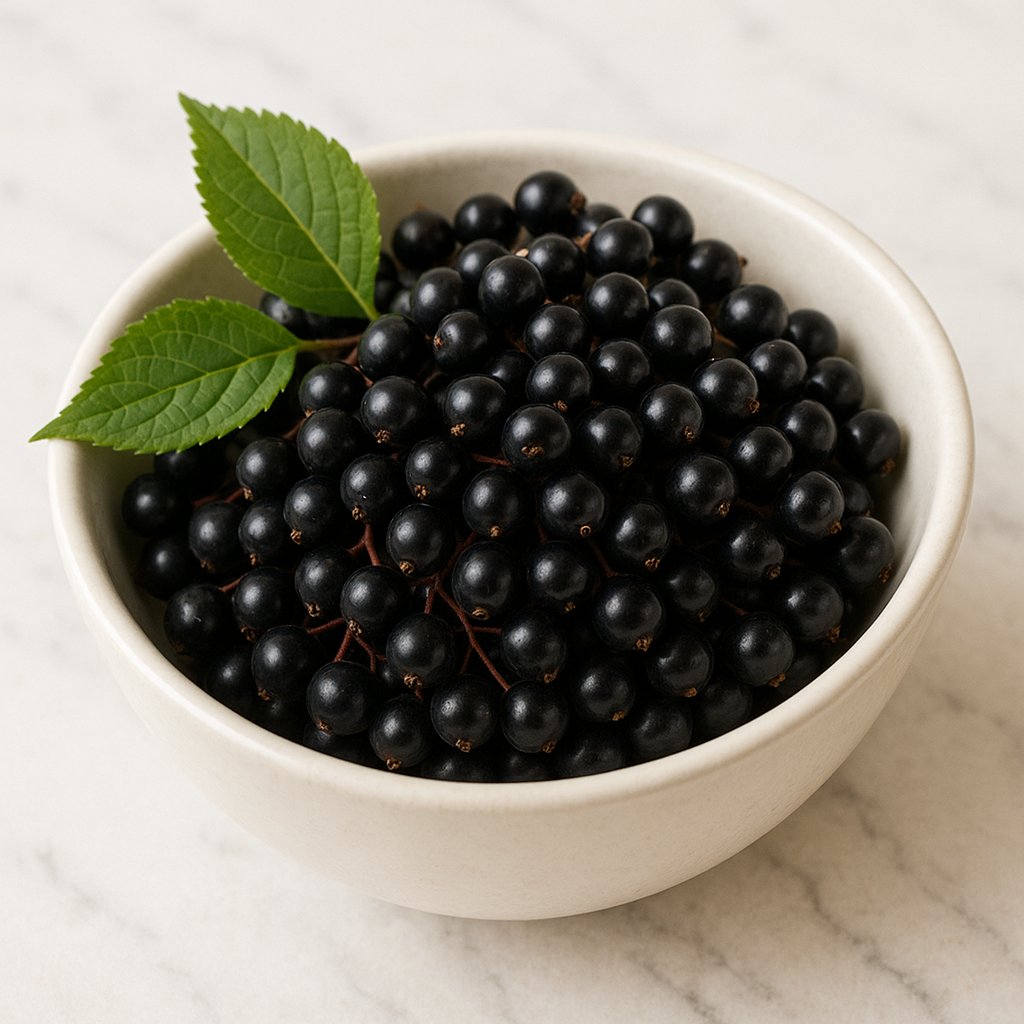
Aromatic, dark purple berries – classic for juice, syrup and jelly.

Wiki about elderberry Nutri-Score A Vegan Yes Gluten-free Yes Lactose-free Yes Nut-free Yes
NUTRITION / 100 g
73 kcal 0.7 g Protein 18.4 g Kohlenhydrate 0.5 g Fett

Introduction

Fresh elderberries
Elderberries are one of those ingredients that always make me a little bit sentimental. I still remember my first autumn, when I wandered through a village park with a friend and he enthusiastically picked a large cluster of dark glossy berries from a shrub – I first thought he wanted to poison me until he explained that elderberries must be heated. Since then I have learned to both respect and love the little black spheres.

Elder (Sambucus nigra) bears its fruit in dense umbels and smells slightly tart and floral in late summer. The berries are rich in flavors that recall dark berries, a touch of bitter chocolate and a floral note. Culinary-wise they are incredibly versatile: from classic elderflower/berry syrup to jams, liqueurs and game sauces – the possibilities are large.

A few practical tips I gathered on forays and in the kitchen:

  • Harvest time: Berries should be fully black and plump; avoid red or green fruits.
  • Safety: Raw berries, bark and leaves are slightly toxic; always cook or process before eating.
  • Preservation: Syrup, canning or freezing are ideal methods to preserve the aroma.
I like to make a simple elderberry syrup with lemon and cloves – the recipe is as comforting as a good novel. A colleague of mine claims his elderberry liqueur makes every family gathering better; I say that's due to the extra warmth the liqueur radiates. In my kitchen I often combine elderberry with apple, red wine, cloves and cinnamon, because the acidity and spice wonderfully carry the dark fruitiness.

Medicinally elderberries have traditionally been used for cold symptoms, and recent studies are examining their constituents more closely. Still, I am careful not to make blanket health claims and recommend consulting professionals if in doubt. When foraging I also pay attention to sustainability: don't pick too much, avoid gathering near heavily trafficked roads and treat the shrub respectfully.

For me elderberries are a small autumnal wonder: aromatic, a bit mysterious and perfect for experimenting – as long as you properly cook them first.

Availability & types

Availability and types of elderberries

Elderberries typically come from the black elder (latin: Sambucus nigra), a plant that grows naturally in Europe, parts of Asia and North Africa. Elder bushes are often found at woodland edges, in hedgerows or along field paths – places that are not too dry and not too shady. Elder prefers the classic Central European environment: not too hot in summer and not too cold in winter.

There are several species and cultivars of elder. The main ones you should know are:

  • Black elder (Sambucus nigra): the most common species in Europe. Its berries are dark blue to black and are usually processed into juice, syrup, jelly or dried products.
  • American elder (Sambucus canadensis): native to North America. The berries are often a bit larger, taste similar and are also used for food.
  • Red elder (e.g. Sambucus racemosa): berries are bright red. They look attractive but are often less suitable to eat raw and can be somewhat unpleasant. For that reason they are less used in cooking.
  • Ornamental forms: there are also elders grown mainly for their attractive leaves or flowers. Their berries are not always suitable for eating.
In cultivated varieties (plants selected by people) breeders often focus on three things: larger berries, higher yield and better disease resistance. A well-known example in Europe is the “Haschberg” cultivar, often grown for syrup and juice. There are also cultivars bred to be sweeter or better suited to colder regions.

Because of these different species and varieties there are also many "formats" in which elderberries can be sold. Here are some common forms:

  • Fresh – picked directly, usually in late summer to early autumn (typically August to September). Fresh berries are soft, dark and perish quickly.
  • Frozen – convenient in the kitchen because the berries keep longer and allow you to prepare elderberry products out of season.
  • Dried – good for teas or as an ingredient in blends. Drying makes the berries more shelf-stable.
  • Juice, syrup, preserves – the most common ways to use elderberry. These products are often available in supermarkets or markets.
Where to find elderberries:

  • Wild foraging in nature (observe protected areas and only gather what is permitted).
  • Farms, weekly markets or farm shops that process elderberries.
  • Supermarkets and health food stores, usually as juice, syrup or dried.
  • Online or from fruit suppliers for special cultivars and frozen berries.
Important to know: raw elderberries can be slightly bitter or even somewhat unpleasant. Some plant constituents can cause stomach upset. Therefore elderberries are usually heated or processed – cooking removes undesirable substances and preserves the delicious flavor. That way almost everyone can safely enjoy the berries.
Details & nutrition

Property Value
Unit g
Calories per 100 73
Protein per 100 0.7
Carbohydrates per 100 18.4
Sugar per 100 0.5
Fat per 100 0.5
Saturated fat per 100 0.1
Monounsaturated fat 0.0
Polyunsaturated fat 0.3
Fiber per 100 7.0
Vitamin C (mg) per 100 36
Vitamin D (IU) per 100 0
Calcium (mg) per 100 38
Iron (mg) per 100 1.6
Nutri-Score A
CO₂ footprint 0.6 kg CO2e/kg
Origin Europe; often wild-harvested or cultivated in Central Europe (e.g. Germany/Austria)
Gluten-free Yes
Lactose-free Yes
Nut-free Yes
Vegan Yes
Note Consume raw only in small amounts; elderberries are usually heated/processed (e.g. into juice, syrup, jelly), as raw berries can be hard to digest.

Technical & scientific information

Elderberries (predominantly from Sambucus nigra) are small, dark purple to black drupe-like berries traditionally used as food and medicinal plants in Europe and parts of Asia and North America. Botanically they belong to the family Adoxaceae. From a chemical and nutritional perspective elderberries are characterized by a high content of secondary plant metabolites, water-soluble pigments and soluble fibers, making them interesting both culinarily and pharmacologically.

Chemical composition and constituents

  • Anthocyanins: The dominant colorants are anthocyanins, particularly derivatives of cyanidin (e.g. cyanidin-3-glucoside, cyanidin-3-sambubioside). These compounds give the characteristic dark purple color and contribute to antioxidant activity.
  • Flavonoids and phenolics: Flavonols such as quercetin and rutinosides as well as various phenolic acids are present and complement the antioxidant profile.
  • Glycosides and potential toxins: In unripe berries, seeds, leaves and bark cyanogenic glycosides such as sambunigrin occur, which can release hydrogen cyanide upon enzymatic cleavage. This makes raw consumption of unripe or improperly processed parts potentially toxic.
  • Other constituents: Organic acids (e.g. malic and citric acid), small amounts of carotenoids, vitamin C, minerals (e.g. potassium) and soluble fibers (pectins) are also characteristic.
Nutritional values and physical properties

Elderberries supply mainly carbohydrates and soluble fiber, have low fat and protein content, and contribute sugars and organic acids to the flavor composition. The relatively high pectin content influences gel formation during cooking, making the berries suitable for jellies and jams.

Processing and stability

  • Harvest and ripeness: Only fully ripe, deep dark berries are used because unripe fruits contain higher amounts of cyanogenic glycosides.
  • Thermal treatment: Boiling, pasteurization or fermentation largely destroy cyanogenic precursors and inactivate heat-labile unwanted compounds; thus juices, syrups and preserves become safe.
  • Drying and freeze-drying: Are possible preservation methods. Freeze-drying better preserves anthocyanins, while conventional drying can lead to color loss and oxidation.
  • Extraction: Aqueous or hydroalcoholic extracts are produced for dietary supplements; standardizations are often based on anthocyanin content.
Health aspects and evidence

In vitro and pharmacological studies show antioxidant and partly antiviral effects, including inhibition of viral entry or replication in cell culture models. Clinical studies with standardized elderberry extracts or syrups suggest, in some influenza-like illnesses, a shortening of symptom duration and attenuation of symptoms; however, data are product- and dose-dependent and do not allow general therapeutic claims. The antioxidant capacity is carried by anthocyanins and flavonoids, while bioavailability and metabolism in humans are complex.

Safety notes

Raw consumption of unripe berries, seeds, leaves and bark should be avoided because they contain cyanogenic glycosides and other irritating compounds. Processing errors can cause gastrointestinal complaints. Pregnant or breastfeeding women and severely ill persons are advised to avoid highly concentrated extracts or consult medical professionals. Interactions with medications have not been comprehensively studied; caution is warranted with concurrent use of immunomodulatory drugs.

Elderberries are a chemically interesting, traditionally used ingredient with a characteristic profile of anthocyanins, flavonoids and pectins. Properly harvested and processed they offer safe culinary and supplemental uses, whereas improper raw consumption can pose health risks due to cyanogenic precursors. Careful standardization and testing are required for therapeutic applications, and consumer information and processing standards improve food safety.

Wiki entry for: elderberry
Active now: 24 visitors of which 2 logged-in members in the last 5 minutes