Availability and types of elderberries
Elderberries typically come from the black elder (latin: Sambucus nigra), a plant that grows naturally in Europe, parts of Asia and North Africa. Elder bushes are often found at woodland edges, in hedgerows or along field paths – places that are not too dry and not too shady. Elder prefers the classic Central European environment: not too hot in summer and not too cold in winter.
There are several species and cultivars of elder. The main ones you should know are:
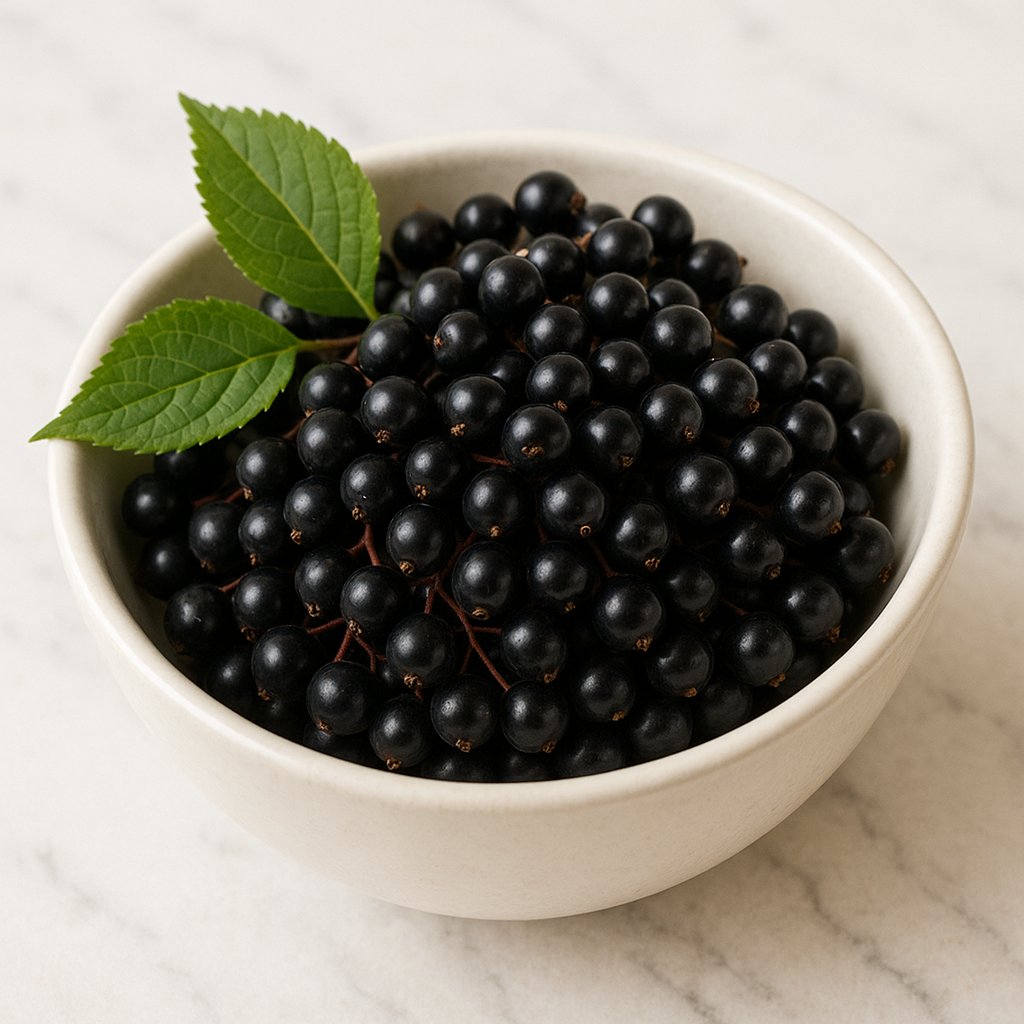
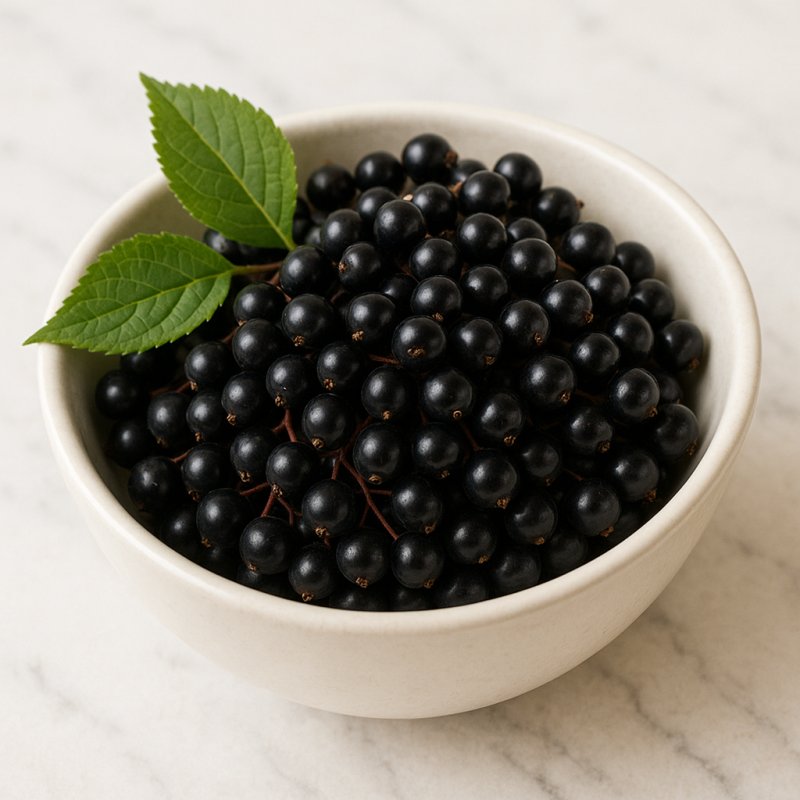
- Black elder (Sambucus nigra): the most common species in Europe. Its berries are dark blue to black and are usually processed into juice, syrup, jelly or dried products.
- American elder (Sambucus canadensis): native to North America. The berries are often a bit larger, taste similar and are also used for food.
- Red elder (e.g. Sambucus racemosa): berries are bright red. They look attractive but are often less suitable to eat raw and can be somewhat unpleasant. For that reason they are less used in cooking.
- Ornamental forms: there are also elders grown mainly for their attractive leaves or flowers. Their berries are not always suitable for eating.
In cultivated varieties (plants selected by people) breeders often focus on three things: larger berries, higher yield and better disease resistance. A well-known example in Europe is the “Haschberg” cultivar, often grown for syrup and juice. There are also cultivars bred to be sweeter or better suited to colder regions.
Because of these different species and varieties there are also many "formats" in which elderberries can be sold. Here are some common forms:
- Fresh – picked directly, usually in late summer to early autumn (typically August to September). Fresh berries are soft, dark and perish quickly.
- Frozen – convenient in the kitchen because the berries keep longer and allow you to prepare elderberry products out of season.
- Dried – good for teas or as an ingredient in blends. Drying makes the berries more shelf-stable.
- Juice, syrup, preserves – the most common ways to use elderberry. These products are often available in supermarkets or markets.
Where to find elderberries:
- Wild foraging in nature (observe protected areas and only gather what is permitted).
- Farms, weekly markets or farm shops that process elderberries.
- Supermarkets and health food stores, usually as juice, syrup or dried.
- Online or from fruit suppliers for special cultivars and frozen berries.
Important to know: raw elderberries can be slightly bitter or even somewhat unpleasant. Some plant constituents can cause stomach upset. Therefore elderberries are usually heated or processed – cooking removes undesirable substances and preserves the delicious flavor. That way almost everyone can safely enjoy the berries.