Menu & categories

Egg yolk

Nutrient-rich egg yolk portion of the chicken egg

Wiki about egg yolk Nutri-Score D Vegan No Gluten-free Yes Lactose-free Yes Nut-free Yes
NUTRITION / 100 g
322 kcal 16.0 g Protein 3.6 g Kohlenhydrate 28.0 g Fett

Introduction

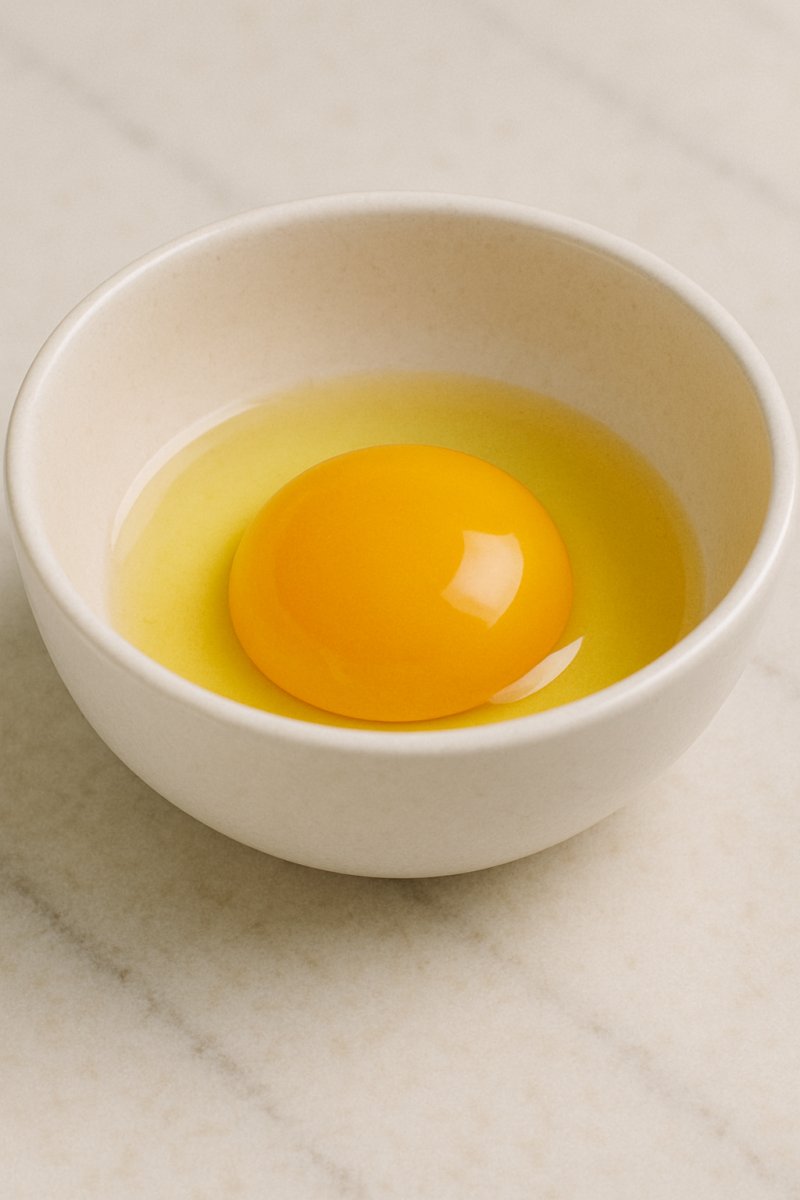
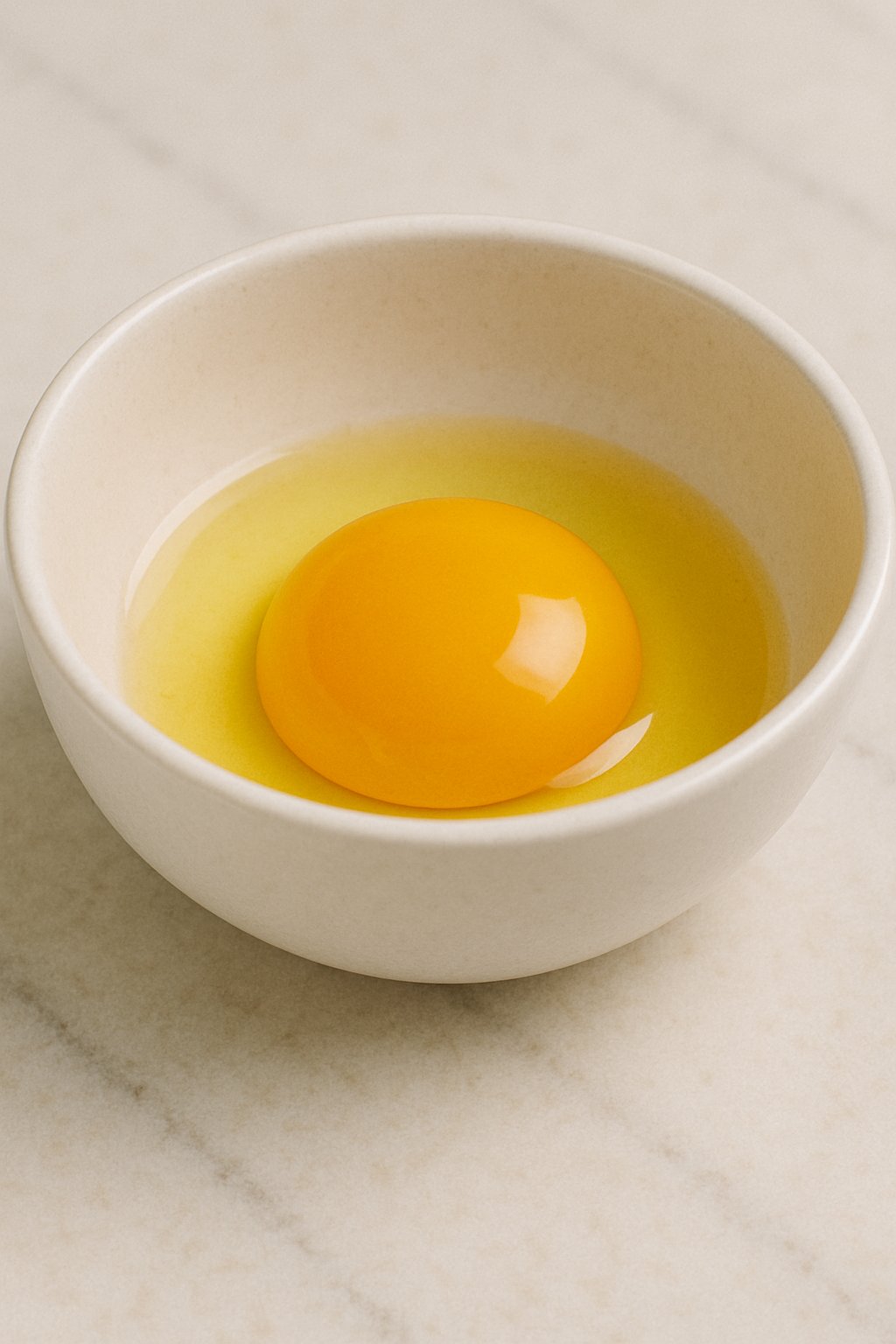
Fresh yolk of a cracked chicken egg
I love yolks. Even as a child I used to trace with fascination the deep-golden core of a cracked egg, as if a small, warm secret were hidden inside. When I shop today or stand at the market, I hold the jar of organic eggs like a treasure in my hand and can hardly resist comparing the yolk color – from pale yellow to a rich orange that recalls late summer.

For me the yolk is more than just a component of the egg; it provides texture, concentrates flavor and is an emotional anchor in the kitchen. I still remember a colleague once saying that a good spoonful of homemade mayonnaise is like a hug on a rainy afternoon. We owe that hug to the yolk: its emulsifiers make oil and vinegar meld into a silky, stable sauce. Without it there would be no velvety crème brûlée, no perfect hollandaise and no sponge cake with the right lightness.

The culinary versatility never ceases to amaze me. In pastry the yolk is the key to rich fillings; in savory dishes it binds sauces and gives them depth. Once I experimented by folding yolk gently into a risotto; the result was surprisingly silky, almost like a secret recipe. Those small experiments are what I enjoy most about cooking.

Of course I also think about sustainability and origin. A yolk is only as good as the husbandry of the hen that laid it. That's why I pay attention to quality and try to support local producers. I have learned that yolk color depends on what the hen ate and is not necessarily a quality indicator — a bright orange can come from natural pigments as well as synthetic additives, which makes me more alert when shopping.

Finally, I am impressed by the cultural richness of this small component. Whether in traditional recipes where the yolk accompanies myths and rituals, or in modern fusion dishes — the yolk remains consistently fascinating. When I prepare a dish with yolk today, I think of all the little stories connected to it and look forward to inventing new ones.

Availability & types

Availability and types

The yolk is the yellow part of an egg and is almost always among the usual ingredients in kitchens and bakeries. You can find yolks year-round in supermarkets, at weekly markets or directly from farmers. This is because hens are kept in many countries and lay eggs almost continuously. So if you want to buy yolks, you usually do not have to worry that they are scarce or only seasonally available — eggs are available all year.

Where the yolks come from exactly depends on the origin of the eggs. Common places of origin are:

  • Local farms: Many families buy eggs directly from a nearby farm. There people often know how the hens are kept.
  • Large poultry farms: Supermarkets source many eggs from larger operations that keep many hens.
  • Imports: In some areas eggs are delivered from other countries — you can sometimes tell from the packaging.
There are different types of yolks because housing, feeding and hen breed vary. Here are the main types explained in simple words:

  • Classic yolk (from barn or cage systems): These are eggs from hens usually kept in barns. These yolks look like the ones people know from home. Often these eggs are cheaper.
  • Free-range yolk: Hens are allowed outdoors and can roam outside. This can mean the yolks are somewhat more intensely colored because the hens eat more plant-based foods — similar to when you eat more vegetables and feel different as a result.
  • Organic yolk: Organic hens are often fed organic feed and live under stricter rules. The yolks of organic eggs are attractive to many people because they believe the hens are better cared for.
  • Omega-3-enriched yolk: Some eggs come from hens fed with feed high in omega-3 fatty acids (for example flaxseed). As a result the yolk contains more of these fatty acids, which can be good for heart and brain. You can think of it like an “enriched breakfast” that delivers extra nutrients.
  • Antibiotic-free or GMO-free: Some packaging states that the hens did not receive antibiotics or that their feed is GMO-free. This means certain rules were followed in raising the hens.
Visually yolks can look different: some are very pale yellow, others almost orange. That has nothing to do with "better" or "worse", but mainly depends on what the hens have eaten — similar to when two people wear different clothes because they have different wardrobes.

If you want to buy yolks, you can look out for some indicators:

  • The packaging often states whether the eggs are organic, free-range or from barn systems.
  • If you want to be sure, you can get eggs from a farmer in your region — there you can often ask directly.
  • For specific nutrients look for terms like Omega-3 or enriched.
In summary: yolks are easy to obtain because eggs are almost always available. There are different types resulting from husbandry, feeding or additives. Which yolk you choose depends on how important animal welfare, origin or certain nutrients are to you — and sometimes simply on taste or price.
Details & nutrition

Property Value
Unit g
Average weight per piece 18
Calories per 100 322
Protein per 100 16.0
Carbohydrates per 100 3.6
Sugar per 100 0.6
Fat per 100 28.0
Saturated fat per 100 9.0
Monounsaturated fat 11.0
Polyunsaturated fat 4.0
Fiber per 100 0
Vitamin C (mg) per 100 0
Vitamin D (IU) per 100 200
Calcium (mg) per 100 130
Iron (mg) per 100 6.0
Nutri-Score D
CO₂ footprint 4.5
Origin Chicken egg
Gluten-free Yes
Lactose-free Yes
Nut-free Yes
Vegan No
Note Nutritional values for the raw yolk of a chicken egg, average values per 100 g.

Technical & scientific information

The yolk refers to the yellow, central portion of a chicken egg and is scientifically known as the egg yolk or vitellus. It is formed during oogenesis in the hen's ovary, consists of a complex emulsion of lipids, proteins and water and serves as a nutrient depot for the embryo. Visually its color ranges from pale yellow to deep orange; the intensity is mainly determined by the uptake of carotenoids in the hens' diet.

Composition and macronutrients
The egg yolk makes up about 30–33% of the egg contents without shell, but contains roughly two thirds of the energy and the majority of the lipids and fat-soluble vitamins of the entire egg. Typical nutritional values per 100 g of yolk are in the range of 320–350 kcal, 16–20 g protein, 30–35 g fat and about 1.5–2 g carbohydrates. The proteins in the yolk are functionally diverse and include albumin, livetin and phosvitin; the latter are highly phosphorylated proteins with strong metal ion-binding capacity.

Lipids and fatty acid profile
The yolk contains mainly triglycerides, phospholipids (especially phosphatidylcholine and phosphatidylethanolamine) as well as cholesterol. Phospholipids like lecithin are emulsifiers and give the yolk its ability to form stable emulsions (e.g. mayonnaise). The fatty acid profile includes saturated, monounsaturated and polyunsaturated fatty acids, including essential omega-3 and omega-6 fatty acids. The exact composition varies with the hens' feed and husbandry.

Vitamins, minerals and trace elements
Yolk is a rich source of fat-soluble vitamins such as vitamins A, D, E and K as well as B vitamins, particularly vitamin B12 and folate. Minerally it provides iron, phosphorus, zinc and selenium. The cholesterol in yolk is high (typically 200–300 mg per yolk), which is why dietary guidelines previously warned against excessive intake; more recent research, however, differentiates between dietary cholesterol and endogenous cholesterol metabolism.

Biochemical peculiarities and functions
Phosvitin in the yolk has an exceptionally high affinity for metal ions, especially iron, thereby affecting antioxidant properties and the bioavailability of minerals. Lecithin and other phospholipids are essential for cell membranes and for culinary texture networks. Yolk proteins contribute enzymatic and structural functions for the embryo as well as techno-functional properties in food processing, such as gelling, foaming and emulsifying.

Processing methods and technological application
Yolk is processed raw, pasteurized or dried. Pasteurization reduces microbial risk, but partially affects functional properties. In the food industry yolks and lecithins are used as emulsifiers in sauces, baked goods, chocolate fillings and mayonnaises. Freezing and drying processes enable longer storage; added salts or sugars are used for stabilization before freezing.

Hygiene and health aspects
Raw yolk can carry Salmonella, which is why pasteurized products are recommended for risk groups (pregnant women, young children, immunocompromised). The high cholesterol content was long a health concern; however recent studies show that moderate egg consumption is generally not associated with a significantly increased cardiovascular risk in healthy individuals. Allergies to egg proteins predominantly affect egg white proteins, although both yolk and white proteins can be allergenic; reactivity varies individually.

Storage and quality indicators
Fresh yolk is round and intact; over time it loses water to the egg white, and the membrane (vitelline membrane) can weaken. Storage temperature and humidity affect microbiological stability. Quality tests include sensory assessment, pH measurement, weight and Haugh unit, while chemical analyses of fat and protein content are relevant for industrial applications.

Overall the yolk is a nutrient-rich, biologically versatile food with important functional properties for cooking and food technology. Its composition reacts sensitively to feeding, husbandry and processing conditions, and health assessments must consider individual risk factors and the context of the overall diet.

Wiki entry for: egg yolk
Active now: 24 visitors of which 2 logged-in members in the last 5 minutes