Menu & categories

Durum wheat semolina

Finely ground semolina from durum wheat, ideal for pasta, gnocchi and casseroles

Wiki about durum wheat semolina Nutri-Score C Vegan Yes Gluten-free No Lactose-free Yes Nut-free Yes
NUTRITION / 100 g
340 kcal 12.0 g Protein 68.0 g Kohlenhydrate 1.5 g Fett

Introduction

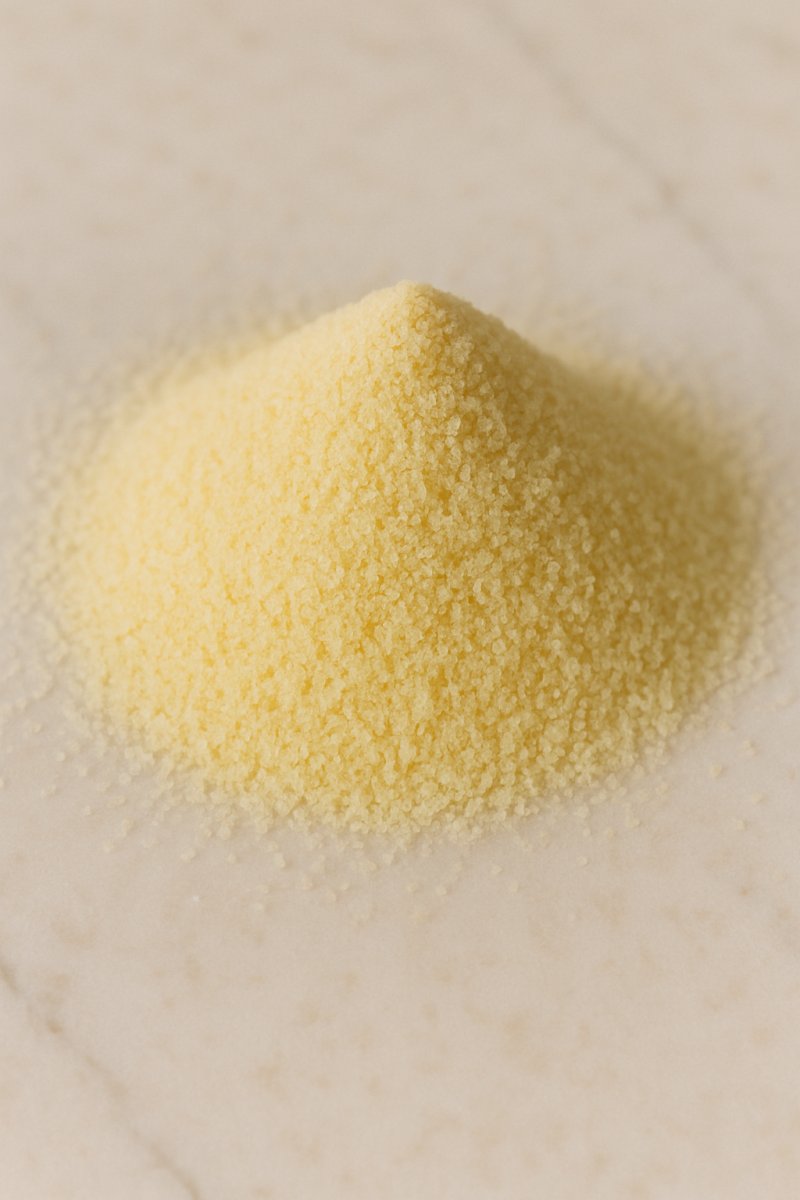
Durum wheat semolina in a bowl on a wooden board
I still remember the first bowl of semolina porridge that truly enchanted me: creamy, slightly grainy and with a pinch of cinnamon rising in my grandmother's kitchen at dusk. Since then durum semolina has been for me more than just an ingredient; it is an anchor of memories and a versatile staple that shines in both sweet and savory recipes.

Durum semolina is produced from durum wheat, a cereal with a relatively high protein and gluten content. The granulation is coarser than regular wheat flour, which gives it that characteristic texture that makes pasta and semolina dishes so satisfying. I find it fascinating how a change in milling fineness can alter the entire consistency of a dish: a fine semolina yields a silky porridge, a coarse one gives a firm, noodle-like character.

In my kitchen I use durum semolina for various classics and experimental variations. A colleague of mine swears by homemade semolina gnocchi that are slightly crisp on the outside and tender inside. I personally love the combination of browned butter and sage over semolina dumplings – it sounds simple but feels incredibly refined.

The ingredient is not only appealing in flavor but also practical: durum semolina has a stable shelf life, can be stored for long periods and is easy to portion. It is suitable for:

  • homemade pasta and pici
  • semolina porridge and casseroles
  • as a breading for vegetables or fish
  • basis for sweet desserts like halva
When cooking, pay attention to the amount of water and the cooking time; semolina absorbs liquid strongly and can quickly become too firm if not stirred in time. A small trick I learned: a splash of cream or some butter at the end makes the texture silkier and rounds out the flavors.

For me durum semolina is therefore a faithful companion in the kitchen: robust, adaptable and full of memories. Whether as a base for a rustic dinner or as comfort food on gray days — it never disappoints.

Availability & types

Availability and types of durum semolina

Durum semolina is a granular milled product made from a specific type of wheat called durum wheat. It is easy to find in many supermarkets, health food stores and even discount retailers. It can be bought in various package sizes, from a small 500‑gram pack to a large 5‑kilogram bag. In some countries durum semolina is a very common staple because it has a long shelf life and can be used in many dishes such as pasta, semolina porridge or casseroles.

Origin and growing regions

Durum wheat grows mainly in countries with warm, dry climates. Well-known growing regions include:

  • Europe: Especially Italy is famous for high-quality durum wheat – a large share of pasta is produced there.
  • North America: Much durum wheat is grown in Canada and parts of the USA.
  • North Africa and the Middle East: Countries like Tunisia, Egypt and parts of Turkey also cultivate durum wheat.
Durum wheat can be thought of as a robust cereal plant that copes well with little rainfall. Therefore it often grows where summers are hot and dry. The grains are harvested, cleaned and then milled, with the coarser parts becoming semolina.

Available varieties and variants

Durum semolina does not come in only one form. Here are the main variants, simply explained:

  • Fine semolina: It has very small granules, almost like coarse flour. Fine semolina is well suited for creamy semolina porridge or fine doughs.
  • Coarse semolina: The granules are larger and feel somewhat crumbly. This semolina is ideal for pasta and some casseroles because it retains bite during cooking.
  • Wholegrain durum semolina: In this variety the whole bran of the grain is retained, so it is darker and contains more fiber. It tastes somewhat nuttier and is healthier because more valuable components of the grain are preserved.
  • Organic semolina: This semolina comes from organic farming, meaning without synthetic fertilizers or pesticides. Many people choose organic believing it is better for the environment and healthier.
  • Durum wheat flour vs. semolina: Sometimes the products differ only in milling fineness: flour is finer than fine semolina. Both, however, come from the same cereal.
How to recognize good durum semolina?

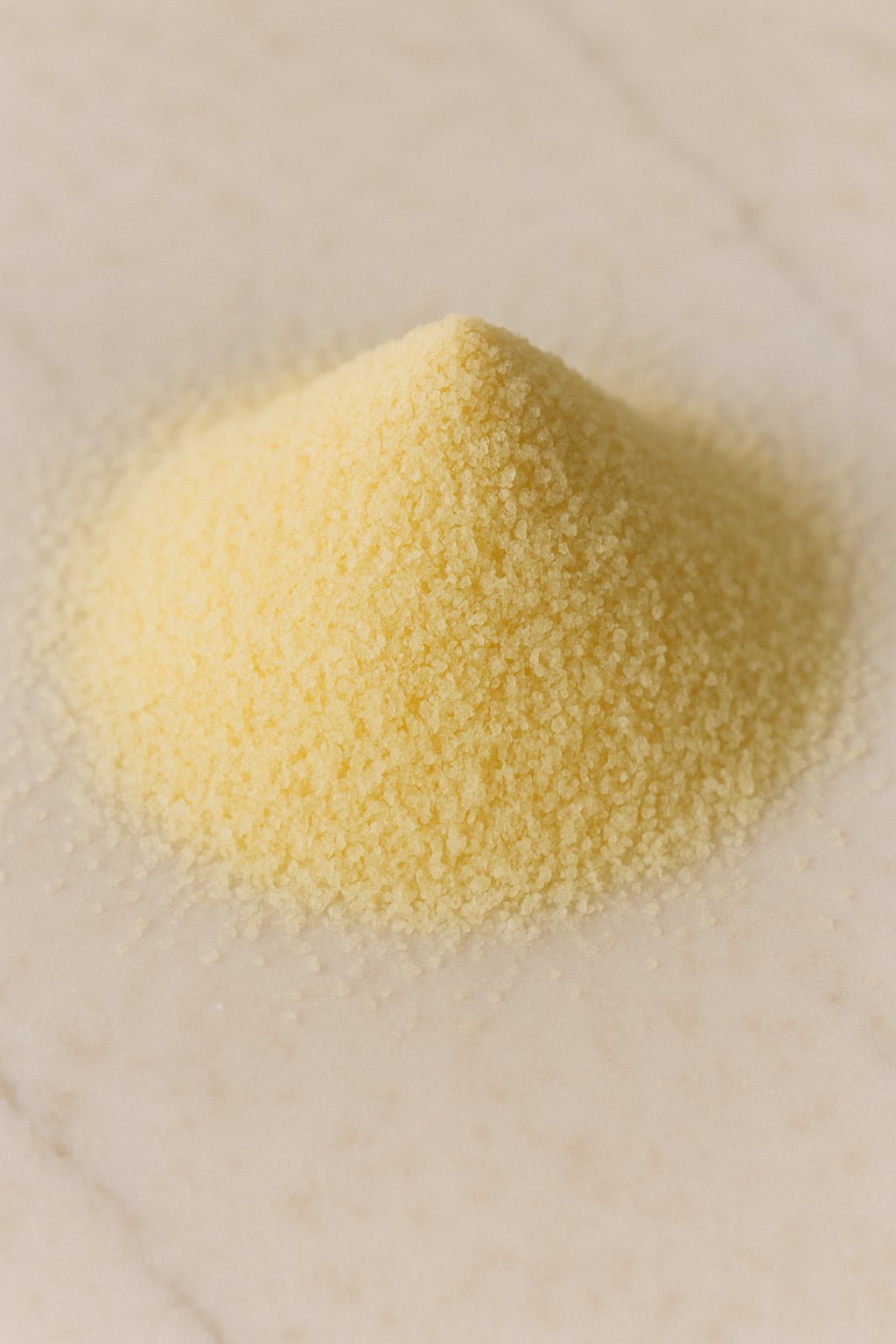
Good durum semolina has a pale yellow color and a slightly nutty aroma. The packaging often states whether it comes from Italy, Canada or another country. Organic labels and indications like “wholegrain” help you decide which variant you want. For homemade pasta the coarse or medium-fine semolina is usually preferred, while fine semolina is better for sweet semolina porridge.

Summary: Durum semolina is widespread and available in many variants — from fine to coarse, in wholegrain form or as an organic product. The choice depends on what you want to make: pasta, casserole or porridge. Because durum wheat grows mainly in warm regions, many varieties come from countries like Italy, Canada or North Africa, and you can find it almost everywhere in stores.
Details & nutrition

Property Value
Unit g
Calories per 100 340
Protein per 100 12.0
Carbohydrates per 100 68.0
Sugar per 100 1.0
Fat per 100 1.5
Saturated fat per 100 0.3
Monounsaturated fat 0.2
Polyunsaturated fat 0.8
Fiber per 100 3.5
Vitamin C (mg) per 100 0
Vitamin D (IU) per 100 0
Calcium (mg) per 100 20
Iron (mg) per 100 1.5
Nutri-Score C
CO₂ footprint 0.7
Origin Mainly durum wheat from the Mediterranean region and Central Europe
Gluten-free No
Lactose-free Yes
Nut-free Yes
Vegan Yes
Note Durum wheat semolina is produced from durum wheat (Triticum durum) and is a typical ingredient for pasta, gnocchi, casseroles and desserts such as semolina pudding. May contain traces of other cereals.

Technical & scientific information

Durum semolina is a coarse-grained milled product obtained by milling durum wheat (Triticum durum). It consists predominantly of the endosperm of the grain and is characterized by a yellowish color and a firm, granular structure. Compared with common wheat, durum wheat contains a higher proportion of proteins, particularly gluten, and has a higher content of hard, protein-rich albumin and globulin fractions that favor the typical bite of pasta and semolina dishes.

Chemical composition and nutritional values
Durum semolina mainly consists of carbohydrates (predominantly starch), protein (mainly gluten), fiber, lipids and minerals. Typical nutritional values per 100 g are approximately 340–370 kcal energy, 12–14 g protein, 2–4 g fat, 60–70 g carbohydrates and 3–4 g fiber; exact values vary with fineness and origin. Minerals such as iron, magnesium, phosphorus and B vitamins (especially thiamine and niacin) are present in moderate amounts. The starch is composed mainly of amylopectin and amylose; the ratio influences texture and cooking behavior.

Processing methods
Recovery is carried out by dehulling (separating the spindle-shaped seed coat), subsequent coarse milling and sieving so that larger particles remain. Industrially, durum wheat undergoes cleaning, milling in multiple passes and sieving, producing endosperm granules of 200–800 µm. Finer milling results in semolina with different grain sizes up to durum wheat flour. In pasta production semolina is often mixed with water to form a firm dough; the high protein concentration promotes gluten networks that provide elasticity and structure. Extrusion at elevated temperature is a common procedure in pasta production, where thermo-mechanical effects cross-link starch and influence the surface.

Functional properties
Durum semolina has specific rheological and techno-functional characteristics: the high protein and gluten quality ensures good water uptake, dough stability and a firm structure after cooking. The granularity contributes to a rough surface that helps sauces adhere. On heating the starch gelatinizes; gel formation and the extent of swelling depend on particle size, amylose content and processing. Browning reactions (Maillard) can cause surface color changes at high processing temperatures.

Health aspects
From a nutritional perspective durum semolina provides valuable proteins, complex carbohydrates and some micronutrients. Due to the gluten content the product is not suitable for people with celiac disease or non-celiac gluten sensitivity. The glycemic index of durum semolina products varies depending on processing and preparation; coarse-grained preparations and combining with proteins or fats tend to lower the postprandial glucose response. Wholegrain variants or products high in fiber improve satiety and gut health.

Sensory characteristics and applications
Durum semolina is classically used for pasta, couscous, bulgur-like products, semolina porridge (semolina), dumplings and certain baked goods. Sensorially it delivers a slightly coarse mouthfeel, yellow to golden color and a neutral-nutty flavor. In industrial formulations particle size is specifically chosen to control texture, cooking time and water uptake.

Storage and quality factors
To preserve quality, dry, cool and light-protected storage conditions are important, as small amounts of fats can oxidize and pest infestation (e.g., grain beetles) must be avoided. Quality indicators include moisture content, protein content, gelatinization behavior of the starch and microbiological purity. Analytical tests include moisture determination, crude protein analysis (Kjeldahl or Dumas), fat determination, flour/semolina fineness and sensory tests after production.

In summary durum semolina is a technologically valuable cereal product with characteristic granularity, high protein quality and versatile applications in food production. Its functional properties are based on the interplay of proteins and starch, and processing and preparation are decisive. For consumers durum semolina is a nutrient-rich carbohydrate source, provided there is no gluten intolerance and appropriate storage conditions are observed.

Wiki entry for: durum wheat semolina
Active now: 20 visitors of which 2 logged-in members in the last 5 minutes