Availability and types
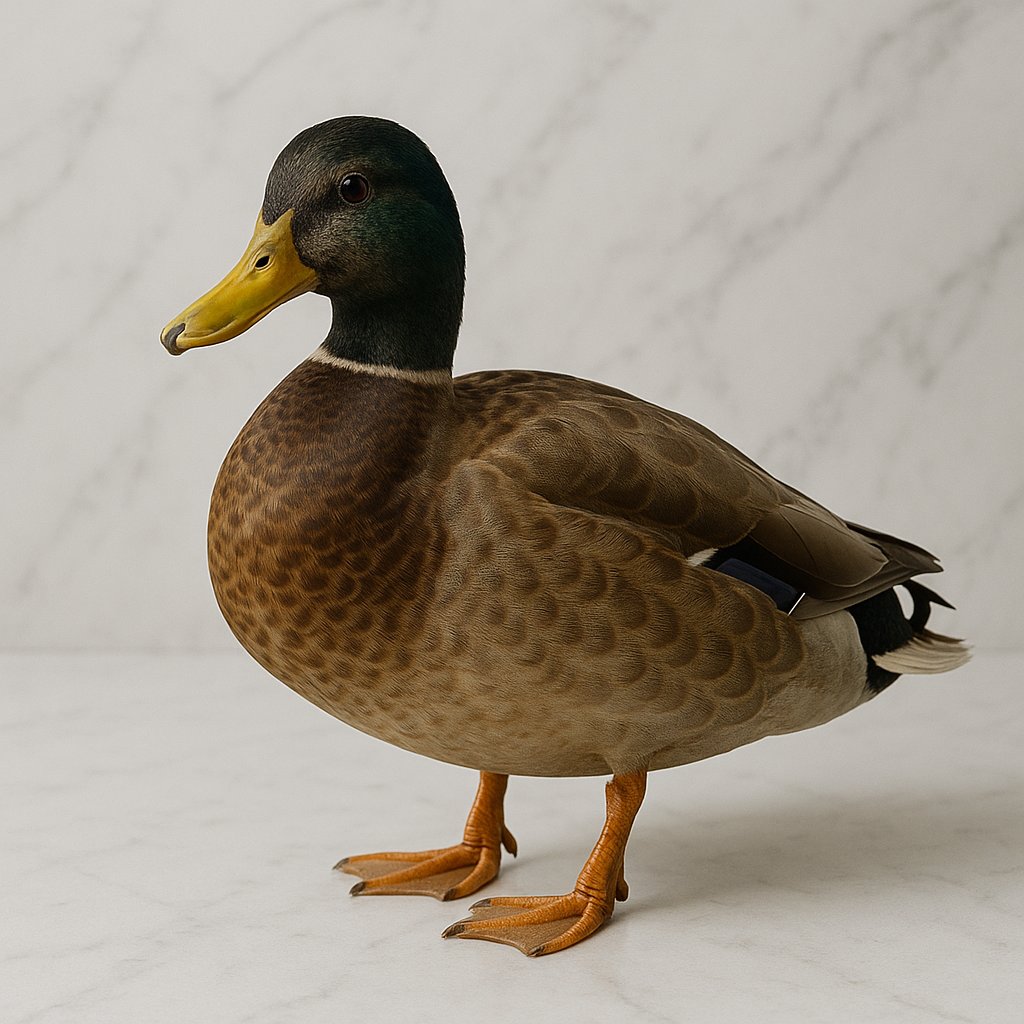
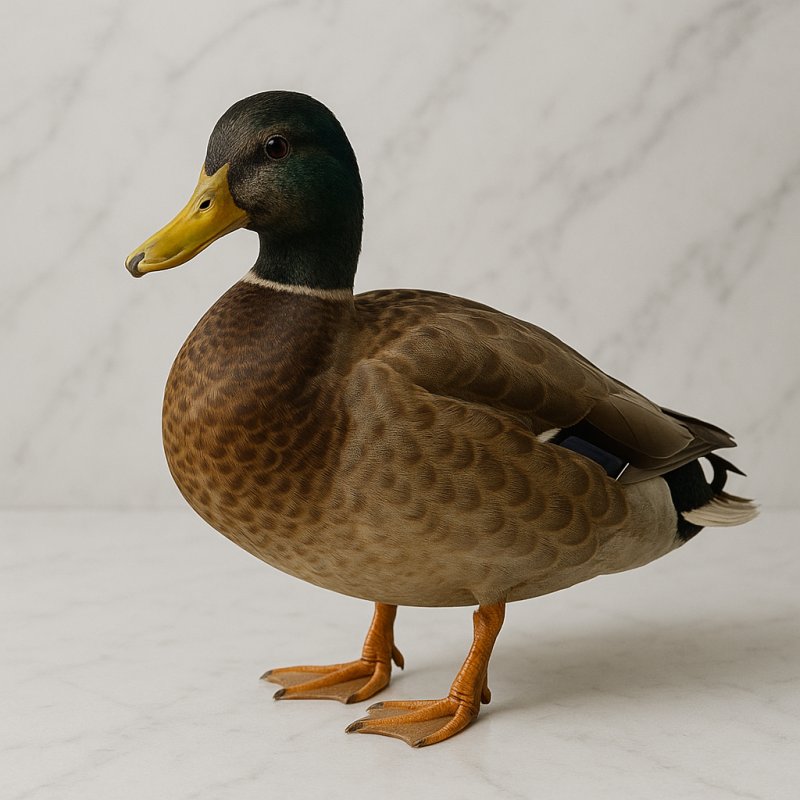
The duck is a poultry bird eaten in many parts of the world. It is commonly found in supermarkets, farmers' markets and restaurants. Some people keep ducks on farms or small holdings, others come from larger commercial operations. If you imagine a duck, think of a large bird with a broad bill and often glossy plumage — the animals we eat are raised until they are big enough.
Origin
Ducks have been kept by humans for a long time. Many of today's domestic ducks originally descend from the wild mallard, which lives in Europe, Asia and North America. Over time people have adapted and bred ducks for different regions. That is why there are ducks from Europe (for example France), Asia (for example China) and North America. Some regions are particularly known for their ducks, such as France for the famous French duck in cuisine.
Ducks have been kept by humans for a long time. Many of today's domestic ducks originally descend from the wild mallard, which lives in Europe, Asia and North America. Over time people have adapted and bred ducks for different regions. That is why there are ducks from Europe (for example France), Asia (for example China) and North America. Some regions are particularly known for their ducks, such as France for the famous French duck in cuisine.
Breeding/production areas
Unlike plants, duck does not "grow" in the ground but is bred. Important breeding areas are:
Unlike plants, duck does not "grow" in the ground but is bred. Important breeding areas are:
- Europe – Countries like France, Germany and Poland raise many ducks for the European market.
- Asia – China in particular is a very large producer of duck meat and products.
- North America – there are also farms raising ducks here, especially in the USA and Canada.
On farms ducks often live in barns with outdoor access or in large modern sheds. Some ducks have access to ponds or puddles, which is more natural for them. Others are raised in larger operations and fed to grow evenly.
Available varieties and types
There are different kinds and varieties of duck that differ in size, flavor and appearance. Among the best known are:
There are different kinds and varieties of duck that differ in size, flavor and appearance. Among the best known are:
- Domestic duck (mallard descendant) – These ducks are the most common. They usually have firm, dark meat and are versatile in the kitchen.
- Peking duck – A large, pale duck variety that is particularly popular. Its meat is tender and it is often roasted whole. In China Peking duck is a famous dish.
- Muscovy duck – This type looks somewhat different, often with less fat layers and a different aroma. It originates from South America and is popular in some regions.
- Wild duck – When people refer to wild duck they mean ducks that were not bred but live in nature. Their meat can have a stronger flavor.
There are also ducks in different processing states that you can buy:
- Fresh duck – corresponds to the whole body or parts such as legs or breast.
- Frozen duck – is convenient to store and keeps for a long time.
- Canned or smoked variants – here the meat is already processed and ready to eat or reheat.
When you buy a duck you often see indications of origin and sometimes labels like "free-range" or "from controlled rearing". "Free-range" means the ducks had more space and often access to water, which is important for many people. Ultimately the choice depends on taste, price and availability in your region. Just as there are different apple varieties, there are also different types of duck — each has its own characteristics that suit certain dishes particularly well.