Menu & categories

Dried onion

Aromatic, long-lasting onion for savory dishes.

Wiki about dried onion Nutri-Score C Vegan Yes Gluten-free Yes Lactose-free Yes Nut-free Yes
NUTRITION / 100 g
341 kcal 10 g Protein 75 g Kohlenhydrate 1 g Fett

Introduction

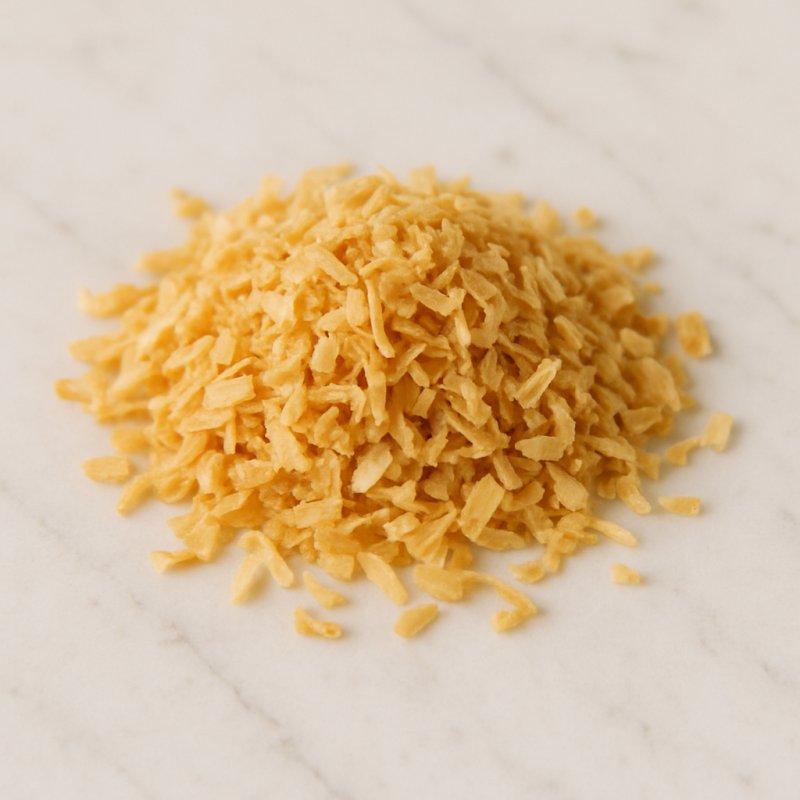
Dried onion pieces
I have a secret soft spot for dried onions, not only because they're practical, but because they've often rescued me from small kitchen shortages. I still remember a rainy evening when I suddenly wanted lentil soup but had no fresh onion left in the house. A pinch of dried onion, a little patience, and suddenly the soup had exactly that savory depth I was looking for.

Dried onions come in several forms: flakes, granules or powder. The flavor is more concentrated than fresh onions, but often milder in pungency. That makes them ideal when you want onion flavor without the texture of sautéed onions or without teary eyes. In spice mixes, ground meat recipes, salad dressings and marinades they provide quick flavor, and in dry mixes they are a real magic trick.

A colleague of mine swears by dried onions for his herb bread: they give an even flavor without adding extra water. When I have time I briefly soak the flakes in lukewarm water because they then act almost like freshly sautéed onions. If not, I simply add them straight to the dish and let some liquid simmer.

  • Rule of thumb for substitution: 1 tbsp dried onion ≈ 3–4 tbsp fresh chopped onion.
  • Rehydration: Soak in warm water for 5–10 minutes or cook directly in liquid.
  • Storage: Airtight, dry and dark; ideally 6–12 months for best flavor.
I like that dried onions are so versatile: they save time, fit in the pantry and are a reliable flavor source when the kitchen needs to improvise. If you've never used them, try them first in a sauce or on roast potatoes – you'll be surprised how much character a small pinch can release.

Availability & types


Dried onion is a practical ingredient that keeps for a long time and that in many kitchens replaces fresh onion. It is made when fresh onions are slowly dried so that water is removed. This makes them light, long-lasting and widely available – almost like potato chips, except they don't stay crunchy but are used for seasoning.

Origin
Onions grow in almost every part of the world. The onion from which dried onions are made often comes from countries with large growing areas. Many come from Europe, North America, India or China. That means: when you buy dried onion, it can come from your own country or from far away. The onion itself is a very old cultivated plant – people have grown it for thousands of years because it tastes good and stores well.

Growing regions
Typical growing regions are areas with lots of sun and good soils. In Europe this includes parts of Spain, the Netherlands and Germany. In North America onions often come from states with large fields like California or Washington. In Asia India and China are major producers. These countries can harvest a lot of onions, which is why dried onions are commonly found in supermarkets worldwide.

Available varieties and forms
Dried onions come in several forms. Here is a simple list so you can see the difference:

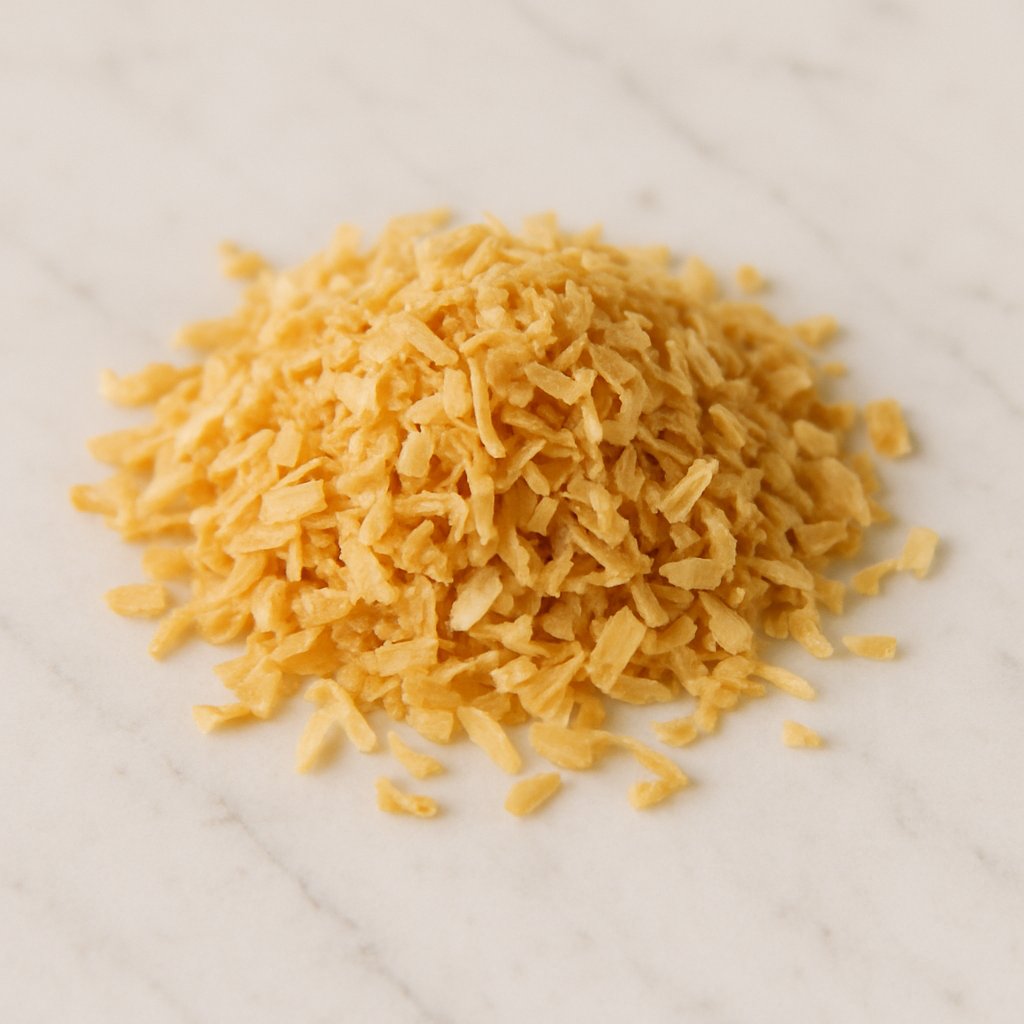
  • Onion dices / pieces: small dried pieces that look like tiny onion bits. They are practical if you want visible onion in soups or sauces.
  • Onion granulate: finer than dices but still small granules. It dissolves faster and is good for seasoning ground meat or dough.
  • Onion powder: ground very finely, almost like flour. It disperses quickly in liquids and doughs, ideal for dressings or marinades.
  • Onion flakes: flat, larger pieces – they somewhat resemble oat flakes but are made of onion. Good for toppings or stews.
  • Smoked onion: in this variant the onion was smoked before drying. It has a smoky flavor, like seasoning over a campfire.
  • Fried / caramelized onion: these pieces were fried first and then dried. They taste sweeter and are like little flavor packages.
Think of the variants like pasta: there are spaghetti, penne or fusilli – they're all pasta but look different and are used differently. The same goes for dried onions: there is a suitable form for each task.

Where to get them
You can find dried onions in the supermarket spice aisle, in health food stores, online and in bulk packs for restaurants. Sometimes they're in small jars, sometimes in large bags. Check the best-before date and whether the packaging is well sealed.

Tip for choosing
If you want a strong flavor, choose pieces or caramelized variants. For an even flavor in a sauce, powder is often better. And if you want something special, try smoked onion – it gives dishes a warm note.
Details & nutrition

Property Value
Unit g
Calories per 100 341
Protein per 100 10
Carbohydrates per 100 75
Sugar per 100 38
Fat per 100 1
Saturated fat per 100 0.2
Monounsaturated fat 0.1
Polyunsaturated fat 0.4
Fiber per 100 15
Vitamin C (mg) per 100 7
Vitamin D (IU) per 100 0
Calcium (mg) per 100 200
Iron (mg) per 100 7
Nutri-Score C
CO₂ footprint 1.5 kg CO2e/kg
Origin EU
Gluten-free Yes
Lactose-free Yes
Nut-free Yes
Vegan Yes
Note Dried onion (flakes/granules) — briefly rehydrate as needed before use or cook directly; nutritional values may vary depending on drying level.

Technical & scientific information

Dried onion refers to dried and comminuted products of the kitchen onion (Allium cepa), used as a spice, instant ingredient or in industrial applications. By removing water the product is preserved, flavor and aroma compounds are concentrated and the volume is greatly reduced compared with fresh onion. Dried onions are available as pieces, flakes or powder and are widespread in food processing and home use.

Composition and nutritional values
Because of water loss, macronutrients and secondary plant compounds in dried onion on a dry basis are significantly more concentrated than in fresh onion. Main constituents are carbohydrates, especially soluble saccharides and fructans (short-chain fructooligosaccharides), as well as fiber. Proteins make up a smaller share while fat content remains low. Minerals such as potassium, calcium and trace elements are largely retained. Heat- and air-sensitive micronutrients such as vitamin C are reduced by heat and oxidation during drying.

Important bioactive compounds
Onions contain characteristic sulfur-containing precursors, so-called cysteine sulfoxides, from which volatile sulfur compounds are formed by the enzyme alliinase when cells are disrupted. These compounds contribute to aroma and potential health-related effects. Onions also contain flavonoids such as quercetin in glycosidic form, which possess antioxidant properties and are generally more stable in dried products than volatile aroma compounds.

Processing methods
Common drying processes include:

  • Convection drying (hot air): widespread and cost-effective, but leads to losses of heat-sensitive vitamins and aroma compounds.
  • Spray or fluid-bed drying: used to produce powder from onion juice or puree, often with carriers like maltodextrin to improve flow properties.
  • Freeze drying (lyophilization): preserves aroma and structural characteristics particularly well, but is costly.
  • Vacuum and microwave-assisted drying: shorten drying times and can be gentler.
Physical properties and storage
Dried onions are characterized by low moisture (<10 %), low water activity and thus reduced microbial activity. Nevertheless residual moisture, oxygen and light affect shelf life; oxidation can cause flavor loss and rancidity of minor lipids. For storage, dry, dark and airtight containers at cool temperature are suitable. Anti-caking agents such as silicon dioxide are used in powder formulations to maintain flowability.

Health aspects
Dried onions provide phytochemicals with antioxidant effects that can show anti-inflammatory actions in vitro and in animal studies. Because of their fructan content, onions are considered FODMAP-rich foods and can cause bloating and abdominal pain in sensitive individuals. People with onion allergy or high sensitivity to sulfur-containing compounds should avoid dried onions. Drying reduces some volatile, irritating compounds but does not eliminate all active substances.

Applications
Dried onions are used as flavoring agents in soups, sauces, spice mixes and convenience products. Powder is suitable for dosing and dry mixes, flakes can be rehydrated quickly in warm liquids. Industrially they are also used as starting material for extracts and flavors.

Wiki entry for: dried onion
Active now: 6 visitors of which 2 logged-in members in the last 5 minutes