Menu & categories

Dried apricots

Sweet, fiber-rich dried fruit with natural fruit sugars

Wiki about dried apricot Nutri-Score C Vegan Yes Gluten-free Yes Lactose-free Yes Nut-free Yes
NUTRITION / 100 g
240 kcal 3.4 g Protein 63 g Kohlenhydrate 0.5 g Fett

Introduction

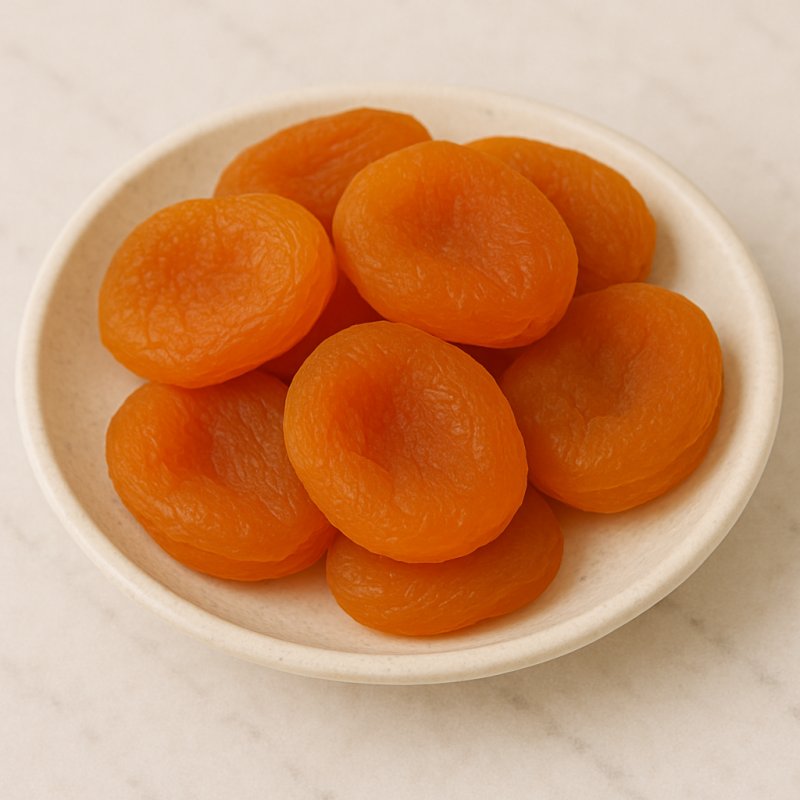
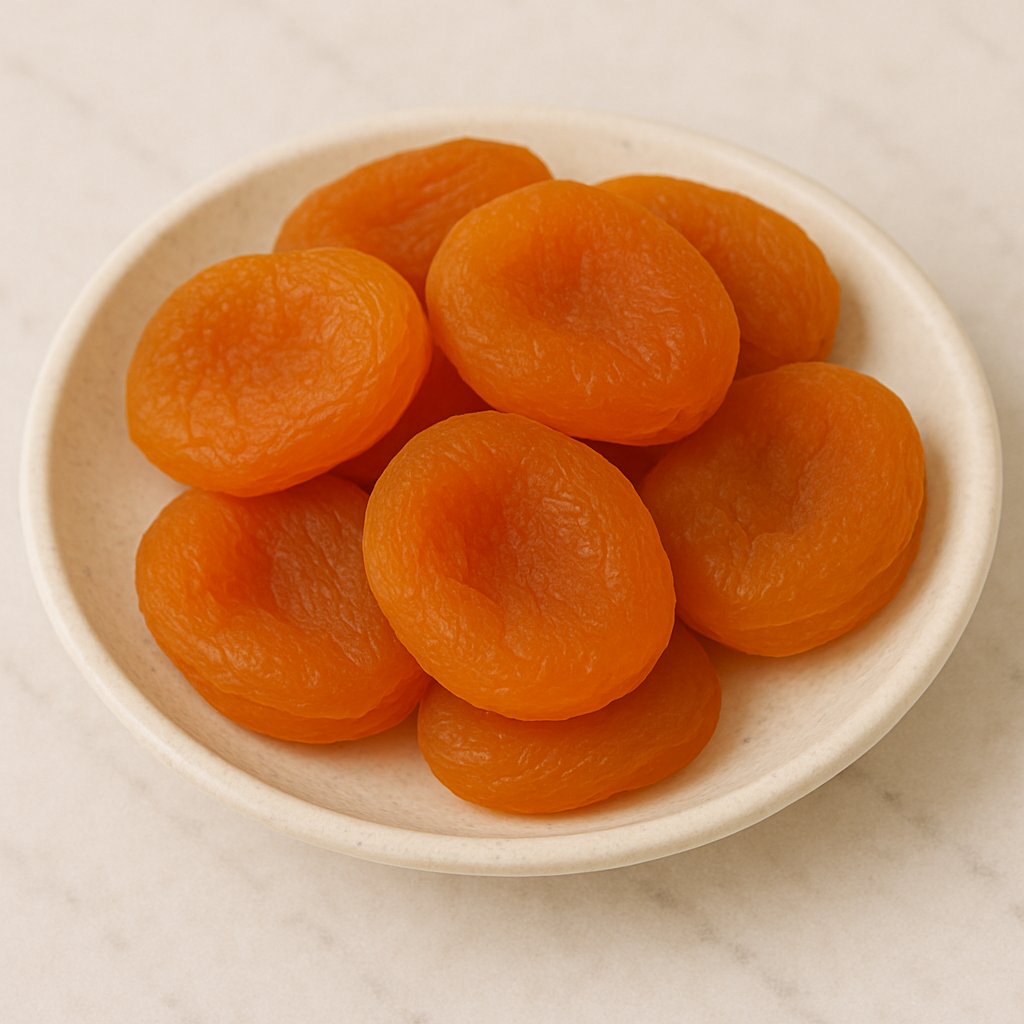
Dried apricots on a plate
I still remember how the scent of dried apricots used to herald the afternoon in my kitchen: sweet, a little honeyed and surprisingly complex. A colleague once brought a small tin, and we nibbled through half of it while chatting about recipes and travels. These fruits, dried and concentrated, have for me something of culinary comfort literature — they tell of sun, patience and the long journey from tree to bite.

Dried apricots are not just a snack; they are versatile ingredients that shine equally in sweet and savory dishes. I secretly use them in salad dressings, season couscous with them or liven up a roast in winter with them. Their texture is chewy yet juicy, their flavor balances between intense sweetness and a fine, light acidity. When I cut them into small cubes, they give baked goods a warm, fruity core; as a purée they turn yogurts and sauces into velvety, golden compositions.

  • Shelf life and storage: Dried apricots keep for a long time when stored cool and airtight. Once opened, I like to keep them in a jar — this way they retain aroma and texture.
  • Nutrients: They provide fiber, vitamin A and some minerals, making them a clever snack when the mid-afternoon slump hits.
  • Culinary tips: A short soak in warm water or tea can loosen their texture and round out the flavor; I sometimes add a splash of liqueur or lemon juice, depending on the dish.
I also love the cultural versatility of these dried fruits. At a market on a trip I discovered a variety with a slight smoky note — a small vendor told me laughing that these were the locals' favorite pieces for savory stews. Encounters like that have shaped my cooking and taught me that dried apricots are much more than just sweet mementos.

When friends visit, I often put out a small bowl of apricots, nuts and a strong cheese. The combination of sweet, salty and nutty almost always leads to surprised enjoyment and good cheer. For me dried apricots are an indispensable ingredient that brings stories, deepens flavor and gives a small everyday luxury in many moments.

Availability & types

Availability and types

Dried apricots are found almost everywhere and are among the most popular dried fruits. They are available in supermarkets, health food stores, small grocery shops and weekly markets. You can often buy them in open baskets or packaged in bags and tins. In large stores they are usually in the dried fruit or nuts section; in natural food stores and organic markets there are often fair-trade or especially gently dried varieties.

Origin and growing regions

Apricots grow on trees and like warm, sunny places. Major apricot-growing regions are in countries such as Turkey, Iran, Uzbekistan, Spain and California in the USA. The Turkey is one of the largest producers of dried apricots worldwide. Farmers harvest apricots when they are ripe and juicy and then dry them so they keep for a long time. You can picture it like drying laundry in the sun: through heat the fruit loses water and becomes smaller, but the sweet aromas remain.

Available varieties

  • Light apricots: These are orange to yellowish and have a softer texture. They are generally best when dried and retain much of their fruity flavor.
  • Dark apricots: They are usually more intense in flavor and become darker, almost brown, after drying. Sometimes they are a bit firmer than the light ones.
  • Organic apricots: These come from trees where no chemical pesticides were used. For people who pay attention to natural cultivation methods, they are a good choice.
  • Unsweetened vs. sweetened: Unsweetened apricots consist only of the fruit, while sweetened varieties have been treated with sugar to make them even sweeter. Children who like sweets sometimes prefer the sweetened ones, but unsweetened are more natural.
Special variants

  • Pitted apricots: The hard stone has been removed to make them easier to eat. This is convenient for baking or for small children.
  • Half apricots: Apricots are often dried in halves. This is convenient for snacking or as an ingredient in muesli.
  • Sulphur-treated (sulphited): Some dried apricots are a bit lighter and more yellow because they have been treated with a small amount of sulfur dioxide. This helps preserve color and extend shelf life. For most people this is unproblematic, but some react sensitively and prefer unsulphited fruits.
  • Oven- or sun-dried: There are two main methods: sun-dried like outdoors on warm days, and mechanically dried in an oven or dryer. Sun-dried apricots can be somewhat more intense in flavor, mechanically dried ones are often more uniform in shape and texture.
In summary: dried apricots can be bought almost anywhere, they often come from warm countries like Turkey or California, and there are many varieties — from light to dark, organic to sweetened, pitted or whole. Some are sulphited, others are not. If you're not sure, try different varieties — this will quickly help you find which you like best.
Details & nutrition

Property Value
Unit g
Average weight per piece 8
Calories per 100 240
Protein per 100 3.4
Carbohydrates per 100 63
Sugar per 100 53
Fat per 100 0.5
Saturated fat per 100 0.03
Monounsaturated fat 0.1
Polyunsaturated fat 0.2
Fiber per 100 7.0
Vitamin C (mg) per 100 1
Vitamin D (IU) per 100 0
Calcium (mg) per 100 55
Iron (mg) per 100 2.7
Nutri-Score C
CO₂ footprint 1.3
Origin Turkey or the Mediterranean region, depending on the supplier
Gluten-free Yes
Lactose-free Yes
Nut-free Yes
Vegan Yes
Note Nutritional values may vary slightly depending on variety, drying process and residual moisture. Unsulfured dried apricots are usually darker in color.

Technical & scientific information

Dried apricots are the dehydrated fruit bodies of Prunus armeniaca, which are preserved by removal of water and thereby remain storable for a long time. Through the drying process the water content typically reduces to 15–25%. This loss of water increases the energy density of the fruit, concentrates sugars and soluble nutrients and alters texture and color through enzymatic and non-enzymatic reactions.

Chemical composition and nutritional values: In dried apricots carbohydrates dominate, mainly simple sugars such as glucose, fructose and sucrose; content is typically 50–65 g per 100 g of end product. Protein content is moderate (approx. 3–5 g/100 g), while fat remains low (under 2 g/100 g). Fibers are notably high and usually amount to 7–10 g/100 g, with a large part from insoluble cellulose and hemicellulose fractions as well as soluble pectins. Mineral concentrations are increased due to water reduction; dried apricots provide mainly potassium (often 800–1,500 mg/100 g), phosphorus, iron and small amounts of calcium and magnesium.

Vitamins and secondary plant compounds: Vitamin losses occur during drying, especially heat- and light-sensitive vitamins like vitamin C are greatly reduced. On the other hand provitamin A in the form of carotenoids remains relatively stable; beta-carotene can still be present in significant amounts in dried apricots and contributes to the orange coloring. In addition, dried apricots contain phenolic compounds, including flavonoids and phenolic acids, which have antioxidant properties. Sulfites are often used as an additive to improve color and shelf life; they can trigger allergic or asthmatic reactions in sensitive people.

Processing methods: There are several drying methods with different impacts on quality and nutrient content. Classic sun- or air-drying is low-energy but long and promotes enzymatic browning. Hot-air drying is widely used industrially and allows defined process parameters (temperature, air humidity, airflow), but leads to greater losses of heat-sensitive nutrients. Freeze-drying (lyophilization) best preserves texture and nutrients but is costly. Before drying, apricots are often blanched, pitted and, if necessary, treated with sulfur dioxide (sulfites) to reduce microbial growth and enzymatic browning.

Sensory and physical properties: The texture of dried apricots ranges from chewy-soft to leathery-hard, depending on final moisture content and the variety used. Color ranges from golden yellow (in sulfited products) to dark brown (in natural, enzymatically browned fruits). Water activity (aw) is usually 0.60–0.70; this low value inhibits most spoilage organisms, however certain yeasts and molds can occur with improper storage.

Health aspects: Dried apricots are a calorie- and sugar-rich but nutrient-dense snack option. The fiber can promote intestinal peristalsis and contribute to satiety. The high potassium content supports electrolyte balance and cardiovascular functions, while carotenoids as precursors of vitamin A can contribute to vision and immune function. Because of the high sugar content, dried apricots should be consumed in moderation, especially in diabetes mellitus or calorie-restricted situations. In addition, possible sulfite content should be considered; sensitive individuals should choose low-sulfite or untreated products.

Safety, storage and application: For storage, cool, dry and dark conditions in airtight containers are suitable; this way aroma and texture remain longer and the risk of microbial contamination decreases. In the food industry dried apricots are used both directly as a snack and as an ingredient in baked goods, muesli, energy bars and jams. Further processing steps such as rehydration or grinding to powder expand the possible uses.

In summary dried apricots are a shelf-stable, nutrient-concentrated product with high potassium and fiber content as well as notable carotenoid and phenolic components. Their nutritional advantages and versatile applications are, however, accompanied by increased energy density and sugar content as well as processing variants with sulfites, so informed choice and moderate consumption are advisable.

Wiki entry for: dried apricot
Active now: 15 visitors of which 2 logged-in members in the last 5 minutes