Menu & categories

Date

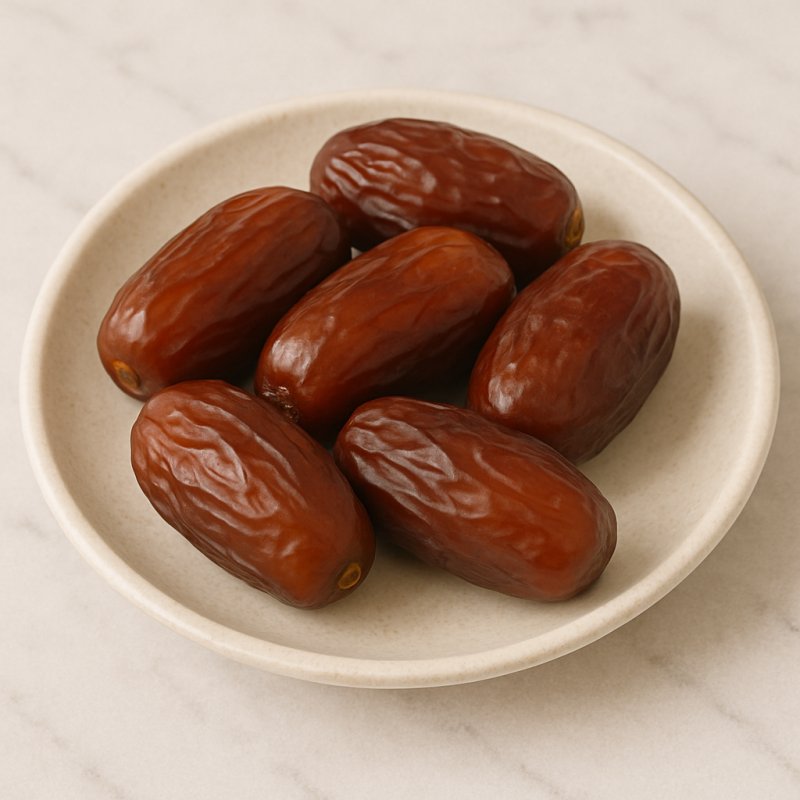
Natural, sweet dried fruit with high fiber and sugar content

Wiki about date Nutri-Score D Vegan Yes Gluten-free Yes Lactose-free Yes Nut-free Yes
NUTRITION / 100 g
282 kcal 2.5 g Protein 75 g Kohlenhydrate 0.4 g Fett

Introduction

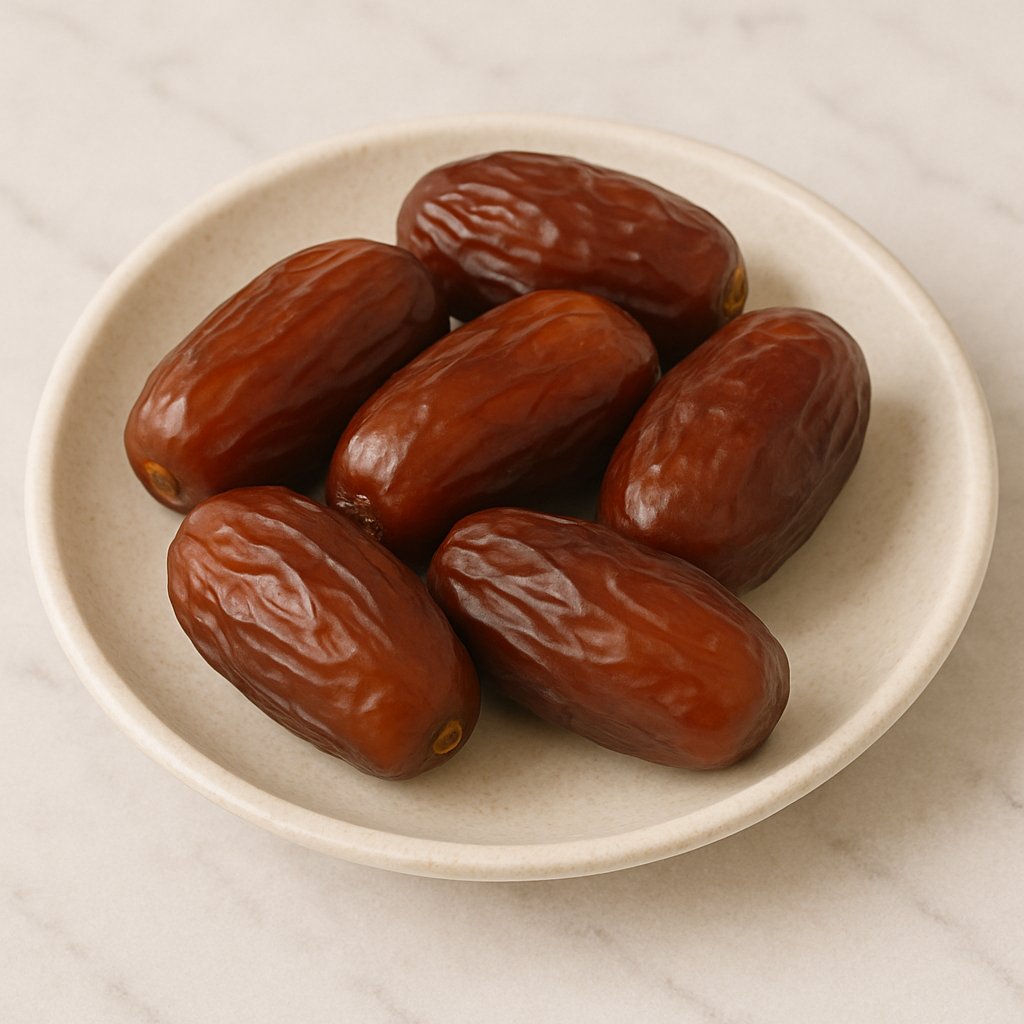
Close-up of dried dates
I still remember my first conscious enjoyment of a date: on a warm late‑summer day when I bought a bag of shiny, sticky fruits at a small street market in a Mediterranean town and wondered why this simply delicious thing had been overlooked for so long. I was immediately struck by the combination of caramel‑like sweetness and a pleasant, almost buttery texture. For me dates are not just an ingredient, they are a moment experienced with a slight smile in the mouth.

Since then I have tried dates in many kitchens: chopped in salads, pureed as a natural sweetener in desserts, stuffed with cream cheese and nuts, or classically as an accompaniment to coffee. A colleague once brought a date to the break in astonishment and ceremoniously opened it like a small gift, causing the whole table to laugh. This fruit has something celebratory and down‑to‑earth at the same time.

What I particularly appreciate about dates is their versatility:

  • Natural sweetness: They replace refined sugar in many recipes and lend a complex, caramel depth.
  • Texture: Depending on the variety dates range from delicately melting to pleasantly chewy.
  • Nutritional value: They provide fiber, minerals like potassium, and are therefore a quick energy source.
When shopping I pay attention to origin and freshness; Medjool dates are my favorites because they are large and juicy, but smaller varieties also have their charms. Once I accidentally stirred too much date purée into my cake and had to laugh when it became a surprisingly moist tart — a happy accident that shows how forgiving dates are in the kitchen.

When I serve dates I like the little ceremony: a handful in a pretty bowl, a few halved and filled with almonds or goat cheese, perhaps a squeeze of lemon or a touch of sea salt. That way this simple fruit becomes a gustatory highlight that delights guests as much as a quiet moment for me alone.

Availability & types

Availability and types of dates

Dates are sweet fruits that grow on tall palms and have been eaten for many years in warm regions of the world. If you hold a date in your hand, it looks like an elongated olive, is soft and very sweet. Some people eat them plain, others use them in baking or as a snack. Here I explain where dates come from, in which areas they are grown and which varieties and types you can find in the store — all so simple that a 12‑year‑old can understand it.

Origin
Dates originally come from parts of North Africa and the Middle East. Thousands of years ago people planted date palms there because the plants grow well in hot, dry areas. Date palms need a lot of sun and little rain — they are therefore plants that do well in desert towns or oases. Today, however, dates are not only grown there but also in other warm regions of the world.

Growing regions
Date palms grow especially well in warm countries. Important growing regions include:

  • North Africa: Countries such as Egypt and Tunisia are large producers. Egypt is one of the most important countries for dates.
  • Middle East: Countries such as Saudi Arabia, Iran and Iraq grow many dates. In these regions dates often form part of the daily diet.
  • North America: There are also date plantations in California (USA). Here date palms grow particularly well in warm valleys.
  • Other warm regions: Parts of Australia and Southern Europe also have date plantations.
Available varieties
There are many different varieties of dates — just as apples have different types (for example Gala or Granny Smith). Each variety tastes a little different: some are very sweet, some milder, some are soft and sticky, others a bit firmer. Here are some well‑known varieties you can find in stores:

  • Medjool: These dates are large, very soft and super sweet. Many people like them as a snack because they are almost like little energy balls.
  • Deglet Noor: Slightly firmer and less sticky than Medjool. They have a mild, caramel taste and are often used for cooking and baking.
  • Barhi: Very juicy and sometimes almost fruity when fresh. They can have a round shape and are very tender.
  • Ajwa and other regional varieties: In certain countries there are local specialties that have their own flavor and particular significance.
Forms and processing
In the supermarket you will find dates in different forms. Some are fresh, others dried or pitted. These are the most common variants:

  • Fresh dates: They are juicy and soft but not always available everywhere because they spoil more quickly.
  • Dried dates: They last longer, are often a bit stickier and very sweet. Many people buy dried dates because they are convenient as a snack.
  • Pitted dates: These are already freed from their kernel and are good for cooking or filling with nuts.
  • Stuffed or processed dates: Sometimes dates are filled with almonds or cream cheese or coated in chocolate — these are tasty variants as gifts or desserts.
In summary: dates originally come from hot regions, are now grown in many warm countries and are available in many varieties such as Medjool or Deglet Noor. You can buy them fresh, dried or already pitted, and there are even stuffed or chocolate‑coated dates. This way you will surely find a variant you like — as a sweet snack, in muesli or as an ingredient in baking.
Details & nutrition

Property Value
Unit g
Average weight per piece 8
Calories per 100 282
Protein per 100 2.5
Carbohydrates per 100 75
Sugar per 100 63
Fat per 100 0.4
Saturated fat per 100 0.1
Monounsaturated fat 0.1
Polyunsaturated fat 0.1
Fiber per 100 8
Vitamin C (mg) per 100 0
Vitamin D (IU) per 100 0
Calcium (mg) per 100 64
Iron (mg) per 100 0.9
Nutri-Score D
CO₂ footprint 1.2
Origin Typical growing countries: North Africa and the Middle East
Gluten-free Yes
Lactose-free Yes
Nut-free Yes
Vegan Yes
Note Nutritional values refer to dried dates without pit; very high natural sugar content, therefore consume in moderation.

Technical & scientific information

Date (Phoenix dactylifera) is the edible fruit of the cultivated palm Phoenix dactylifera and is botanically classified among drupes (Drupaceae). The fruit has a characteristic oval shape, a leathery to slightly wrinkled skin and contains a hard seed. Dates have been cultivated for millennia in arid, subtropical and Mediterranean regions and are an important food source both fresh and dried.

Chemical composition and nutritional values
The composition of dates varies by variety and ripeness; typically 100 g of dried dates contain about 280–320 kcal. The main source of energy is carbohydrates (approx. 60–75 g/100 g), predominantly in the form of simple sugars such as glucose, fructose and smaller amounts of sucrose. Fiber content is around 6–8 g/100 g and includes soluble and insoluble fructans, pectins and cell‑wall polysaccharides. Proteins are present in low amounts (around 2–3 g/100 g); fats are minimal (0.2–0.5 g/100 g), mostly unsaturated fatty acids.

Vitamins and minerals
Dates provide several water‑ and fat‑soluble vitamins in small amounts, notably vitamin B6 (pyridoxine), niacin and pantothenic acid, as well as traces of vitamins A and K. Mineral‑wise dates are relatively rich in potassium, with values of 600–800 mg/100 g; they also contain magnesium, phosphorus and calcium. Iron and zinc are present in moderate amounts. These micronutrient concentrations contribute to electrolyte balance and energy metabolism.

Bioactive compounds
Dates contain a range of secondary plant compounds with potential health‑promoting effects. These include polyphenols (flavonoids, phenolic acids), carotenoids and tannins. These compounds show antioxidant activity in vitro and can modulate inflammatory mediators. Polyphenol content is variety‑dependent and often increases with darker fruit skin and higher degrees of drying.

Processing methods
Dates are marketed fresh, dried or processed into products such as paste, syrup, extract or as components of baked goods and confectionery. Industrial drying is carried out by sun drying, hot‑air or freeze drying, where temperature and humidity affect sugar crystallization behavior, texture and shelf life. Dates are also often pitted and sometimes filled with nuts. Thermal processing can lead to Maillard reactions that alter color and flavors.

Sensory and physical properties
Fresh dates have a soft, occasionally juicy texture, while dried dates are tougher and stickier. Water content varies widely (fresh 15–35 %; dried <20 %). The viscosity of date paste and syrup depends on dissolved sugars and polysaccharides and is relevant for functional applications in foods as a sweetener and binding agent.

Health aspects
Due to their high content of rapidly available sugars, dates are a concentrated energy source. They are suitable for quick energy provision but should be consumed in moderation by individuals with impaired glucose regulation. The fiber and polyphenols can have beneficial effects on gut health and the microbiome and exert antioxidant effects. Allergic reactions to dates are rare, however contamination or use of sulfur dioxide for preservation can trigger reactions. Portion size is important in dietary recommendations, especially in calorie‑conscious diets.

Storage and shelf life
Dates remain shelf‑stable for long periods when stored at low moisture and cool conditions. Microbial spoilage is mainly caused by yeasts and molds, while enzymatic browning and crystallization can affect quality. Modern packaging methods and controlled atmospheres extend shelf life without significant nutrient losses.

In summary, dates are energy‑dense fruits with high sugar and fiber content and notable amounts of potassium and phytochemicals. Their physical and chemical properties make them versatile in fresh, dried or processed forms, while nutritional pros and cons should be considered for daily consumption.

Wiki entry for: date
Active now: 11 visitors of which 2 logged-in members in the last 5 minutes