Menu & categories

Bittersweet couverture

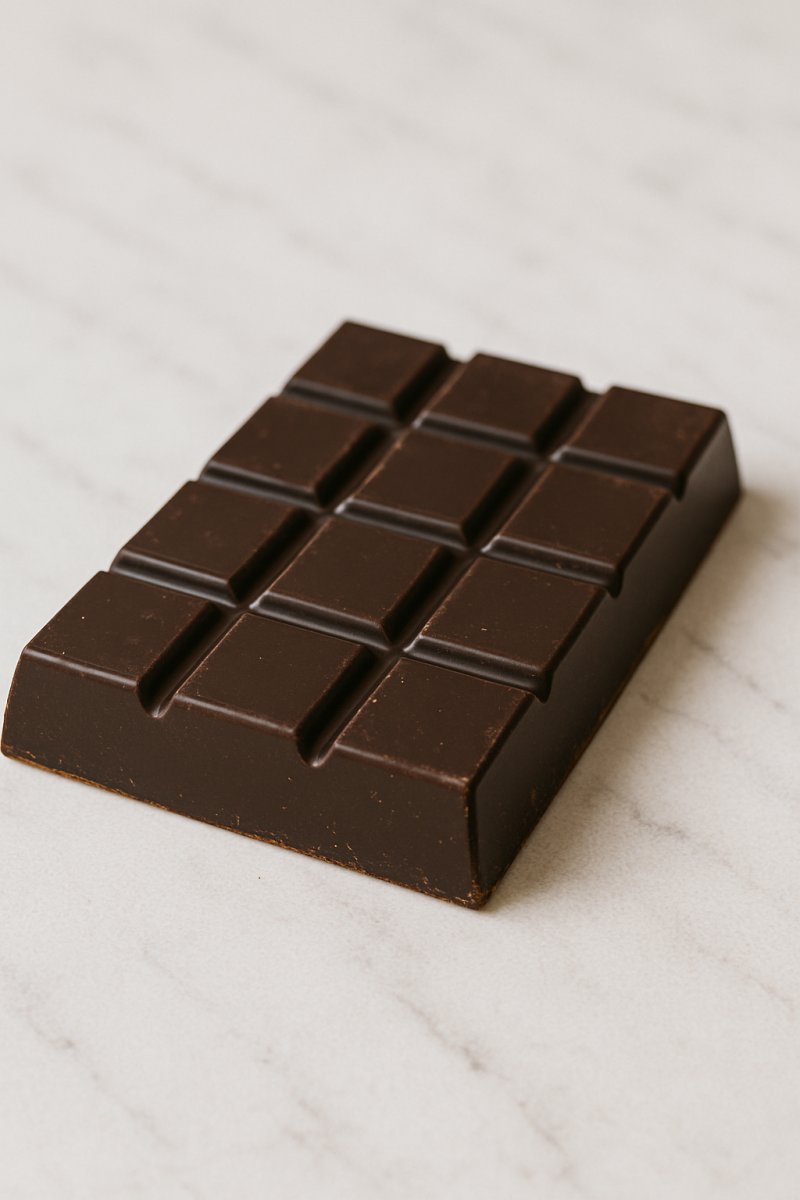
Bittersweet couverture chocolate with a high cocoa content for coating and finishing

Wiki about dark couverture chocolate Nutri-Score D Vegan No Gluten-free Yes Lactose-free No Nut-free No
NUTRITION / 100 g
540 kcal 5.0 g Protein 46.0 g Kohlenhydrate 36.0 g Fett

Introduction

Pieces of dark couverture chocolate on a wooden board
I've had more than a few cooking and baking disasters with dark chocolate couverture, so I now approach it with a mixture of respect and childlike anticipation. The first memory comes from a tiny rented kitchen where I tried to rescue a ganache while the thermometer simply preferred to stay silent. A colleague then offered the lifesaving idea: Tempering is not magic, but patience with temperature curves. Since then I've learned that dark couverture is less temperamental when treated with knowledge and a pinch of humour.

Dark chocolate couverture differs from ordinary chocolate by its higher proportion of cocoa mass and lower sugar content, which gives it that characteristic, slightly bitter note. For me that means: deep flavors that pair wonderfully with coffee, nuts or dark fruits. Once I coated pear halves with it — the result was so surprisingly good that I received compliments for weeks afterwards, which I cheekily credited to the couverture rather than my technical finesse.

  • Uses: Coating pralines, glazes for cakes, ganache, mousse and chocolate ornaments.
  • Characteristics: Good shine, crisp snap, intense cocoa flavour.
  • Tips: Always melt gently, keep away from water contact and ideally temper.
I still remember a tasting where a tiny temperature error turned the couverture “grey” — the so‑called bloom. An older friend laughed encouragingly and said the chocolate had simply put on its winter coat. Anecdotes like that show: mistakes are part of the process and teach us to appreciate texture and gloss. In my kitchen dark couverture is the calm, reliable partner that lifts recipes from good to great.

In conclusion: anyone who ventures into the dark, bittersweet world of dark couverture gains a versatile ingredient that rewards both technique and creativity. I recommend experimenting with small amounts, practising simple tempering methods and, above all, bringing patience — the chocolate will repay you with flavour and elegance.

Availability & types

Availability and types

Dark chocolate couverture is a special chocolate used primarily for baking and for coating pralines, cakes or pastries. It consists mainly of cocoa mass, cocoa butter and some sugar. The dark note means it is less sweet and somewhat more bitter than milk chocolate. If you look for chocolate in a supermarket, you will usually find dark couverture in the baking aisle or with the confectionery.

Origin and growing regions
The main ingredient of dark couverture is cocoa. Cocoa grows on trees that thrive in warm, tropical regions. The main growing areas are near the equator, for example in West Africa (countries like Côte d'Ivoire and Ghana), in South America (such as Ecuador and Brazil) and in some Southeast Asian countries (for example Indonesia). You can imagine it like bananas or mangoes: cocoa needs warmth, humidity and shade, so cocoa trees grow in specific parts of the world.

Why are there different varieties?
Not all cocoa tastes the same. There are different varieties of cocoa and also different processing methods. That is why a range of dark couvertures exists, similar to how apples come in different varieties with different tastes. Here are a few important variants you might find in stores:

  • By cocoa percentage: Dark couverture is often labelled by its cocoa percentage. Typical levels are for example 50 %, 60 %, 70 % or even 85 %. The higher the cocoa percentage, the more bitter and less sweet the chocolate tastes. For children a medium percentage (about 50–60 %) is often more pleasant.
  • Origin designations: Some couvertures carry an indication of the country or region where the cocoa comes from, for example “Ecuador” or “Ghana”. This is similar to wine, where the region influences the flavour.
  • Refinement levels and flavours: Some couvertures are particularly mild or have subtle flavours such as fruity or nutty notes. These differences arise from how the cocoa beans were fermented and roasted — a part of production that shapes the taste.
  • Organic and Fairtrade: There are also couvertures with organic certification or Fairtrade labels. “Organic” means fewer synthetic fertilizers and pesticides were used in cultivation. “Fairtrade” means cocoa farmers receive a better price for their harvest. This can help improve farmers' living conditions.
  • Vegan or with additives: Dark couverture is often naturally free of milk or animal ingredients, so it is frequently vegan. Some varieties, however, contain small additives like vanilla or soy lecithin (an emulsifier that helps make the chocolate smooth — you can think of it like a detergent that helps oil and water combine more easily).
How easy is it to obtain?
Dark couverture is available in most supermarkets, drugstores with baking sections and specialised pastry supply shops. If you want a particular variety, for example with a high cocoa percentage or from a specific region, you will often find it in delicatessens or online. For hobby bakers it is sold in blocks, shavings or chips — practical forms depending on whether you want to melt it or mix it directly into dough.

In summary: dark couverture comes from cocoa, which grows in tropical countries. It is available in different varieties based on cocoa percentage, origin and special features like organic or Fairtrade. You can easily find it in the supermarket, and depending on the effect or flavour you want, you can choose the appropriate type.
Details & nutrition

Property Value
Unit g
Calories per 100 540
Protein per 100 5.0
Carbohydrates per 100 46.0
Sugar per 100 42.0
Fat per 100 36.0
Saturated fat per 100 22.0
Monounsaturated fat 11.0
Polyunsaturated fat 1.5
Fiber per 100 8.0
Vitamin C (mg) per 100 0
Vitamin D (IU) per 100 0
Calcium (mg) per 100 40
Iron (mg) per 100 10.0
Nutri-Score D
CO₂ footprint 5.0
Origin Depending on the producer, typically cocoa from tropical growing countries, processed in Europe
Gluten-free Yes
Lactose-free No
Nut-free No
Vegan No
Note Values are average for bittersweet couverture with approximately 55–60% cocoa; exact values may vary by brand and formulation.

Technical & scientific information

Dark chocolate couverture refers to a specific form of chocolate characterised by a high proportion of cocoa mass and cocoa butter and a comparatively low sugar content. It is used primarily in patisserie and confectionery for coating, glazing, moulding and tempering. Unlike table chocolate, couvertures are optimised for flow; this is achieved by a higher fat content, usually in the form of cocoa butter.

Composition and ingredients
Chemically, dark couverture mainly consists of cocoa mass (dark, ground cocoa flavour), cocoa butter (a fatty plant product dominated by stearic, palmitic and oleic acids) and raw or granulated sugar. Complementary components can include soy lecithin as an emulsifier and, in some cases, vanillin or natural vanilla flavour. The cocoa content varies by manufacturer; dark couvertures typically range between 50 and 70 % cocoa, occasionally higher.

Nutritional values
The caloric density of dark couverture is high, due to fat and sugar content. On average 100 g provides about 500–600 kcal. In macronutrient terms it is roughly 40–50 % fat, 30–50 % carbohydrates (most of which are sugars) and 5–10 % protein. The content of minerals such as magnesium, iron and potassium as well as secondary plant compounds like flavonoids depends on the cocoa mass percentage and the origin of the cocoa beans.

Manufacturing and processing methods
Production includes several stages: fermentation and drying of the beans, roasting to develop flavour, cracking and grinding of the nibs to cocoa mass, pressing to obtain cocoa butter and subsequent mixing with sugar and additives. For texture and flavour development a so‑called conching is performed, during which the chocolate mass is stirred and aerated for hours to days. For later use as couverture tempering and control of the cocoa butter crystal structure (notably the beta‑V crystal form) are central: by targeted heating and cooling cycles a stable crystal form develops that ensures shine, a crisp snap and shelf life.

Physical properties
Dark couverture shows a specific melting behaviour determined by the melting point of cocoa butter (around 34–36 °C). Rheological properties are influenced by particle size (finely ground solids), fat content and the presence of emulsifiers. Good couverture has low viscosity at processing temperatures and sets quickly on cooling.

Health aspects
A higher cocoa content brings more polyphenolic compounds such as flavanols, which are attributed antioxidant effects. Moderate amounts of dark chocolate can have favourable effects on vascular function and blood pressure, but these effects are dose‑dependent and must be weighed against sugar and fat content. From a nutritional perspective dark couvertures should be consumed in moderation due to their energy density. People sensitive to cocoa flavonoids, allergic to soy (if soy lecithin is used) or on specific diets should pay attention to the ingredients.

Sensory profile and applications
Sensorially, dark couverture is characterised by an intense, often slightly bitter cocoa profile that can include roasted, fruity or nutty notes — depending on bean origin and roasting. Typical applications are coating pralines, baked goods and desserts, tempering for mould work, and use as a binder in glazes. Industrial variants can be formulated for machine use.

Storage and shelf life
To prevent quality losses such as fat bloom or aroma degradation, dark couverture should be stored cool (ideally 16–18 °C), dry and protected from light. Temperature fluctuations and humidity promote crystallisation issues and microbial spoilage when additives are present. When stored properly, shelf life often ranges from several months to over a year, depending on formulation and packaging.

Overall, dark couverture combines technological properties that make it a versatile product in fine cooking with chemical and nutritional features that determine its flavour, texture and effects on health and processing.

Wiki entry for: dark couverture chocolate
Active now: 15 visitors of which 2 logged-in members in the last 5 minutes