Menu & categories

Crème fraîche 40% fat

Creamy, rich and versatile

Wiki about crème fraîche 40% fat Nutri-Score D Vegan No Gluten-free Yes Lactose-free No Nut-free Yes
NUTRITION / 100 g
380 kcal 2.5 g Protein 3.0 g Kohlenhydrate 40.0 g Fett

Introduction

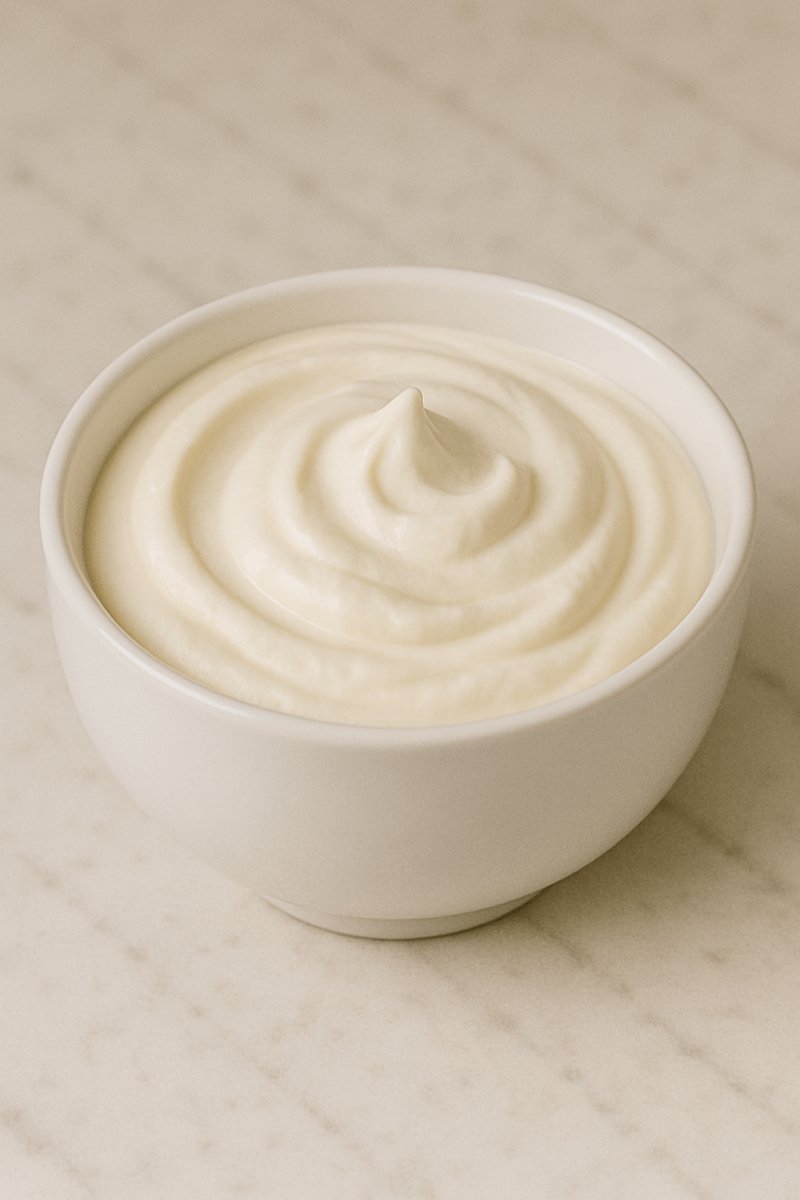
Crème fraîche in a bowl
Crème fraîche 40% Fett is one of those ingredients that holds a permanent place in my European cooking – not only because it elevates almost any dish, but also because it offers a remarkable balance between lush creaminess and subtle acidity. I am 35, live in Europe and over the past years I have developed, tested and refined countless recipes. Whenever I look for more depth, shine and structure in sauces, soups or dips, I reach for Crème fraîche with 40 percent fat. It does not curdle when gently heated and blends silkily with other ingredients. That is exactly what makes it indispensable to me – from quick weeknight meals to a Sunday menu.

When I think of its origin, I do not only picture French cream culture, but the whole European food culture built on fermented dairy products. Crème fraîche 40% Fett is created by acidifying cream with lactic acid bacteria. In the process the typical slightly nutty flavour develops, less sharp than sour cream yet bringing freshness to the dish. A colleague of mine swears by using Crème fraîche almost like a spice: a spoonful in the pan when the onions are translucent, a dollop at the end in the soup – and suddenly everything tastes rounder, more complete, more harmonious.

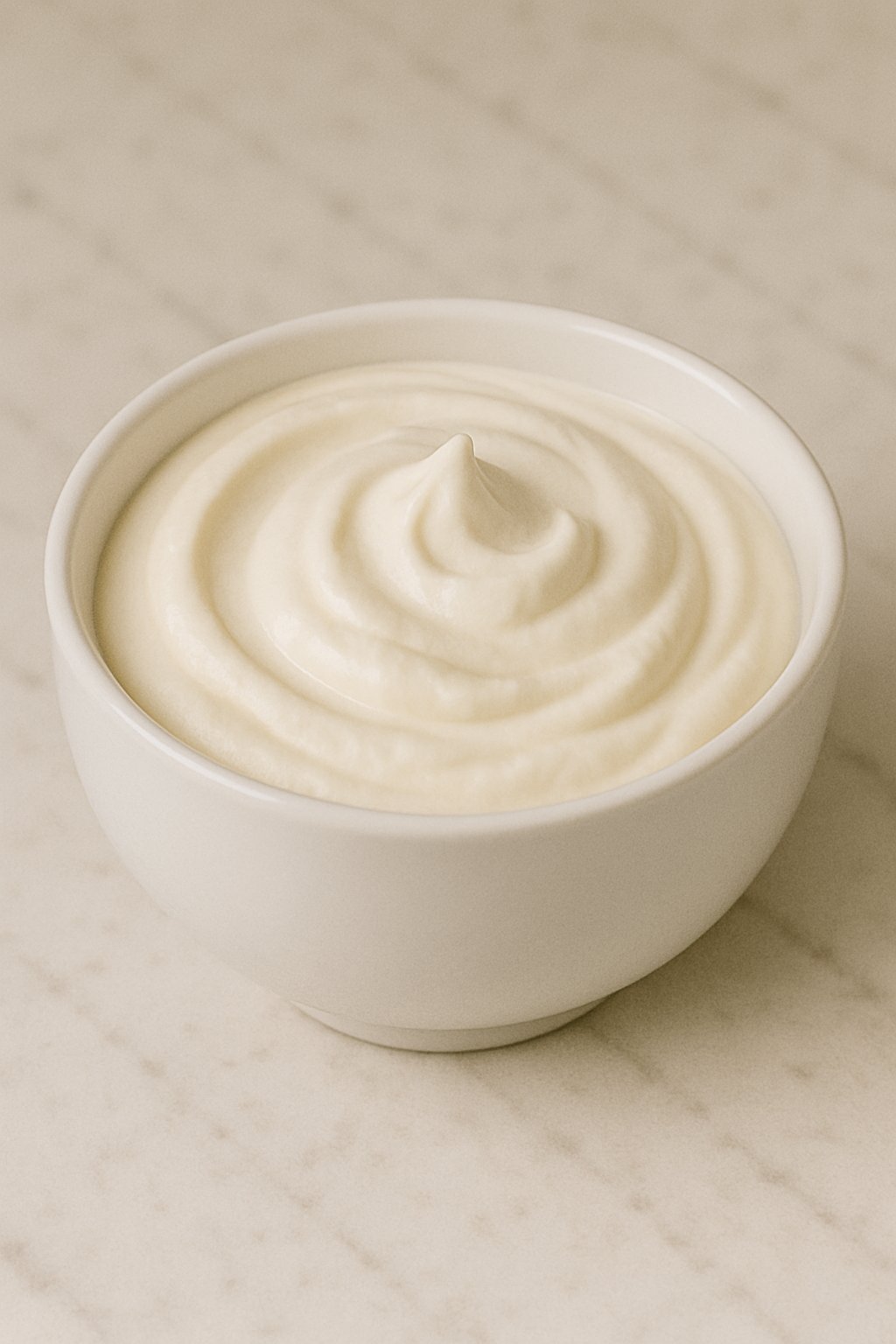
What continually fascinates me is the texture. Crème fraîche 40% Fett is firm but not heavy. You can pull it with a spoon, it forms soft peaks and still remains shape-stable. This consistency is ideal for toppings and fillings: on roasted vegetables, with baked potatoes, in quiches or as a base for creamy salad dressings. A chef friend from Lyon once showed me how he whips up a lightning-fast pan sauce: sauté shallots, deglaze with white wine, reduce, stir in a spoonful of Crème fraîche, a little lemon zest, pepper, salt – done. The sauce clings perfectly to pan-fried fish or chicken without being too heavy.

In terms of taste, Crème fraîche 40% Fett provides a gentle acidity that highlights the flavours of other ingredients. In a pumpkin soup it provides an elegant balance, in

Availability & types

Availability and types of Crème fraîche 40% Fett

Crème fraîche is a spoonable, mildly tart cream that is mildly acidified and thickened by lactic acid bacteria. The 40% fat variant is especially creamy and heat-stable, meaning: it is less likely to curdle when cooked. For many sauces, soups, gratins and desserts it is therefore a particularly popular ingredient. In this section you will learn where Crème fraîche comes from, which varieties exist, and how to find it in stores or online – explained simply, even for a 12-year-old.

Origin and production
Crème fraîche originally comes from France. There, cream was traditionally inoculated with specific bacteria and allowed to mature at cool temperatures. This produced a particularly dense, spoonable cream with a gently tangy flavour. Unlike ordinary cream, Crème fraîche is fermented, i.e. altered through a controlled ripening process. This kind of fermentation makes it stable when heated and gives it the typical taste. Today Crème fraîche is produced not only in France but in many countries across Europe and the world.

Availability in trade
You can find Crème fraîche 40% Fett in many supermarkets, delicatessens and online shops. It is usually located in the chilled section next to schmand, sour cream and mascarpone. Smaller shops sometimes carry only one brand, larger markets often several. Pay attention to the fat declaration (e.g. “40% Fett i. Tr.”), because there are also reduced-fat variants that taste different and behave differently in cooking.

  • Supermarkets: Often tubs of 150–200 g, sometimes family packs.
  • Organic and delicatessen stores: Often regional or organic variants of higher quality.
  • Online: Good selection of brands, including imports
Details & nutrition

Property Value
Unit g
Average weight per piece 200
Calories per 100 380
Protein per 100 2.5
Carbohydrates per 100 3.0
Sugar per 100 3.0
Fat per 100 40.0
Saturated fat per 100 25.0
Monounsaturated fat 11.0
Polyunsaturated fat 1.5
Fiber per 100 0
Vitamin C (mg) per 100 0
Vitamin D (IU) per 100 8
Calcium (mg) per 100 90
Iron (mg) per 100 0.1
Nutri-Score D
CO₂ footprint 2.1 kg CO2e/kg
Origin Dairy product, Europe
Gluten-free Yes
Lactose-free No
Nut-free Yes
Vegan No
Note Do not boil, only heat to avoid curdling; ideal for refining sauces and soups.

Technical & scientific information

Crème fraîche 40% Fett is a fermented dairy product with a high fat content, produced by acidifying cream with specific lactic acid cultures. Characteristic features are a dense, spoonable texture, a mildly tangy aroma and high thermal stability. The designation “40% Fett” generally refers to the fat content in the dry matter (Fett i. Tr.) or – depending on national labelling – to the absolute fat proportion relative to the total mass. Technologically and sensorily, Crème fraîche 40% Fett is distinguished from sour cream, schmand and mascarpone by the degree of fermentation, acidity profile, water binding and creaming behaviour.

Manufacture and fermentation:
Production starts with pasteurised cream, whose initial fat content typically ranges between 30 and 40 percent. After standardisation of fat and dry matter, defined starter cultures are added, usually Lactococcus lactis subsp. cremoris, Lactococcus lactis subsp. lactis and optionally Leuconostoc strains. These cultivate the cream under controlled conditions (usually 20–25 °C) for 8–24 hours. During fermentation lactose is metabolised to lactic acid, lowering the pH to about 4.3–4.6. This leads to denaturation and aggregation of milk proteins (casein micelles), which together with milk fat form a stable gel structure. Subsequent cooling (4–8 °C) fixes the texture, slows microbial activity and harmonises the flavour.

Physico-chemical properties:
Crème fraîche 40% Fett exhibits pronounced viscosity and thixotropic flow behaviour, meaning it liquefies easily under shear and regains body after rest. The comparatively high fat content stabilises the emulsion system, reduces perception of acidity and imparts a creamy, full-bodied taste. Water activity is moderate; protein gels retain free water and minimise syneresis (whey separation). The pH range is below
Wiki entry for: crème fraîche 40% fat
Active now: 24 visitors of which 2 logged-in members in the last 5 minutes