Menu & categories

Crispbread

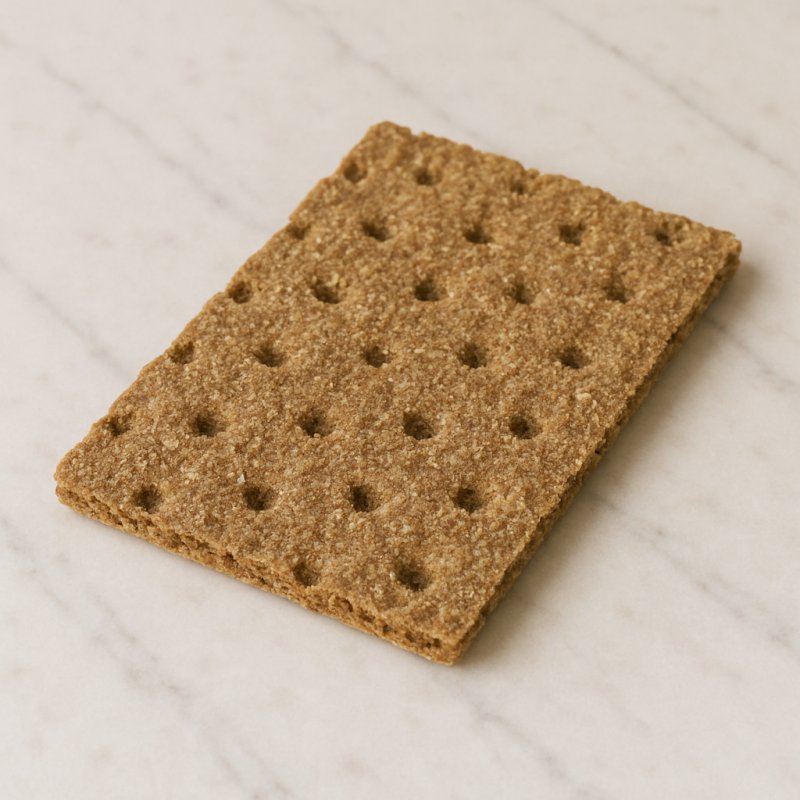
Crispy, shelf-stable bread made from wholemeal flour

Wiki about crispbread Nutri-Score B Vegan Yes Gluten-free No Lactose-free Yes Nut-free Yes
NUTRITION / 100 g
360 kcal 9 g Protein 67 g Kohlenhydrate 2 g Fett

Introduction

Several slices of crispbread on a wooden board
I still vividly remember the first bite of an especially crunchy crispbread that my grandmother took from her small pantry. It was one of those thin, almost transparent slices that produced a fluorine-like crackling sound under the tongue and yet provided a wonderful feeling of fullness. Since then crispbread has never quite left me: for me it is much more than just a substitute for bread, it is a faithful companion on mild lunch breaks, quick dinners and when unexpected guests arrive.

What I love about crispbread is its versatility. A dry slice, with a bit of creativity, becomes a small explosion of flavor. I like to mix cream cheese with herbs, place a slice of smoked salmon on it or try sweet combinations with honey and cottage cheese. A colleague of mine swears by avocado, tomato and a squeeze of lemon; he calls it his “office-luxury” ritual. It is amazing how different crispbread can feel depending on the topping: sometimes rustic, sometimes elegant, always uncomplicated.

Preparation is simple, yet the selection can be surprising: wholegrain, rye, sesame or oats — each crispbread brings its own texture and a different aroma. Some varieties remind me of tart-spicy autumn days, others smell nutty and are perfect for breakfast. I like to check the ingredient list and appreciate varieties with few, clear ingredients and without unnecessary additives.

In addition, crispbread has practical advantages I wouldn't want to miss. It keeps for a long time, is easy to store and ideal for on the go. At picnics in parks or spontaneous trips into nature it is often the first thing I reach for in my backpack. Friends have jokingly called me a “crispbread fan” because I always have a few slices with me — and of course I usually share.

For me crispbread also stands for sustainability and a more conscious use of food. One properly topped slice is often enough to feel full and it avoids the waste that happens more easily with large loaves. I enjoy trying small experiments: different toppings, sweet-and-salty combinations, or simply enjoying it with a good cup of tea. In all its variants crispbread remains for me a small but reliable culinary pleasure that should not be missing in any pantry.

Availability & types

Availability and types of crispbread

Crispbread is a crunchy bread popular in many countries. It is usually made from grains like rye or wheat and is baked very thin. This makes it long-lasting and ideal to take with you. You can find crispbread in supermarkets, health food stores, discount stores and sometimes at weekly markets. There are simple packs with multiple slices or small portion packs for school or the office.

Origin
Crispbread has its roots in Northern Europe, especially in countries like Sweden, Finland and Germany. People there needed bread that stored well because winters were cold and fresh bread was not always available. For this reason they developed a bread that is thin and very dry — so it could be kept for weeks or months without spoiling. You can imagine it like dry crackers, except crispbread is savory and made from grains.

Growing regions
The main cereals for crispbread are rye and wheat. These cereals grow particularly well in the cooler regions of Europe, for example in Germany, Poland, Sweden and Finland. Rye is often the main ingredient in classic crispbread because it gives a strong, slightly sour flavor. Wheat is also used, especially when the bread should be milder and softer in taste. Organic crispbread packages often state the origin of the grain; many brands use grain from Europe.

Available varieties and options
There are many different types of crispbread, so there is something for every taste. Here are some of the most common variants explained simply:

  • Classic rye crispbread: Thin, dark and with a strong taste. It is what many people know as the “typical” crispbread.
  • Wheat crispbread: Lighter and milder in taste. For people who find rye too strong.
  • Multigrain or wholegrain crispbread: Whole grains or the whole kernel are used. This makes the bread firmer and often slightly nutty in flavor. Wholegrain is healthier because it contains more fiber — these are parts of the grain that help the body with digestion.
  • Crispbread with seeds: Many varieties contain sunflower seeds, flaxseed, sesame or pumpkin seeds. These add extra flavor and small nutrient packages, similar to mixing muesli with different ingredients.
  • Spiced varieties: Some crispbreads are refined with herbs, salt flakes or other spices. This makes them especially tasty as a snack with cheese or spreads.
  • Fingerfood or snack shapes: Small, round or rectangular pieces that fit well in a lunchbox. They are practical for on the go.
  • Gluten-free versions: For people who cannot tolerate gluten, there are crispbreads made from rice, corn or legumes. Gluten is a protein in wheat and rye; some people cannot tolerate it well, so these alternatives exist.
Summary
Crispbread is versatile, long-lasting and easy to find. It comes in many varieties — from classic rye to modern versions with seeds, spices or entirely gluten-free. Next time you buy crispbread you can check the ingredients to see if it contains rye, wheat, wholegrain or seeds and choose the one you like best.
Details & nutrition

Property Value
Unit g
Average weight per piece 10
Calories per 100 360
Protein per 100 9
Carbohydrates per 100 67
Sugar per 100 2
Fat per 100 2
Saturated fat per 100 0.4
Monounsaturated fat 0.4
Polyunsaturated fat 0.8
Fiber per 100 16
Vitamin C (mg) per 100 0
Vitamin D (IU) per 100 0
Calcium (mg) per 100 40
Iron (mg) per 100 3
Nutri-Score B
CO₂ footprint 0.7
Origin Europe
Gluten-free No
Lactose-free Yes
Nut-free Yes
Vegan Yes
Note Values refer to average wholegrain crispbread without added seeds or toppings.

Technical & scientific information

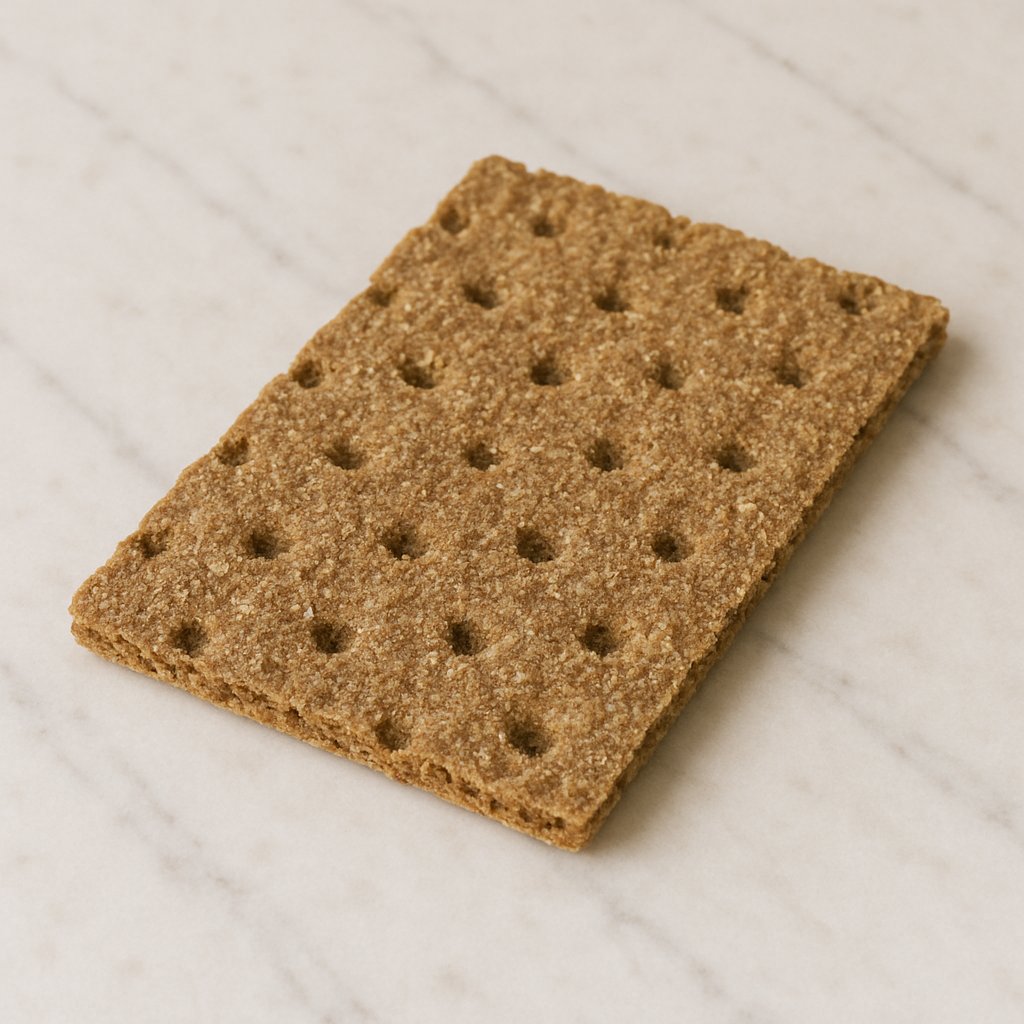
Crispbread is a dry, thin cereal product made predominantly from wholegrain flour or meal and characterized by long shelf life, low moisture and a crisp texture. Traditionally it is a flat-baked product whose structure is determined by a low water content (typically 3–6% after baking) and a porous, lamellar crumb. The microstructural properties result from water evaporation and starch gelatinization during the baking process, followed by rapid drying that facilitates starch retrogradation and crystallization.

Composition and nutritional values: Crispbread is usually based on rye, wheat or blends of both grains; oats, barley or seeds are often added. The macronutrient distribution varies by formulation but typically is around 60–70% carbohydrates, 7–12% protein, 3–8% fat and 6–12% fiber per 100 g. The energy content is generally between 300 and 420 kcal/100 g. Wholegrain variants contain higher levels of fiber (particularly soluble and insoluble hemicelluloses and cellulose), minerals such as magnesium, phosphorus and iron, and B vitamins.

Biochemical components: The starch in crispbread consists of amylose and amylopectin; the ratio influences gel formation and texture. Proteins are mainly gluten in wheat or prolamin-like proteins in rye, which influence dough viscosity and gas retention during baking. Lipids are present in small amounts, mainly as triglycerides and esterified vegetable oil in seeds. Phenolic compounds and phytic acid are relevant in wholegrain products: phytates bind minerals and can reduce their bioavailability, while phenolic compounds may have antioxidant properties.

Manufacturing process: Production includes mixing, dough handling, rolling or sheeting, pre-baking or partial baking and subsequent drying or full baking to the desired residual moisture. In industrial manufacture processes like lamination and perforation are often used to create uniform thicknesses and air channels. Enzymatic additives (e.g., amylases) or hydrothermal treatments can improve extensibility, crumb structure and digestibility profile. Temperature control is critical: temperatures that are too high lead to Maillard reactions and darkening, while insufficient heat impairs the desired crispness.

Sensory properties and texture: The crisp texture is based on a brittle cell-wall structure of gelatinized starch and consolidated proteins. Moisture uptake behavior (retrogradation) affects storage stability; hygroscopic environments lead to softening (staling). Aroma arises from Maillard reaction by-products as well as free fatty acids and nutty notes from roasted grains or seeds.

Health aspects: Crispbread can be part of a fiber-rich, calorie-conscious diet. A high fiber content promotes intestinal motility, lowers postprandial glucose responses and supports satiety. For people with celiac disease or gluten intolerance, commercial crispbread made from wheat or rye is unsuitable; gluten-free variants based on rice, corn or buckwheat are available. Salt and added fat contents vary; for people with hypertension or fat restrictions, formulations with reduced salt or fat content are recommended.

Nutritional optimization: By varying the grain mix, adding sprouts, flaxseed, chia seeds or employing fermentative pretreatments, the amino acid balance, omega-3 fatty acid content and mineral availability can be improved. Fermentation (sourdough) reduces phytate levels via phytase activity and can positively influence digestibility and sensory profile.

Overall, crispbread is a technologically simple but nutritionally versatile food type whose properties strongly depend on raw material choice and process parameters. Through targeted recipe and process design, texture, nutritional value and shelf life can be adapted to specific dietary or taste requirements.

Wiki entry for: crispbread
Active now: 11 visitors of which 2 logged-in members in the last 5 minutes