Menu & categories

Cream

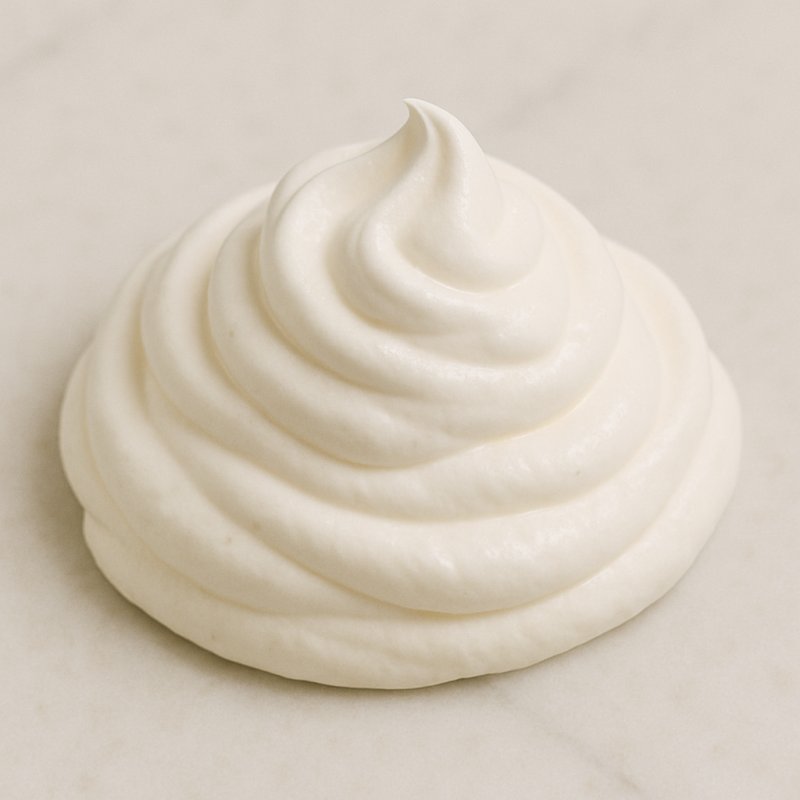
Creamy dairy product for enhancing sauces, soups and desserts.

Wiki about cream Nutri-Score E Vegan No Gluten-free Yes Lactose-free No Nut-free Yes
NUTRITION / 100 ml
292 kcal 2.0 g Protein 3.0 g Kohlenhydrate 30.0 g Fett

Introduction

Bowl of fresh cream
I still remember well the first rainy evening when I refined a simple potato soup with a splash of cream and the kitchen suddenly smelled like a small restaurant. For me cream is more than just an ingredient; it is the little luxury in everyday life that makes soups velvety, binds sauces and gives desserts the right playfulness.

In Europe I encounter cream in many variants: from light coffee cream to classic whipping cream to tangy Crème fraîche or thick sour cream. Each type has its place in the kitchen because they react differently when heated, whipped or combined with acids. I have learned that fat plays the decisive role: the higher the fat content, the more stably cream can be whipped and the less likely it is to curdle when heated.

A colleague of mine swears by a trick he learned from his grandmother: whip the cream only shortly before serving and add a pinch of cold sugar, then it stays airier. I myself sometimes add a few drops of lemon juice to Crème fraîche when I want a fruity dressing. Such small experiments make cooking exciting.

Over the years I have gathered practical tips:

  • For whipping: Chill the cream and the bowl well.
  • For heating: Do not cook too strongly, stir in slowly.
  • As a substitute: For vegan alternatives oat cream or coconut cream are suitable, depending on the dish.
  • Storage: Cool leftovers quickly and consume within a few days.
What I particularly love is the versatility: cream turns a simple pasta into a feast and transforms fruit into fine desserts. Sometimes it is the small centrifuged world in a bowl that awakens memories and makes guests smile. So the next time I open a can or pack of cream, I think of warm evenings, curious tasting and how few ingredients can create so much enjoyment.

Availability & types

Availability and Types

Cream does not come from a plant, but from cows — it is produced from the fatty top layer of milk. On a farm farmers milk the cows and separate the cream from the milk. In the past cream simply settled on top (this was called 'skimming'), today it is usually removed quickly in a machine, the separator. In Germany and worldwide there are many farms with dairy cows. Popular milk regions in Germany include Schleswig-Holstein, Lower Saxony, Bavaria and North Rhine-Westphalia. Internationally, large milk producers are countries such as EU member states, the USA, New Zealand and Australia.

Although it is better to speak of 'rearing and production areas' rather than 'cultivation', it helps to know: cream is available almost everywhere because milk and cream are produced daily and delivered in the cold chain. In supermarkets, organic shops, direct farm sales or at weekly markets you can find fresh cream. There are also long-life variants that can remain without refrigeration for longer (more on that later).

Which cream types and variants exist?

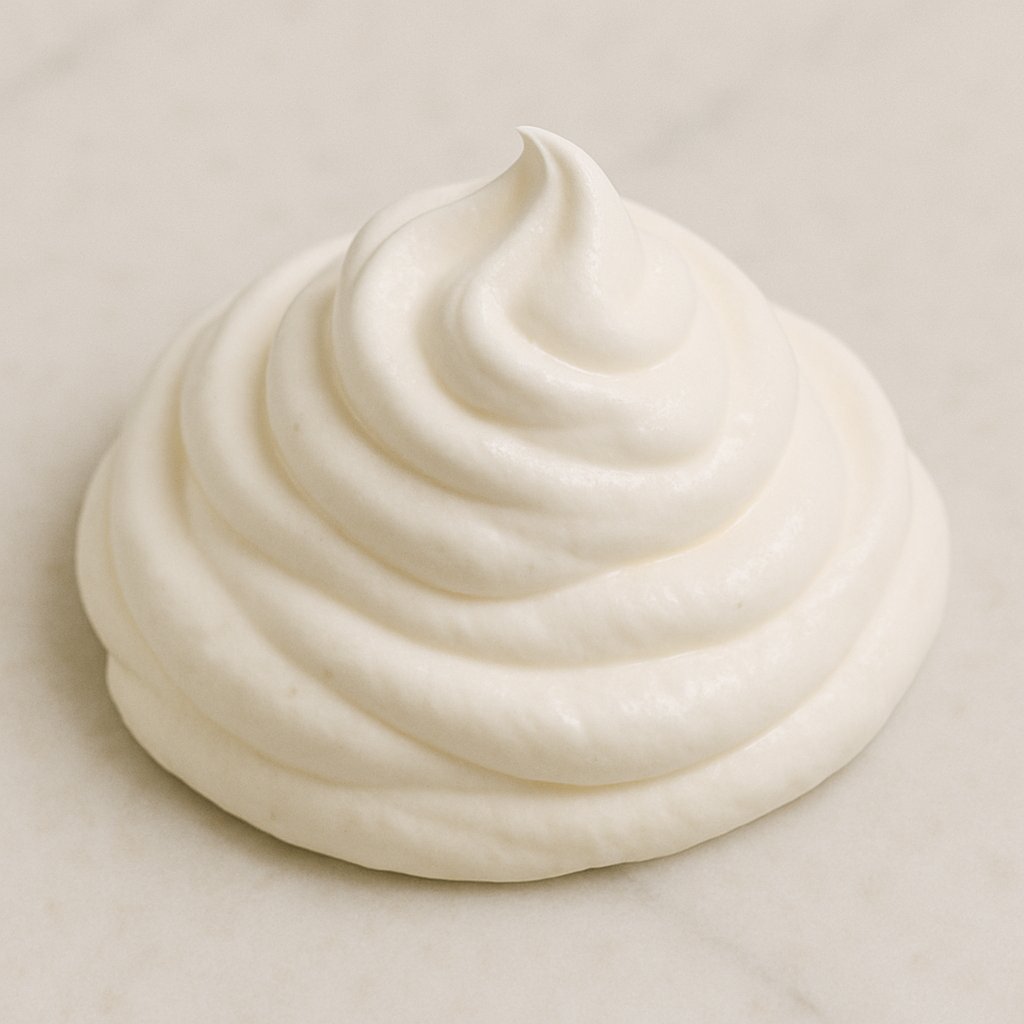
  • Whipping cream (sweet cream): This cream has a high fat content (usually at least 30%). It can be whipped into whipped cream, i.e. aerated, and is used for desserts, cakes and for decoration.
  • Double cream / full cream: Very high-fat cream (often around 40% or more). It is particularly creamy and is suitable for sauces or desserts when something very rich is desired.
  • Coffee cream / coffee milk: Thinner cream with less fat (for example around 10–15%). It is often added to coffee or tea because it is not as heavy as whipping cream.
  • Sour cream: This cream has been briefly 'acidified' (harmless bacteria were added), giving it a slightly sour taste. It is suitable for dips, dressings or baking.
  • Crème fraîche: A very creamy, slightly tangy variant with a higher fat content (often around 30%). It curdles less quickly when heated and is good for hot sauces.
  • UHT cream (H-Sahne) and ESL cream: This cream has been heat-treated so that it lasts longer. UHT cream often sits longer on the supermarket shelf, but must be refrigerated after opening.
  • Lactose-free cream: For people who cannot tolerate milk sugar, there is cream from which the sugar has already been removed.
  • Plant-based alternatives: Cream made from soy, oats or coconut is intended for vegans. It looks similar and can replace cream in many recipes.
Some terms can be confusing: pasteurized means briefly heated so that fewer germs are present; UHT (or H-cream) is longer-lasting due to higher heat. 'Gechroma' is not a technical word – here simple words apply: fresh cream from the chilled section and long-life cream from the pantry shelf.

In short: you can get cream today almost everywhere and in many variants — from very high-fat to light, from fresh to long-life, and even plant-based. Which type you choose depends on whether you want to whip it, cook with it or add it to coffee. Each kind has its own taste and use, so you can find the right cream for your recipe.
Details & nutrition

Property Value
Unit ml
Calories per 100 292
Protein per 100 2.0
Carbohydrates per 100 3.0
Sugar per 100 3.0
Fat per 100 30.0
Saturated fat per 100 19.0
Monounsaturated fat 8.0
Polyunsaturated fat 1.0
Fiber per 100 0.0
Vitamin C (mg) per 100 0.0
Vitamin D (IU) per 100 20
Calcium (mg) per 100 80
Iron (mg) per 100 0.1
Nutri-Score E
CO₂ footprint 0.55 kg CO2e/100 ml
Origin Germany/EU (from cow's milk)
Gluten-free Yes
Lactose-free No
Nut-free Yes
Vegan No
Note Nutritional values may vary slightly depending on fat content (e.g., 30–36% fat).

Technical & scientific information


Cream is the fat-rich fraction of milk that is produced naturally during separation or obtained industrially. Technically, cream is an oil-in-water emulsion, in which milk fat is distributed as fat globules in an aqueous phase. It is a widely used food ingredient with numerous variants that differ in fat content, processing and bacterial fermentation.

Composition and nutritional values: Typical components are milk fat (as triacylglycerides), milk proteins (mainly caseins and serum proteins), milk sugar (lactose) as well as water-soluble vitamins and minerals. Fat content varies by product: coffee cream is often about 10–15% fat, cooking cream and Crème fraîche around 15–30%, whipping cream usually ≥ 30%. Accordingly, calorie values are roughly between 120 kcal/100 g (lighter variants) and 400 kcal/100 g (very high-fat products). Milk fat consists predominantly of saturated fatty acids (typically around 60–70%), monounsaturated fatty acids (~20–30%) and a small proportion of polyunsaturated fatty acids.

Physicochemical properties: The fat globules in cream are surrounded by a complex membrane of phospholipids, proteins and glycolipids (the Milk Fat Globule Membrane, MFGM) which stabilizes the emulsion. Industrial processes like homogenization reduce globule size, increase stability and change wetting properties. When whipped, air is incorporated; partial coalescence and the formation of a fat network lead to stabilization of the foam. Temperature and fat crystallization critically influence foam stability.

Processing and variants:

  • Pasteurization (e.g. HTST): reduction of microorganisms at moderate temperatures.
  • UHT treatment: ultra-high-temperature treatment for long shelf life at room temperature before opening.
  • Fermentation: Sour cream or Crème fraîche are produced by targeted lactic acid bacteria (e.g. Lactococcus spp.), which lower the pH and change texture and aroma.
  • Stabilizers and emulsifiers: Many commercial products use hydrocolloids (carrageenan, guar gum) or lecithins to prevent separation and improve body.
Shelf life and microbiological aspects: Pasteurized cream is sensitive to contamination and must be stored chilled. Unpasteurized or poorly chilled cream can be affected by pathogens like Listeria or by spoilage organisms. Lipolytic enzymes and oxidative processes can lead to rancidity defects; a more saturated composition reduces oxidation susceptibility compared to vegetable oils.

Nutritional and health aspects: Cream provides concentrated energy, fat-soluble vitamins (especially vitamin A) and calcium. Because of the high proportion of saturated fatty acids and the dense energy content, it should be used in moderation as part of a balanced diet. People with a milk allergy react to milk proteins, and with lactose intolerance lactose-containing cream products can cause complaints; fermented variants tend to contain less available lactose.

Cream is thus a technically versatile product with clear physicochemical foundations that determine processing, stability and nutrition-relevant properties. Its use in the kitchen and food industry is based on these functional properties as well as on sensory criteria such as texture, taste and mouthfeel.

Wiki entry for: cream
Active now: 21 visitors of which 2 logged-in members in the last 5 minutes