Menu & categories

Cranberries

Tart, slightly sour berries with fiber and vitamin C.

Wiki about cranberry Nutri-Score A Vegan Yes Gluten-free Yes Lactose-free Yes Nut-free Yes
NUTRITION / 100 g
46 kcal 0.4 g Protein 12.2 g Kohlenhydrate 0.1 g Fett

Introduction

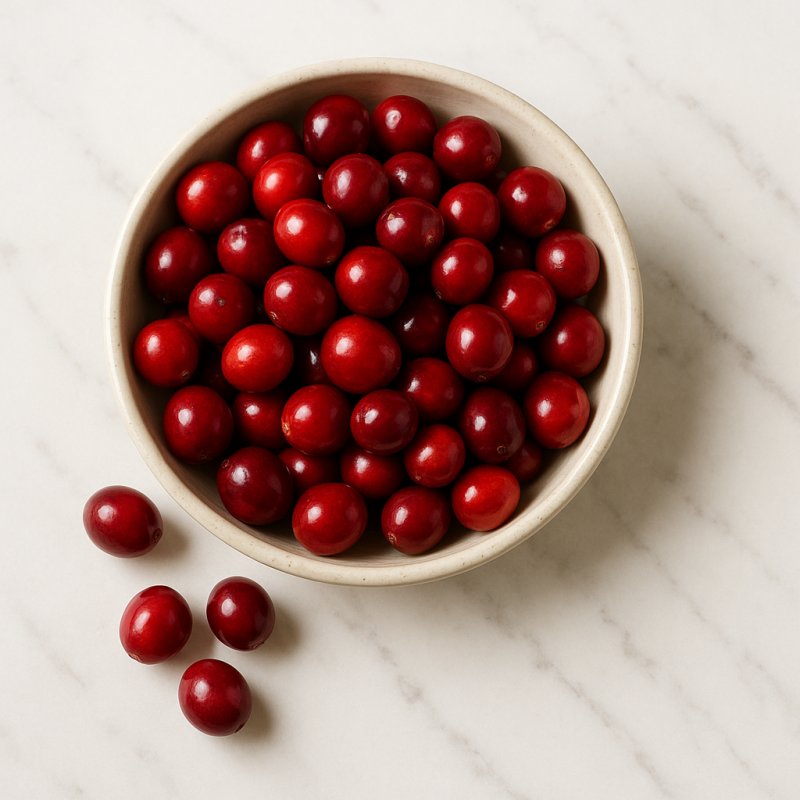
Fresh red cranberries in a bowl
I have a weakness for small, intense flavors, and cranberries have been among my favorite surprise guests in the kitchen for years. I still remember a foggy market visit when a stall offered fresh, deep-red berries; the seller dipped his hand into a crate and handed me a sample that immediately impressed with its tart-freshness. This freshness is typical of cranberries and makes them so versatile: they call for sugar, but also go great with savory components.

Cranberries come from North America and belong to the genus Vaccinium. Their natural tartness comes from compounds like proanthocyanidins, which give them not only flavor but also interesting health-related properties. I've often discussed the legends around cranberry juice with colleagues, and although some effects are still debated scientifically, it is clear the berries are rich in vitamin C and antioxidants.

In my kitchen I use cranberries in various ways: fresh, dried, as juice or cooked into a sweet-and-sour sauce. A colleague once brought a version with orange zest and rosemary that I had to recreate immediately. The combination with citrus fruits and spices softens the acidity and elevates the aroma in an elegant way.

  • Savory partners: poultry, pork and mature cheeses.
  • Sweet applications: cakes, mueslis and energy bars with dried cranberries.
  • Practical tips: fresh berries can be frozen; dried ones should be briefly soaked beforehand to make them juicier.
I recommend starting with small amounts of sugar or honey when cooking with cranberries and adjusting to taste. Playing with textures — whole berries, purée, candied — brings a lot of joy. When I have guests, I like to serve a savory cranberry sauce alongside a strong cheese: the combination of acidity and bite is a conversation starter every time. For me cranberries are an ingredient that connects food and stories and repeatedly sparks new ideas.

Availability & types

Availability and types

Cranberries are small red berries that often taste tart. If you want to know where they come from and what kinds there are, it's not hard. You can imagine cranberries as little red pearls that like to grow in wet soils or bogs – it looks a bit like a wet lawn carpet.

Origin and growing regions
The most well-known cranberries originally come from North America. The major growing areas there are:

  • USA: States like Wisconsin, Massachusetts, New Jersey and Oregon are important producers.
  • Canada: Especially British Columbia and some eastern regions grow many cranberries.
Today cranberries are also cultivated elsewhere:

  • Chile: In the south cranberries are grown so there are products year-round – it's practical because the seasons are different than in North America.
  • Europe: In northern countries like Sweden, Finland and the Baltic states similar berries grow. These are often smaller and are sometimes called bog berries.
Different varieties
There are two main groups of cranberries that are easy to distinguish:

  • American cranberry (large): These berries are fairly round and larger; they are used a lot for juices, sauces and dried fruit.
  • European or bog cranberry (smaller): These are usually smaller and grow wild in bogs. They are somewhat tarter in taste.
Within these groups there are many cultivars — it's like with apples (e.g. Granny Smith or Gala). Some varieties are more acidic, others somewhat sweeter or have firmer flesh.

Available forms in stores
You can get cranberries not only fresh. Here are the usual forms in which they are sold:

  • Fresh: Seasonal produce, mostly in autumn and winter. The fruits are very firm and quite sour.
  • Frozen: Very practical because you can use them year-round. Frozen berries are almost like fresh ones.
  • Dried: Often sweetened, because dried berries would otherwise be too tart. They are sometimes called "Craisins" (a brand name), similar to raisins but red.
  • Juice and concentrates: For drinks or mixing in recipes. Some juices are pure, others are blended with apple or grape juice.
  • Sauces and preserves: Particularly popular with meat dishes or as a side at festive meals.
  • Powders and extracts: For supplements or baking; somewhat like a strong flavor concentrate.
  • Organic variants: Grown without chemical pesticides, like other organic fruits.
In summary: if you can't find fresh cranberries, frozen, dried or as juice are good alternatives. Fresh ones are mainly available in autumn, while processed forms are available year-round. That way you can enjoy the bright red berries almost always in some form.
Details & nutrition

Property Value
Unit g
Calories per 100 46
Protein per 100 0.4
Carbohydrates per 100 12.2
Sugar per 100 4.0
Fat per 100 0.1
Saturated fat per 100 0.01
Monounsaturated fat 0.02
Polyunsaturated fat 0.05
Fiber per 100 4.6
Vitamin C (mg) per 100 13.3
Vitamin D (IU) per 100 0
Calcium (mg) per 100 8
Iron (mg) per 100 0.25
Nutri-Score A
CO₂ footprint 0.7 kg CO2e/kg
Origin USA/Canada (common), sometimes also Europe
Gluten-free Yes
Lactose-free Yes
Nut-free Yes
Vegan Yes
Note Nutritional values refer to fresh cranberries per 100 g; dried/sweetened cranberries can have significantly higher sugar and calorie levels.

Technical & scientific information

Cranberries are small red-colored berries of the genus Vaccinium, most commonly represented by Vaccinium macrocarpon (American cranberry) and Vaccinium oxycoccos (bog cranberry). They prefer to grow in acidic, wet soils and are harvested by both dry and wet methods. Wet harvest often takes place in flooded fields, where the berries float to the surface due to their air pockets and can thus be collected mechanically.

The chemical composition of cranberries is complex and is characterised by a high water content and secondary plant compounds. Typical macronutrient-related values for fresh cranberries are about 46 kcal per 100 g, around 12 g of carbohydrates, dietary fiber about 4–5 g and very low amounts of fat and protein. In addition, cranberries contain moderate amounts of vitamin C and minerals such as potassium. Exact nutritional values vary by variety, ripeness and processing.

Key bioactive constituents are polyphenolic compounds, in particular:

  • Anthocyanins (e.g. cyanidin and peonidin glycosides), which are responsible for the red colour and possess antioxidant properties.
  • Proanthocyanidins (predominantly A‑type), which in in‑vitro studies appear to inhibit the adhesion of certain bacteria to epithelial cells.
  • Flavonols such as quercetin and hydroxycinnamic acids (e.g. caffeic acid), which contribute to the polyphenolic profile.
  • Natural organic acids (e.g. citric and malic acid) and volatile aroma compounds, which influence flavour and shelf life.
Processing leads to characteristic changes. Heating and storage cause degradation of vitamin C and anthocyanins, while drying or concentration increases sugar content per mass. Industrial products include fruit flesh, juices, concentrates, dried (often sweetened) cranberries and freeze-dried powders. The choice of process affects both the sensory profile and the level of functional polyphenols.

Regarding health, cranberries are the subject of intensive research. Mechanistically they are attributed antioxidant effects and an ability to reduce the adhesion of certain bacterial strains (particularly uropathogenic Escherichia coli) to urinary tract cells, mediated by A‑type proanthocyanidins. Clinical trials for the prevention of urinary tract infections, however, show heterogeneous results, which is due in part to different preparations, doses and study populations. Other investigated effects include possible cardiovascular benefits, modulation of the gut microbiota and oral health, with varying strength of evidence and often a need for further research.

In terms of safety, food amounts are generally well tolerated. In highly concentrated preparations, interactions have been reported occasionally, for example with the anticoagulant warfarin, so medical advice is recommended during long-term medication. People prone to kidney stones should be aware of oxalate content and consult their treating physician if necessary.

In summary, cranberries are a water-rich fruit with low energy density and a polyphenol-rich profile that is thought to be responsible for potentially beneficial health effects. The quality of demonstrable health effects depends strongly on the type of preparation, the dose and the composition of the specific product, so claims about effectiveness should be evaluated in a differentiated way and on the basis of specific studies.

Wiki entry for: cranberry
Active now: 24 visitors of which 2 logged-in members in the last 5 minutes