Menu & categories

Cracked wheat

Coarsely crushed wheat kernels as a fiber-rich cereal ingredient

Wiki about cracked wheat Nutri-Score C Vegan Yes Gluten-free No Lactose-free Yes Nut-free Yes
NUTRITION / 100 g
340 kcal 12.0 g Protein 64.0 g Kohlenhydrate 2.0 g Fett

Introduction

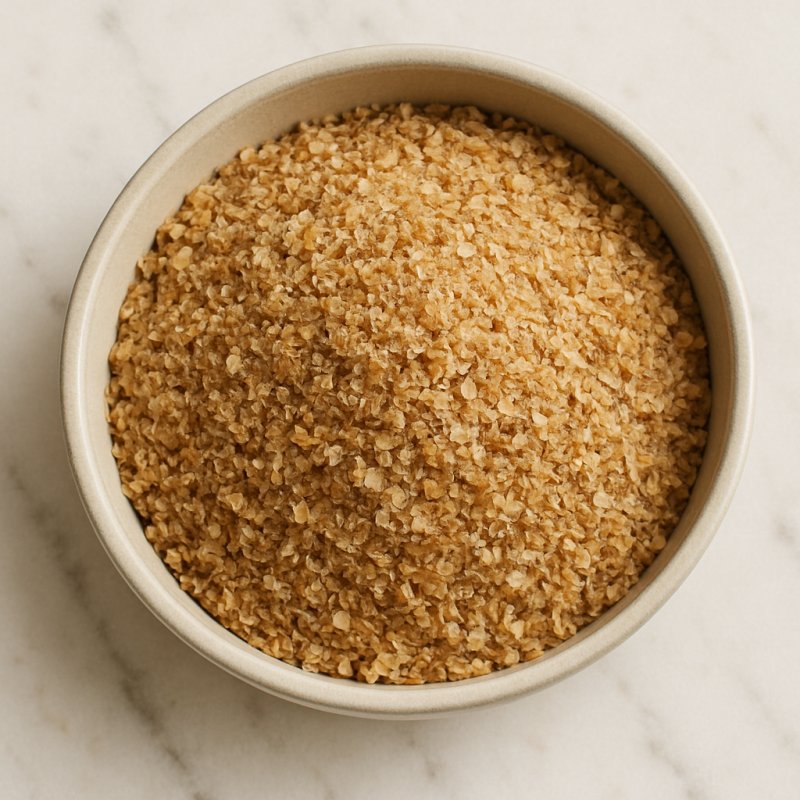
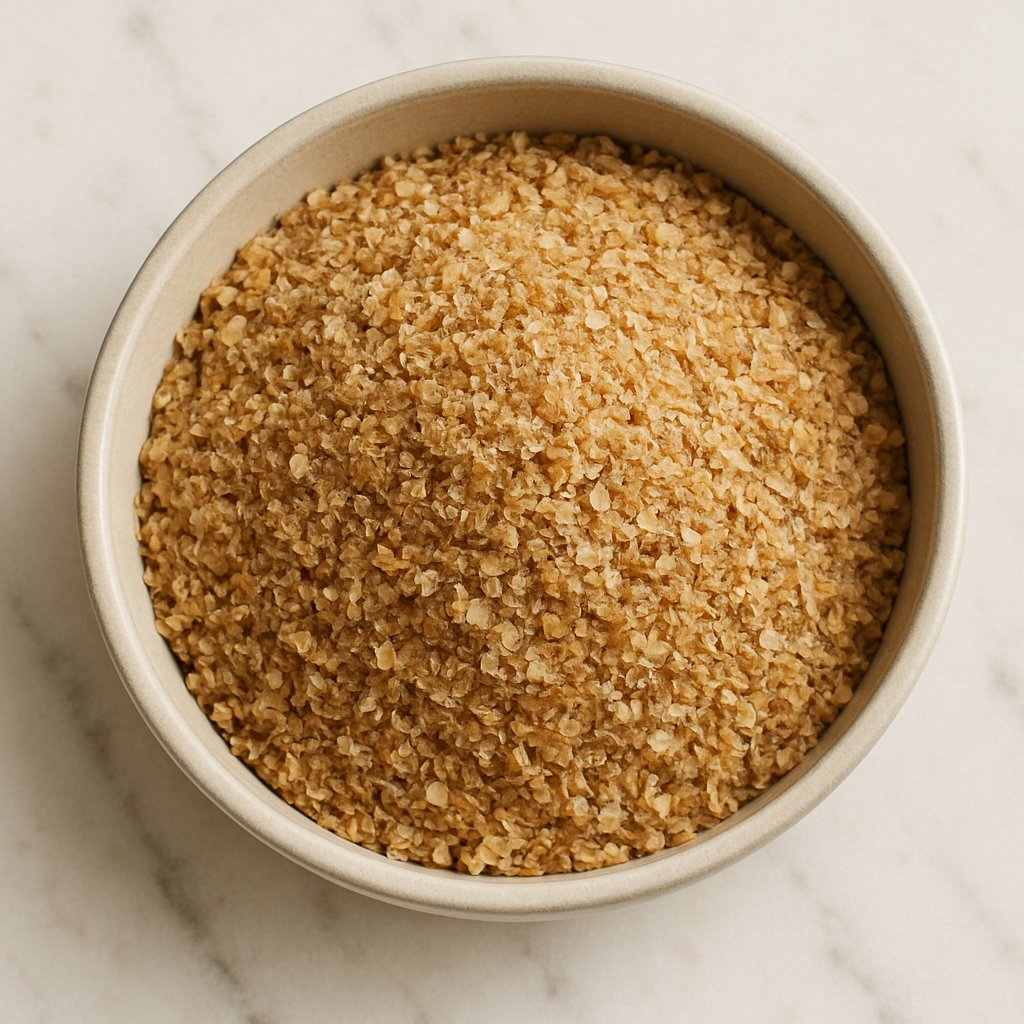
Coarse cracked wheat grains in a bowl
I still remember clearly my first conscious contact with cracked wheat: it was a rainy Saturday morning and I wanted to prepare a hearty breakfast that would not only warm me up but also taste of earth and home. While rummaging through my supplies I came across a rustic sack of coarse cracked wheat and I was immediately curious about the texture and aroma. Already at the first stirring into the milk a nutty scent unfolded that reminded me of freshly baked bread and farmhouse kitchens.

Cracked wheat is basically nothing more than coarsely crushed wheat kernels. It contains bran, flour components and the germ, which makes it particularly high in fiber and flavorful. This structure makes it versatile: from a heartier breakfast bowl to additions for soups and to bread and roll recipes – cracked wheat gives dishes bite and substance. I personally prefer it combined with milk, honey and toasted nuts when I want something hearty that also comforts the soul.

A colleague of mine swears by preferring cracked wheat to classic porridge because the graininess provides a more satisfying mouthfeel and keeps you full longer. I also find the sustainability aspect appealing: it is often a very regional product, less processed than finer flour and thus preserves more of the original kernel. In baking cracked wheat produces a rustic crumb and a savory crust; I recommend mixing it with finer flours to achieve a good balance between structure and lightness.

Practical tips I've learned from many experiments:

  • Let cracked wheat swell: soak it in liquid for at least half an hour so it softens.
  • As a soup addition: cook it briefly so it remains pleasantly al dente and not mushy.
  • In baking: replace up to one third with cracked wheat, otherwise the bread becomes too heavy.
To me cracked wheat has something honest and down-to-earth. It speaks of fields, wind and seasonal cycles, and it effortlessly turns simple meals into small rituals. When I'm feeling nostalgic or want to surprise guests, a creamy cracked wheat porridge with a dollop of yogurt and fresh berries is my secret tip.

Availability & types

Availability and types

Cracked wheat comes from the grain of the wheat plant. After the ears have grown and ripened, the kernels are harvested. These kernels consist of different parts: the hull (germ), the endosperm (starch-containing part) and the outer layer (also called bran). When the wheat kernel is milled you obtain cracked wheat – these are coarser pieces of the kernel, not as fine as flour. You can think of it like the difference between sugar and coarse sugar: both come from the same plant, but the particle sizes are different.

Wheat grows in many parts of the world. In Europe large growing regions are:

  • Central Europe – countries such as Germany, France, Poland and the Netherlands grow a lot of wheat. The climate here with warm summers and sufficient rain is good for the plant.
  • Eastern Europe – countries like Russia and Ukraine also have vast areas of wheat fields.
  • North America – especially in the central states of the USA and in Canada a lot of wheat is grown.
In supermarkets or at the baker you will find different varieties and versions of cracked wheat. The main differences are how fine or coarse the grits are and whether all parts of the kernel are still present.

  • Whole-grain grits: here the whole kernel is milled – endosperm, bran and germ. This is similar to wholemeal bread: it contains many fibers and vitamins. Whole-grain grits are darker and somewhat coarser.
  • White grits (also called extraction grits): in this variant parts of the bran have been removed. It is lighter and resembles the lighter flour. It has fewer fibers but a milder taste.
  • Coarsely cracked: the pieces are large and crunchy. Good for muesli, bread with bite or as an ingredient when you want texture.
  • Finely cracked: almost like very coarse flour. Suitable when you want a finer dough or a softer consistency, for example for certain breads or rolls.
  • Split grits: the kernels are split so that you get medium-sized pieces – not too coarse and not too fine. This is a good compromise for many recipes.
There is also organic cracked wheat and conventional grits. Organic wheat is grown without synthetic pesticides and according to specific rules. This matters to people who care about the environment and nature. Conventional wheat can be grown with more modern methods to achieve higher yields.

Availability depends on the season and the country. Because wheat is a staple food, cracked wheat is usually available year-round in supermarkets, health food stores or from the miller. In regions with a lot of wheat cultivation it is often cheaper and available in larger quantities. If you want a special type of grits – for example very coarse or from organic farming – it is worth visiting a health food store, an organic shop or the local miller.

In short: cracked wheat is the coarsely milled form of the wheat kernel. It comes in different degrees of fineness and as whole-grain or extraction variants. It is grown on fields worldwide, especially in Europe, North America and parts of Asia, and is easy to find in most food stores. This way you can choose the appropriate type depending on taste and intended use.
Details & nutrition

Property Value
Unit g
Calories per 100 340
Protein per 100 12.0
Carbohydrates per 100 64.0
Sugar per 100 0.5
Fat per 100 2.0
Saturated fat per 100 0.4
Monounsaturated fat 0.3
Polyunsaturated fat 1.0
Fiber per 100 10.0
Vitamin C (mg) per 100 0
Vitamin D (IU) per 100 0
Calcium (mg) per 100 30
Iron (mg) per 100 3.0
Nutri-Score C
CO₂ footprint 0.7
Origin Typically Europe, North America, or Asia; exact origin varies by manufacturer
Gluten-free No
Lactose-free Yes
Nut-free Yes
Vegan Yes
Note Nutritional values refer to 100 g of dry cracked wheat. May contain traces of other gluten-containing cereals, depending on processing.

Technical & scientific information

Cracked wheat refers to coarsely broken kernels of wheat (Triticum aestivum), in which all components of the kernel — bran, germ and endosperm — remain largely intact. It is produced in mills by breaking or cracking processes, in which the kernel is not fully ground into flour but fractured into different particle sizes. Cracked wheat is used in food production, animal feed and artisanal baking processes; its physical properties affect water absorption, dough structure and baking performance.

Chemical composition and nutritional values
The composition of cracked wheat essentially corresponds to that of whole grain: typical dry matter contents are about 88–90%. Per 100 g dry matter there are approximately 12–15 g protein, 2–3 g lipids (with a high proportion of linoleic acid in the germ), 60–70 g carbohydrates including starch and soluble sugars, and 10–15 g indigestible fiber. Mineral contents include notable amounts of magnesium, phosphorus, iron and zinc; B vitamins (especially thiamine, niacin and folate) are concentrated mainly in the germ and bran. The glycemic index of cracked wheat is generally lower than that of pure wheat flour, since fibers and intact starch structures slow the release of glucose.

Fiber and functional compounds
Cracked wheat is rich in insoluble fiber, particularly arabinoxylans, as well as cellulose and hemicelluloses from the bran layer. These components increase stool bulk, accelerate intestinal transit time and may have positive effects on the gut microbiota. Bran also contains phenolic compounds such as ferulic acid, which can exhibit antioxidant activity, as well as phytic acid, which binds minerals and can reduce the bioavailability of certain trace elements.

Processing methods
The manufacture of cracked wheat is carried out by breaking or roller processes. Different particle sizes can be produced in grit manufacture — finer grits for baked goods, coarser grits for casseroles or flake pressing. Heat development during milling is controlled to minimize lipid oxidation in the germ. Extended storage can lead to rancidity, which is why cooling or removal of the germ (partial degerming) is often applied to extend shelf life. Heat treatments, steam or extrusion change starch structure and can increase water uptake and digestibility.

Technological properties in foods
Cracked wheat affects water-holding capacity and dough stability. Coarse particles increase loaf volume and texture, but can reduce gas retention in the dough, resulting in denser crumbs. Finely milled grits integrate better into baking mixes. Moisture should be avoided during storage because mold growth and enzyme activity can occur. For industrial applications standardized grit products with defined particle size and moisture are often used.

Health aspects
Regular consumption of cracked wheat can, due to its high fiber content and micronutrient density, support digestion, blood sugar regulation and cardiovascular health. People with celiac disease or non-celiac gluten sensitivity must avoid cracked wheat, as it contains the storage proteins of wheat (gluten). Phytic acid in the bran can impair absorption of iron and zinc; this can be substantially reduced by soaking, sprouting or fermentation (e.g. sourdough).

Safety and storage
Because it contains the germ, cracked wheat is more susceptible to lipid oxidation and thus rancidity than degermed flour without germ. Stored cool, dry and airtight it has a longer shelf life. For industrial quality assurance moisture, microbial counts, mycotoxin contamination and free fat value are monitored, as wheat can develop molds and resulting toxins if stored improperly.

Overall cracked wheat is a nutrient-rich, versatile whole-grain product whose nutritional advantages are primarily based on the intact kernel components. For optimal nutritional and technological properties, particle size, thermal treatment and storage conditions are crucial, as is consideration of individual gluten intolerances.

Wiki entry for: cracked wheat
Active now: 17 visitors of which 2 logged-in members in the last 5 minutes