Menu & categories

Couverture chocolate

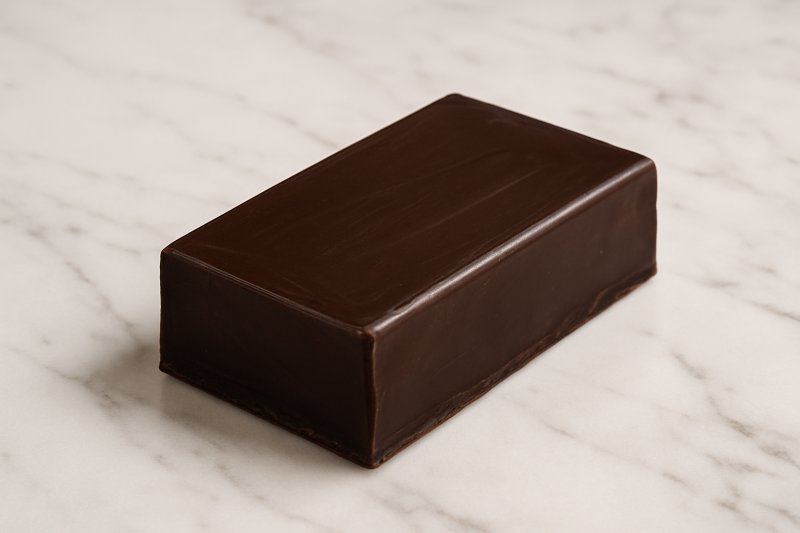
High-quality chocolate couverture for coating and finishing baked goods

Wiki about couverture chocolate Nutri-Score D Vegan No Gluten-free Yes Lactose-free No Nut-free No
NUTRITION / 100 g
540 kcal 5.0 g Protein 50.0 g Kohlenhydrate 35.0 g Fett

Introduction

Dark couverture chocolate in chunks and melted in a bowl
Couverture is for me one of those ingredients that appear both unassuming and magical. I still remember my first encounter in a small confectionery shop: the scent of melted chocolate, a hint of vanilla, and an older chocolatier tempering the couverture with patient hands. Since then it has stayed with me, because couverture is not just chocolate — it is the link between craft and enjoyment.

At its core, couverture differs from ordinary block chocolate by a higher proportion of cocoa butter. That makes it glossy, smooth and ideal for glazes, coatings and fillings. I have often seen how a layer of properly tempered couverture immediately gives a baked good a professional look. A friend once commented that my brownies suddenly looked like they came from a boutique — and often it was just the couverture that made the difference.

Tempering is the tricky but rewarding part. I have learned that patience and a good thermometer do more than frantic stirring. When the crystals are properly aligned, the couverture shines and snaps with a satisfying sound. Poorly tempered, it stays dull or turns whitish — not pretty, but still tasty.

Couverture comes in different varieties: dark, milk and white. Each has its own melting behaviour and flavour. I love experimenting with small amounts: a touch of sea salt in dark couverture, a splash of espresso in milk or vanilla in white. Such little experiments have often given me new favourite combinations.

  • Uses: coatings, glazes, ganache, decorations
  • Advantages: gloss, quick setting, pleasant texture
  • Tip: always work clean and avoid moisture
In the end couverture is for me more than just an ingredient — it is a small kitchen magic trick that gives pastries and pralines the final touch. I am delighted every time a simple cake layer is turned into a little sensation by a glossy layer of couverture.

Availability & types

Availability and types

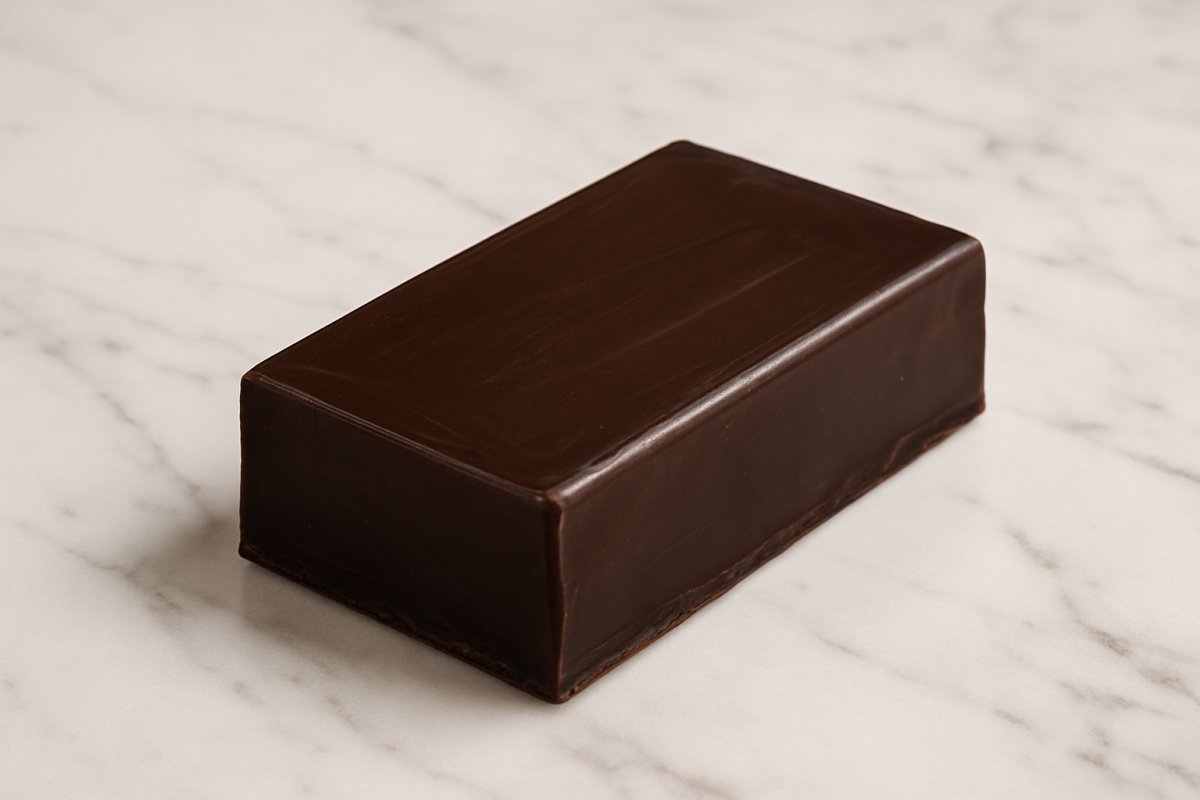
Couverture is a special chocolate used primarily for melting, coating and decorating. It can be found not only in bakeries and patisseries but also in supermarkets, specialist shops and online. You can buy it as bars, shavings, pieces or drops — the drops are small chocolate pieces that are very convenient for melting. If you want to bake at home or coat with chocolate, you will almost always find a suitable couverture.

Origin and growing regions
The most important ingredient of couverture is cocoa. Cocoa grows on a tree that thrives in warm, humid regions near the equator. Major growing regions include West African countries like Ivory Coast and Ghana, but also countries in South America (for example Ecuador) and Southeast Asia (for example Indonesia). You can think of it like bananas or oranges: these fruits also only grow in certain warm regions — cocoa is similar.

After harvest the cocoa beans are dried, roasted and processed into cocoa mass and cocoa butter. These components give couverture its flavour and melting properties. Quality and taste can vary depending on origin – much like wine or coffee.

Available types
There are several main types of couverture, which differ by the proportion of cocoa and other ingredients. Here are the most important ones, explained simply:

  • Dark couverture: This has a high cocoa content and less sugar. It tastes strong and slightly bitter, similar to dark chocolate. Many adults like it, but children sometimes find it too austere.
  • Milk couverture: This is milder and sweeter because it contains milk powder or milk components. It is popular for cakes and pralines because it tastes nicely creamy.
  • White couverture: Technically white couverture contains no cocoa mass, only cocoa butter, sugar and milk. It appears pale and has a sweet-creamy taste, almost like vanilla.
  • Special varieties: Sometimes there are couvertures with added flavours such as orange, hazelnut or salted caramel. These are often used for special desserts.
Variants by processing and use
Besides flavour there are also differences in processing. Some couvertures are particularly suitable for tempering. Tempering is a technical term that means heating and cooling the chocolate slowly and in a controlled way so that it becomes shiny and crisp when set. This is important for people who make pralines or chocolate bars. Other couvertures are easier to use and are used for coating cakes or as a chocolate sauce in the kitchen.

For everyday use it is practical to know that couverture is sold in different formats – large blocks for professionals or small drops for hobby bakers. If you want to start baking, the drops or pieces are particularly handy because they melt faster. Overall there are many types of couverture so everyone can find the product that suits their taste and project.
Details & nutrition

Property Value
Unit g
Calories per 100 540
Protein per 100 5.0
Carbohydrates per 100 50.0
Sugar per 100 48.0
Fat per 100 35.0
Saturated fat per 100 21.0
Monounsaturated fat 11.0
Polyunsaturated fat 1.5
Fiber per 100 8.0
Vitamin C (mg) per 100 0
Vitamin D (IU) per 100 0
Calcium (mg) per 100 40
Iron (mg) per 100 3.0
Nutri-Score D
CO₂ footprint 4.5
Origin Cocoa beans from tropical growing countries, processed in Europe
Gluten-free Yes
Lactose-free No
Nut-free No
Vegan No
Note Information refers to a typical dark couverture chocolate with approximately 50–60% cocoa content; exact values may vary depending on brand and formulation.

Technical & scientific information

Couverture refers to a form of chocolate enriched with a high percentage of cocoa butter, used especially in confectionery, chocolate-making and patisserie as a coating, glaze and for tempering. Unlike table chocolate, couverture contains a higher proportion of cocoa fat (cocoa butter) and is therefore more fluid, glossier and better suited for making pralines, coating cakes or dipping pastries.

Chemical composition and ingredients
Couverture essentially consists of cocoa mass, cocoa butter, sugar and, where applicable, milk components and emulsifiers. Cocoa mass provides the solid cocoa components and the typical aromatic polyphenols; cocoa butter is the lipid carrier with characteristic melting behaviour. Commonly used emulsifiers are lecithin (plant lecithin, e.g. soy) and less commonly polyglycerol polyricinoleate (PGPR), which lower viscosity and improve flow. Milk couvertures additionally contain milk powder or milk fat, increasing the fat content and altering the flavour profile. Dark couverture contains a high proportion of cocoa solids and has a lower sugar content than milk or white couvertures.

Physical properties and tempering
The technical properties of couverture are largely determined by the crystallisation behaviour of cocoa butter. Cocoa butter can exist in several crystal forms (polymorphs); the stable and desired form is the so-called Form V crystal, which provides gloss, a crisp snap and a defined melting temperature. During tempering couverture is heated above 45 °C, then cooled to about 27–28 °C and finally heated to around 31–32 °C for dark or 29–30 °C for milk couvertures to generate as many Form V crystals as possible. Improperly tempered couverture can end up dull, soft or with fat bloom.

Nutritional values and nutritional aspects
Couverture is energy- and fat-rich. Typical nutritional values are around 500–600 kcal per 100 g, with fat content often between 30 and 40 g or more, depending on the cocoa butter content and added milk fats. A high proportion of saturated fatty acids is to be expected from stearic acid and palmitic acid in the cocoa butter. Cocoa solids also supply secondary plant compounds such as flavanols (polyphenols) and small amounts of minerals (magnesium, iron) and trace elements. Sugar content varies greatly between dark and milk/white couvertures and influences the glycaemic effect.

Manufacturing and processing methods
Industrial production includes conching and rolling of the cocoa mass, addition of cocoa butter and other ingredients, and fine grinding to very small particle sizes (typically < 25 µm) to achieve a smooth texture. Couvertures are formulated with different flow properties for specific applications. Artisanal processing requires precise temperature control, clean work surfaces and the use of tempering equipment or water baths to stabilise the tempered crystal structure.

Health aspects and quality
From a nutritional point of view couverture provides energy and lipid components, including valuable secondary plant compounds from cocoa that may have antioxidant properties. At the same time, because of the high energy and sugar content, couverture cannot be considered health-promoting in large amounts. Major allergens are primarily milk and soy (lecithin), so labelling and traceability are important. Quality criteria include purity of ingredients, minimal content of foreign fats, good melting profile and freedom from off-flavours. Sensory and chemical analyses are used to monitor quality, cocoa solid content, moisture and possible contaminants.

In summary, couverture is a technically modified chocolate with an increased cocoa butter content that offers specific physical properties for professional applications. Its functionality results from the structural nature of cocoa butter and the fine particle size, while nutritional and health aspects include both positive effects from cocoa polyphenols and limitations due to high sugar and fat content.

Wiki entry for: couverture chocolate
Active now: 17 visitors of which 2 logged-in members in the last 5 minutes