Menu & categories

Maize (Corn)

Sweet cereal with versatile uses in cooking and industry

Wiki about corn Nutri-Score B Vegan Yes Gluten-free Yes Lactose-free Yes Nut-free Yes
NUTRITION / 100 g
96 kcal 3.4 g Protein 21.0 g Kohlenhydrate 1.5 g Fett

Introduction

Fresh corn cobs with yellow kernels
I have a long relationship with corn that goes far beyond a simple side dish. As a child I found the kernels fascinating — those crunchy, sweet pearls that burst like little suns when you bite into them. Later I discovered corn in so many roles: as creamy polenta on rainy evenings, as a crunchy corn cake for a quick snack, and as braised corn cobs at backyard summer parties. A colleague once brought a bowl of grilled corn to work, seasoned only with butter and a bit of chili, and I immediately fell in love with the smoky depth that can come from such simple ingredients.

Corn is remarkably versatile. It can be sweet or savory, plain or extravagant. In my kitchen I use cornmeal for fluffy pancakes, fresh corn for salads and frozen corn when supplies are low. I still remember a sunny market morning when I found a stall with colorful varieties of corn — yellow, white and even blue — and thought how little I actually knew about the diversity of this crop. That discovery made me curious about traditional preparations, such as the nixtamalized dough for tortillas, which tastes so different from industrially produced versions.

Besides taste, I appreciate corn for its accessibility. It appears in many kitchens worldwide and connects cultures: from Latin American tortillas to Southeastern European polenta to American barbecue styles. The cooking methods are a feast for the senses. I love the crackle when butter melts on a hot cob and the silky texture of a well-seasoned creamy corn soup. A friend once told me that his grandmother always refined corn with a touch of nutmeg — a small, elegant surprise that I’ve often recreated since.

From a nutritional point of view, corn provides energy, fiber and important B-vitamins; in wholegrain form it also supplies valuable micronutrients. For me corn is less a food of the past and more a treasure chest for creative dishes. It invites experimentation, whether as a crunchy snack, a velvety side dish or an aromatic main. When I cook a plate of corn today, I don’t just see a field full of yellow cobs, but a connection of tradition, flavor and small joyful memories that make every meal a bit more special.

Availability & types

Availability and types of corn

Corn is one of the best-known plants in the world. It originally comes from Central America — places like Mexico and nearby countries — where people were already cultivating different varieties thousands of years ago. From there corn spread around the globe because it is easy to eat, grows well and comes in many different forms.

Today corn is grown almost everywhere. Major growing regions include, for example:

  • North America – especially the United States and Canada. There are vast cornfields there.
  • South America – countries like Brazil and Argentina grow a lot of corn.
  • Europe – you can also find cornfields here, for example in France, Germany and Italy.
  • Africa and Asia – in many countries corn is an important food source.
Why does corn grow in so many places? Because there are different types of corn adapted to various climates and soils. You can imagine it like different shoes: for the beach you take sandals, for the snow boots — so corn has the right “gear” depending on the region.

The main corn types you should know are:

  • Sugar corn kernels (sweet corn) – this is the corn many people eat directly as a vegetable. The kernels are juicy and sweet. You can find it fresh, canned, frozen or grilled as a cob.
  • Fodder corn – this corn is usually not eaten directly by humans but used as feed for animals like cows or pigs. It often has larger kernels and is more starchy.
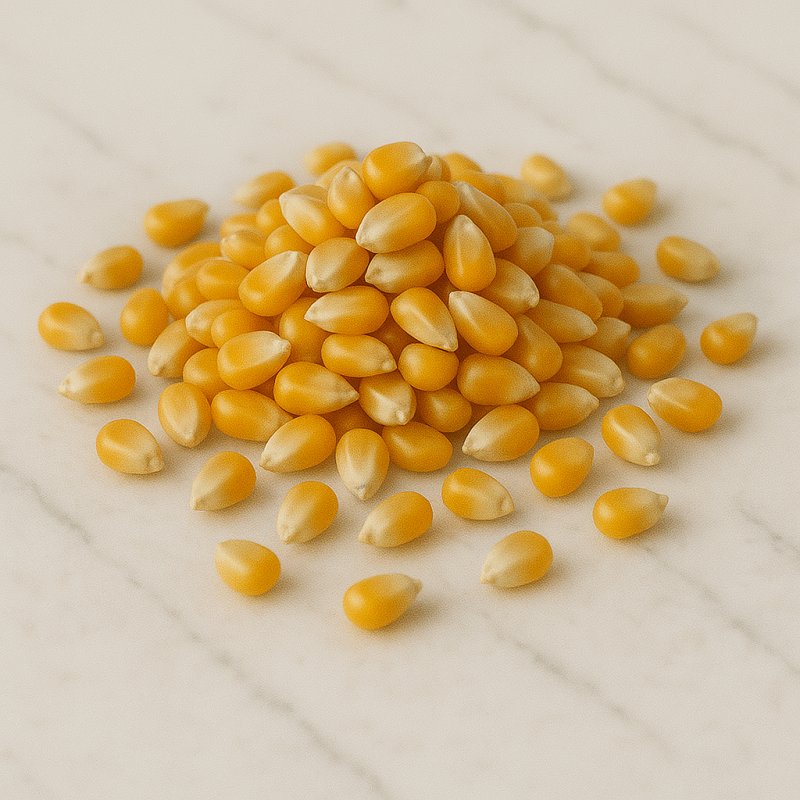
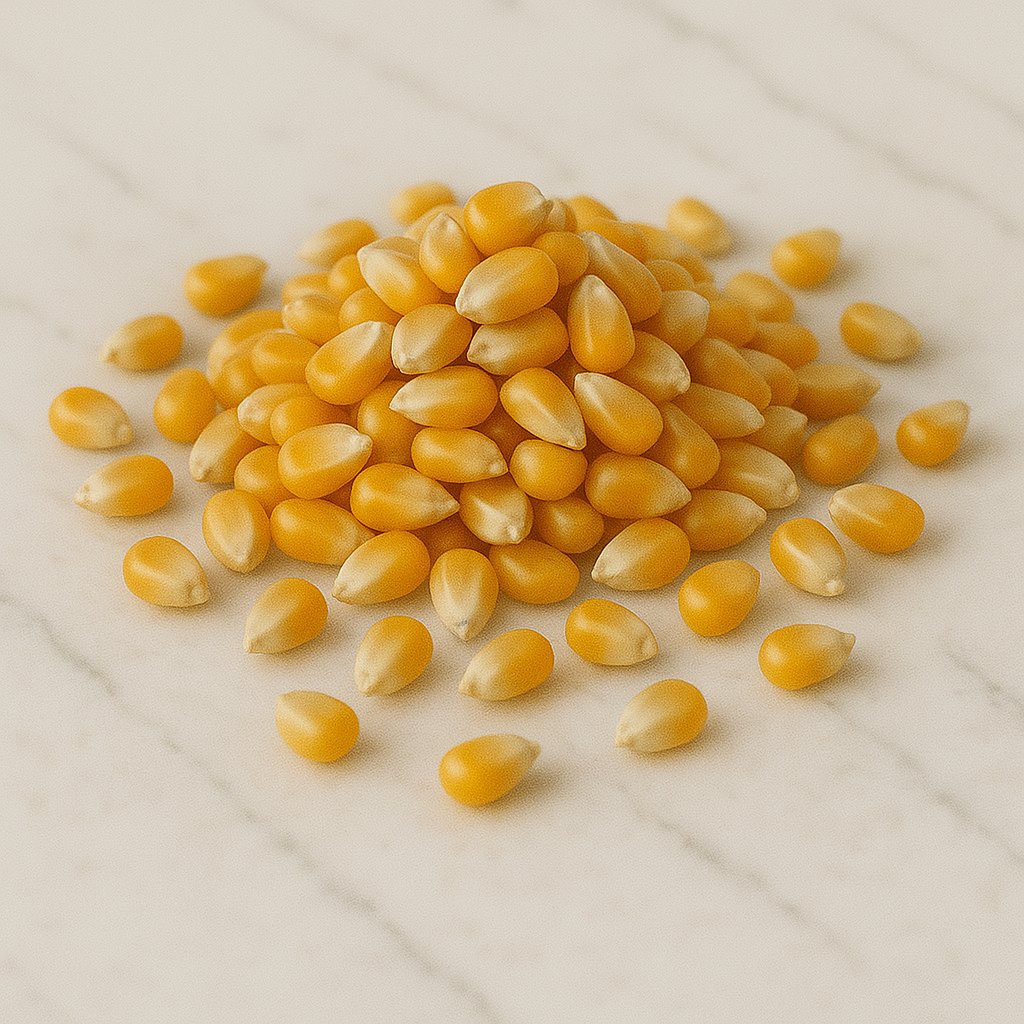
  • Flint corn (hard corn) – this type has hard kernels. It is often used for cornmeal or popcorn. Popcorn forms when the small amount of water inside the kernel turns to steam from heat and the kernel pops.
  • Dent corn (soft corn) – this corn has a mix of soft and hard parts in the kernel, which often leaves a small dent on top. It is widely used for cornmeal, animal feed and industrial products.
  • Grits and polenta corn – coarse corn grits are made from special varieties, used for polenta or corn porridge. These varieties are particularly rich in starch.
  • Field corn – a general term for many corn varieties grown in fields and often used for animal feed or to make corn-derived products.
In addition to these basic types there are processing forms of corn found in supermarkets:

  • Fresh corn on the cob
  • Canned corn (pre-cooked and preserved in liquid)
  • Frozen corn
  • Cornmeal, grits and polenta
  • Popcorn
  • Cornstarch (often used in baking or industry)
Corn availability often depends on the season: fresh sweet corn is usually at its best in summer, while products like canned corn or cornmeal are available year-round. Some regions have special traditional corn varieties that have distinctive tastes or colors — for example blue, red or white corn. These colorful varieties show how diverse corn can be, almost like a rainbow of flavors and uses.

In summary: corn originates from Central America, is now grown worldwide and is available in many types — from sweet cobs to hard-shelled popcorn corn. This means there is a suitable corn variety for almost every taste and use.
Details & nutrition

Property Value
Unit g
Average weight per piece 220
Calories per 100 96
Protein per 100 3.4
Carbohydrates per 100 21.0
Sugar per 100 4.5
Fat per 100 1.5
Saturated fat per 100 0.2
Monounsaturated fat 0.4
Polyunsaturated fat 0.7
Fiber per 100 2.7
Vitamin C (mg) per 100 6.8
Vitamin D (IU) per 100 0
Calcium (mg) per 100 2
Iron (mg) per 100 0.5
Nutri-Score B
CO₂ footprint 0.4
Origin Worldwide, especially the Americas, Europe and Asia
Gluten-free Yes
Lactose-free Yes
Nut-free Yes
Vegan Yes
Note Nutritional values for fresh, cooked corn (no additives); may in rare cases trigger cross-reactions in pollen-allergic individuals.

Technical & scientific information

Corn (Zea mays) is a cultivated plant in the family of Poaceae (grasses) and ranks among the world’s most important crops. Originally domesticated in Central America, corn is distinguished by high genetic diversity and strong adaptability to different climatic zones. Plant morphology, yield and kernel composition vary by variety; common types include sweet corn, flint (hard) corn, dent corn and popcorn.

Botanical and agronomic features: Corn is an annual, mainly wind-pollinated plant with tall growth and an unbranched stem. Leaves are long and lance-shaped; male flowers form the tassel, female flowers form the ears. Corn requires warm conditions and adequate water supply during pollination and kernel fill. Intensively managed corn is often combined with fertilization, irrigation and pest control, while ecological systems emphasize crop rotation and soil-conserving measures.

Chemical composition and nutritional values: Corn kernels are composed mainly of starch (polysaccharides), which makes up 60–75% of dry weight. The starch fraction consists of the two main components amylose and amylopectin; their ratio affects physical properties and processability (e.g., stickiness, gel formation). Other key components include:

  • Water: Fresh kernels typically contain 10–25% moisture, depending on variety and harvest time.
  • Proteins: 7–11% of dry weight, with an amino acid profile low in lysine and tryptophan; certain breeding lines (e.g., Quality Protein Maize, QPM) were developed to increase lysine content.
  • Fat: 3–5%, mainly in the germ and pericarp; the lipid fraction is predominantly polyunsaturated fatty acids such as linoleic acid.
  • Dietary fiber: In the form of cellulose, hemicelluloses and pectins, especially in the germ and hull.
  • Minerals and vitamins: Corn provides minerals like magnesium, phosphorus and iron as well as B-vitamins, particularly niacin and folate.
Processing methods: Corn is used in many forms: whole grain, flour or grits, oil or starch, as well as feed and industrial applications. Important processing steps include drying, dehulling, milling and extraction. Nixtamalization is a traditional treatment of kernels with an alkaline solution (often calcium hydroxide) that improves niacin availability, alters proteins and increases nutrient uptake. Industrial methods like wet milling separate endosperm, germ and starch and provide feedstocks for ethanol production, syrups (e.g., high-fructose corn syrup) and modified starch products.

Health aspects and nutritional science: Corn supplies energy through its high starch content and can be part of a balanced diet. Some health aspects to consider are:

  • The relatively low content of essential amino acids such as lysine makes corn protein less suitable as the sole protein source; combining it with legumes can improve protein quality.
  • In sensitive individuals, corn products can trigger allergies or cross-reactions, although corn protein allergies are less common than wheat or soy allergies.
  • Contamination by mycotoxins, particularly aflatoxins or fumonisins, can occur with improper storage and pose a health risk; appropriate controls and storage conditions are important.
  • Highly processed products with high sugar or fat content (e.g., sweetened syrups, fried corn chips) are nutritionally less favorable and should be consumed in moderation.
Industrial and ecological importance: Beyond food uses, corn is a key raw material for biofuel production (ethanol), the manufacture of starch and various bio-based materials, and for animal feed. However, intensive corn cultivation can promote soil erosion, high water use and biodiversity loss; sustainable farming practices such as integrated pest management, crop rotations and preservation of genetic diversity are central measures to reduce negative environmental impacts.

Overall, due to its versatility, energy efficiency and adaptability, corn is a central crop of great significance for food, industry and agriculture. Scientific improvements in breeding, processing and storage aim to further optimize the nutritional value, safety and environmental profile of this crop.

Wiki entry for: corn
Active now: 11 visitors of which 2 logged-in members in the last 5 minutes