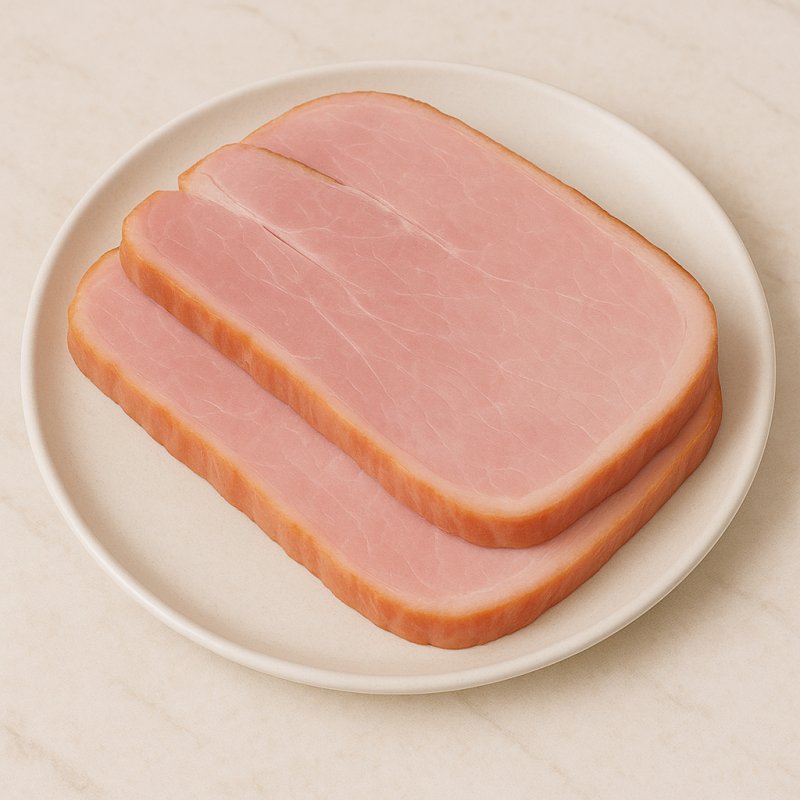
Availability and types of ham (cooked)
What is cooked ham made from?
Cooked ham is produced from the hind part of a pig, commonly called the leg. After slaughter the meat is salted or brined, sometimes lightly seasoned, and then gently cooked or steamed. Cooking makes the ham tender and juicy so that it slices well and often ends up in slices on bread or in a sandwich. You can think of it like potatoes: raw they are hard, cooked they become soft and easier to digest.
Cooked ham is produced from the hind part of a pig, commonly called the leg. After slaughter the meat is salted or brined, sometimes lightly seasoned, and then gently cooked or steamed. Cooking makes the ham tender and juicy so that it slices well and often ends up in slices on bread or in a sandwich. You can think of it like potatoes: raw they are hard, cooked they become soft and easier to digest.
Where does it come from?
Pigs for ham are raised in many countries. Large producers include European countries such as Germany, Spain and Italy as well as countries outside Europe like the USA and China. Within a country there are different regions where many pigs are kept, often where there is sufficient space, feed and good housing. The actual place of production can be a local butcher shop or large meat processing plants.
Pigs for ham are raised in many countries. Large producers include European countries such as Germany, Spain and Italy as well as countries outside Europe like the USA and China. Within a country there are different regions where many pigs are kept, often where there is sufficient space, feed and good housing. The actual place of production can be a local butcher shop or large meat processing plants.
Which varieties of cooked ham exist?
There are several variants that differ in taste, shape and method of production. Here are some, explained simply:
There are several variants that differ in taste, shape and method of production. Here are some, explained simply:
- Sliced ham: Thinly sliced, ideal for bread or sandwiches. It is mild in flavor and very practical.
- Block ham: Usually pressed into square or round shapes and sold in slices. Often sold in supermarkets and keeps well in the refrigerator.
- Chicken or poultry ham: Made from poultry meat instead of pork. It is paler and sometimes lower in fat, for people who do not want to eat pork.
- Ham with herbs or pepper: Seasoned on the outside or inside with spices. This gives it a stronger flavor, similar to herb-flavored cheeses.
- Organic ham: From animals raised according to organic rules. This usually means more space for the animals and feed without artificial additives.
- Ready meals / salami-like variants: Sometimes cooked ham is used as an ingredient in gratins, pizzas or in mixed sausages.
How easy is it to find?
Cooked ham is very easy to obtain. You can find it in supermarkets, butcher shops, discount stores and some farm shops. In large cities there is often more variety, in smaller towns perhaps only a handful of types. Many supermarkets have a deli counter with freshly sliced ham and a chilled section with prepackaged slices.
Cooked ham is very easy to obtain. You can find it in supermarkets, butcher shops, discount stores and some farm shops. In large cities there is often more variety, in smaller towns perhaps only a handful of types. Many supermarkets have a deli counter with freshly sliced ham and a chilled section with prepackaged slices.
Packaging and shelf life
Ham is often sold sliced and vacuum-packed or offered loose at the counter. Vacuum packing extends its shelf life because no oxygen gets in. Once the package is opened it should be kept in the refrigerator and eaten within a few days. This is similar to sliced cheese.
Ham is often sold sliced and vacuum-packed or offered loose at the counter. Vacuum packing extends its shelf life because no oxygen gets in. Once the package is opened it should be kept in the refrigerator and eaten within a few days. This is similar to sliced cheese.
Small tips for shopping
When you buy ham you can look at a few things: what the color looks like (light pink is normal), whether it smells fresh, and whether the label says “cooked” or “cured”. For organic or regional products you can often ask about how the animals were raised. That way you find the type that suits you best.
When you buy ham you can look at a few things: what the color looks like (light pink is normal), whether it smells fresh, and whether the label says “cooked” or “cured”. For organic or regional products you can often ask about how the animals were raised. That way you find the type that suits you best.
