Menu & categories

Cooked ham

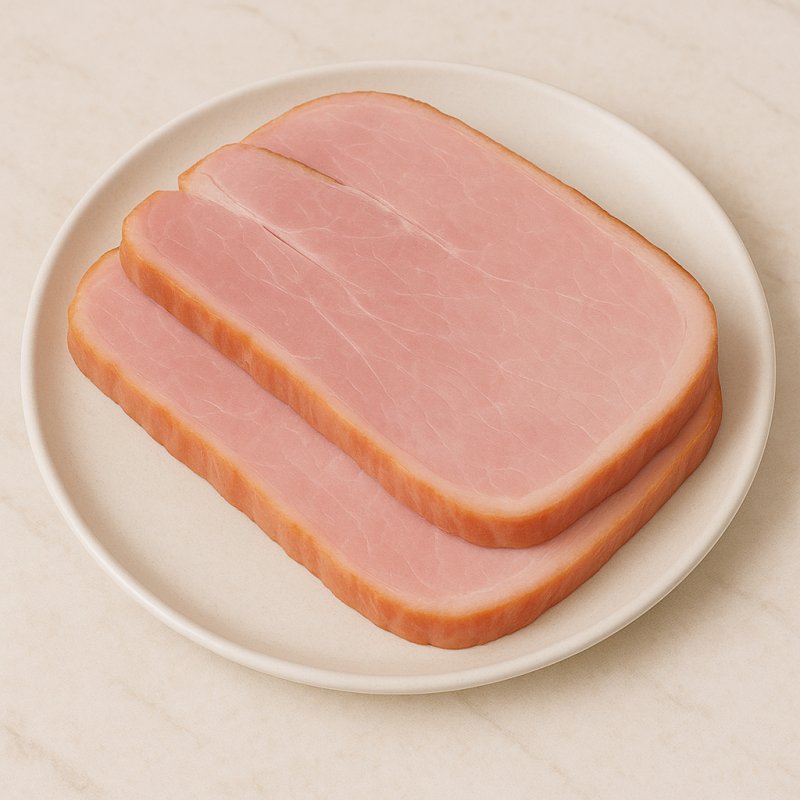
Lean, gently cooked pork ham with a mild flavor

Wiki about cooked ham Nutri-Score B Vegan No Gluten-free Yes Lactose-free Yes Nut-free Yes
NUTRITION / 100 g
120 kcal 20 g Protein 1 g Kohlenhydrate 4 g Fett

Introduction

Slices of cooked ham on a wooden board
I still clearly remember the first bite of cooked ham that really surprised me: tender, slightly sweet, with that unobtrusive saltiness that immediately evokes memories of family celebrations and small snack breaks. For me, cooked ham is more than just an ingredient; it is an everyday hero that carries breakfast rolls, quick sandwiches and festive platters alike. A colleague of mine swore for years that only raw smoked ham had character, until I handed him a warm croissant with cooked ham — since then he has been an avowed fan.

Cooked ham is created through a deliberate interplay of salt, spices and slow heat treatment. The result is a fine, juicy texture that slices beautifully and has a fixed place in many European kitchens. I often use it when I need something practical yet flavorful: it can be quickly cut into strips, seasons gratins subtly and adds pleasant substance to salads without dominating.

What I particularly appreciate about this ingredient is its versatility. Cooked ham goes well with:

  • breakfast platters, combined with fresh bread and mustard
  • pasta dishes, finely diced in cream sauces
  • salads, where it provides a savory component
  • tapas and small bites, because it rolls and fills well
Sometimes I conjure something special with minimal effort: an omelette with a hole in the middle, filled with sliced ham and herbs, or a simple gratin in which the ham slices are layered between potatoes and cheese. I remember a rainy Sunday afternoon when there was only a piece of cooked ham left in the fridge — from that came an improvised gratin that surprised everyone and lifted the mood.

When shopping I pay attention to the ingredient list and prefer products without unnecessary additives; that changes the taste more than you might think. For special occasions I like varieties with a light smoky note or regional character. Despite all the culinary details, for me the nicest moment remains the simple one: a warm roll, a thin slice of cooked ham and the smell that immediately brings confidence and well-being.

Availability & types

Availability and types of ham (cooked)

What is cooked ham made from?
Cooked ham is produced from the hind part of a pig, commonly called the leg. After slaughter the meat is salted or brined, sometimes lightly seasoned, and then gently cooked or steamed. Cooking makes the ham tender and juicy so that it slices well and often ends up in slices on bread or in a sandwich. You can think of it like potatoes: raw they are hard, cooked they become soft and easier to digest.

Where does it come from?
Pigs for ham are raised in many countries. Large producers include European countries such as Germany, Spain and Italy as well as countries outside Europe like the USA and China. Within a country there are different regions where many pigs are kept, often where there is sufficient space, feed and good housing. The actual place of production can be a local butcher shop or large meat processing plants.

Which varieties of cooked ham exist?
There are several variants that differ in taste, shape and method of production. Here are some, explained simply:

  • Sliced ham: Thinly sliced, ideal for bread or sandwiches. It is mild in flavor and very practical.
  • Block ham: Usually pressed into square or round shapes and sold in slices. Often sold in supermarkets and keeps well in the refrigerator.
  • Chicken or poultry ham: Made from poultry meat instead of pork. It is paler and sometimes lower in fat, for people who do not want to eat pork.
  • Ham with herbs or pepper: Seasoned on the outside or inside with spices. This gives it a stronger flavor, similar to herb-flavored cheeses.
  • Organic ham: From animals raised according to organic rules. This usually means more space for the animals and feed without artificial additives.
  • Ready meals / salami-like variants: Sometimes cooked ham is used as an ingredient in gratins, pizzas or in mixed sausages.
How easy is it to find?
Cooked ham is very easy to obtain. You can find it in supermarkets, butcher shops, discount stores and some farm shops. In large cities there is often more variety, in smaller towns perhaps only a handful of types. Many supermarkets have a deli counter with freshly sliced ham and a chilled section with prepackaged slices.

Packaging and shelf life
Ham is often sold sliced and vacuum-packed or offered loose at the counter. Vacuum packing extends its shelf life because no oxygen gets in. Once the package is opened it should be kept in the refrigerator and eaten within a few days. This is similar to sliced cheese.

Small tips for shopping
When you buy ham you can look at a few things: what the color looks like (light pink is normal), whether it smells fresh, and whether the label says “cooked” or “cured”. For organic or regional products you can often ask about how the animals were raised. That way you find the type that suits you best.

Details & nutrition

Property Value
Unit g
Calories per 100 120
Protein per 100 20
Carbohydrates per 100 1
Sugar per 100 1
Fat per 100 4
Saturated fat per 100 1.4
Monounsaturated fat 1.6
Polyunsaturated fat 0.8
Fiber per 100 0
Vitamin C (mg) per 100 0
Vitamin D (IU) per 100 0
Calcium (mg) per 100 10
Iron (mg) per 100 1
Nutri-Score B
CO₂ footprint 4.0
Origin Pork, predominantly from European farms
Gluten-free Yes
Lactose-free Yes
Nut-free Yes
Vegan No
Note Nutritional values refer to commercially available, low-fat cooked pork ham without breading; actual values may vary slightly depending on brand and recipe (e.g., salt and water content).

Technical & scientific information

Ham, cooked refers to a product made from pork that has been cooked after salting, curing or seasoning and receiving a thermal treatment. The basic raw material usually comes from the hind leg (or parts of the shoulder); by trimming, paring or cutting excess fat is removed. This is often followed by a curing phase with nitrite or saline solutions that inhibit microbial spoilage, develop flavor and stabilize the typical pink coloration. The final cooking or steaming treatment reaches core temperatures typically of 70–80 °C, causing protein denaturation and rendering the product unequivocally edible.

Composition and constituents

  • Proteins: Cooked ham consists mainly of animal protein; the most important proteins are myosin, actin and other muscle proteins. Denaturation through heating changes their structure, increases digestibility and can affect water-holding capacity.
  • Fats: Fat content varies depending on cut and processing; saturated, monounsaturated and polyunsaturated fatty acids are present. Cholesterol is also present, at levels typical for pork.
  • Water: Cooked ham has a high water content (typically 50–70 %), which is stabilized by curing and cooking processes as well as additives like phosphates that affect water binding.
  • Minerals and vitamins: Ham provides mainly sodium (due to curing salt), potassium, iron and zinc. B vitamins, especially vitamin B1 (thiamine) and B12, are present in moderate amounts.
  • Curing salts and additives: Nitrite curing salt is frequently used to inhibit Clostridium botulinum and maintain the red/pink color; phosphates may be used to improve texture and water retention.
Nutritional values (typical figures)

  • Energy: about 100–200 kcal per 100 g, depending on fat content.
  • Protein: approx. 15–25 g per 100 g.
  • Fat: approx. 2–15 g per 100 g, varying by cut and trimming.
  • Carbohydrates: generally very low to negligible, except when sugars are added.
  • Sodium: often elevated due to curing, which is relevant for people with blood pressure issues.
Processing methods

Industrial production comprises several steps: introducing salt/curing solution (by injection or immersion), maturation time, shaping (if pressed into molds), vacuum packaging and controlled cooking. Traditional artisan methods may involve longer curing times and gentler cooking processes. Modern techniques use computer-controlled temperature programs to reach core temperatures precisely and ensure food safety.

Microbiology and food safety

Curing and cooking markedly reduce the risk of pathogenic microbes. Nitrite acts antimicrobially against certain spore-formers. Nevertheless, hygiene during processing and cold chains for stored products are essential. After opening cooked ham products are susceptible to contamination and should be consumed quickly and kept refrigerated.

Health aspects

  • The high sodium content can affect blood pressure in sensitive individuals.
  • Nitrite and resulting nitrosamines are debated because nitrosamines can be carcinogenic under certain conditions; modern manufacturing practices aim to minimize their formation, for example through antioxidants like ascorbate.
  • As a protein-rich food source, cooked ham is practical for supplying essential amino acids, but fat and salt content should be considered within a balanced diet.
Storage and sensory properties

Good cooked ham shows a uniform pink color, a fine-fibred texture and a mild-salty taste. In case of unpleasant odor, sliminess or discoloration consumption is not recommended. Airtight packaging and refrigeration at about 0–4 °C extend shelf life.

Overall, cooked ham is a versatile food with high protein content and a notable sodium level; its technological processes balance food safety, texture and taste, while health considerations are addressed by moderate consumption and conscious product choice.

Wiki entry for: cooked ham
Active now: 24 visitors of which 2 logged-in members in the last 5 minutes