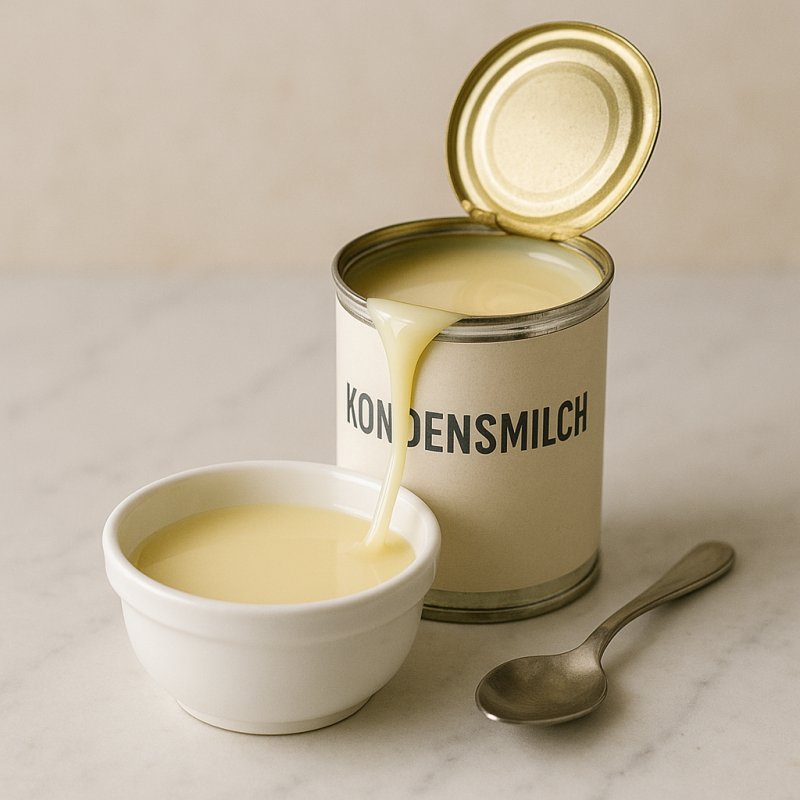
Availability and types of the ingredient condensed milk 10% fat
Condensed milk with 10% fat is a spreadable, thicker form of milk often sold in cans or cartons. It is produced when part of the water is evaporated from regular cow's milk. This makes the milk thicker and longer-lasting. Many people use it for baking, coffee or desserts. You can find it in almost every supermarket, in delicatessen shops and online – sometimes in the baking aisle or with coffee specialties.
Origin and production areas
Condensed milk is usually made from cow's milk. Cows supply the milk on farms; the largest milk-producing regions are in Europe (for example Germany, the Netherlands), North America, South America (such as Brazil) and parts of Asia and Africa. That means: the milk often comes from nearby, but sometimes the finished condensed milk is also imported. Products labeled “organic” come from farms with specific rules for feed and husbandry – this is indicated on the packaging.
Important word explained: “Pasteurized” means the milk has been briefly heated to reduce microbes. This makes it safer to eat and extends shelf life. Many condensed milk products are pasteurized or additionally packaged sterilely.
Available varieties and variants
There are several variants of condensed milk 10% fat. Here is an overview to give you an idea of what exists:
- Sweetened condensed milk: Sugar has been added. It is very sweet and is often used for desserts, cakes or as a spread. In some countries it is called “Leche condensada”.
- Unsweetened condensed milk (Evaporated Milk): This type contains no added sugar. It is more suitable for savory recipes or for refining sauces.
- Light variants: 10% fat is already a lighter option compared to full-fat dairy products. There are also higher-fat or reduced-fat versions, depending on how much fat you want.
- Flavored variants: Sometimes condensed milk is available with vanilla, caramel or chocolate – ready-flavored products.
- Organic and regional products: Brands with organic certification or “regional” indicate that the milk was produced ecologically or sourced locally.
- Lactose-free or vegan alternatives: For people who cannot tolerate milk sugar, there are lactose-free condensed milks. There are also plant-based condensed milks made from soy or coconut that are similarly thick and can be used in similar ways.
- Packaging types: Cans, cartons (Tetra Pak) or screw-top bottles – cans often keep longer at room temperature, opened products usually need to be refrigerated.
A simple picture: imagine regular milk is like a thin juice. Condensed milk is like that juice with much of the water removed — it is more concentrated and creamier. That's why often a small spoon is enough to give a recipe a lot of flavor.
In summary: condensed milk 10% fat is easy to find, usually comes from milk regions of the world, and there are many variants – sweetened or unsweetened, organic or vegan, in cans or cartons. The packaging states exactly which type it is and how to store it after opening.
