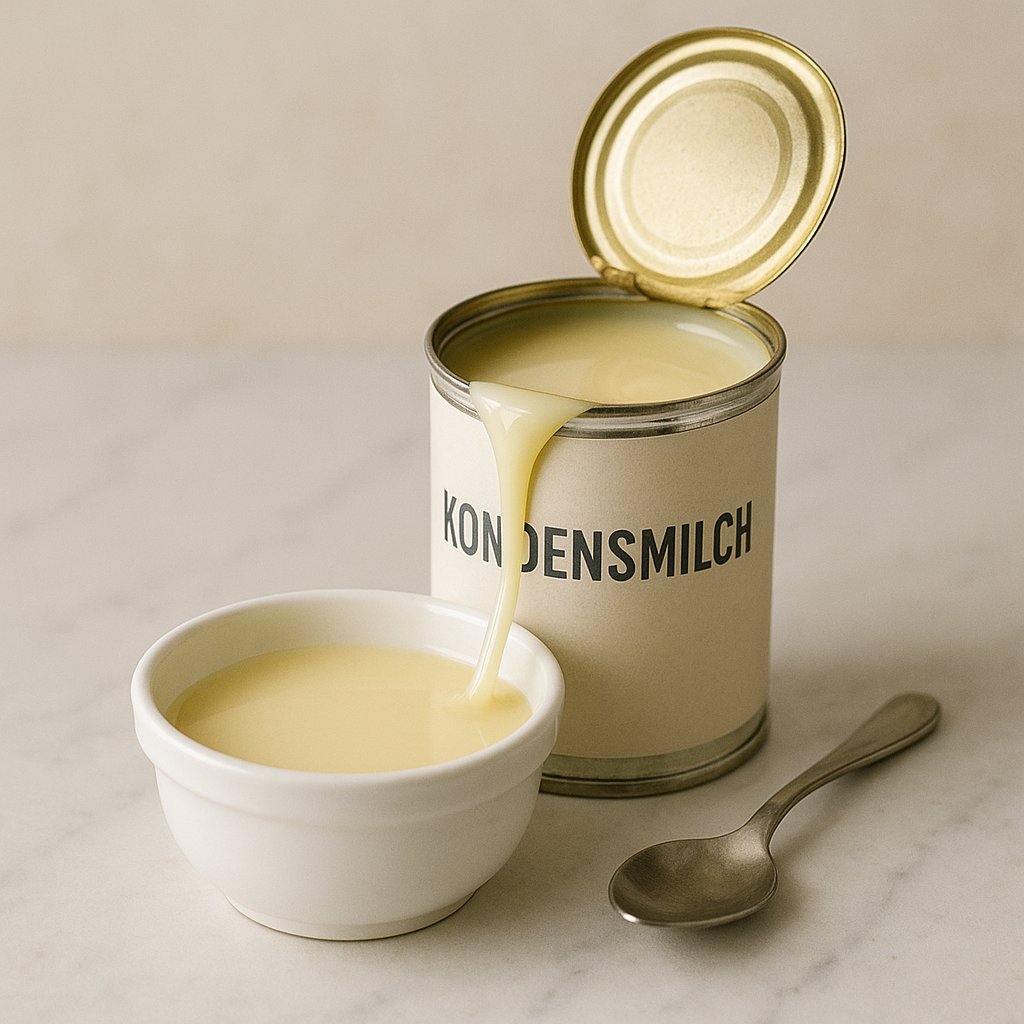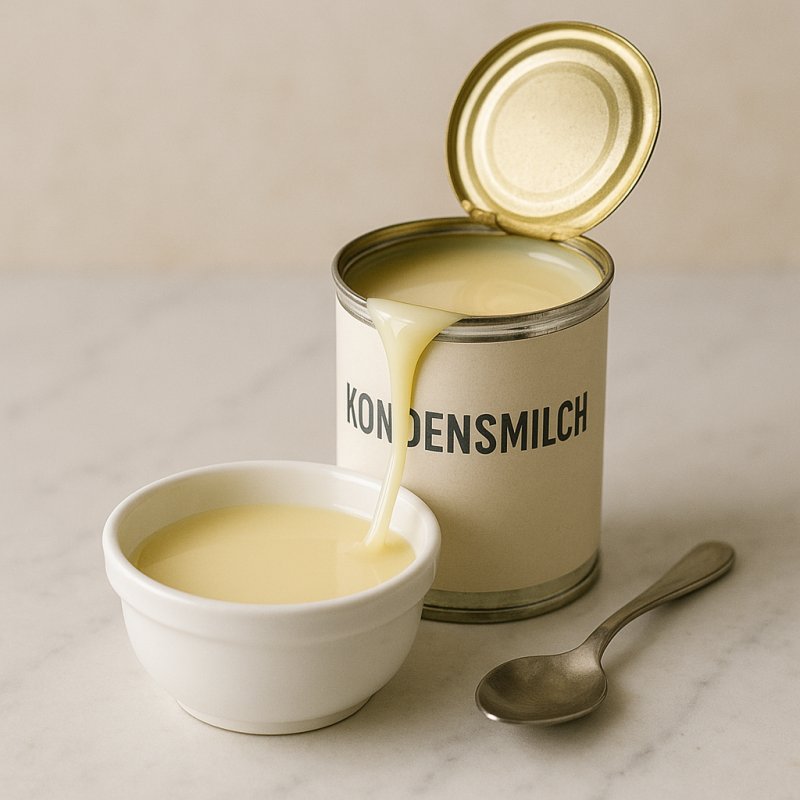
Condensed milk 7.5% fat is a form of milk from which some water has been removed, making it thicker and longer-lasting. If the package states 7.5% fat, that means that out of 100 parts of content 7.5 parts are fat. That is a bit more than in regular UHT milk, but less than in cream. You can imagine condensed milk like strong coffee compared to regular coffee: it is more concentrated and often lasts longer.
Origin: Condensed milk is usually made from cow's milk. The milk comes from farms, often located in regions with extensive pastureland. In Europe, major dairy-producing countries include Germany, the Netherlands, France and Poland. Worldwide there are also large producers in countries such as Brazil, India and Thailand. The milk is collected at farms and then brought to dairies where it is heated and concentrated.
Production regions:
- Europe: Many dairies in Germany, the Netherlands and France produce condensed milk.
- Latin America and Asia: Countries like Brazil, Argentina, Thailand and India produce large quantities, mainly for export and local markets.
- Regional farms: Some small producers make condensed milk locally, often as organic products or with regional branding.
Available types and variants: Condensed milk comes in different types, not only with 7.5% fat. Here are the main variants explained simply:
- Unsweetened condensed milk / evaporated milk: This is simply concentrated milk without sugar. Perfect for cooking or when you want to sweeten yourself.
- Sweetened condensed milk: Sugar has been added. It is very sweet and is often used for desserts, cakes or sweet drinks.
- Different fat levels: Besides 7.5% there are lower-fat variants (e.g. 1–3%) and higher-fat products, depending on how creamy the result should be.
- Organic and regional: From organic farming, often more expensive but with stricter rules for animal husbandry.
- Lactose-free: For people who do not tolerate normal milk sugar (lactose) well.
- Packaging: Cans are classic, but there are also Tetra Paks or pouches that are easier to open.
- Plant-based alternatives: For vegans or allergy sufferers there are condensed alternatives based on soy, oat or coconut (e.g. sweetened coconut condensed milk).
Availability: Condensed milk with 7.5% fat is found in many supermarkets, discount stores and online shops. Because it is heated and sealed, it has a long shelf life and is therefore available year-round. Some varieties are regionally rarer, for example special organic or lactose-free variants. If a shop does not have something, it is worth checking international grocery stores or online retailers.
Finally: when you buy condensed milk, check the label — it will state whether sugar is included, how much fat is contained, whether it is organic or lactose-free. Opened condensed milk must be refrigerated and should be used within a few days. That way you will find the right type for coffee, cakes or your favorite recipe.