Menu & categories

Coffee liqueur (mokka)

Coffee-based liqueur with a pronounced moka flavor

Wiki about coffee liqueur Nutri-Score E Vegan Yes Gluten-free Yes Lactose-free Yes Nut-free Yes
NUTRITION / 100 ml
285 kcal 0.5 g Protein 30 g Kohlenhydrate 0 g Fett

Introduction

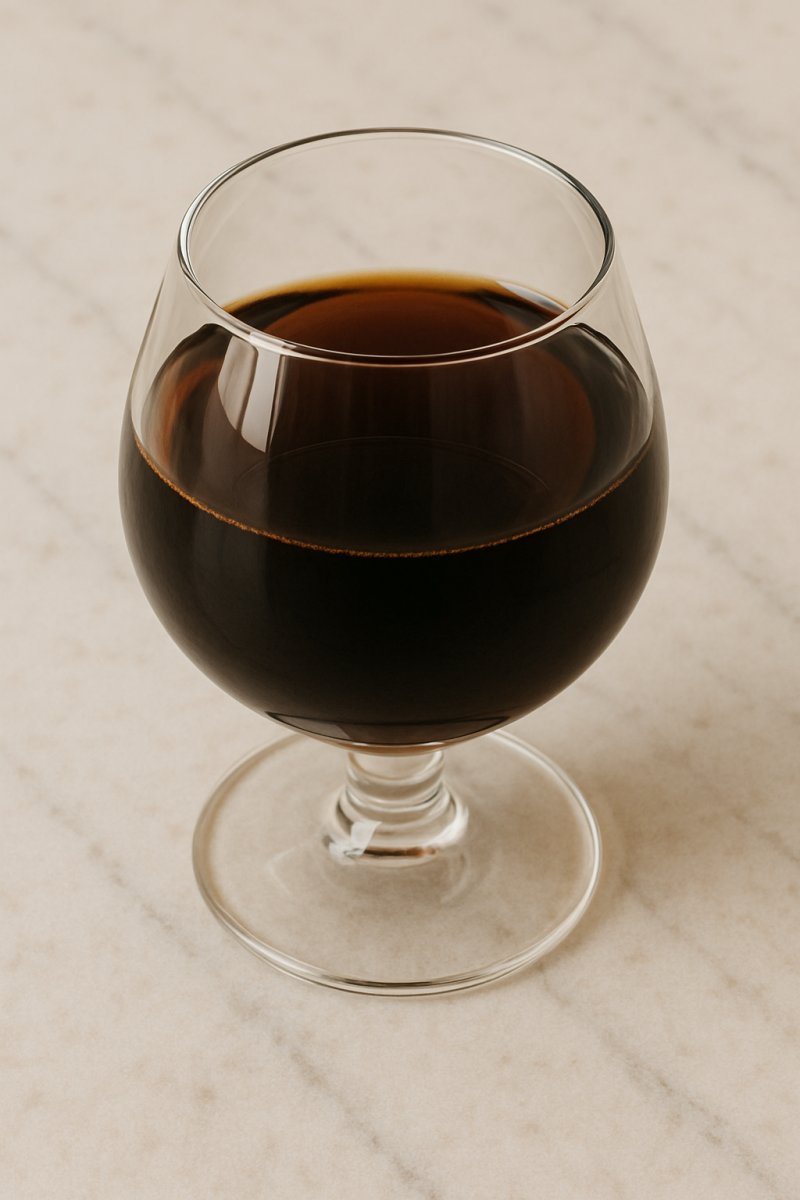
A glass of coffee (mokka) liqueur with coffee beans beside it
When I think of moka liqueur, the scent of freshly brewed coffee immediately rises to my nose, mixed with a sweet, slightly bitter warmth that evokes cozy evenings. I first tried the drink at a small gathering, where a friend placed a bottle on the table and, with a mischievous smile, explained that this elixir could turn any cake into a celebration. The very first sip felt like a hug: velvety, rich and with a dash of concentrated bean aromas that lingered for a long time.

What makes moka liqueur so appealing is its versatility. It is not only a digestif; I poured it over vanilla ice cream, folded it into chocolate mousse and even used it as a secret ingredient in a braised dish. A colleague of mine swears by drizzling a tablespoon into his breakfast muesli to give the morning coffee an extra kick. Its sweetness balances the coffee's bitterness so well that even skeptics become curious.

The production of this liqueur varies greatly: some use coffee beans and alcohol as a base, others prefer concentrated espresso or extracts. Typical components include

  • roasted coffee beans for aroma depth,
  • sugar or syrup for sweetness,
  • high-proof alcohol as carrier and preservative,
  • sometimes vanilla, chocolate or spices for additional nuances.
I still remember a rainy day in a small kitchen when I was experimenting with a friend: we tried to find the perfect balance between bitterness and sugar and laughed when the first batch tasted more like a dessert liqueur than a serious moka liqueur. With a few adjustments we ended up with a bottle we proudly gave away — and the recipient claimed she had never loved her espresso so much.

When buying, I pay attention to ingredient transparency and whether natural flavors were used. Homemade versions allow creative freedom: I love playing with bean roast levels or adding a pinch of cinnamon. Whether as a gift, a kitchen helper or a cozy way to end an evening — moka liqueur deserves a permanent place in my home bar.

Availability & types

Availability and types

Moka liqueur is a sweet, caffeinated liqueur with an intense coffee or moka flavor. It is easy to find in many countries because it is often offered in supermarkets, liquor stores and online. You can buy it in small bottles for tasting or in larger bottles for baking and cocktails. In a store, moka liqueur is usually located near other liqueurs such as amaretto or coffee liqueurs.

Where does the flavor come from? The flavor of moka liqueur usually comes from coffee or flavors that evoke moka. "Moka" originally refers to a particular coffee variety from the region around the port city of Mokha in Yemen. Today it often denotes a very strong, chocolatey coffee taste. Some producers use real coffee; others use flavor oils or extracts to reproduce the taste. It's a bit like making apple juice from real apples or just adding apple flavoring — both taste of apple, but the effort and price differ.

Growing regions of the raw materials
The coffee beans that provide the base flavor grow in tropical countries around the equator. Important regions are:

  • South America – countries like Brazil and Colombia supply large amounts of coffee. Brazilian coffee is often mild and nutty.
  • Central America – Guatemala or Honduras often produce aromatic, fruity coffees.
  • Africa – Ethiopia and Kenya often yield spicy and floral coffees; Ethiopia is also associated with the origin of moka.
  • Asia – Indonesia has darker, earthier coffee varieties.
These regions provide the beans. Whether a moka liqueur uses real beans or artificial flavors depends on the producer.

Available types and variants
Moka liqueur comes in several variants to suit different tastes. Here are some typical types, simply explained:

  • Standard moka liqueur – sweet, with a clearly recognizable coffee or chocolate flavor. Good for drinking after a meal or for desserts.
  • Cream moka liqueur – creamy and slightly milky, similar to cream liqueurs. It's like coffee with milk in liquid form.
  • Caramelized or chocolate moka liqueur – extra sweet and with a strong chocolate or caramel flavor. Children might recognize the taste from chocolate syrup on ice cream.
  • Stronger moka liqueur (high alcohol content) – more intense flavor and a warmer finish. Often used in small amounts because it is potent.
  • Alcohol-free variants – for those who do not want to drink alcohol. These are like caffeinated syrups or beverages with moka flavor.
Tips for choosing
When buying moka liqueur, check the label: some bottles indicate whether real coffee was used. Try smaller bottles if you are unsure which flavor you prefer. For recipes it helps to know whether the liqueur is creamy, chocolaty or drier — this can strongly affect the taste of cakes, ice cream or drinks.

Overall, moka liqueur is versatile and usually easy to obtain. There are simple, inexpensive types as well as more expensive variants with real coffee extract. This way almost anyone can find a version that fits their taste and use.
Details & nutrition

Property Value
Unit ml
Calories per 100 285
Protein per 100 0.5
Carbohydrates per 100 30
Sugar per 100 30
Fat per 100 0
Saturated fat per 100 0
Monounsaturated fat 0
Polyunsaturated fat 0
Fiber per 100 0
Vitamin C (mg) per 100 0
Vitamin D (IU) per 100 0
Calcium (mg) per 100 5
Iron (mg) per 100 0.1
Nutri-Score E
CO₂ footprint 1.5
Origin Varies by producer; typically Europe
Gluten-free Yes
Lactose-free Yes
Nut-free Yes
Vegan Yes
Note Alcoholic beverage based on coffee/mokka extract, sugar and neutral alcohol; alcohol content usually between 15% and 25% vol., depending on the producer. May contain small amounts of caffeine.

Technical & scientific information

Moka liqueur is an alcoholic product made mainly from coffee or coffee-like flavors, sugar and a high-proof alcohol base. Typically, neutral alcohol or a spirit such as rum or brandy is used in moka liqueurs as a solvent for the flavor compounds. The combination of ethanol's solvent action, water-soluble components and lipophilic aroma fractions produces a complex, intense flavor profile that unites the volatile roast aromas of coffee with sweet and often vanilla-like components.

Composition and ingredients
A moka liqueur essentially contains the following components:

  • Ethanol: as solvent and preservative factor; alcohol levels commonly range between 15 and 30% vol.
  • Coffee extract or coffee flavors: can come from real coffee beans (water- or alcohol-based extraction, cold or hot extraction) or from concentrated aroma microsystems. Included are aromatic compounds such as furans, pyrazines and phenolic compounds that create roast and bitter notes.
  • Sugars and sweeteners: sucrose or invert sugar syrups increase viscosity, stabilize emulsions and dampen bitterness.
  • Fats and oils (in small amounts): lipids derived from coffee beans that contribute to texture; in industrial recipes emulsifiers are often added to stabilize the oil-water mixture.
  • Additives: colorants, natural or synthetic flavors (e.g. vanillin), acidulants and preservatives to ensure sensory consistency and shelf life.
Processing methods
Production typically involves blending coffee extracts with alcohol and syrups. Important process steps are:

  • Extraction of coffee aromas: by maceration in alcohol, extraction with hot water followed by concentration, or by CO2 extraction for soluble, fat-soluble fractions.
  • Filtration and clarification: to remove particles and unwanted solids; membrane filtration or clarification help avoid cloudiness.
  • Emulsification: addition of emulsifiers (e.g. lecithin) and homogeneous stirring to create stable dispersions between aqueous and oily fractions.
  • Maceration and maturation: some products benefit from a short resting period during which flavor components harmonize.
Nutritional and chemical aspects
The calorie content of a moka liqueur is driven mainly by alcohol (7 kcal/g) and sugar (4 kcal/g); the energy density is therefore relatively high. Micronutrients are negligible. Chemically, moka liqueurs contain a mixture of polar soluble compounds (coffee acids, breakdown products of chlorogenic acids) and lipophilic constituents (coffee oils, aromatic ketones and aldehydes). pH is slightly acidic to neutral depending on additives.

Sensory properties and stability
Sensory dominant notes are roast, chocolate and bitterness, complemented by sweetness. Stability issues can arise from phase separation (oil-water separation), sugar crystallization or microbial contamination. Alcohol content and sugar act as preservatives; nevertheless appropriate hygienic production and sterile filling are important.

Health aspects
As an alcoholic product, moka liqueur carries the same health risks as other spirits: acute toxic effects from overconsumption, risky drinking behavior and interactions with medications. Coffee components also bring small amounts of caffeine, depending on extract concentration, which can be relevant for sensitive individuals. People with fructose or sucrose intolerance should note sugar contents. Allergens are rare but may be relevant due to additives such as vanillin or milk components (in creamy variants).

Applications
Moka liqueur is used as an ingredient in mixed drinks, desserts, baked goods and cooking recipes. Its physicochemical properties as an aromatic and sweetening alcohol carrier make it versatile in beverage technology and food processing.

Overall, moka liqueur is a technically considered product whose quality depends on raw material selection, extraction methods and stabilizing processing steps. The combination of alcohol, sugar and complex coffee aromas determines both the sensory perception and the microbiological stability and nutritional properties of this beverage.
Wiki entry for: coffee liqueur
Active now: 18 visitors of which 2 logged-in members in the last 5 minutes