Availability and types
Coconut milk comes from the fruit of the coconut palm, which grows mainly in warm, tropical regions. You can think of it like juice from the coconut that is produced by grating the white flesh with water. Coconut palms are found especially in countries such as Thailand, Indonesia, the Philippines, India, Sri Lanka, some Pacific islands and parts of Africa and South America. There the palms are often part of everyday life: people use the fruits for food, the fibers for mats or ropes and the leaves for roofs.
In stores coconut milk is available in different forms depending on how much fat and how creamy it is. The main variants are:
- Full-fat coconut milk: This is very creamy and has a high fat content (often 18–22%). It is well suited for curries, desserts or dishes where you want a silky, rich consistency. You can compare it to cream, except that it comes from coconut.
- Coconut cream: Even thicker and higher in fat than full-fat coconut milk. It is used when you want particularly thick sauces or desserts. Imagine it as the solid part that forms at the top of a can when the coconut milk has been allowed to sit.
- Light or reduced-fat coconut milk: Here part of the fat has been removed, making it thinner and less creamy. It is similar to low-fat milk and is chosen when you want to save calories or need a lighter consistency.
- Coconut water: This is not the same as coconut milk. Coconut water is the clear liquid from young green coconuts. It is light and refreshing, whereas coconut milk is made from the flesh and is white and creamy.
- Ready-to-drink beverages: Supermarkets also sell coconut-based drinks mixed with water and sometimes sugar or flavorings. They are ready to drink but are usually thinner than real canned coconut milk.
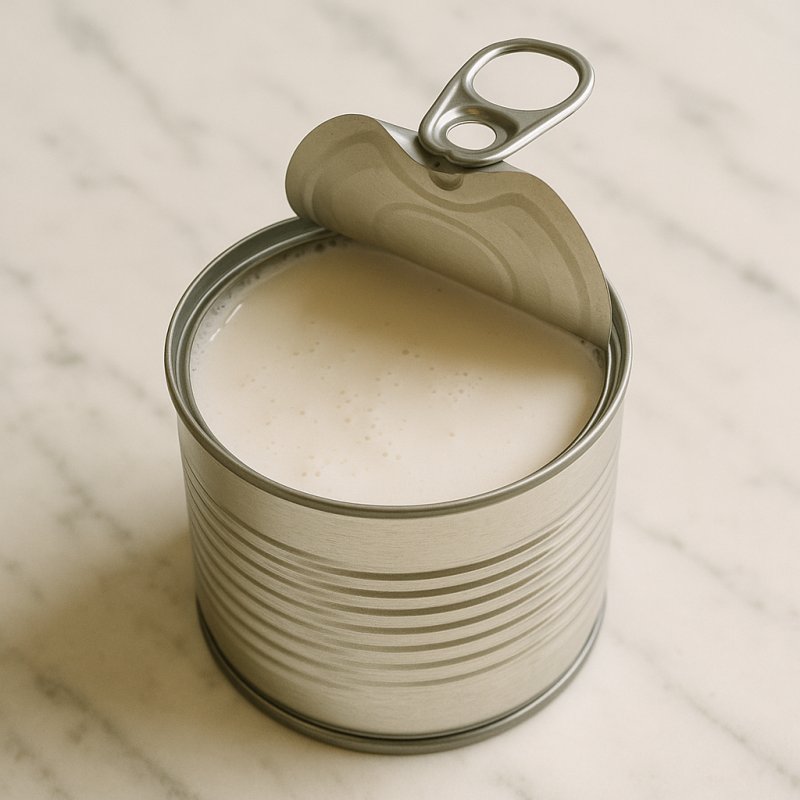
You can buy coconut milk in cans, Tetra Paks or bottles. Cans are often the creamiest variants; Tetra Paks are practical because they have a longer shelf life, and bottles are good for quick use. Check the label when shopping: some products contain only coconut and water, others have additives like stabilizers or sugar. If you want a natural variant, choose products with few ingredients.
Organic products are also available. With organic coconut milk the coconuts come from organic farming, meaning they are grown without certain chemicals or synthetic fertilizers. This can be important for people who pay attention to environmental and health issues. There are also specific variants such as unsweetened coconut milk for savory dishes or sweetened versions for desserts.
One last tip: if you want to try fresh, homemade coconut milk, you can blend grated coconut flesh with hot water and press it through a cloth. The result is natural and often very aromatic. Purchased products are practical because they have long shelf life and are quick to use. So there is something for every taste and use – from thick coconut cream for festive meals to light coconut milk for a quick smoothie.
