Menu & categories

Coconut flakes

Dried, finely shredded coconut for sweet and savory dishes

Wiki about desiccated coconut Nutri-Score D Vegan Yes Gluten-free Yes Lactose-free Yes Nut-free Yes
NUTRITION / 100 g
660 kcal 6.9 g Protein 23.7 g Kohlenhydrate 64.5 g Fett

Introduction

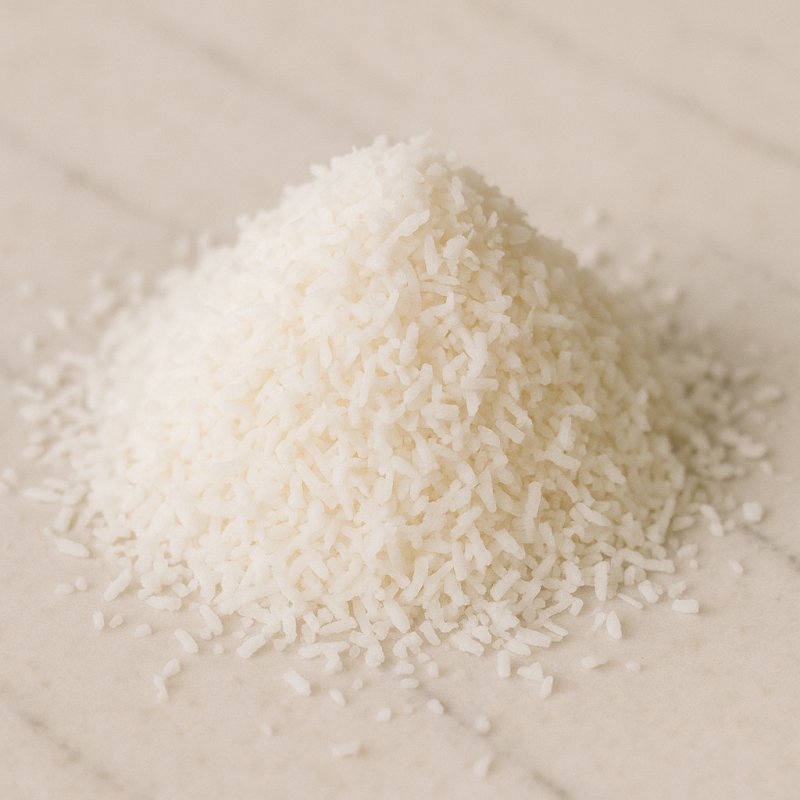
White coconut flakes in a bowl
I still remember well my first intense encounter with coconut flakes: it wasn't on a distant holiday, but in a small kitchen at a friend's who bravely recreated a recipe from an old magazine. The fine, slightly sweet flakes immediately released that warm, tropical scent that has since repeatedly given me the feeling of both faraway places and home at the same time. Since then, coconut flakes have been one of those ingredients that should never be entirely missing from my pantry.

Coconut flakes are made when the white flesh of the coconut is grated and dried. They are available in different degrees of fineness: from coarse to extra fine, sometimes lightly toasted or unsweetened. I have learned that choosing the right type makes the difference between a subtle coconut accent and a full, crunchy flavor explosion. A colleague of mine swears by coarse flakes in curry because they provide structure and bite, while I prefer fine flakes for creams and desserts.

They're practical and versatile, too. Here are a few of my favorite uses:

  • Baking: In cakes, muffins or as a crowning crumble; they add aroma and texture.
  • Granola and porridge: A spoonful of coconut flakes makes everything a little sunnier in the morning.
  • Sauces and curries: Carefully toasted, they develop nutty notes that elevate dishes to a new level.
  • Breading: For fish or chicken they provide a crispy, exotic crust.
A little secret I like to share: briefly toasted in a dry pan, the flakes gain a caramel-like depth that's almost addictive. Recently I tried this for an improvised dessert for guests and had to keep replenishing them because everyone was nibbling before the dessert was even ready.

Coconut flakes are not only flavorful but also practical: they store well, have a long shelf life and are excellent for portioning and further processing. For those who like to experiment, they are a small pantry helper with great effect — an easy way to add a touch of exoticism to everyday dishes.

Availability & types

Availability and types of coconut flakes

Coconut flakes come from the coconut, which grows on tall palms in warm countries. You can picture the coconut as a hard shell that contains white flesh inside. This flesh is dried and then finely grated – that's how coconut flakes are made. They are easy to find in many supermarkets, health food stores and online because they are versatile: for baking, as a topping for yogurt or muesli, and as an ingredient in hot dishes.

Origin and growing regions
Coconut palms grow mainly in tropical regions. The most important countries where coconuts are cultivated and processed into coconut flakes are:

  • Indonesia: One of the largest growing regions. Many coconut products are produced there.
  • Philippines: Known for large coconut plantations and traditional craftsmanship around the coconut.
  • India: Especially in the southern states, many coconuts are harvested.
  • Sri Lanka, Thailand, Vietnam and some countries in Africa: Coconut palms also grow well there.
You can imagine: coconut palms like sun, warmth and sufficient rain, which is why they are often found on beaches or in forests with a lot of sun.

Available varieties and formats
Coconut flakes come in different forms. Here are the main types, explained as if to a child:

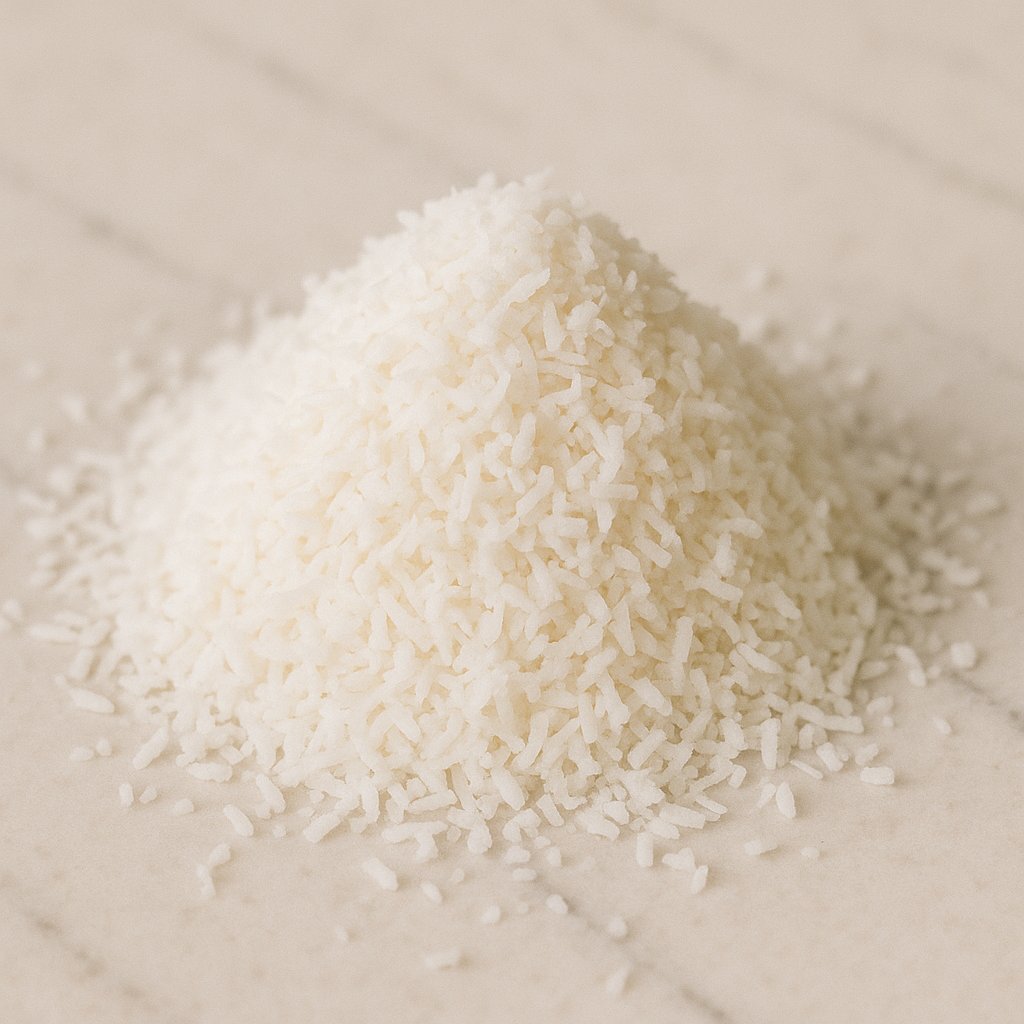
  • Finely grated: These coconut flakes are very small and almost powdery like little flakes. They are practical when you mix them into batter or want to use a fine topping.
  • Coarsely grated: These pieces are larger and crunchier. They give more bite to cakes, cookies or mueslis, like little crunchy bits in a sponge cake.
  • Unsweetened coconut flakes: This is the natural variant, with nothing added. They taste slightly nutty and are ideal if you don't like too much sugar.
  • Sweetened coconut flakes: Sugar has been added to make them sweeter. They are convenient when making cookies or sweets and you don't want to add extra sweetness.
  • Toasted coconut flakes: These are briefly browned in a pan or oven. They then smell nuttier and taste a bit crunchier – like bread that has been lightly toasted.
  • Organic coconut flakes: These come from plants grown without chemical pesticides. For people who prefer more natural farming methods.
Where to find them and what to look for
In supermarkets coconut flakes are usually located in the baking aisle or with baking ingredients. On the packaging you can see whether they are sweetened or unsweetened, and whether they are fine or coarse. If you like, try toasted flakes as a crunchy topping – it is a bit reminiscent of caramelized nuts on ice cream.

In summary: coconut flakes come from tropical countries like Indonesia, the Philippines or India and are available in many variants – fine or coarse, sweetened or unsweetened, toasted or raw. They are easy to obtain and suit many dishes, whether sweet or savory. That way you can choose the appropriate variety depending on the recipe and taste and try out delicious ideas with coconut flakes.
Details & nutrition

Property Value
Unit g
Calories per 100 660
Protein per 100 6.9
Carbohydrates per 100 23.7
Sugar per 100 7.4
Fat per 100 64.5
Saturated fat per 100 57.2
Monounsaturated fat 2.7
Polyunsaturated fat 1.0
Fiber per 100 16.3
Vitamin C (mg) per 100 1.5
Vitamin D (IU) per 100 0
Calcium (mg) per 100 14
Iron (mg) per 100 3.3
Nutri-Score D
CO₂ footprint 2.9
Origin Tropical regions, mainly Asia
Gluten-free Yes
Lactose-free Yes
Nut-free Yes
Vegan Yes
Note Coconut flakes consist of dried, shredded coconut flesh; commonly used in baked goods and desserts.

Technical & scientific information

Coconut flakes are dried and finely shredded pieces of coconut flesh (Cocos nucifera) and are used worldwide as a food ingredient, flavoring and garnish. They are produced from the white endosperm of the shelled fruit, which, after removal of the shell, is normally blanched, grated and dried. Depending on the degree of processing, one differentiates coarse and fine shreds as well as flakes; the moisture content in commercial products typically ranges below 3–6% for long shelf life, while in fresher products it can be considerably higher.

Chemical composition and constituents
Dried coconut flesh mainly consists of lipids, carbohydrates and proteins. The fat content, depending on drying degree and product, is between 60 and 70 percent by weight and consists predominantly of saturated fatty acids. Dominant fatty acids are lauric acid (C12:0), followed by myristic acid, palmitic acid and smaller amounts of oleic and linoleic acid. Carbohydrates are usually 8–20% and consist mainly of non-starch polysaccharides (fiber) and small amounts of soluble sugars. Protein content is about 5–10%. Minerals such as manganese, copper, iron, potassium and magnesium are present in appreciable amounts; coconut flesh also contains B vitamins and trace elements.

Nutritional values
Per 100 g of dried coconut flakes there are typically 600–700 kcal (2,500–2,900 kJ), mainly caused by the high fat content. The fiber amount is relatively high (approx. 15–20 g/100 g), making coconut flakes a good source of non-digestible dietary components. The share of saturated fatty acids is nutritionally relevant, as high intake can be associated with an increased risk of cardiovascular disease; at the same time lauric acid is being investigated in studies for antimicrobial and immunomodulatory effects.

Processing methods
Production includes several steps: opening the coconut and separating the white flesh, mechanical grating, optional blanching to inactivate enzymes and reduce microbial load, and drying. Drying methods range from sun and convective drying to modern vacuum or freeze-drying techniques; more intensive drying methods reduce moisture content faster, but can also cause flavor losses. After drying, flakes are sieved, classified and optionally offered flavored or toasted. Industrial processing also involves hygiene controls and possibly treatments against mold or insect infestation.

Food safety and microbiological aspects
Coconut flakes are relatively stable against spoilage as long as they are stored dry. However, moisture and warmth favor microbial growth and the formation of fungal toxins (mycotoxins), which is why low water activity is targeted. Processing and storage under controlled conditions reduce contamination risks. Inadequate hygiene can also lead to Salmonella or mold; therefore HACCP concepts and regular laboratory analyses in production are common.

Health aspects
Coconut flakes provide concentrated energy and are rich in saturated fatty acids, which suggests consuming them in moderation. The contained fiber supports bowel function and the minerals contribute to nutrient supply. Individual components such as lauric acid show antimicrobial activity in vitro, but meaningful clinical evidence for health-promoting effects from ordinary consumption of coconut flakes is limited. People with nut or coconut allergies should avoid coconut products, although coconut is allergologically distinct and not identical to tree nut allergies.

Applications in cuisine and industry
Coconut flakes are used in many ways: as an ingredient in pastries, sweets, muesli, curry dishes and baked goods as well as for decoration. Industrially they also serve as a raw material for oil extraction (coconut oil), for extracts and flavorings. Technological properties such as fat content, texture and moisture uptake influence uses and product development.

In summary, coconut flakes are a nutrient-dense, fat-rich plant product with characteristic saturated fatty acids and a high fiber content. Their nutritional pros and cons depend on amount and context of consumption, while processing and storage are decisive for quality and food safety.

Wiki entry for: desiccated coconut
Active now: 20 visitors of which 2 logged-in members in the last 5 minutes