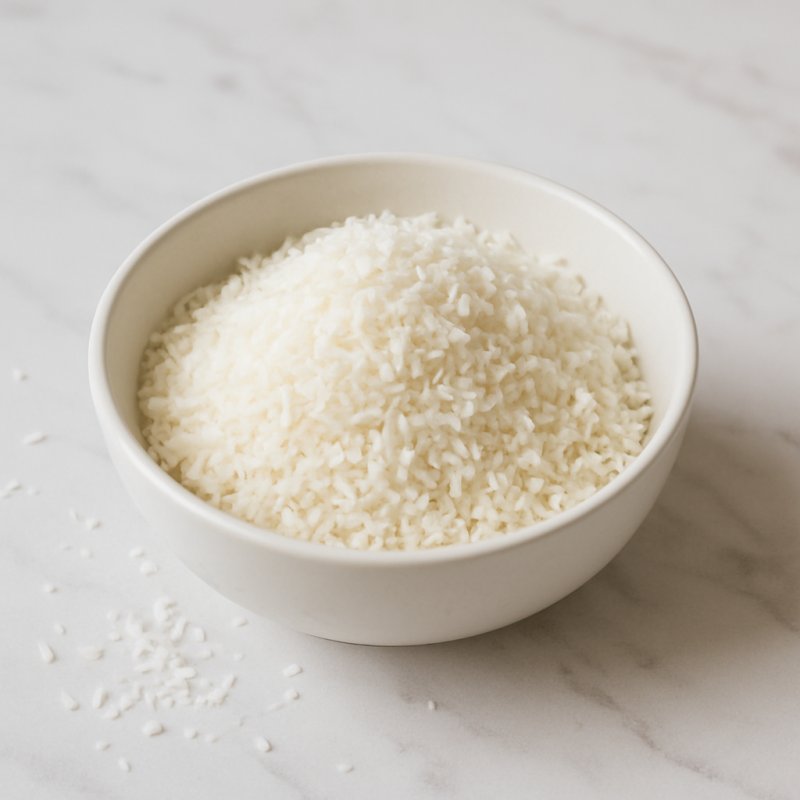
Availability and types of coconut flakes
Coconut flakes are small, dried pieces from the white interior of the coconut. They are found in many supermarkets, health food stores and even in some discount retailers. The coconut grows on tall palms, mainly in warm regions around the equator. Well‑known growing areas include countries such as Indonesia, the Philippines, India, Sri Lanka and parts of Brazil or Africa. You can imagine it like an orchard, except there are whole fields of coconut palms swaying in the warm wind.
There are different types of coconut flakes because people process the coconut in different ways. Here are the main variants you can see in the store:
- Unsweetened coconut flakes: These are simply dried coconut flesh with no added sugar. They taste naturally of coconut and are ideal if you don't want extra sweetening — for example for baking or as a topping on yogurt.
- Sweetened coconut flakes: A little sugar has been added so they become sweeter and crispier. They are often found in baking mixes or ready‑made confections. Imagine someone sprinkled a bit of sugar on them so they taste like coconut candies.
- Coarse and fine grates: Coconut flakes come in different sizes. Fine grates are very small and work well when you want a smooth texture, for example in cakes or creams. Coarse flakes remain as visible pieces and add more bite, for instance to muesli or ice cream.
- Toasted coconut flakes: These are lightly browned because they have been briefly toasted in an oven or a pan. Toasting brings out a nutty flavour — similar to briefly toasting bread, the smell changes and becomes crisper.
- Organic coconut flakes: In organic variants certain chemicals or synthetic fertilizers are avoided during cultivation. For many people organic products are therefore seen as more environmentally friendly or “natural”.
Availability can vary slightly by season and region, but because coconuts are harvested year‑round in tropical regions, coconut flakes are usually available throughout the year. In larger supermarkets you'll often find several varieties side by side, while smaller stores may carry only the most common version. Online shops also offer special types or larger packages.
When buying it is worth checking the packaging: labels such as “unsweetened”, “organic” or “toasted” help you choose the right variety. If you are following a recipe, it often states which type is recommended. For school children who like to bake or snack, sweetened flakes are practical, while unsweetened and coarse flakes are great for savory cooking or healthier snacks.
In summary: coconut flakes come from tropical countries, are widely available and come in several variants — unsweetened, sweetened, fine or coarse, toasted or organic. This lets you choose the appropriate variety depending on taste and use, whether you want to bake something, enhance a muesli or just snack.
