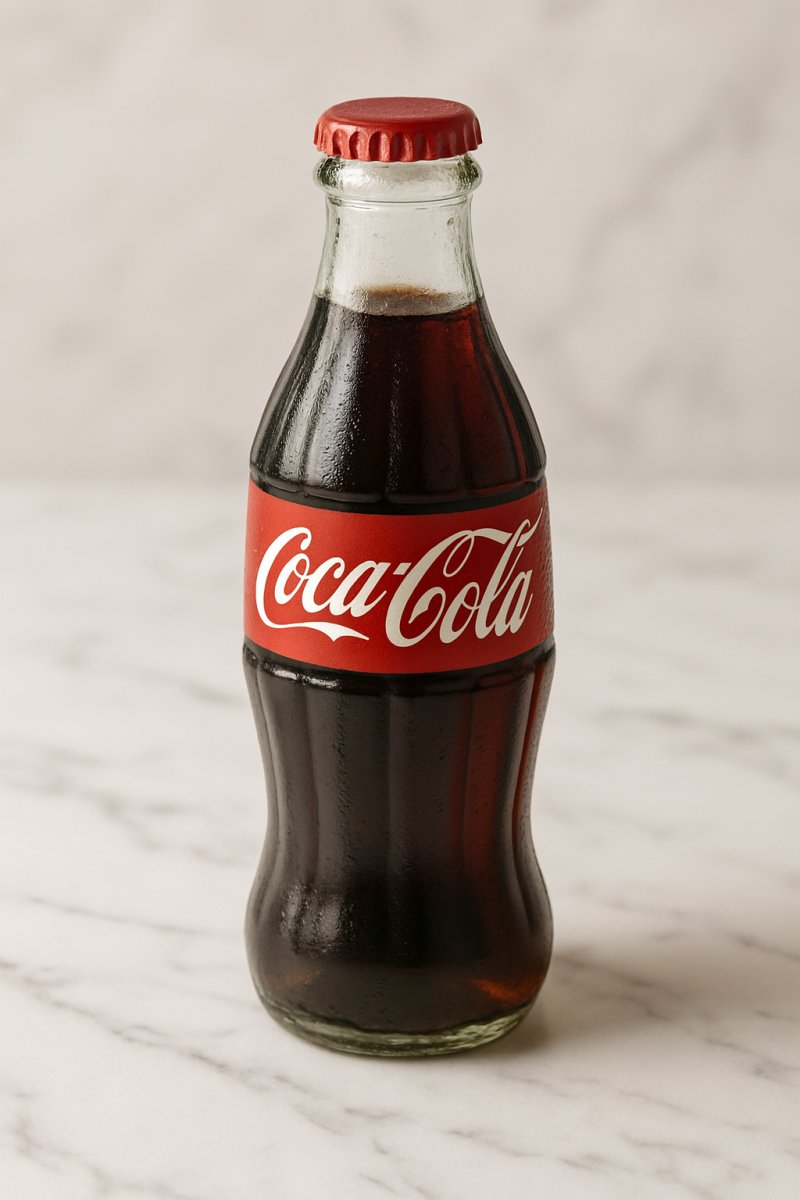
Menu & categories

Coca-Cola

Caffeinated soft drink with sugar and carbonation

Wiki about Coca-Cola Nutri-Score E Vegan Yes Gluten-free Yes Lactose-free Yes Nut-free Yes
NUTRITION / 100 ml
42 kcal 0 g Protein 10.6 g Kohlenhydrate 0 g Fett

Introduction

Glass with Coca-Cola and ice cubes
I remember clearly the first time I consciously held a bottle of Coca‑Cola in my hand: the crown cap popped, a scent of caramel rose, and for a moment the world felt a little lighter. It may sound cheesy, but such small rituals have always fascinated me. Coca‑Cola is more than just a drink; it is a cultural phenomenon, a flavor that evokes memories and sparks discussion – whether at a picnic in the park, as a quick coffee substitute at the train station, or as a secret ingredient in a braised dish I once tried.

As a passionate enthusiast I have come to appreciate the versatility of this classic. The sweet, slightly spicy taste combines notes of vanilla, citrus and caramel in a way that feels both familiar and surprising. I have friends who serve it ice‑cold with fish because the acidity supposedly heightens the flavors, and acquaintances who pour a small bowl of cola into sauces to achieve caramelization and depth. Such experiments say a lot about the creativity a simple soft drink can inspire.

Of course Coca‑Cola is not free from controversy. The sugar content, nutritional debates and global marketing strategies are often discussed. I’ve had heated conversations at long office tables and learned to listen: some people associate cola with unmistakable family rituals, others avoid it for health reasons. This variety of perspectives makes the subject so interesting.

For me Coca‑Cola also has a nostalgic dimension. A colleague once brought an old advertising can to the office; we looked at the faded colors and laughed about the fashion of the time. Such little finds show how much brands can permeate our everyday life. At the same time the fizzy sound when pouring reminds me that enjoyment often lies in the details: the temperature, the glass, the mood you are in.

  • Taste: Sweet, caramel‑like, with light citrus and spice notes.
  • Use: Refreshing drink, mixer in cocktails, ingredient in cooking.
  • Discussions: Sugar content and health versus cultural significance.
In conclusion, I find that Coca‑Cola offers an interesting window into our food culture: it is practical, polarizing and brings people together. Whether you celebrate it, avoid it or use it creatively in small doses remains a very personal choice – and it is precisely this variety that gives it its appeal.

Availability & types

Availability and types

Coca‑Cola is a very well‑known soft drink that can be found virtually everywhere in the world. It was originally invented in the 19th century in the United States. Today the beverage is produced by The Coca‑Cola Company. The exact recipe of classic Coca‑Cola is a closely guarded secret, but you don’t need to be an expert to understand where the drink comes from and what variants exist.

Origin and production
Coca‑Cola itself does not grow in fields like fruit or vegetables — it is a beverage mixed and bottled in factories. Some ingredients in Coca‑Cola do come from plants: sugar (or sweeteners) and flavorings. In earlier formulations an extract from the leaves of a coca plant was included; today this is no longer present in the same form. The company sources raw materials such as sugar, water, carbon dioxide (which is the fizzy gas that makes drinks “bubbly”) and natural flavorings from various regions. The finished bottles and cans are then filled in plants in many countries, so Coca‑Cola is sold in supermarkets, kiosks, restaurants and vending machines in nearly every country.

Growing regions of the ingredients
Because Coca‑Cola consists of several raw materials, these come from different regions:

  • Sugar: Sugar is often produced from sugarcane or sugar beet. Sugarcane grows in warm regions such as South America, India or parts of Africa. Sugar beet is grown more in cooler regions such as Europe or North America.
  • Flavorings and aromas: Many flavors come from plants or herbs that are grown worldwide. Some special flavors may come from exotic plants that grow in particular countries.
  • Water: Water is the main ingredient. The bottling plants use local water that is thoroughly purified before it goes into bottles.
These ingredients are grown and collected in different places and then mixed in the bottling plants — similar to a large recipe that uses ingredients from several gardens.
Available varieties and variants
Coca‑Cola does not exist in only one version. As with many products, manufacturers have created different varieties to suit different tastes. Some well‑known variants are:
  • Coca‑Cola Classic: The original version with the traditional taste.
  • Coca‑Cola Zero Sugar (or simply “Coke Zero”): Tastes similar to classic Coca‑Cola but contains no sugar and has very few calories. Instead of sugar, sweeteners are used to provide sweetness without much energy (calories).
  • Coca‑Cola Light (also called “Diet Coke”): Also a low‑sugar variant that tastes different from Coke Zero because it uses a different recipe and different sweeteners.
  • Flavor variants: There are often limited or permanent flavors such as cherry, vanilla, orange or cinnamon. These taste like classic cola but have an additional fruity note or a special aroma.
  • Regional versions: In some countries there are special variants sold only locally. This can be due to local preferences or particular ingredients.
In summary: Coca‑Cola is easy to find because it is bottled and sold in many countries. The ingredients come from different growing regions around the world, and there are many varieties — from sugar‑free versions to special flavored types — so people can choose according to their preferences. Whether in a bottle, a can or a glass with ice: Coca‑Cola has a suitable variant for many occasions and tastes.
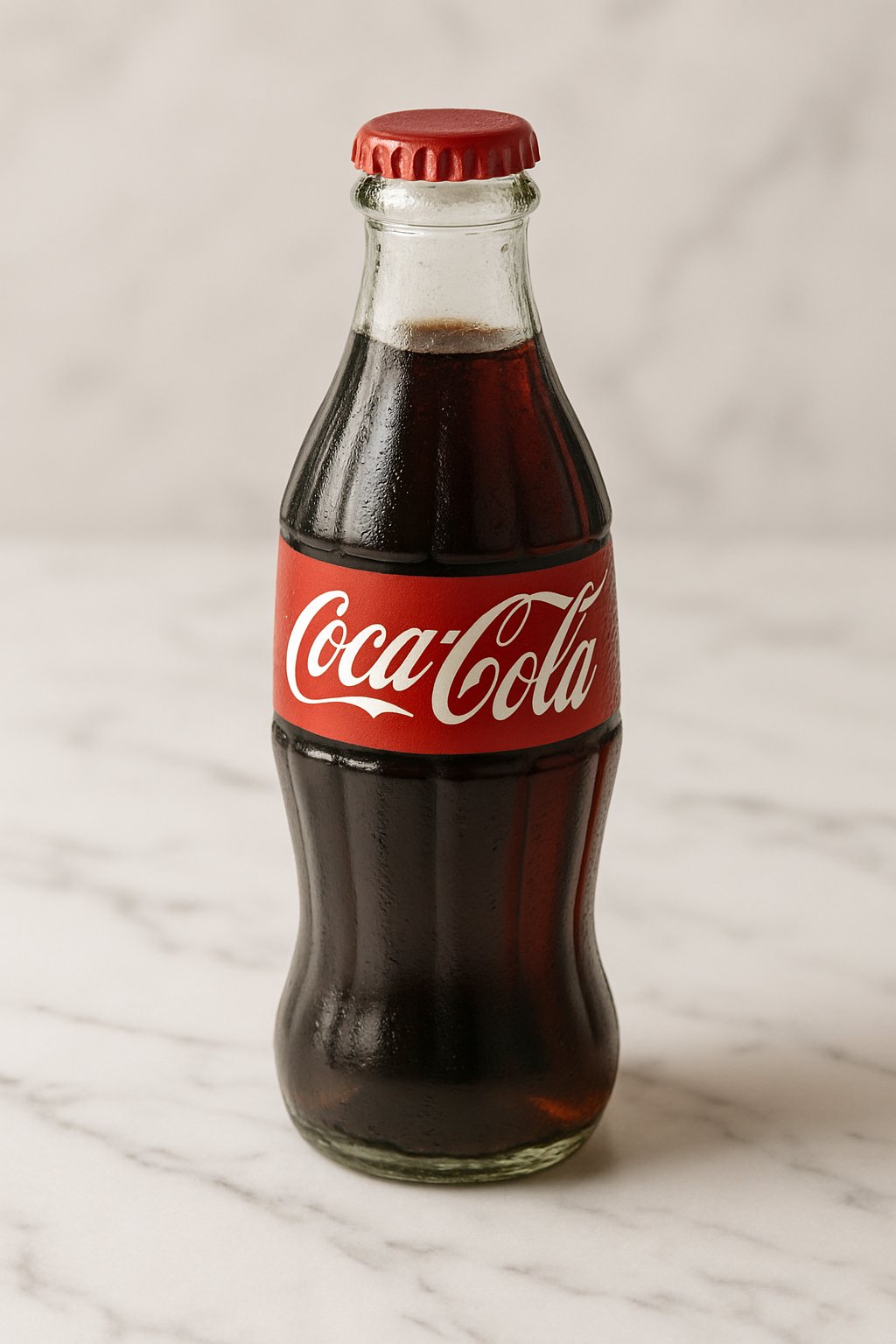
Details & nutrition

Property Value
Unit ml
Calories per 100 42
Protein per 100 0
Carbohydrates per 100 10.6
Sugar per 100 10.6
Fat per 100 0
Saturated fat per 100 0
Monounsaturated fat 0
Polyunsaturated fat 0
Fiber per 100 0
Vitamin C (mg) per 100 0
Vitamin D (IU) per 100 0
Calcium (mg) per 100 2
Iron (mg) per 100 0
Nutri-Score E
CO₂ footprint 0.25
Origin International brand product
Gluten-free Yes
Lactose-free Yes
Nut-free Yes
Vegan Yes
Note Caffeinated soft drink with sugar and carbonation; does not contain relevant EU major allergens.

Technical & scientific information

Coca‑Cola is a widely distributed, carbonated soft drink originally developed in 1886. As an ingredient in foods and beverages it is often used for its characteristic aroma, sweetness and ability to enhance flavors. Technically, it is a complex mixture of water, dissolved solids and gases, whose composition determines both sensory and chemical properties.

Chemical composition and ingredients:

  • Water: The main component, which acts as a solvent for all dissolved substances.
  • Carbon dioxide (CO2): Responsible for carbonation that produces the tingling mouthfeel; CO2 forms small amounts of carbonic acid (H2CO3) in water, which slightly lowers the pH.
  • Sweeteners: In classic Coca‑Cola the dominant sweetener is sucrose or high‑fructose corn syrup (in some regions); diet variants use synthetic sweeteners such as aspartame, acesulfame K or sucralose. Sweeteners affect osmotic pressure, taste threshold and caloric content.
  • Acidulants: Phosphoric acid (H3PO4) is a typical acidulant in cola beverages; it shifts the pH into the acidic range (typically ~2.5–3.5) and contributes to the sharp, slightly metallic taste.
  • Flavorings: A complex mixture of natural and nature‑identical flavor compounds, including vanillin, citrus oils, caramel flavors and spice extracts. The exact recipe is protected as proprietary information.
  • Caramel color (E150d): Produces the characteristic dark brown color; it is formed by controlled heating of sugar in the presence of acids and/or alkalis.
  • Preservatives and additives: Some formulations contain stabilizing or antimicrobial additives; typical concentrations are set to preserve microbiological stability and sensory properties.
Nutritional values and energy content:

The energy content of a classic cola derives primarily from metabolizable carbohydrates (sugars). Typical nutritional values are about 40–45 kcal per 100 ml and 10–11 g of carbohydrates (predominantly sugars) per 100 ml. Diet variants provide virtually no calories, since sweeteners are used in very small amounts.

Processing methods and production technology:

  • Water treatment: Softening, filtration and microbiological stabilization are important steps to ensure consistent quality.
  • Syrup production: Sugar, flavorings, acids and colorants are mixed in concentrated form as a syrup and heat‑treated to achieve dissolution and homogeneity.
  • Mixing and carbonation: The syrup is diluted with treated water and then carbonated with CO2 under controlled pressure. Carbonation affects solubility, sensory perception and shelf life.
  • Bottling: Aseptic or hygienically controlled bottling processes minimize contamination; material compatibility (PET, glass, aluminium) influences CO2 permeation and shelf‑life parameters.
Health aspects and scientific assessment:

  • Regular consumption of sugar‑sweetened cola drinks is associated with an increased risk of overweight, type 2 diabetes and dental caries; this is due to high energy density and readily available mono‑ and disaccharide carbohydrates.
  • Phosphoric acid can, at very high consumption levels, affect mineral balance and has been linked in some studies to negative effects on bone density; the effect depends on overall intake, diet and cofactors.
  • Sweeteners in light products are considered safe by health authorities as long as acceptable daily intakes are not exceeded; long‑term effects on appetite and the microbiome are the subject of ongoing research.
  • Carbonation can exacerbate gastroesophageal reflux or bloating in sensitive individuals, but is physiologically harmless at usual consumption levels.
Overall, Coca‑Cola is a technologically standardized, sensorially calibrated beverage with a well‑defined composition. Its most scientifically relevant aspects concern physico‑chemical properties (solutions, carbonation, acidity), nutritional consequences of sugar content, and production requirements regarding water quality and bottling processes. Consumer‑oriented recommendations emphasize moderate consumption and attention to sugar content and portion sizes.

Wiki entry for: Coca-Cola
Active now: 6 visitors of which 2 logged-in members in the last 5 minutes