Menu & categories

Chopped tomatoes

Finely chopped tomatoes for sauces, soups and Italian dishes

Wiki about chopped tomato Nutri-Score A Vegan Yes Gluten-free Yes Lactose-free Yes Nut-free Yes
NUTRITION / 100 g
25 kcal 1.2 g Protein 4.0 g Kohlenhydrate 0.2 g Fett

Introduction

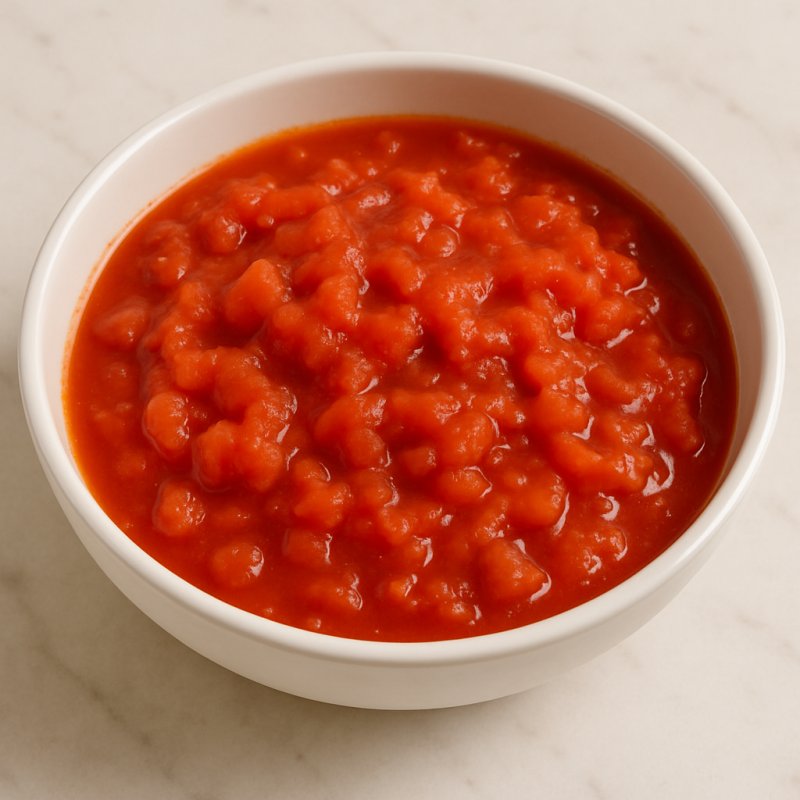
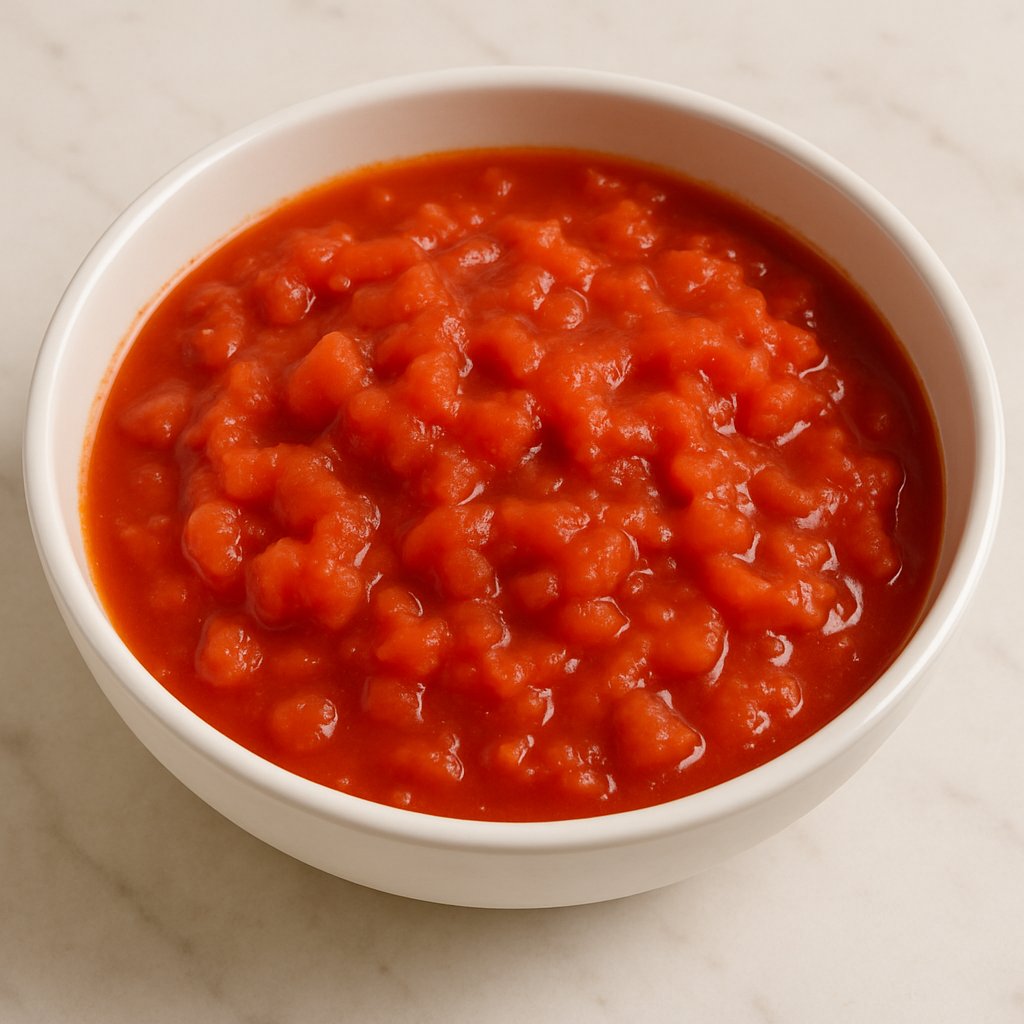
Chopped tomatoes in a bowl
When I first stumbled upon pomodori tritati, it was in a small osteria where the air smelled of garlic and basil and the waitress served me a bowl that didn't look spectacular at all – and yet it changed everything. I still remember a colleague casually saying, "Simplicity betrays quality." That remark stuck with me because pomodori tritati are exactly that: simple, chopped tomatoes that, when treated properly, make a kitchen shine.

Pomodori tritati means more than just cutting tomatoes into small pieces. It's about the balance of texture and acidity, the choice of ripe fruit and the art of bringing out flavor with little intervention. In my pantry they often play the role of a quick rescue: a handful of freshly improvised creations becomes possible with a can of San Marzano or with meaty sun‑ripened tomatoes. Sometimes I chop them roughly when I want a rustic sauce, and sometimes so finely that they become almost creamy when a delicate risotto calls for it.

I love how versatile pomodori tritati are. They work as a base for:

  • a simple pasta al pomodoro that’s on the table in 20 minutes
  • a spicy ragù that simmers for hours and deepens
  • fresh bruschetta that captures summer
  • soups and stews that bring warmth and color
An anecdote: at an improvised dinner with friends I forgot to buy bread. Instead I served freshly chopped tomatoes on spoons — with a drizzle of olive oil, salt and pepper. It became the hit of the evening; someone called it "pure Italian philosophy" and laughed about it for a long time.

In the end pomodori tritati are an invitation to achieve something great with little effort. They teach patience when seasoning, respect for good ingredients and the courage to enjoy the uncomplicated. So next time I have a bowl of chopped tomatoes in front of me, I take a breath, stir, taste and look forward to what will come of it.

Availability & types

Availability and types of Pomodori tritati

"Pomodori tritati" is Italian and simply means chopped tomatoes. You find this ingredient in many kitchens because it is practical and versatile. You can make it fresh, but most often you'll find it in the supermarket in cans or jars. That's useful because tomatoes aren't equally good fresh all year round. In a can they keep longer and are always ready to use, just like a pack of frozen peas.

Origin
Tomatoes originally come from Central and South America. From there explorers brought the plants to Europe. Today tomatoes are grown in many countries. Countries particularly known for good tomato products include Italy, Spain and Turkey. In these regions there are many sunny fields, and the sun helps tomatoes become sweet and aromatic. You can think of it like apples: apples from sunny regions often taste sweeter than those from cool areas.

Growing regions

  • Italy: Regions such as Campania, Apulia (Puglia) and Sicily are particularly famous for tomatoes. There tomatoes are grown that are commonly used for canned tomatoes.
  • Spain: Lots of sun and large fields make Spain an important exporter of tomatoes.
  • Turkey: Turkey supplies many tomatoes and tomato products to Europe.
  • Other countries: Countries like the USA, China, Greece or Morocco also grow many tomatoes. In hot, sunny areas you can harvest a lot of tomatoes.
Available varieties and versions
Pomodori tritati are not all the same — there are different variants depending on how the tomatoes were prepared and what was added. Here are the main types, explained as if for someone learning to cook:

  • Chopped tomatoes in a can: This is the most common variant. Whole ripe tomatoes are peeled and coarsely chopped. They are like small pieces of tomato in their juice. This type is ideal for sauces, soups or stews.
  • Canned tomatoes with herbs: Some cans contain additions like basil or oregano. That's convenient because there is already some flavor — like using a ready spice mix.
  • Peeled and chopped tomatoes (polpa): "Polpa" means the fruit flesh. These tomatoes are finely chopped and have a more uniform texture. They are well suited for smoother sauces.
  • Passata vs. chopped tomatoes: Passata is very finely sieved, almost like a smooth tomato juice, while pomodori tritati have pieces. If you prefer small pieces, choose chopped tomatoes; for a fine sauce choose passata.
  • Organic varieties: There are also organic chopped tomatoes grown without certain chemical pesticides. This matters to people who care about environmentally friendly farming.
  • With or without salt/sugar: Some products have a little salt or sugar added to improve flavor. It's stated on the label — similar to a drink labeled "sweetened."
Practical tips for choosing
When you buy pomodori tritati, check the label: country of origin, ingredient list (only tomatoes or with herbs, salt) and whether it is organic. For children it's like juice: some juices are pure, others are mixed with apple — tomatoes are similar. That way you find the version that best suits your dish.

Overall pomodori tritati are a practical, widely available ingredient in many variants — from simple chopped tomatoes to seasoned and organic versions — and they mostly come from sunny regions like Italy, Spain or Turkey, where tomatoes ripen particularly well.
Details & nutrition

Property Value
Unit g
Calories per 100 25
Protein per 100 1.2
Carbohydrates per 100 4.0
Sugar per 100 3.5
Fat per 100 0.2
Saturated fat per 100 0.03
Monounsaturated fat 0.03
Polyunsaturated fat 0.08
Fiber per 100 1.2
Vitamin C (mg) per 100 12
Vitamin D (IU) per 100 0
Calcium (mg) per 100 14
Iron (mg) per 100 0.5
Nutri-Score A
CO₂ footprint 0.25
Origin Typically from Italy or other Mediterranean countries
Gluten-free Yes
Lactose-free Yes
Nut-free Yes
Vegan Yes
Note Values refer to natural chopped tomatoes in a can or jar without added sugar or fat.

Technical & scientific information

Pomodori tritati denotes a form of chopped tomatoes commonly used in Italian cuisine, obtained from ripe tomatoes by mechanical comminution. This ingredient appears as coarse chopped or finely diced pieces and is offered fresh, as a preserve in its own juice, or combined with additions such as salt, citric acid or basil. The texture differs from passata or tomato purée by visible fruit pieces that provide structure and bite during cooking.

Botanical and chemical fundamentals: Tomatoes (Solanum lycopersicum) consist mostly of water (about 93% in fresh fruit). The soluble components include carbohydrates, mainly simple sugars such as glucose and fructose, organic acids—primarily citric and malic acid—and plant cell wall components like pectins, cellulose and hemicelluloses. In the comminuted state cell walls are broken, releasing cell sap, pigments and aroma compounds. Important secondary plant compounds are carotenoids (particularly lycopene and β-carotene), flavonoids and various phenolic compounds; lycopene is responsible for the red color and is typically present in the tomato matrix in an all‑trans form that can partly convert to cis isomers upon heating, which increases bioavailability.

Nutritional profile: Pomodori tritati have nutritional values similar to fresh tomatoes, although exact values vary by variety, degree of ripeness and processing. Typical values per 100 g are about 18–25 kcal, 0.5–1.2 g protein, 0.1–0.4 g fat, 3–5 g carbohydrates (of which sugars 2–3 g) and 1–2 g fiber. Vitamin content includes mainly vitamin C and provitamin A (β‑carotene), plus traces of B‑vitamins and vitamin K. Minerals such as potassium are relatively abundant; sodium is low in unprocessed products but can be higher in preserved variants.

Processing methods: To produce pomodori tritati, tomatoes are first cleaned, blanched and peeled, after which the flesh is mechanically chopped. Blanching eases skin removal and inactivates enzymes that might alter flavor and color. For canned products pasteurization is often applied to ensure microbiological stability; temperatures are used that reliably reduce microorganisms without completely destroying the structure. In some industrial processes stabilizers or acidulants are added to lower pH and extend shelf life. Filling into glass or cans is carried out under sterile conditions.

Microbiology and shelf life: Mechanical comminution increases the risk of microbial contamination because surfaces are enlarged and cell sap is released. Canning and vacuum‑sealed jars combined with pasteurization or short heat treatment minimize this risk. The pH of tomatoes typically ranges around 4.0–4.6, a range that inhibits the growth of many pathogenic bacteria but does not fully protect against spore‑formers. For commercial products, safe manufacturing procedures and preserving measures are crucial.

Health aspects: Pomodori tritati provide antioxidant compounds such as lycopene, which have been associated with a reduced risk of chronic diseases like cardiovascular disease and certain cancers. The bioavailability of lycopene increases with mechanical comminution and thermal processing, especially when fat is added, since carotenoids are fat‑soluble. People sensitive to nightshade plants should consume tomatoes in moderation. Also pay attention to salt content in seasoned or preserved products, as increased sodium intake can pose health risks.

Culinary and technological application: Pomodori tritati are frequently used as a base for sauces, stews, soups and baked goods, where they provide aroma, moisture and texture. Industrially they serve as an intermediate step in the manufacture of concentrated tomato products. The choice between coarse and fine chopped variants influences mouthfeel and cooking time.

In summary, pomodori tritati represent a versatile and nutritionally relevant form of tomato whose nutrient and bioactive compound profile is in many cases enhanced by comminution and heat treatment. Safety‑relevant aspects such as microbiological stability and salt content should be considered for processed products, while the positive role of carotenoids and other antioxidants is well supported by nutritional science.

Wiki entry for: chopped tomato
Active now: 18 visitors of which 2 logged-in members in the last 5 minutes