Menu & categories

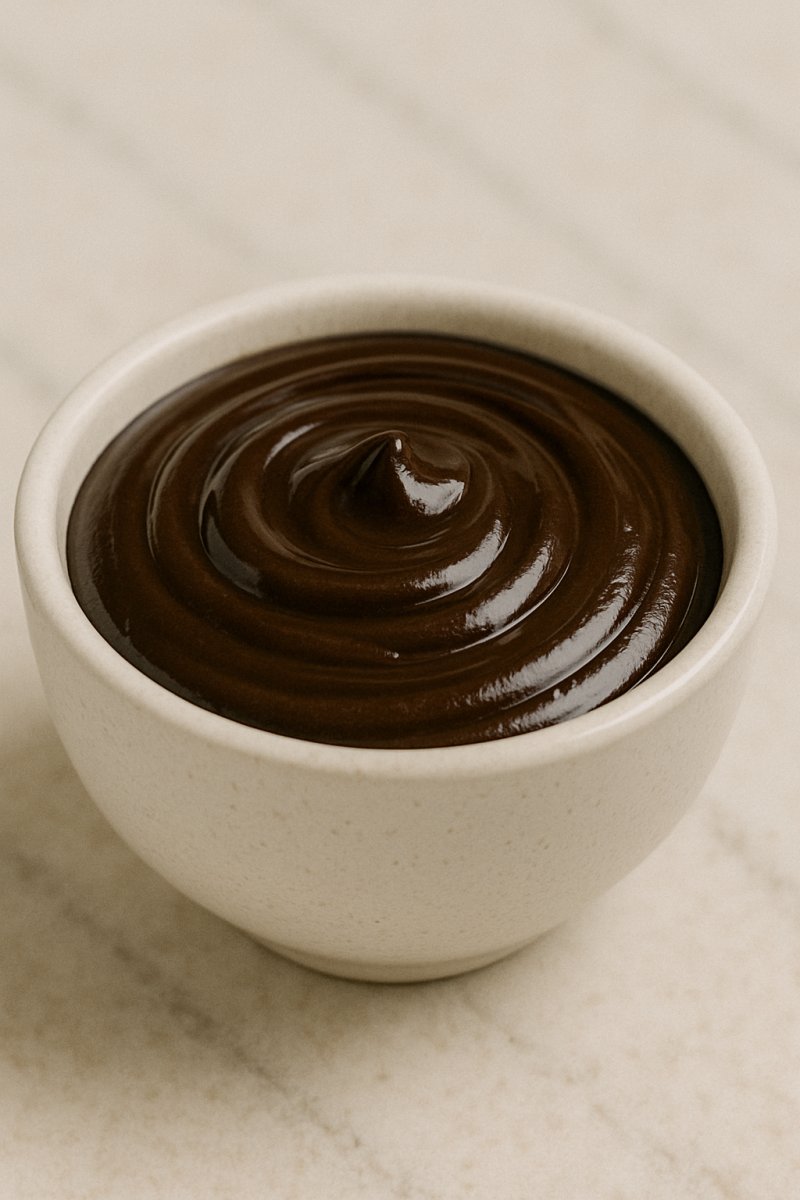
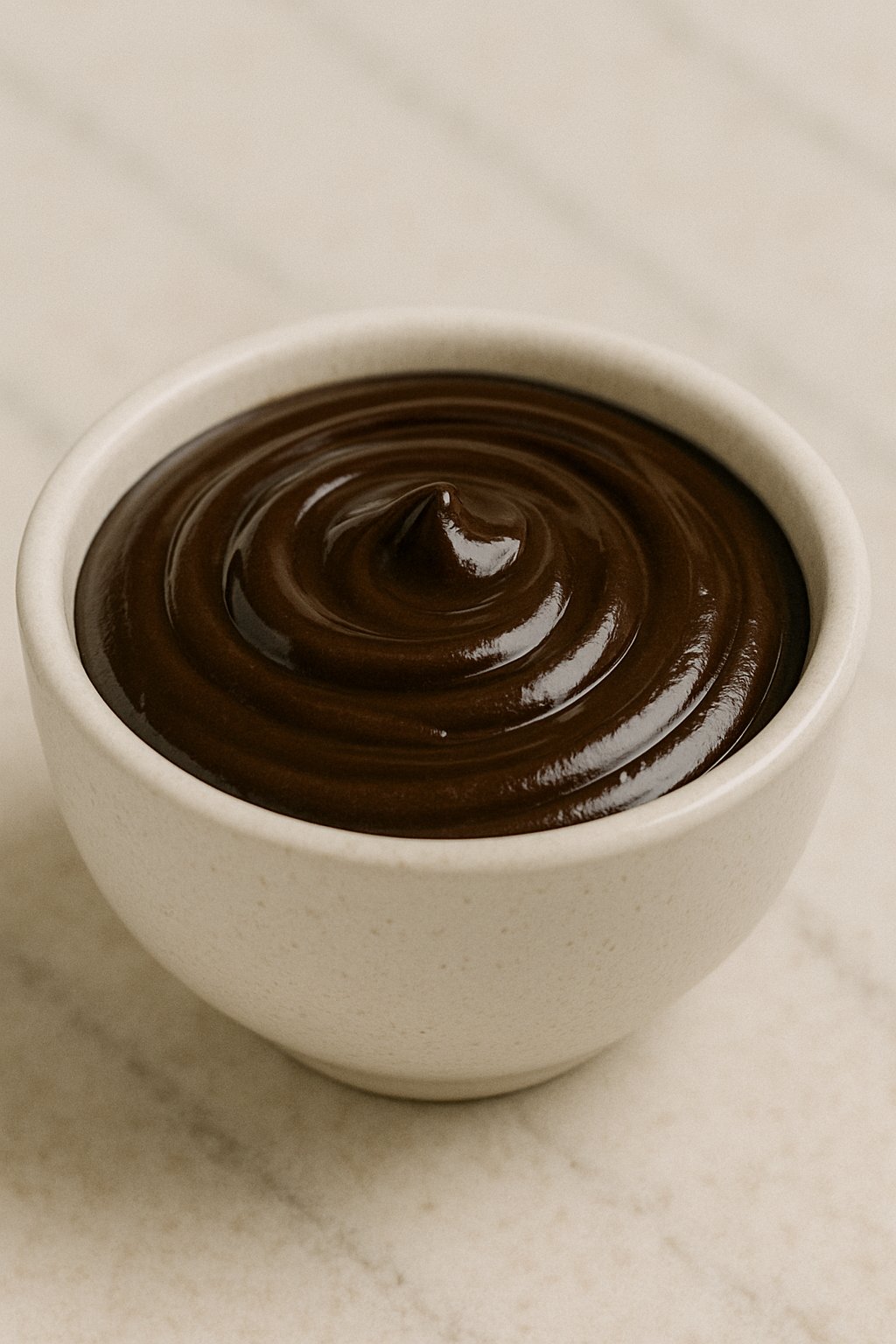
Chocolate glaze

Sweet glaze made from chocolate and fat for coating baked goods

Wiki about chocolate glaze Nutri-Score E Vegan No Gluten-free No Lactose-free No Nut-free No
NUTRITION / 100 g
520 kcal 4.0 g Protein 60.0 g Kohlenhydrate 30.0 g Fett

Introduction

Chocolate glaze flowing over a slice of cake
I love chocolate glaze because it is more than just a sweet coating: it is the finish that turns a simple cake into something alluring. I still clearly remember a rainy Sunday afternoon when I first consciously experimented with it. A friend had spontaneously announced guests, and from an improvised mixing bowl emerged a shiny, dark blanket over a plain sponge cake that everyone devoured before the cookies were even on the plate.

Chocolate glaze comes in many forms: from glossy liquid to velvety matte to firm ganache that cracks when cooled. I particularly like the combination of dark chocolate and a touch of butter because it flows smoothly over the surface and still remains stable. A colleague of mine swears by cream as a base because it makes the glaze nicely velvety; another prefers high-cocoa chocolate for intense flavors. Both are right — it depends on the desired result.

When preparing it, some basics are useful:

  • Temperature control: Chocolate that is too hot loses its shine, too cold it clumps.
  • Ingredient ratio: More fat provides smoothness, more cocoa gives intensity.
  • Stirring and resting times: Let it rest, but not too long if the glaze should remain spreadable.
I've learned that simple tricks achieve big effects. A splash of hot water or a spoonful of syrup can rescue the consistency, and a pinch of salt wonderfully lifts the sweetness. Sometimes I brush a thin layer of jam on a cake before pouring the glaze so it doesn't sink into the batter and instead shines on the surface.

Chocolate glaze is not only technically interesting but also tells stories: of family celebrations, small kitchen mishaps and unexpected compliments. The last time I baked, I accidentally mixed dark chocolate with milk chocolate, and the result was surprisingly popular — sweeter, rounder, with a nostalgic, comforting charm. That reminded me that baking often lives from experimentation.

Whether I prefer a simple sugar glaze, a rich ganache or a tempered chocolate layer: what matters is the love of detail. The right glaze highlights texture and flavor, completes appearance and feel, and transforms a slice of cake into a small celebration. And the best part: a good chocolate glaze is often quicker to make than you think — and guarantees beaming faces at the table.

Availability & types

Availability and types

Chocolate glaze is a very popular ingredient that is often found in bakeries, supermarkets and homes. It is made from chocolate or chocolate-like ingredients and is used to coat cakes, cookies, donuts or muffins to make them glossy and tasty. If you imagine a wet street shining in the sun, that is similar to the glaze on a cake — it makes everything prettier and more delicious.

Origin
The base of chocolate glaze is usually chocolate, and chocolate comes from the cocoa bean. Cocoa beans grow on cocoa trees, which thrive in warm, humid regions near the equator. Typical countries where cocoa trees grow include:

  • West Africa (e.g. Ivory Coast, Ghana)
  • Latin America (e.g. Brazil, Ecuador)
  • Southeast Asia (e.g. Indonesia)
The beans are harvested, fermented and dried — these are steps that develop the flavor. Afterwards they are further processed in factories until chocolate is made, which then goes into glazes.

Available varieties
There are many different types of chocolate glaze so everyone can find something to their taste. The main varieties are:

  • Dark chocolate glaze: It tastes fairly strong and a little bitter because it contains a lot of cocoa. People who don't like things too sweet prefer it.
  • Milk chocolate glaze: This glaze is creamier and sweeter because it contains milk components. It is often very popular with children.
  • White chocolate glaze: It contains no cocoa solids but is mainly made of cocoa butter, sugar and milk. It is very sweet and looks nicely pale.
  • Vegan or plant-based glaze: For people who do not eat dairy, there are plant-based glazes. Instead of milk, for example, plant milks or margarine are used.
  • Couverture: This is a higher-quality chocolate that melts particularly well and gives a beautiful shine to the glaze. It often contains more cocoa butter than ordinary chocolate.
Usage variants
Glaze can be used in different ways depending on what one wants to achieve:

  • Pouring: The glaze is melted and poured over the cake — this creates a smooth, glossy coating.
  • Spreading: The glaze is spread with a knife or spatula; this is good for muffins or brownies.
  • Tempering: Some glazes are tempered specifically. This means they are heated and cooled very precisely so that the chocolate is particularly shiny and cracks with a snap like a chocolate bar when it sets.
  • Decorating: Glaze can be colored with food coloring, sprinkled with sprinkles or combined with nuts and fruit.
How easy is it to obtain?
Chocolate glaze is normally very easy to find: you can buy ready-made glazes in tubes or jars at the supermarket, or you can buy couverture and melt it yourself. Bakeries often have special glazes, and you can order special varieties online. For home use a simple tube or a bar of chocolate to melt is usually enough — like melting butter in a pan, just more carefully so nothing burns.

Overall there is a chocolate glaze suitable for almost every taste and diet, and it is a very practical ingredient that instantly makes baked goods prettier and more delicious.
Details & nutrition

Property Value
Unit g
Calories per 100 520
Protein per 100 4.0
Carbohydrates per 100 60.0
Sugar per 100 55.0
Fat per 100 30.0
Saturated fat per 100 18.0
Monounsaturated fat 8.0
Polyunsaturated fat 4.0
Fiber per 100 3.0
Vitamin C (mg) per 100 0
Vitamin D (IU) per 100 0
Calcium (mg) per 100 60
Iron (mg) per 100 2.5
Nutri-Score E
CO₂ footprint 4.0
Origin Depending on the manufacturer, often EU
Gluten-free No
Lactose-free No
Nut-free No
Vegan No
Note Nutritional values can vary significantly depending on the recipe (cocoa content, sugar and fat content) and the manufacturer; the information should be understood as an average guideline for commercially available chocolate glaze.

Technical & scientific information

Chocolate glaze refers to a viscous coating layer on baked goods and desserts, which mainly consists of cocoa mass, cocoa butter, sugar and possibly milk components. As a finished ingredient it is used both in industrial applications and in household contexts. Chemically, it is a dispersion or emulsion system whose physical properties depend on composition, the crystallization behavior of fats and the fineness of the particles.


Composition and ingredients

  • Cocoa components: Cocoa mass provides polyphenolic compounds (e.g. flavanols), cocoa butter consists mainly of triglycerides with palmitic, stearic and oleic acids.
  • Sugars and sweeteners: Sucrose is the most common sugar; industrial recipes also use glucose syrup or sugar alcohols.
  • Milk components: In milk chocolate glazes milk powder or whey powder increases the protein content and influences the melting point.
  • Emulsifiers: Lecithin (soy- or sunflower-based) and PGPR (polyglycerol polyricinoleate) improve flowability and processability.
  • Fats and fat equivalents: Besides cocoa butter, alternative fats (e.g. cocoa butter equivalents) are often used to optimize cost or processing properties.
  • Additives: Flavors (e.g. vanillin), preservatives and thickeners may be added.

Physico-chemical properties

The rheology of the glaze depends on the particle size of the solid components, the fat content and the fraction of the dispersed phase. The crystallization of cocoa butter is decisive for shine, fracture behavior and melting. Cocoa butter can occur in several crystalline forms (polymorphs); the most stable form (Form V) is desired because it produces a stable gloss and a clear “snap”. Temperature control during tempering is therefore a central processing step.

Production and processing

  • Grinding and conching reduce particle size and distribute fat evenly; a finely dispersed system provides a smooth surface and pleasant texture.
  • Tempering aims at controlled crystallization of cocoa butter. Typical procedures involve heating above 45–50 °C, cooling to 27–28 °C and reheating slightly to 31–32 °C for dark chocolate.
  • Liquid glazes are often adjusted by heating to operating temperature (e.g. 30–40 °C). Viscosity and wetting behavior are regulated by emulsifier and fat content.
  • For vegan or heat-resistant applications, water-free fat glazes (compound glazes) with vegetable fats instead of cocoa butter are used.

Nutrition and health aspects

Chocolate glaze provides mainly energy in the form of fats and carbohydrates. Typical nutritional values per 100 g are around 400–550 kcal, 30–45 g fat and 40–60 g carbohydrates, depending on the recipe and milk content. Micronutrients such as iron, magnesium or small amounts of antioxidants (flavanols) come from cocoa, but in glazes they are present only in limited amounts due to the high sugar and fat content.

From a health perspective the following points should be considered: high sugar and fat content can lead to increased calorie intake. Milk components make glazes problematic for people with lactose intolerance, and soy lecithin can be relevant in case of soy allergy. Flavonoids in cocoa are associated with antioxidant effects, but their efficacy at the amounts typical for glazes is limited.

Storage and shelf life

Chocolate glazes are sensitive to light and heat. Optimal storage conditions are cool (approx. 15–20 °C), dry and protected from foreign odors. Temperature fluctuations favor fat bloom or sugar bloom; both impair appearance but do not primarily affect food safety.
In practical use, recipe and processing strongly influence the final result: properly tempered chocolate glaze yields glossy, snapping coatings, whereas compound-based glazes are easier to handle but deliver a different mouthfeel. Understanding the chemical and physical fundamentals allows targeted adjustments to achieve desired quality characteristics.

Wiki entry for: chocolate glaze
Active now: 11 visitors of which 2 logged-in members in the last 5 minutes