Menu & categories

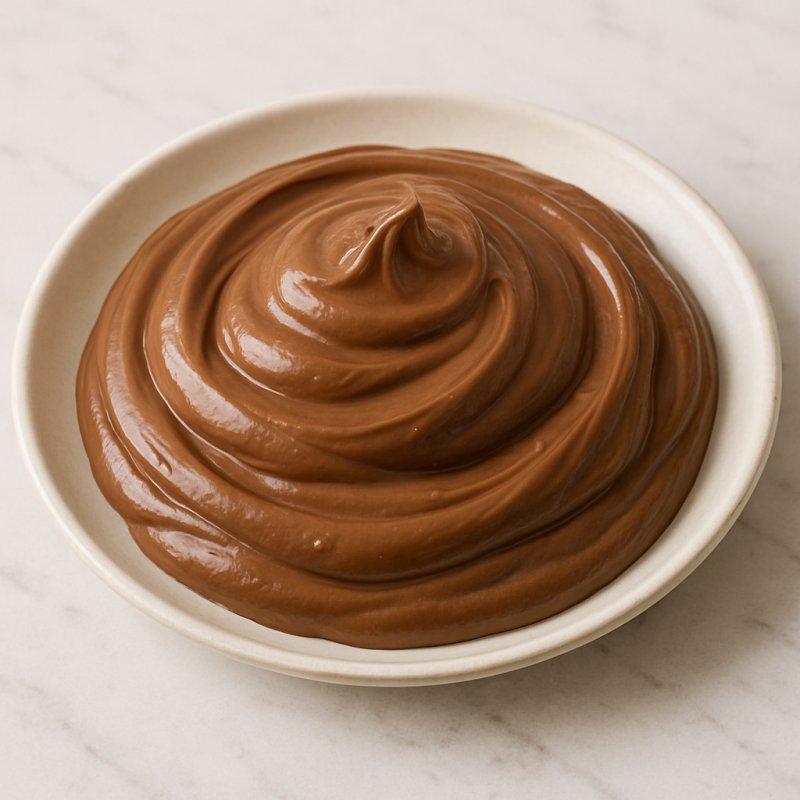
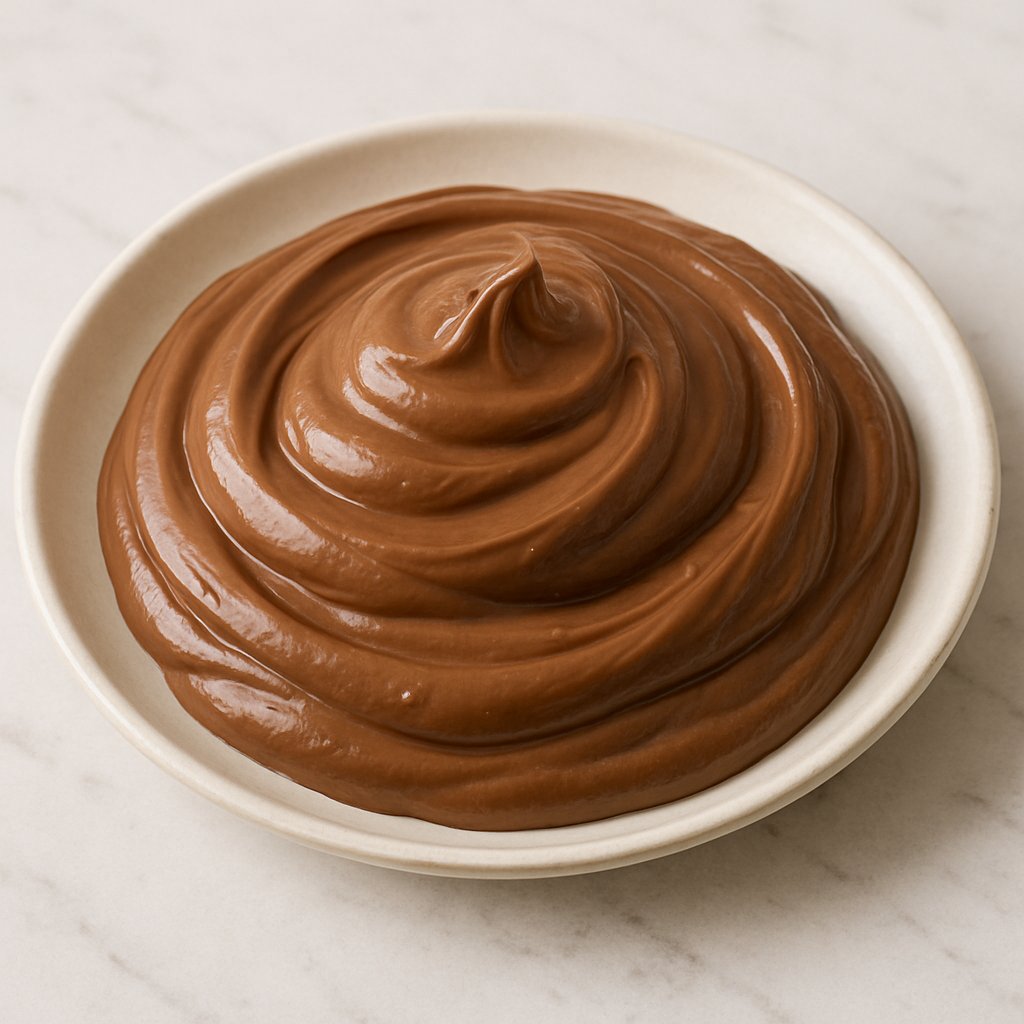
Chocolate spread

Creamy spread made from cocoa and sugar

Wiki about chocolate cream Nutri-Score E Vegan No Gluten-free Yes Lactose-free No Nut-free No
NUTRITION / 100 g
539 kcal 6.3 g Protein 57.5 g Kohlenhydrate 31.6 g Fett

Introduction

A jar of chocolate spread with a spoon and a slice of bread spread with it
I still remember the first spoonful of chocolate spread that really opened my eyes: creamy, intense and at the same time comforting, as if someone had created a warm blanket in jar form. For me, chocolate spread is more than just an ingredient; it is a flexible companion in the kitchen, a mood lifter on the breakfast table and a small portion of happiness for in-between. A colleague of mine once brought a jar to an office party, and within minutes the fruit dip was gone — the simple power of that dark, glossy paste has stayed with me ever since.

What I especially love about chocolate spread is its versatility. It can be as plain as a bread spread or transform into more elaborate desserts. It is excellent for:

  • as a spread or filling for croissants,
  • as a topping for pancakes and waffles,
  • as a base for mousses, glazes or creams for cakes,
  • but also as an aromatic ingredient for unusual combinations like spicy chili cookies or salty nut mixes.
Making it can be as simple or as refined as you like. Sometimes I stir up a homemade version from melted chocolate, light cream and a touch of vanilla; other days I reach for a carefully chosen jar from the shelf when I need to be quick. Once I experimented with sea salt and olive oil — an unexpected but delicious contrast that amazed guests.

When buying I pay attention to ingredient lists and depth of flavor: cocoa content, types of sugar and whether hazelnuts are included all change the profile significantly. For delicate moments I prefer darker, less sweet variants; for children's birthday parties or coffee get-togethers it can be milder and finer. Ultimately it's about balance: texture, sweetness and aroma must play together.

Chocolate spread is for me a small everyday wonder — uncomplicated, comforting and surprisingly versatile. It connects memories, quick kitchen rescues and creative experiments, and that is exactly why I always keep at least one jar in the cupboard.

Availability & types

Availability and types

What is chocolate spread and where does it come from?
Chocolate spread is a spreadable sweet that tastes of chocolate. The most important ingredient is cocoa, which is produced from the seeds of the cacao tree. Cacao trees grow mainly in warm, humid countries near the equator. Known cultivation areas are West Africa (for example the Ivory Coast and Ghana), South America (such as Brazil and Ecuador) and parts of Asia (like Indonesia). You can think of it like oranges: they only grow well in certain regions – the same applies to cocoa.

How and where can you buy chocolate spread?
Chocolate spread is available almost everywhere food is sold:

  • Supermarkets: The most common source. Various brands are available on shelves in jars or tubes.
  • Specialty shops: Delicatessens or organic stores sometimes offer special or handmade varieties.
  • Online shops: On the internet you can order international or rare variants that are hard to find in stores.
  • Bakeries and cafés: Some sell homemade chocolate spread or use it in their products.
What varieties and variants exist?
Chocolate spread is not always the same – there are many different types. Here are the main ones:

  • Light (milky) chocolate spread: It tastes creamy and sweet because it contains a lot of sugar and dairy products. This is the type many children prefer.
  • Dark (more bitter) chocolate spread: This contains more cocoa and less sugar. It tastes more intense and less sweet, similar to dark chocolate.
  • Nutty variants: Hazelnut or almond is often added. Well-known spreads combine cocoa and nuts – this gives a nutty, rounder flavour.
  • With additional flavours: Some spreads contain vanilla, caramel, orange or even chili. These are small flavour surprises, like ice cream with toppings.
  • Light or reduced-sugar variants: For people who want to eat less sugar, there are spreads with sweeteners or fewer calories.
  • Organic and Fairtrade products: These creamy spreads often use cacao beans from controlled cultivation. That means the trees were grown under more environmentally friendly conditions and farmers sometimes receive fairer prices.
  • Vegan variants: Dairy products are omitted here. Instead of milk, plant milks such as oat or almond milk are used, so vegans can also eat the spread.
  • Homemade spreads: Many families make chocolate spread themselves, for example from melted chocolate and a little butter or oil. This is often less processed than purchased products.
How do the varieties differ in everyday life?
Imagine you have three slices of bread: On one you spread a very sweet, light chocolate spread – that's like a dessert. The second slice gets a dark, more bitter spread – that's like a small cocoa kiss, but not as sweet. On the third you spread a nutty variant – it tastes a bit like gianduja. That way you quickly notice which spread suits which taste.

Tips for buying
Pay attention to the ingredient list: the fewer unknown words and the more natural ingredients, the simpler the spread. If environmental protection matters to you, look for labels like "Organic" or "Fairtrade". And try different varieties – sometimes you discover your new favourite spread that way.
Details & nutrition

Property Value
Unit g
Calories per 100 539
Protein per 100 6.3
Carbohydrates per 100 57.5
Sugar per 100 56.3
Fat per 100 31.6
Saturated fat per 100 11.0
Monounsaturated fat 12.0
Polyunsaturated fat 7.0
Fiber per 100 3.4
Vitamin C (mg) per 100 0
Vitamin D (IU) per 100 0
Calcium (mg) per 100 110
Iron (mg) per 100 1.8
Nutri-Score E
CO₂ footprint 2.5
Origin Varies by manufacturer; typically produced in the EU with cocoa from tropical growing countries
Gluten-free Yes
Lactose-free No
Nut-free No
Vegan No
Note Nutritional values are exemplary for a typical industrially produced chocolate spread containing milk and hazelnuts; exact values may vary by brand.

Technical & scientific information

Chocolate spread refers to a spreadable preparation based on cocoa products, fats and sugar, which is used in confectionery, baked goods and as a bread spread. As a product category the term covers both industrially manufactured spreads and homemade variants. Typical raw materials are cocoa mass or powder, vegetable fats (for example palm, sunflower or coconut fat), sugar, milk components (milk powder, whey concentrate), emulsifiers and, where applicable, flavourings such as vanillin. Formulations vary widely and determine consistency, taste, nutritional value and processing properties.

Chemical composition and ingredients
Chemically, chocolate spread consists of three main components: lipids, carbohydrates and proteins, complemented by small amounts of minerals and water. The lipid fraction originates mainly from cocoa butter and added vegetable fats; this contains saturated and monounsaturated fatty acids such as palmitic acid, stearic acid and oleic acids. The carbohydrates consist mainly of sucrose and sometimes glucose syrup. Milk-based variants contain lactose and milk proteins (casein, whey proteins). Emulsifiers such as lecithin (soy- or sunflower-based) reduce the interfacial tension between fat and water phases and stabilise the product.

Nutritional values
Nutritional information varies depending on formulation; generally chocolate spread provides high energy amounts per 100 g (typically 500–600 kcal) due to the high fat and sugar content. Fat content can range between 30 and 60%, with saturated fatty acids contributing significantly to the balance. Sugar content is often 40–60%. Protein is moderate in milk variants (2–8%), while dietary fibre is present only in small amounts. Minerals such as calcium are somewhat elevated in milk-containing products; cocoa also contributes traces of magnesium, iron and flavonoids.

Manufacturing and processing methods
Industrial manufacture includes several steps: mixing, conching, homogenising and tempering of the fat phase. First, dry and liquid ingredients are mixed and melted. Through conching (grinding and refining) particle sizes are reduced and flavour compounds are distributed evenly; this affects mouthfeel and the flavour profile. Homogenisation ensures a fine dispersion of the fat and water phases, improving viscosity and stability. Finally, emulsifiers and, if necessary, preservatives are added. To achieve spreadable consistencies additional thickeners such as starches or hydrocolloids are often used.

Sensory technique and structure
The texture of a chocolate spread is determined by particle size (cocoa powder, sugar), the fat continuum and the crystalline structure of the fats. The crystal form of the fats (polymorphism) influences melting behaviour and gloss. On a technical level a fine particle distribution (<30 µm) is desirable to achieve a sand-free mouthfeel. Rheological properties such as viscosity and shear sensitivity are important for filling, storage and spreading.

Health aspects
From a nutritional perspective chocolate spread is regarded as an energy-dense treat. Common criticisms concern the high sugar and saturated fat content, which when consumed excessively can increase the risk of overweight, type 2 diabetes and cardiovascular disease. On the other hand cocoa provides secondary plant compounds such as flavonoids, which in relevant amounts may have positive effects on endothelial function and oxidative stress; however, in highly sugared products these benefits are limited. For people with allergies or intolerances milk, soy lecithin and nuts should be considered possible allergens.

Shelf life and storage
Shelf life depends on water activity, fat oxidation and microbial load. At low water activity microbiological risks are reduced, while the oxidation stability of the fats is influenced by antioxidants, packaging air and storage temperature. Refrigerated storage can slow crystal transformations and preserve texture, although room temperature is common for stable emulsions.

Overall chocolate spread is a technologically complex product whose properties are deliberately controlled by the choice of fat substitutes, particle fineness, emulsifiers and processing steps. The balance between flavour appeal, consistency, nutritional profile and shelf life determines the application and quality assessment of this widespread food.

Wiki entry for: chocolate cream
Active now: 12 visitors of which 2 logged-in members in the last 5 minutes