Menu & categories

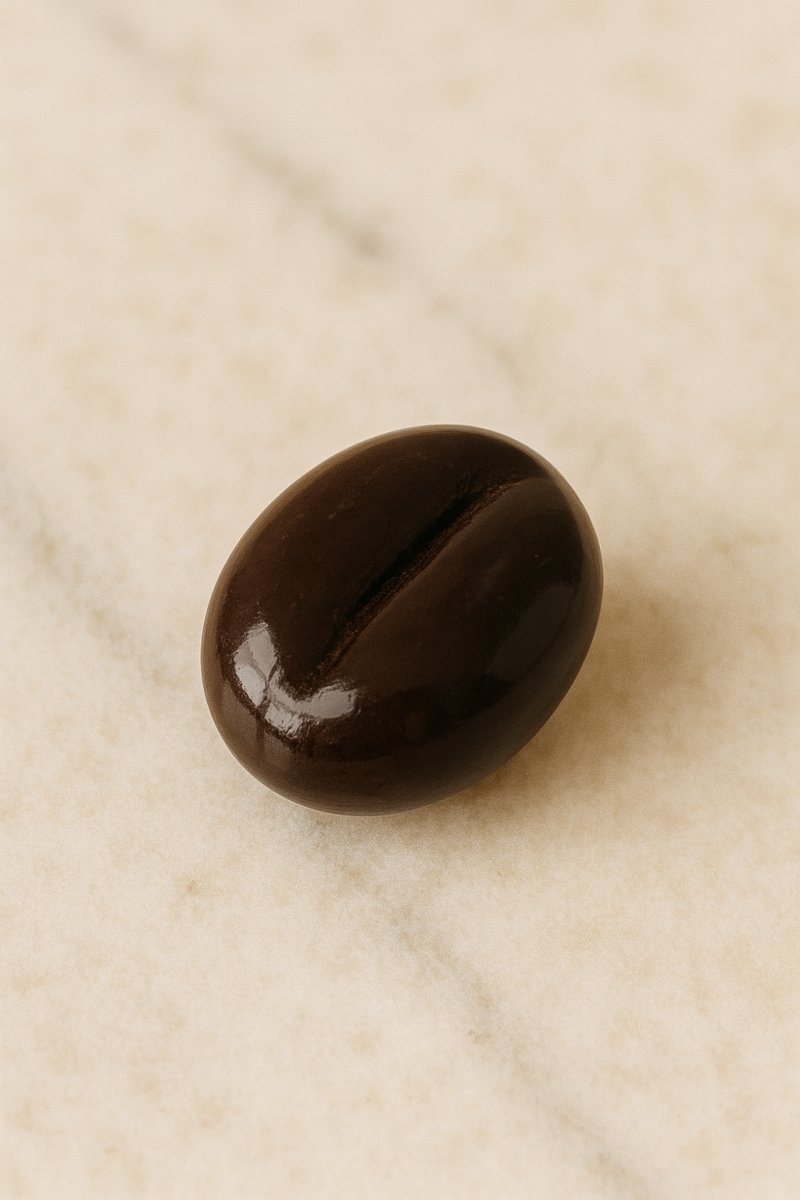
Chocolate bean

Small chocolate confections in bean shape

Wiki about chocolate bean Nutri-Score E Vegan No Gluten-free No Lactose-free No Nut-free No
NUTRITION / 100 g
480 kcal 6.0 g Protein 64.0 g Kohlenhydrate 22.0 g Fett

Introduction

Several colorful chocolate bean confections
I still remember well the first bite of a chocolate bean, which both confused and enchanted me: hard on the outside, surprisingly soft inside, with an intense cocoa core that recalled childhood chocolate and a hot espresso at the same time. To me the chocolate bean is more than just a sweet morsel; it is a small, layered taste experience that fits perfectly between coffee and dessert moments.

When I think of its origin, I don't just see a simple treat, but the connection between cacao craft and workmanship. I often imagine chocolatiers in a small workshop coating bean after bean with sugar glaze until each chocolate bean gains its characteristic shine. A colleague once brought a bag to the editorial office, and suddenly the coffee break turned into a little tasting: nutty, fruity, with a hint of bitterness — each variety had its own character.

The chocolate bean is practically versatile. It works as an accompaniment to espresso, as an elegant finish to a menu, or as a surprising element in baked goods and desserts. Some people crush it over ice cream, others roast and chop it for brownies. I even tried a recipe once where ground chocolate beans added texture to a caramel sauce — an experiment that was surprisingly well received.

  • Taste: intense, often with notes of coffee, nuts and dark chocolate.
  • Texture: crunchy shell, tender core or completely uniform, depending on production.
  • Use: with coffee, as a gift, in desserts or as a surprising crunch in baked goods.
What I like most about the chocolate bean is its ability to evoke memories. It is compact, portable and ideal for sharing; I have started many conversations simply by offering a chocolate bean. At the same time it has a certain nobility: a single bean can ennoble a moment without being intrusive. When I next stand in a small confectionery shop, I like to be surprised by new variations — perhaps with sea salt, orange zest or even a pinch of chili. The chocolate bean remains for me a little marvel of confectionery that unites pleasure and history in one bite.

Availability & types

Availability and types of the chocolate bean

The chocolate bean is a fictional but easily imaginable ingredient that one can picture similar to a cocoa bean or a chocolate fruit. Its availability and the different types can be explained well and are especially exciting for children: some varieties are found everywhere, others only in certain regions or from special vendors.

Origin
The chocolate bean grows on plants that thrive best in warm, humid areas. You can imagine it as a plant that likes lots of sun and regular rain — similar to an apple tree, but located in tropical regions. Traditionally, chocolate beans are cultivated in countries near the equator because temperature and humidity there are ideal. This origin also explains why the term "tropics" is sometimes heard when talking about the chocolate bean.

Growing regions
The main growing regions are imagined as tropical areas on several continents. Examples include:

  • West Africa: Much of what we know grows here — many farmers grow chocolate beans, similar to large plantations.
  • South America: In dense, green rainforests special varieties with fruity flavours thrive.
  • Southeast Asia: In countries with lots of rain and warmth chocolate beans are also cultivated, often on smaller farms.
You can think of these places like different kitchens: each region has its own "recipe" for how the plants are cared for, and that later affects the flavor of the chocolate beans.

Available varieties and versions
There are several types of chocolate beans that differ in taste, size and color. Here are some easy-to-understand categories:

  • Mild chocolate beans: This variety tastes gentle and not very bitter. It is good for people who like sweet, mild chocolate — similar to milk chocolate.
  • Bitter chocolate beans: They have a stronger, slightly bitter taste. Adults like to use them for dark chocolate, which is more intense.
  • Fruity chocolate beans: Some beans taste a bit like berries or citrus. That is due to how the plant grows and what is in the soil.
  • Spice- or nut-flavored: There are variants that naturally have notes of nuts or spices — it's like discovering different flavors in chewing gum.
  • Organic and Fairtrade variants: These beans are grown without harmful chemicals and usually by farmers who are fairly paid. It's like the difference between "homemade" and "factory-made" — many people prefer the sustainable options.
How easy are they to get?
You can find chocolate beans in many supermarkets, grocery stores and online. Some varieties are very common, others rare — for example special fruity or hand-picked variants that are produced in small quantities. A simple comparison: some chocolate beans are like ordinary apples in the store, others like a special apple variety from the farmers' market that isn't available everywhere.

In summary: the chocolate bean comes from warm, tropical regions, there are many different types with different flavours, and you can often find them easily — although some special varieties are rarer and usually more expensive. Thus each bean has its own character, and discovering them is fun, almost like trying new ice cream flavours on a hot summer day.

Details & nutrition

Property Value
Unit g
Average weight per piece 2.5
Calories per 100 480
Protein per 100 6.0
Carbohydrates per 100 64.0
Sugar per 100 58.0
Fat per 100 22.0
Saturated fat per 100 13.0
Monounsaturated fat 6.0
Polyunsaturated fat 1.0
Fiber per 100 3.0
Vitamin C (mg) per 100 0
Vitamin D (IU) per 100 0
Calcium (mg) per 100 80
Iron (mg) per 100 2.0
Nutri-Score E
CO₂ footprint 4.5 kg CO2e/kg
Origin Varies by manufacturer; typically Europe
Gluten-free No
Lactose-free No
Nut-free No
Vegan No
Note Values are typical averages for chocolate-based confectionery in bean form; exact composition varies by manufacturer.

Technical & scientific information

Chocolate bean is a colloquial term often used for the seeds of the Theobroma cacao plant, from which chocolate and cocoa-containing products are made. Botanically, these are large, oil-rich seeds that ripen in pods on tropical cacao trees. The seeds are surrounded by a sweet pulp that plays an important role during the fermentation process. After harvest, chocolate beans go through several processing steps — fermentation, drying, roasting and grinding — before being converted into cocoa mass, cocoa butter and cocoa powder.

Chemical composition and constituents. Chocolate beans consist mainly of fats, proteins, carbohydrates, fiber and water. The fat content typically ranges between 40 and 55 percent and consists predominantly of cocoa butter, whose main fatty acids are stearic acid, oleic acid and palmitic acid. The beans also contain numerous secondary plant compounds: flavanols (including epicatechin, catechin), theobromine and, in smaller amounts, caffeine. Other relevant components are minerals (especially magnesium, iron, potassium), vitamins (traces of B vitamins) and organic acids that form during fermentation.

Nutritional values (typical ranges per 100 g raw cocoa): Energy content varies depending on fat content; for raw cocoa roughly 400–600 kcal can be expected. Fat 40–55 g, of which saturated fatty acids 20–35 g; protein 10–20 g; carbohydrates 10–30 g, of which sugars are low after fermentation/drying; fiber 15–35 g. Industrial processing (addition of sugar, milk ingredients) significantly alters these values.

Processing methods and steps

  • Harvest and pod opening: The pods are opened and the seeds removed together with the surrounding pulp.
  • Fermentation: The seeds are fermented for several days in bins or containers. This catalyzes chemical transformations (breakdown of mucilage, formation of aroma precursors) and reduces microbial load.
  • Drying: After fermentation moisture is reduced to about 6–8 % to prevent microbial growth and ensure storability.
  • Roasting: Roasting at 110–150 °C develops desirable aromatic compounds (Maillard reactions, caramelization) and tempers bitterness.
  • Grinding and pressing: Ground beans yield cocoa mass; pressing separates cocoa butter from the solid residue, which is processed into cocoa powder.
Aroma formation and biochemistry. Typical chocolate aroma results from a complex interplay between fermentation microbes, enzymatic processes in the bean and thermal reactions during roasting. Fermentation promotes the formation of free amino acids and reducing sugars, which during roasting produce Maillard products and volatile aroma compounds such as pyrazines and aldehydes. Flavanols and other polyphenols contribute to bitterness and antioxidant activity, but are partly reduced by processing.

Health aspects. Raw cocoa is rich in antioxidants, particularly flavanols, which in studies have been linked to positive effects on vascular function, blood pressure and insulin sensitivity. The amount and bioavailability of these substances depend strongly on origin, fermentation and processing. At the same time, chocolate beans supply notable amounts of energy-rich fats and caloric components; heavily sweetened chocolate products can therefore contribute to energy overconsumption. Theobromine acts as a mild stimulant and is considered well tolerated in moderate amounts for humans, but can be toxic to animals such as dogs.

Safety and quality aspects. While fermentation and drying reduce microorganisms, improper processing carries the risk of molds and mycotoxins such as ochratoxin A. Pesticide residues may occur depending on cultivation conditions. Quality parameters include aroma profile, fat content, residual moisture and levels of bitterness and astringency.

Overall, chocolate beans are a complex, chemically rich food raw material with diverse sensory properties and nutritional effects. Their full appreciation in foods results from the interplay of genetic variety, cultivation and harvest conditions and controlled processing, which determine aroma, nutrient content and food safety.

Wiki entry for: chocolate bean
Active now: 24 visitors of which 2 logged-in members in the last 5 minutes