Menu & categories

Chocolate bar

Sweet chocolate snack with sugar, fat and milk components

Wiki about chocolate bar Nutri-Score E Vegan No Gluten-free No Lactose-free No Nut-free No
NUTRITION / 100 g
500 kcal 7 g Protein 60 g Kohlenhydrate 25 g Fett

Introduction

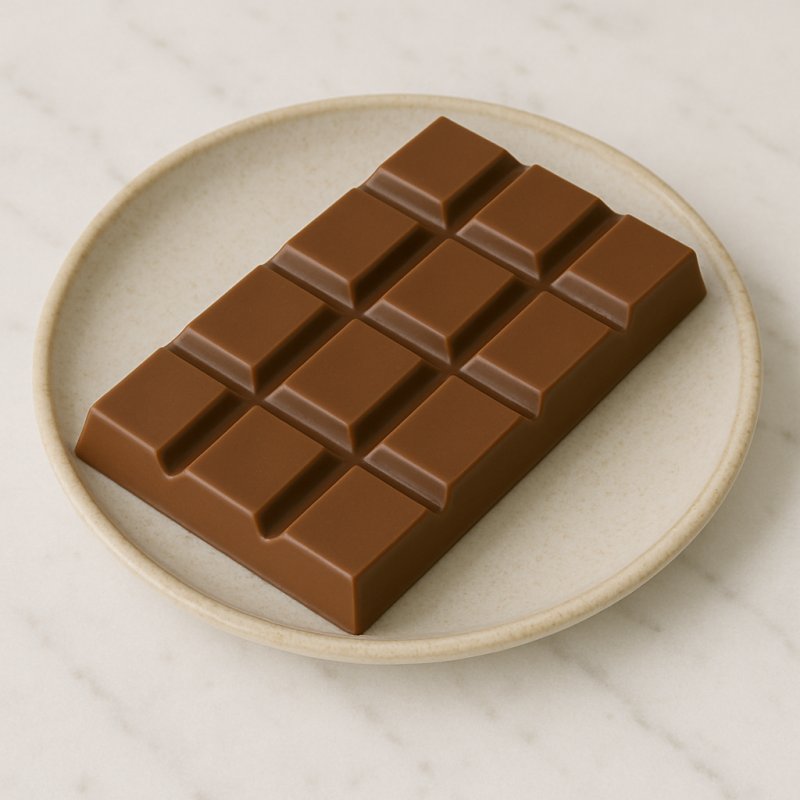
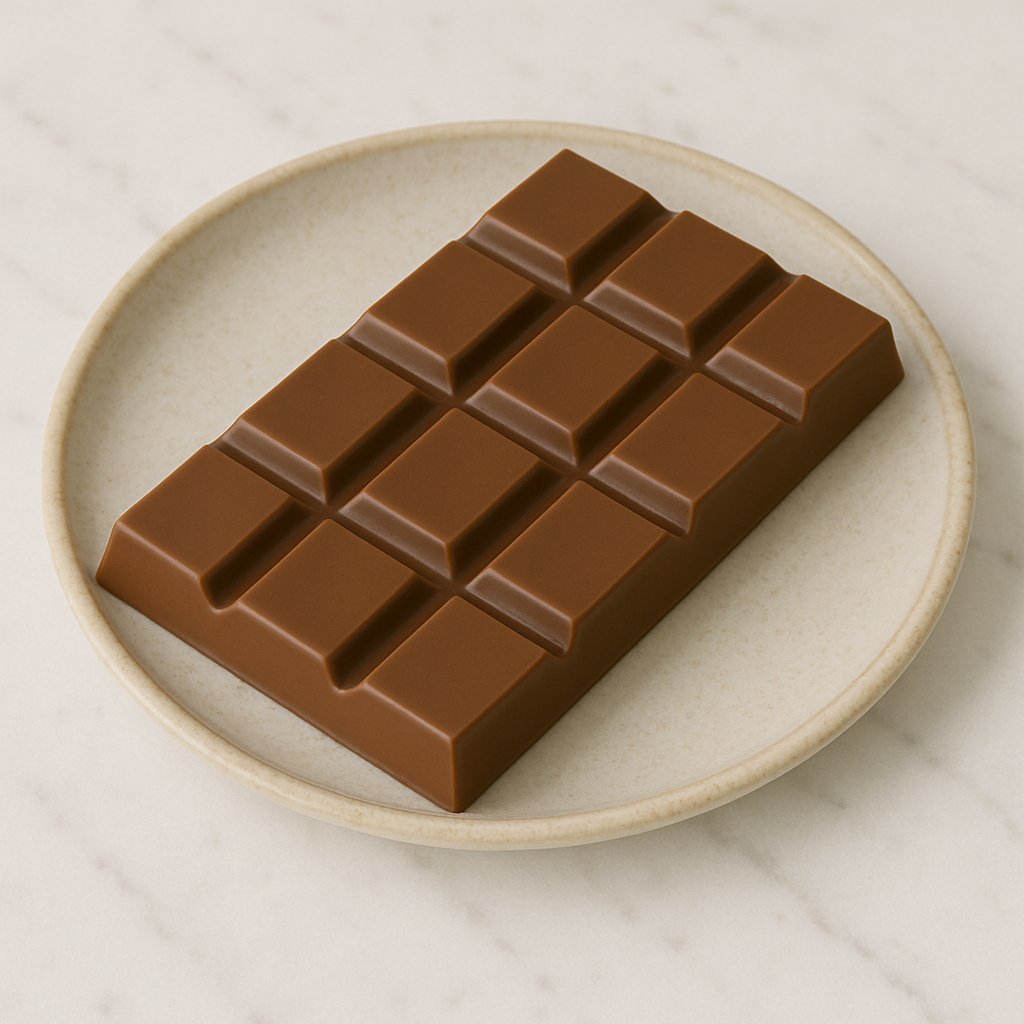
A single chocolate bar on a plate
I still remember how a simple chocolate bar on a rainy afternoon immediately lifted my mood: the crunchy shell, the soft interior, the moment when the bitter note of the cocoa mass met the sweetness and everything else became unimportant. Small sensory wonders like that have accompanied me for years on trips, at the office and on walks through the city. A colleague once affectionately called the chocolate bar "the portable happiness", and since then I have seen it with the same eyes.

For me the chocolate bar is more than just a confectionery item. It is a miniature dessert, an experimental field for flavors and textures and often the entry point into serious discussions about origin and quality. Already at the first bite I ask myself questions: Were the cocoa beans traded fairly? What milk was used? Is there brittle, caramel or nuts inside? These small details tell stories about origin, processing and the craftsmanship behind a product.

I like to compare different types of bars, and I repeatedly notice the same categories:

  • Creamy bars with velvety fillings that melt almost like pudding.
  • Crispy bars with rice crispies or wafer, which produce a satisfying sound when bitten.
  • Nutty bars with whole or chopped nuts, which add texture and deep roasted flavors.
  • Gourmet or dark bars with a high cocoa content, which are more reminiscent of dark chocolate.
In my kitchen I have lovingly taken bars apart to understand how caramel harmonizes with chocolate and a pinch of sea salt. Once I tried to recreate a classic with homemade brittle; the result was delicious, but my work surface looked like a sugar battlefield afterwards. Such experiments show that a chocolate bar can also provide creative impulses.

In the end I appreciate chocolate bars for their versatility: they are comfort givers, energy providers and taste experiences at the same time. Whether as a quick snack between appointments, as a small gift or as a little luxury moment on the sofa – a good bar can turn everyday life into a pleasurable moment.

Availability & types

Availability and types

Chocolate bars are sweets found almost everywhere in the world. They usually consist of chocolate, sometimes with additional ingredients like nuts, caramel or crunchy pieces. If you want to know where they come from and what types exist, it's helpful to first think of the main ingredient: the cocoa bean. Cocoa beans grow on cocoa trees that thrive in warm, humid areas near the equator. Important producing countries include West Africa (especially Ivory Coast and Ghana), South America (such as Brazil and Ecuador) and parts of Asia (like Indonesia).

The journey from the tree to the chocolate bar looks like this: farmers harvest cocoa pods, extract the beans, ferment and dry them. These steps give chocolate its typical flavor. The beans are then taken to chocolate factories where they are roasted, ground and mixed with sugar, milk powder or other ingredients. From this mass manufacturers finally form bars in various shapes and sizes.

There are many varieties of chocolate bars so there's something for every taste. The main basic types are:

  • Dark chocolate (also bittersweet): These bars have a higher proportion of cocoa mass and less sugar. They often taste strong and slightly bitter. Some people like them because they have a more intense cocoa flavor.
  • Milk chocolate: These bars are sweeter and creamier because they contain milk powder or milk components. They are the most common type for many chocolate bars.
  • White chocolate: Technically, white chocolate does not contain cocoa solids but mainly cocoa butter, sugar and milk. It is very sweet and has a vanilla-like flavor.
Besides these basic types there are many variants that use additional ingredients or special preparations. Some common variants are:

  • With nuts – hazelnuts, almonds or peanuts are often coarsely chopped and baked into the bar. This gives crunch and a nutty taste.
  • With caramel – a sticky layer of caramel makes the bar sweeter and softer when bitten.
  • With crunchy bits – small rice or cereal puffs provide a crispy feeling, similar to cornflakes.
  • With fruit filling – some bars contain fruit gels or dried fruit for a fruity note.
  • With spices or salt – a pinch of sea salt or spices like chili or cinnamon can create surprising flavor combinations.
There are also special lines like vegan chocolate bars (without milk), reduced-sugar variants or bars with extra high cocoa content for people who prefer less sweet products. Some manufacturers also offer "organic" or "Fairtrade" products. Organic means certain rules were followed in cultivation, e.g. fewer chemicals were used. Fairtrade indicates that farmers are meant to be paid more fairly.

You can buy chocolate bars in supermarkets, kiosks, gas stations and many online shops. Some bars are world-famous and available almost everywhere, others are local or seasonal, meaning only available at certain times of the year, for example at Christmas. So there's something for everyone: from simple milk chocolate bars to elaborate varieties with nuts, caramel or spice combinations.
Details & nutrition

Property Value
Unit g
Average weight per piece 40
Calories per 100 500
Protein per 100 7
Carbohydrates per 100 60
Sugar per 100 55
Fat per 100 25
Saturated fat per 100 15
Monounsaturated fat 7
Polyunsaturated fat 1
Fiber per 100 3
Vitamin C (mg) per 100 0
Vitamin D (IU) per 100 0
Calcium (mg) per 100 120
Iron (mg) per 100 2
Nutri-Score E
CO₂ footprint 3.0
Origin Varies by manufacturer, typically EU
Gluten-free No
Lactose-free No
Nut-free No
Vegan No
Note Nutritional values refer to a typical filled milk chocolate bar; exact values vary by brand and variety.

Technical & scientific information

Chocolate bars are industrially produced food products composed from a base of chocolate or cocoa-containing masses and frequently combined with fillings, nuts, caramel or other ingredients. In chemical and technological terms they are multiphase composites whose macrostructure is determined by the composition of the cocoa mass, the cocoa butter system, sugar, milk components and additives. Physical properties such as melting point, fracture behavior and texture result directly from the crystallization state of the cocoa butter and the particle fineness of the chocolate matrix.

Chemical composition and ingredients: The main components of chocolate bars are:

  • Cocoa mass: contains numerous bioactive compounds such as flavanols (e.g. epicatechin), theobromine, small amounts of caffeine as well as lipids and proteins.
  • Cocoa butter: a fat mixture primarily composed of triglycerides of palmitic, stearic and oleic acids. The specific fatty acid composition determines melting behavior.
  • Sugar (sucrose, optionally glucose/corn syrup): serves as a sweetener and crystallization agent, influencing water activity and texture.
  • Milk components (in milk chocolate): milk powder or condensed milk supply proteins, lactose and more hydrophilic components that alter emulsion properties.
  • Fats and emulsifiers: vegetable fats and lecithins (soy, sunflower) improve flowability, heat resistance and prevent fat migration.
  • Additives: flavors, colorants, preservatives and texturizing agents (e.g. polydextrose, inulin) complement sensory and technological requirements.
Nutritional values and energy aspects: Chocolate bars are energy-dense foods with a high proportion of fats and carbohydrates. Typical macronutrient values vary by type but often sit around 200–250 kcal per 30 g portion, with 10–15 g fat and 20–25 g sugar. Protein contents are moderate (2–5 g per portion), fiber varies with cocoa content. Micronutrients like magnesium, iron and certain B vitamins are present in cocoa products but often in amounts that only partially cover daily requirements.

Processing methods: Industrial production comprises several steps:

  • Roasting of cocoa beans to develop aroma precursors via Maillard and Strecker reactions.
  • Grinding and conching: reduction of particle size (refining) and extended conching to form homogeneous rheology and to remove volatile acids.
  • Tempering: controlled crystallization of cocoa butter into stable polymorphs (predominantly form V) to achieve gloss, snap and optimal melting behavior.
  • Forming and enrobing: inserting fillings, enrobing or extrusion into bars, followed by cooling and packaging.
Physiological and health aspects: Bioactive components of cocoa, particularly flavanols, are associated with positive effects on vascular function and antioxidant potential. The concentration of such compounds, however, strongly depends on cocoa content and processing conditions. At the same time, the high content of sugar and saturated fats when consumed frequently is associated with increased risk of obesity, dental caries, dyslipidemia and type 2 diabetes. Allergens can occur in the form of milk protein, soy lecithin or nuts; cross-contamination is possible on production lines.

Technological challenges and quality assurance: Important quality parameters are fat-bloom resistance, texture stability, moisture management and microbiological safety of fillings. Fat bloom arises from recrystallization or fat migration and impairs appearance and mouthfeel. Sensory analyses, rheology measurements and chromatographic techniques (e.g. HPLC for flavanol determination or GC‑MS for aroma analysis) are standard methods in research and quality control.

Overall, chocolate bars are complexly formulated products whose properties result from the combination of chemical components, thermomechanical processing and microstructural organization. They offer nutritional pros and cons as well as multiple production and quality-management challenges, so recipe design and process control are decisive for attractiveness, stability and the health assessment of the final product.

Wiki entry for: chocolate bar
Active now: 18 visitors of which 2 logged-in members in the last 5 minutes