Availability and types of peperoni
Peperoni are very popular with many people: they are crisp, often have attractive colors and can taste mild or very hot. Originally, peperoni come from Central and South America. That was many hundreds of years ago, before explorers brought the plants to Europe and other parts of the world. There the plants were so well liked that they were quickly cultivated in gardens and fields. Today peperoni are grown almost everywhere it is warm enough.
Growing regions
Peperoni grow best in warm areas with plenty of sun. Important growing regions are:
Peperoni grow best in warm areas with plenty of sun. Important growing regions are:
- Europe: Southern Europe, for example Spain, Italy and Greece. There they ripen well under the warm sun.
- North America: Especially in the USA and Mexico, where many different varieties are bred.
- South America: Because of their origin, many traditional varieties still grow there.
- Asia and Africa: Also in many tropical and subtropical countries
In supermarkets you can find peperoni almost all year round: in summer you often get freshly harvested local ones, in winter from warmer countries or from greenhouses. Greenhouses are like large glass rooms where temperature and climate can be controlled artificially so that the plants can grow even in cold weather.
Available varieties and forms
Peperoni come in many shapes, sizes, colors and degrees of heat. Here are the main types explained simply:
Peperoni come in many shapes, sizes, colors and degrees of heat. Here are the main types explained simply:
- Bell peppers (also called sweet peppers): These are usually mild and juicy, often red, yellow or green. They are large and have many seeds in the middle. Many children like them raw in salads or as a snack.
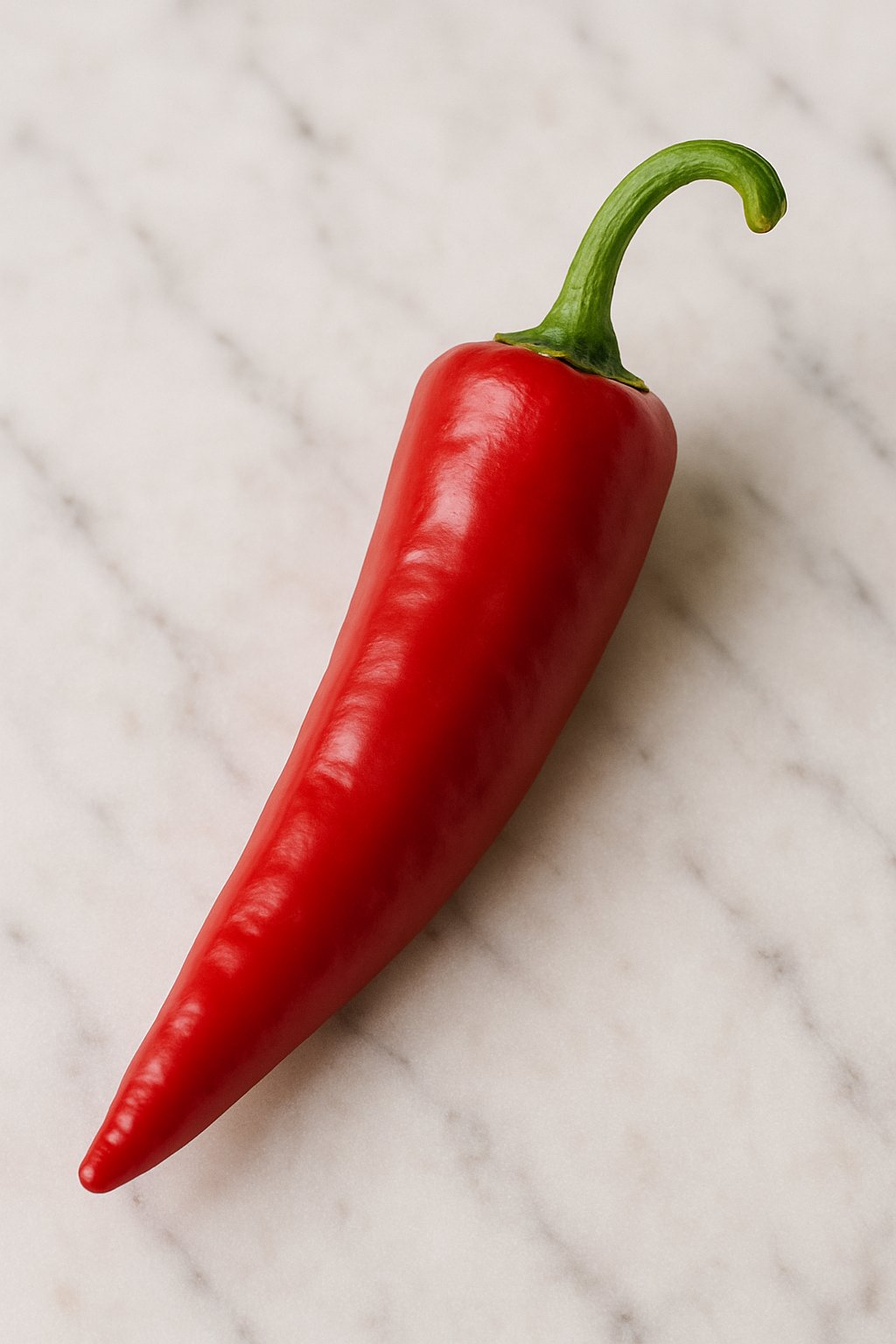
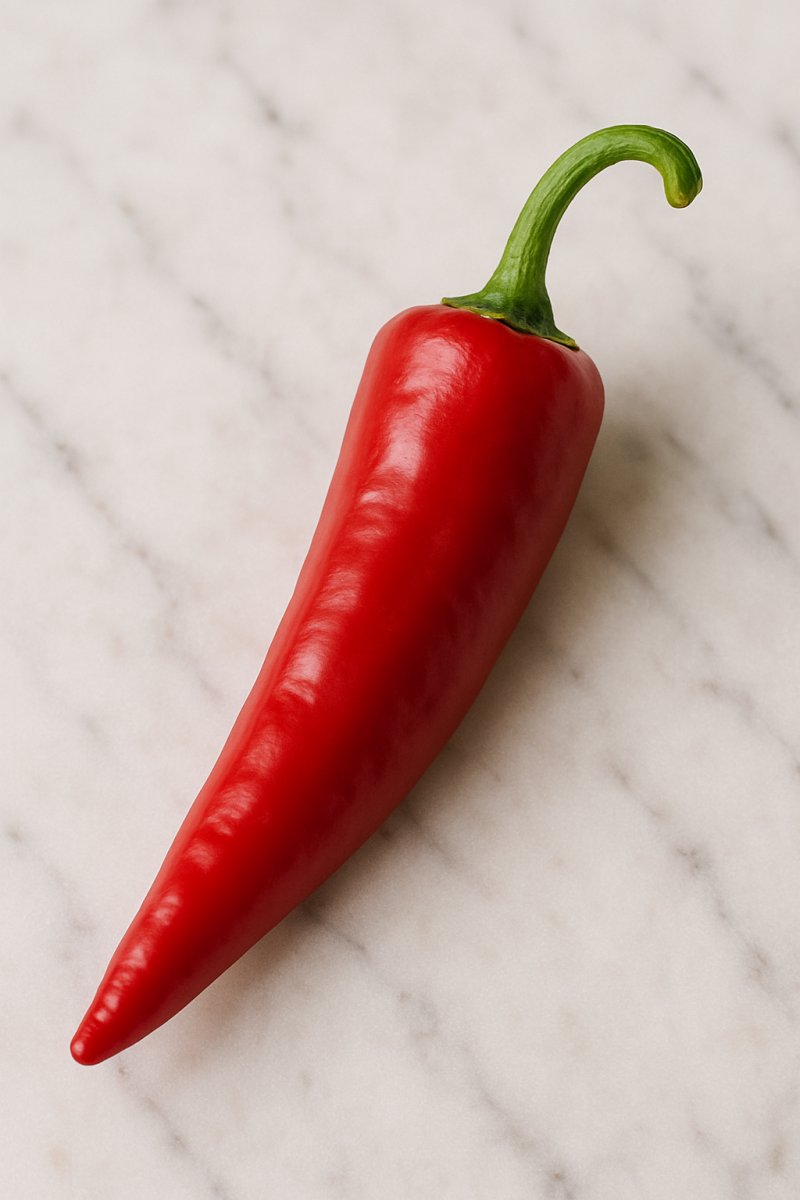
- Fiery chili peppers: These are the hotter relatives. Some are very small and extremely hot, others are longer and hotter than bell peppers. Heat feels like a warm, burning sensation on the tongue.
- Pointed peppers / Szegediner or peperoncini: These are usually elongated and can range from mild to moderately hot. They are often found pickled in jars.
- Roman or “Sweet Banana” varieties: These look like small bananas, are usually yellow to red and mild in taste.
- Stuffing varieties: Some peppers are so large and mild that you can hollow them out and fill them with cheese or minced meat. One example would be the Spanish “Pimiento de Padron” – they are often mild, but sometimes surprisingly hot.
Colors often help to identify the variety: green peppers are usually not fully ripe, red ones are often sweeter and riper, and yellow or orange varieties can taste especially fruity. Spiciness is measured with a scale called Scoville, but that only indicates how much "burning" to expect — the higher the number, the hotter.
In the shop or at the market you can buy fresh peppers, dried, ground (as a spice) or pickled in jars. Dried and ground peppers are often used as a spice because they keep for a long time and give dishes a lot of flavor. Pickled peppers are practical if you like to have something spicy or savory ready to put on your bread or into your salad.
In short: peperoni are very versatile. Whether you are looking for something mild for children or something hot for adults, you will always find a suitable variety. In addition, they are available almost everywhere because they are grown in many countries or in greenhouses.