Menu & categories

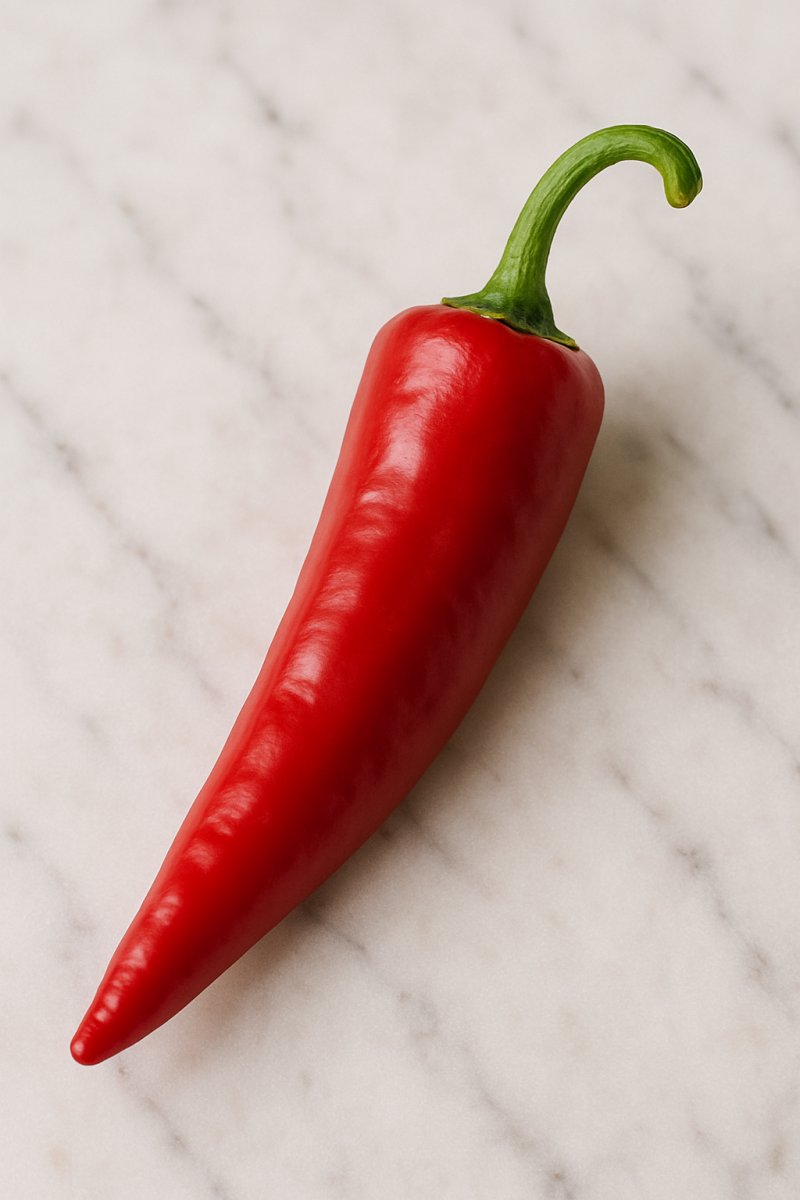
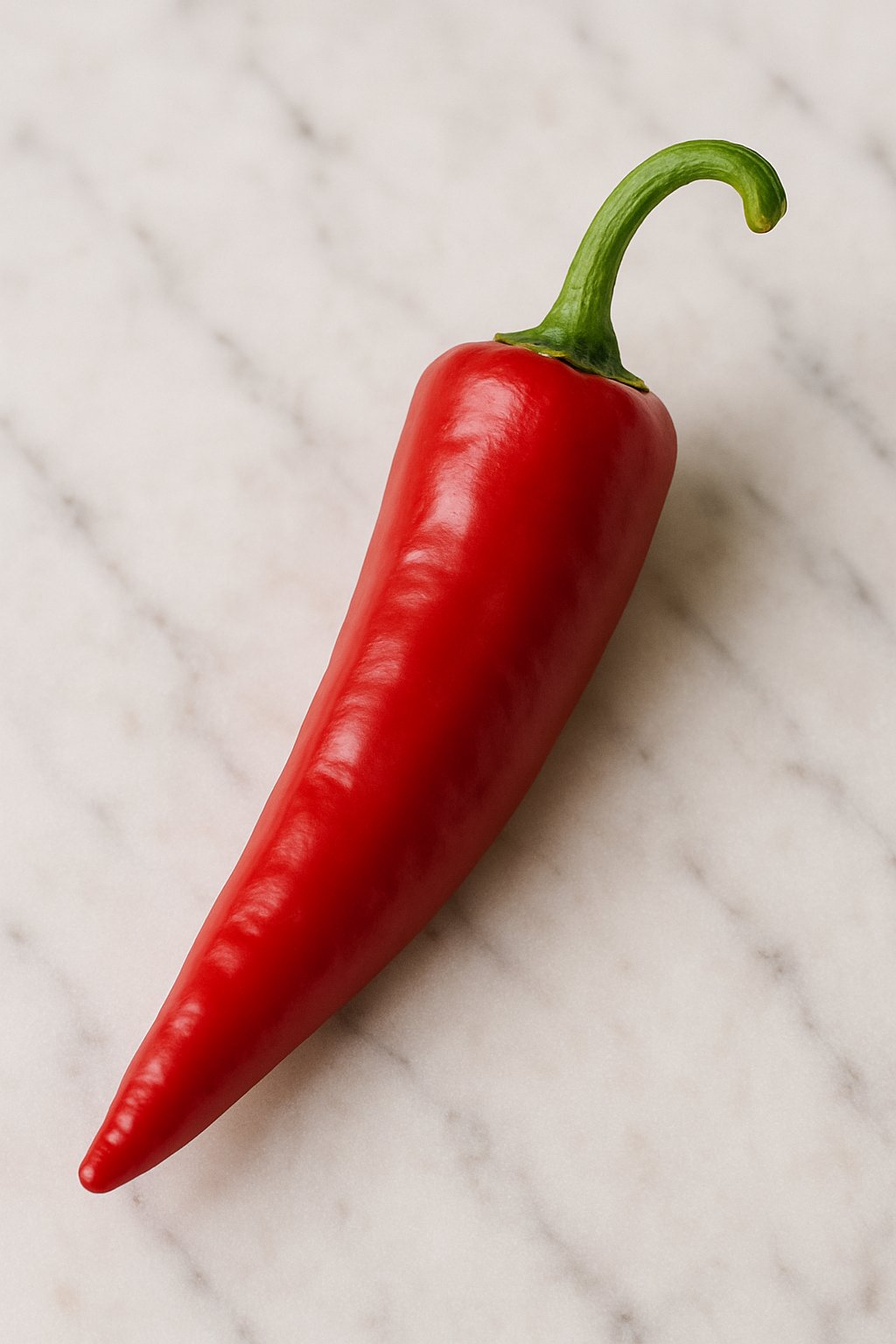
Chili pepper

Hot chili pepper with an intense aroma

Wiki about bell pepper Nutri-Score A Vegan Yes Gluten-free Yes Lactose-free Yes Nut-free Yes
NUTRITION / 100 g
40 kcal 2 g Protein 9 g Kohlenhydrate 0.4 g Fett

Introduction

Fresh red and green chili peppers
I still clearly remember the first scent that rose from my grandmother's kitchen when she seared freshly harvested peperoni in olive oil: a mix of sweet fruitiness, a lightly smoky depth and a hint of heat that became noticeable later. Since then peperoni have been more than just a side dish to me; they are a small culinary all-rounder that enlivens dishes and evokes memories.

In my kitchen I encounter peperoni in many different forms: bright red, sweet varieties, green slightly bitter types and tiny hot chilies that bring surprises to a salad. I have learned that color often tells something about taste – green peperoni are often more robust and somewhat bitter, while red specimens are sweeter and more aromatic. They are versatile in use:

  • Raw in salads or as a crunchy snack with dip.
  • Fried or grilled to release their full aroma.
  • Stuffed with rice, cheese or minced meat as the centerpiece of a cozy dinner.
  • As a pesto or paste, to refine soups, sauces and spreads.
A colleague once swore that his whole family would only eat pepper pesto after he first puréed roasted peperoni and mixed them with almonds, garlic and a pinch of lemon. I must admit: I was skeptical until I tasted the first spoonful. Since then I have made and given this paste in many variations.

Peperoni are not only interesting in taste but also practical: they can be pickled, dried and preserved well. In late summer I often turn my harvest into jars so I can recall the flavor in winter. When pickling I pay attention to a balanced acid–sweet ratio, because that is precisely what makes pickled peperoni so seductive with cheese, bread or grilled fish.

For me peperoni are ingredients that enable small culinary adventures. They are uncomplicated, yet always ready to elevate dishes and tell stories. Every time I cut a pepper and its aroma escapes, I feel that familiar moment of home and the joy of experimentation at the same time. Thus they remain an indispensable companion in my kitchen, offering both comfort and surprise.

Availability & types

Availability and types of peperoni

Peperoni are very popular with many people: they are crisp, often have attractive colors and can taste mild or very hot. Originally, peperoni come from Central and South America. That was many hundreds of years ago, before explorers brought the plants to Europe and other parts of the world. There the plants were so well liked that they were quickly cultivated in gardens and fields. Today peperoni are grown almost everywhere it is warm enough.

Growing regions
Peperoni grow best in warm areas with plenty of sun. Important growing regions are:

  • Europe: Southern Europe, for example Spain, Italy and Greece. There they ripen well under the warm sun.
  • North America: Especially in the USA and Mexico, where many different varieties are bred.
  • South America: Because of their origin, many traditional varieties still grow there.
  • Asia and Africa: Also in many tropical and subtropical countries
In supermarkets you can find peperoni almost all year round: in summer you often get freshly harvested local ones, in winter from warmer countries or from greenhouses. Greenhouses are like large glass rooms where temperature and climate can be controlled artificially so that the plants can grow even in cold weather.

Available varieties and forms
Peperoni come in many shapes, sizes, colors and degrees of heat. Here are the main types explained simply:

  • Bell peppers (also called sweet peppers): These are usually mild and juicy, often red, yellow or green. They are large and have many seeds in the middle. Many children like them raw in salads or as a snack.
  • Fiery chili peppers: These are the hotter relatives. Some are very small and extremely hot, others are longer and hotter than bell peppers. Heat feels like a warm, burning sensation on the tongue.
  • Pointed peppers / Szegediner or peperoncini: These are usually elongated and can range from mild to moderately hot. They are often found pickled in jars.
  • Roman or “Sweet Banana” varieties: These look like small bananas, are usually yellow to red and mild in taste.
  • Stuffing varieties: Some peppers are so large and mild that you can hollow them out and fill them with cheese or minced meat. One example would be the Spanish “Pimiento de Padron” – they are often mild, but sometimes surprisingly hot.
Colors often help to identify the variety: green peppers are usually not fully ripe, red ones are often sweeter and riper, and yellow or orange varieties can taste especially fruity. Spiciness is measured with a scale called Scoville, but that only indicates how much "burning" to expect — the higher the number, the hotter.

In the shop or at the market you can buy fresh peppers, dried, ground (as a spice) or pickled in jars. Dried and ground peppers are often used as a spice because they keep for a long time and give dishes a lot of flavor. Pickled peppers are practical if you like to have something spicy or savory ready to put on your bread or into your salad.

In short: peperoni are very versatile. Whether you are looking for something mild for children or something hot for adults, you will always find a suitable variety. In addition, they are available almost everywhere because they are grown in many countries or in greenhouses.
Details & nutrition

Property Value
Unit g
Average weight per piece 10
Calories per 100 40
Protein per 100 2
Carbohydrates per 100 9
Sugar per 100 5
Fat per 100 0.4
Saturated fat per 100 0.04
Monounsaturated fat 0.02
Polyunsaturated fat 0.22
Fiber per 100 1.5
Vitamin C (mg) per 100 140
Vitamin D (IU) per 100 0
Calcium (mg) per 100 14
Iron (mg) per 100 1.2
Nutri-Score A
CO₂ footprint 0.3
Origin Worldwide, commonly the Mediterranean region and Latin America
Gluten-free Yes
Lactose-free Yes
Nut-free Yes
Vegan Yes
Note Values refer to fresh, raw red chili peppers.

Technical & scientific information

Peperoni in German usually refers to a mild to medium-hot fruit of the genus Capsicum, which botanically belongs to the nightshade family (Solanaceae). The term is regionally variable: in German-speaking areas "Peperoni" often means elongated, red or green bell peppers (Capsicum annuum) or spicier variants. Plants of the genus Capsicum are herbaceous, annual to short-lived perennial plants whose fruit is botanically classified as a berry. The fruits are morphologically variable and occur in different shapes, colors and sizes.

Chemical composition and constituents: The chemical composition of peperoni consists mainly of water (up to about 88–92%), carbohydrates, fiber, small amounts of proteins and lipids as well as numerous secondary plant compounds. Notable are:

  • Capsaicinoids: The alkaloids responsible for pungency, primarily capsaicin and related compounds (dihydrocapsaicin, nordihydrocapsaicin). Capsaicinoids are lipophilic and act on the TRPV1 receptor (Transient Receptor Potential Vanilloid 1), which triggers the burning and heat signal in human tissue.
  • Carotenoids: Especially β-carotene, capsanthin and capsorubin, which are responsible for red, orange and yellow coloration. These pigments have antioxidant properties and are precursors to vitamin A or support its activity.
  • Vitamin C (ascorbic acid): Peperoni are among the vitamin C–rich vegetables; content can vary greatly depending on variety and ripeness, but is often considerably higher than in tomatoes.
  • Polyphenols and flavonoids: Various phenolic compounds contribute to antioxidant capacity and secondary metabolism.
  • Minerals: Potassium, magnesium, calcium and phosphorus are present in moderate amounts.
Nutritional values (average per 100 g fresh weight): Peperoni provide about 20–40 kcal, depending on variety and ripeness. The distribution is roughly: 3–6 g carbohydrates, 1–2 g fiber, 0.5–1.5 g protein and negligible fats. The high water content favors a low energy density profile.

Processing methods: Peperoni are consumed fresh, fried, grilled, baked, pickled (in vinegar/saline), dried or processed into powders (paprika powder, chili flakes). Heat treatment alters the structure of cell walls, increases the availability of lipophilic compounds such as carotenoids and can reduce vitamin C content. Drying and fermentation lead to a concentration of aromas and changes in volatile compound content; fermentation can also affect the bioavailability of certain nutrients.

Physiology and mechanisms of action: Capsaicin binds to the TRPV1 ion channel on nociceptive neurons and induces a depolarization that is perceived as a sharp heat sensation. Repeated exposure can lead to desensitization and reduced pain perception, which is why capsaicin is used pharmacologically in topical analgesics. Capsaicinoids at higher concentrations are irritating to mucous membranes and eyes.

Health aspects: Regular moderate consumption of peperoni has been associated with various potential health effects, including increased energy expenditure (thermogenic effects), reduced appetite and beneficially influenced cardiometabolic markers in some epidemiological studies. Antioxidant constituents such as vitamin C, carotenoids and polyphenols contribute to protection against oxidative stress. Contraindications exist for people with sensitive gastrointestinal disorders or mucosal irritations, as spicy components can provoke inflammatory reactions or worsen existing complaints.

Safety and storage: Fresh peperoni should be stored cool and dry; refrigeration extends shelf life. When handling hot varieties, the use of gloves is recommended because capsaicin is skin-irritating and can be easily transferred to mucous membranes. Consumption in extremely high amounts or as highly concentrated extracts carries the risk of severe gastrointestinal irritation.

In summary, the peperoni is a versatile vegetable with characteristic secondary plant metabolites such as capsaicinoids and carotenoids, which are both culinary significant and pharmacologically active. Its nutrient density, combination of water-soluble and fat-soluble micronutrients and its sensory properties make it an interesting ingredient in cooking and an object of intensive scientific research regarding metabolic effects and health impacts.

Wiki entry for: bell pepper
Active now: 14 visitors of which 2 logged-in members in the last 5 minutes