Menu & categories

Chickpeas

Protein-rich legume with high fiber content

Wiki about chickpea Nutri-Score A Vegan Yes Gluten-free Yes Lactose-free Yes Nut-free Yes
NUTRITION / 100 g
164 kcal 8.9 g Protein 27.4 g Kohlenhydrate 2.6 g Fett

Introduction

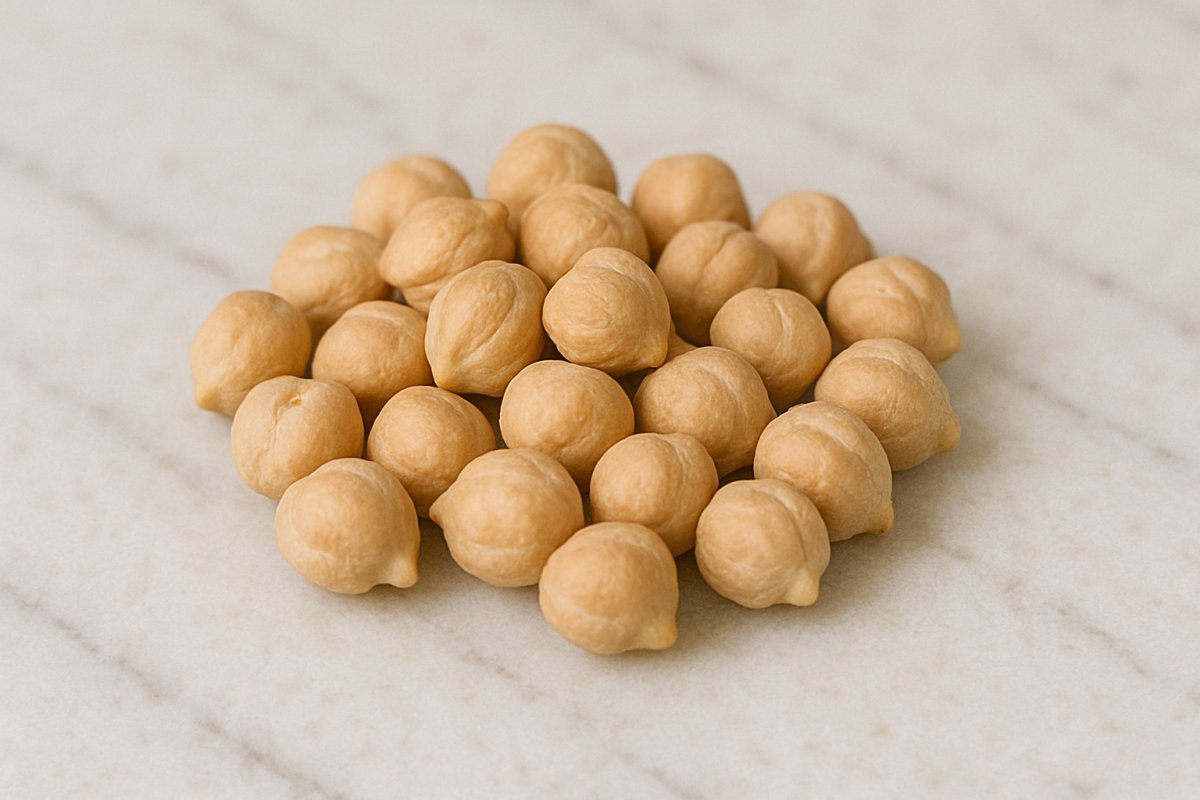
Dried chickpeas in a bowl
I have a secret love for chickpeas that has grown over years of kitchen experiments. They are so unassuming and yet so versatile – from silky hummus to crunchy oven marinades they can do just about everything. I still remember a rainy afternoon when, with a cup of tea and a can of chickpeas, I was hunting for the perfect base recipe for curries; the result was so comforting that I’ve cooked it ever since whenever I need calm.

What fascinates me most is their combination of flavor, texture and nutritional value. Chickpeas provide plant protein, fiber and a small amount of iron, making them ideal for making meatless dishes hearty and filling. A colleague of mine was skeptical until I served him a bowl where roasted chickpeas provided crispy contrasts – since then he considers them a regular part of his diet.

They are also surprisingly uncomplicated: soaking dried ones requires planning, but cans often rescue spontaneous hunger. I love to season chickpeas well and roast them in the oven until they’re crispy on the outside and still slightly tender inside. You can purée, mash, crush or leave them whole. Each preparation brings out a different personality.

  • In salads: as a filling component with herbs and lemon.
  • As a purée: classic in hummus or as a base for dips and spreads.
  • Roasted: as a snack or topping for soups and bowls.
  • In stews: for hearty, long-cooked dishes.
When I discover new kitchens, one of the first questions is: “Do they have chickpeas?” They connect cultures, recall simple family cooking and at the same time carry urban creativity. For me they are more than an ingredient; they are a faithful companion in many life situations, constantly surprising and comforting me.

Availability & types

Availability and types of chickpeas

Chickpeas are small, round legumes eaten in many countries around the world. You can buy them fresh, dried or canned. They are very versatile — like a chameleon among foods — and grow in warm regions of the world.

Origin and growing areas
Chickpeas were cultivated thousands of years ago. They are believed to have originated in the Near East, in areas such as present-day Iran, Turkey and the countries around the eastern Mediterranean. Later chickpeas spread to India, Africa, southern Europe and eventually worldwide. Today major growing areas include:

  • India – the country that grows and eats the most chickpeas.
  • Australia – an important exporter, especially of dried chickpeas.
  • Turkey and Egypt – traditional growing countries around the Mediterranean.
  • Spain and Italy – where chickpeas are often used in Mediterranean dishes.
  • Mexico and the USA – chickpeas are also grown there today.
You can imagine that chickpeas are “sun-loving”: they prefer warm, dry conditions and tolerate little water — which makes them ideal for regions with hot summers.

Available varieties and forms
There is not just one kind of chickpea. Here are the main types you can find in the supermarket or market:

  • Dried chickpeas – These are hard and must be soaked overnight or cooked for several hours. They are often cheaper and keep for a long time. Many people prefer them because after cooking they are firmer and have a nuttier taste.
  • Canned chickpeas – Already cooked and packed in water or brine. Very convenient because they are ready to use. You can add them directly to salads, stews or purées like hummus.
  • Jars and preserves – Similar to cans, but sometimes packed in jars with liquid or oil. Good for storage and attractive to look at.
  • Fresh chickpeas – In some regions they are available fresh, still in the pod. These are juicier and taste more like young peas.
  • Chickpea flour – The flour is made from dried chickpeas and is used in many dishes like pancakes, bread or fried foods. It is gluten-free, so suitable for people who cannot eat wheat.
  • Roasted chickpeas – Like chips, but crunchy and healthy: you can buy them or roast them yourself in the oven as a snack.
Differences in color and shape
Chickpeas are mostly cream-colored to light brown. However there are darker varieties, such as the so-called Kabuli chickpeas (larger and lighter) and Desi chickpeas (smaller and darker). Kabuli types resemble small round balls, while Desi types are often a bit wrinkled. Both taste good but are preferred in different regions and dishes.

In summary: chickpeas are widespread worldwide, grow best in warm, dry areas and are available in many forms — dried, canned, fresh, ground or roasted. Whether you take them quickly from a can or cook something tasty from dried beans, chickpeas are a simple and healthy ingredient found in many kitchens.
Details & nutrition

Property Value
Unit g
Calories per 100 164
Protein per 100 8.9
Carbohydrates per 100 27.4
Sugar per 100 4.8
Fat per 100 2.6
Saturated fat per 100 0.27
Monounsaturated fat 0.58
Polyunsaturated fat 1.16
Fiber per 100 7.6
Vitamin C (mg) per 100 1.3
Vitamin D (IU) per 100 0
Calcium (mg) per 100 49
Iron (mg) per 100 2.9
Nutri-Score A
CO₂ footprint 0.5
Origin Worldwide, especially the Mediterranean, India and the Middle East
Gluten-free Yes
Lactose-free Yes
Nut-free Yes
Vegan Yes
Note Nutritional values refer to cooked chickpeas without salt.

Technical & scientific information

Chickpea (Cicer arietinum) is an annual legume of the Fabaceae family that has been cultivated for millennia. Botanically it is a pod that typically contains one to three seeds. Cultivated varieties differ in size, color and shape; the two main types are the light, rounded Kabuli type and the smaller, wrinkled Desi type. Chickpeas are grown worldwide and constitute an important source of protein and carbohydrates in many regions.

Chemical composition and macronutrients: Fresh dried chickpeas consist mainly of carbohydrates (approx. 40–60% dry matter), a large portion of which is present as resistant and readily digestible starch. Protein content typically ranges between 18 and 25% and is rich in essential amino acids such as lysine, but relatively low in methionine, as is common for many legumes. Fat content is moderate (4–8%), with mainly unsaturated fatty acids such as oleic and linoleic acid. Fiber makes up about 12–20% and consists of soluble and insoluble fractions, including pectins and cellulose.

Vitamins, minerals and secondary plant compounds: Chickpeas provide important micronutrients, including folate, vitamin B6, thiamine and niacin, as well as minerals such as iron, phosphorus, magnesium and potassium. The content of bioactive compounds includes phytoestrogens, polyphenols and tannins; these secondary plant compounds contribute antioxidant properties but can, at high concentrations, slightly reduce protein digestibility.

Physical and technological properties: Seed structure is determined by the composition of proteins (mainly albumins and globulins) and starches. When cooked chickpeas swell by water uptake; starch granules gelatinize and proteins denature, making the texture softer. Germinability and texture depend on storage conditions and moisture. In industrial processing chickpeas are converted into flour, protein isolates, flakes, precooked canned goods, silky pastes like hummus or fermented products. Mechanical pretreatments like soaking and heating reduce cooking time and antinutritional factors.

Processing techniques and effects on nutrient content: Common processing steps are cleaning, sorting, soaking, cooking, peeling and drying. Soaking rehydrates the seeds, activates enzymatic processes and can lower phytic acid content, improving mineral availability. Sprouting and fermentation are biotechnological methods that promote proteolysis and vitamin formation and reduce antinutritional substances. Heat treatments inactivate heat-labile antinutritional protease inhibitors but can lead to losses of heat-sensitive vitamins.

Health aspects: Chickpeas are useful for blood glucose regulation due to their high protein and fiber content, as the slow release of carbohydrates moderates postprandial blood sugar spikes. Fibers promote gut health by increasing stool bulk and modulating the microbiota; fermentation of fibers produces short-chain fatty acids with anti-inflammatory effects. However, the plant also contains antinutritional factors such as phytic acid and oligosaccharides (raffinose-family), which in sensitive individuals can cause bloating. Appropriate processing can largely reduce these side effects. People with legume allergies should exercise caution, as cross-reactions are possible.

Safety and shelf life: Dried product is long-lasting when stored at low moisture and cool conditions; pests (e.g., storage pests) and moisture uptake are the main quality risks. Industrial aflatoxin contamination is less common than in some oilseeds, but not impossible; therefore controls are important. Prepackaged cooked products should be processed under hygienic conditions and refrigerated to avoid microbial contamination.

In summary, chickpeas are a nutrient-rich, versatile legume with significant nutritional benefits. Their chemical composition of protein, complex carbohydrates, fiber and micronutrients, combined with favorable technological properties, makes them an important raw material in households and the food industry as well as a sustainable plant protein source in modern diets.

Wiki entry for: chickpea
Active now: 15 visitors of which 2 logged-in members in the last 5 minutes